
Sign up to save your podcasts
Or

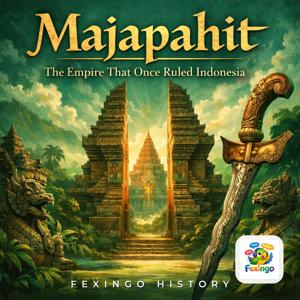


Long before modern irrigation, the rice fields of Java were sustained by an intricate system of water temples and cooperative farming known as subak. In this episode, Lucas and Luna explore how the Majapahit empire, centered at Trowulan on the Brantas River, relied on this democratic water management to feed its population and support its monumental architecture. Drawing on inscriptions like the Canggu and the chronicle of Mpu Prapanca, they discuss the role of the Jero Gde (water priest), the goddess Dewi Sri, and the rituals that synchronized planting cycles. They also touch on the legacy of subak in Bali, where it continues today, and how the volcanic soil of Java made it all possible. A deep dive into the unsung infrastructure that underpinned one of Southeast Asia's greatest empires.
#Majapahit #Subak #WaterTemples #JavaneseIrrigation #DewiSri #JeroGde #Trowulan #BrantasRiver #MpuPrapanca #RiceCulture #Bali #SoutheastAsianHistory #AncientAgriculture #HinduBuddhist #Empire #Indonesia #History #FexingoHistory
Keep every episode free: buymeacoffee.com/fexingo
We've talked about the Kakawin Sutasoma and the phrase Bhinneka Tunggal Ika as Indonesia's national motto, but what did it actually mean for Majapahit? In this episode, Lucas and Luna dig into the political context of Mpu Tantular's poem: written under Hayam Wuruk and Gajah Mada, it wasn't just a pious Buddhist text but a court manifesto for religious tolerance in a plural empire. They explore how the epic's hero Sutasoma embodies reconciliation, how the line 'They are indeed different, but they are one' was a tool to unify Hindu and Buddhist factions, and how later rulers—especially during the Paregreg civil war—may have twisted its meaning. From tantric rituals to colonial reinterpretations, this is the story of a motto that survived an empire.
#Majapahit #BhinnekaTunggalIka #KakawinSutasoma #MpuTantular #HayamWuruk #GajahMada #HinduBuddhistUnity #OldJavaneseLiterature #Sutasoma #Purusada #ReligiousTolerance #Pancasila #Indonesia #FexingoHistory #SoutheastAsianHistory #TantricBuddhism #CandiSukuh #EmpireAndIdeology
Keep every episode free: buymeacoffee.com/fexingo
Beyond the famous kings and prime ministers, Majapahit's history is shaped by powerful women who ruled as queens, managed court factions, and influenced imperial policy. This episode explores figures like Tribhuwana Wijayatunggadewi, the queen who reigned before Hayam Wuruk and appointed Gajah Mada; Suhita, whose reign saw the Paregreg civil war; and lesser-known regents and consorts who held real authority. Drawing on the Negarakertagama and Pararaton, we examine how Javanese queens navigated patrilineal structures, wielded influence through temple patronage, and commanded loyalty in a male-dominated court. Their stories challenge assumptions about women's roles in medieval Southeast Asian empires.
#Majapahit #WomenInHistory #Tribhuwana #Suhita #Negarakertagama #Pararaton #GajahMada #HayamWuruk #BhreHyang #JavaneseQueens #SoutheastAsia #IndonesianHistory #MedievalQueens #FemaleRule #Empire #FexingoHistory #History #Patriarchy
Keep every episode free: buymeacoffee.com/fexingo
In this episode, Lucas and Luna explore the metallurgical and spiritual artistry behind the Majapahit keris. They discuss the pamor pattern-welding technique, the role of the empu or master bladesmith, and how these sacred blades were not just weapons but objects of power, status, and spiritual protection. The conversation touches on the myth of Mpu Gandring, the differences between Majapahit-era keris and later forms, and how the keris tradition survived the empire's fall. Lucas explains the specific alloys used, the symbolism of the wavy blade, and the connection between keris and the Hindu-Buddhist cosmology of Majapahit. The episode also features a brief, natural donation segment where Lucas and Luna talk about listener support keeping the show ad-free.
#Majapahit #Keris #JavaneseMetallurgy #Pamor #MpuGandring #Empu #Trowulan #Negarakertagama #SoutheastAsia #Bladesmithing #HinduBuddhist #Nusantara #LucasAndLuna #FexingoHistory #History #WeaponHistory #SpiritualArtifacts #JavaneseCulture
Keep every episode free: buymeacoffee.com/fexingo
When we talk about Majapahit, we often picture stone gateways and keris blades, but the empire's real engine might have been something far more humble: water. In this episode, Lucas and Luna explore the vast canal system that crisscrossed the Brantas River delta around Trowulan. Drawing on archaeological surveys and the Negarakertagama, they trace how Majapahit engineers diverted rivers, built massive reservoirs like Candi Tikus, and constructed a network of waterways that transported rice, controlled floods, and connected the capital to the sea. They discuss the practical challenges of maintaining a hydraulic empire, the evidence for boat traffic on the canals, and the legacy of this infrastructure in later Javanese kingdoms. Along the way, they touch on the Sengkala Memet inscription, the role of the pasisir ports, and how water shaped Majapahit's rise and fall.
#Majapahit #Canal #Brantas #Trowulan #Negarakertagama #CandiTikus #SengkalaMemet #WaterManagement #Rice #Pasisir #HydraulicEmpire #SoutheastAsia #History #FexingoHistory #Indonesia #Javanese #Archaeology #Infrastructure
Keep every episode free: buymeacoffee.com/fexingo
This episode explores the Paregreg civil war that tore Majapahit apart in the early 15th century. Lucas and Luna discuss the prince Bhre Wirabhumi, who ruled the eastern half of the empire from his court at Blambangan, and his rebellion against his cousin Wikramawardhana after the death of King Hayam Wuruk. They delve into the political tensions between the western and eastern branches of the royal family, the role of the prime ministers Mada Natha and Mada Narasa, and how the conflict weakened Majapahit, paving the way for the rise of Demak and the spread of Islam. The episode includes a reading from the Pararaton describing the battle and its aftermath, and considers whether Bhre Wirabhumi's defeat was a victory for centralization or a fatal blow to the empire's unity.
#Majapahit #Paregreg #BhreWirabhumi #Wikramawardhana #Blambangan #Trowulan #Pararaton #MadaNatha #MadaNarasa #HayamWuruk #JavaneseHistory #CivilWar #Indonesia #FexingoHistory #SoutheastAsianHistory #Empire #15thCentury #History
Keep every episode free: buymeacoffee.com/fexingo
In 1365, a Javanese Buddhist poet named Mpu Prapanca completed a remarkable work: the Nagarakretagama, a long poem describing the kingdom of Majapahit under King Hayam Wuruk. This episode explores what the poem tells us about daily life, court ceremonies, religious diversity, and the empire's vast geography. We dive into Prapanca's unique perspective as both a court official and a witness to history. The poem's manuscript was rediscovered in 1894 on the island of Lombok during a Dutch military expedition, and it remains the single most important source for understanding 14th-century Java. We also discuss the controversies around the poem's accuracy, its blending of Hindu and Buddhist elements, and how it shaped modern Indonesian identity. Lucas and Luna examine key passages, from the royal progress through East Java to the list of tributary states stretching from Sumatra to New Guinea. This is a story of literature, archaeology, and the fragile thread that connects us to a lost world.
#Majapahit #Nagarakretagama #MpuPrapanca #HayamWuruk #OldJavanese #Kakawin #Trowulan #Lombok #HinduBuddhist #JavaHistory #IndonesianHistory #14thCentury #CandiPanataran #BhinnekaTunggalIka #PalapaOath #GajahMada #History #FexingoHistory
Keep every episode free: buymeacoffee.com/fexingo
Lucas and Luna explore Candi Panataran, the largest temple complex in East Java and a key religious center of the Majapahit Empire. Lucas explains the temple's layout, its three courtyards, and the symbolic reliefs that depict the Ramayana and episodes from the life of the god Vishnu. They discuss the temple's connection to Mount Kelud, an active volcano that erupted in the 14th century, and how the Majapahit kings incorporated volcanic ash into their rituals. Lucas also shares how the temple's architecture reflects the empire's syncretic blend of Hinduism and indigenous ancestor worship. Luna asks how the temple was rediscovered and preserved after the empire's fall. The episode ties the temple's fate to the decline of Majapahit and the rise of Islam on Java.
#Majapahit #CandiPanataran #EastJava #Hinduism #Vishnu #Ramayana #MountKelud #Volcano #TempleArchitecture #Syncretism #AncestorWorship #Blitar #Relief #14thCentury #HayamWuruk #Archaeology #History #FexingoHistory
Keep every episode free: buymeacoffee.com/fexingo
In this episode, Lucas and Luna explore the final decades of the Majapahit Empire, focusing on the rise of Demak and the pivotal role of the Wali Songo. They discuss how internal strife, the Paregreg civil war, and the growing power of coastal lords (pasisir) led to the empire's collapse in the early 16th century. Key figures include Bhre Kertabhumi, Raden Patah, Sunan Ampel, and Sunan Kalijaga. The episode also examines the strategic shift from inland Trowulan to the bustling port of Demak, the influence of Islam, and the legacy of Majapahit's downfall on subsequent Javanese history. Listeners will gain insight into the complex interplay of politics, religion, and trade that shaped the end of one of Southeast Asia's greatest empires.
#Majapahit #Demak #WaliSongo #RadenPatah #Paregreg #BhreKertabhumi #Trowulan #Pasisir #IslamNusantara #JavaneseHistory #SoutheastAsia #EmpireCollapse #CivilWar #SunanAmpel #SunanKalijaga #16thCentury #History #FexingoHistory
Keep every episode free: buymeacoffee.com/fexingo
When the Portuguese arrived in Java in the early 16th century, they described a ruined city of red brick—Trowulan, the former capital of the Majapahit Empire. This episode explores the empire's extraordinary brickmaking industry, which produced millions of standardized bricks for temples, canals, and city walls. We discuss the volcanic clay of the Brantas river basin, the kiln technology of the era, and the engineering behind structures like Candi Bajang Ratu and the Tikus bathing pool. Lucas and Luna consider how brickmaking shaped Majapahit's economy, with brickmakers organized into guilds and taxed by the state. We compare Javanese brickwork to contemporary Indian and Khmer techniques and examine how the porous volcanic brick decayed in the tropical climate, leaving Trowulan a ghost city. The episode also touches on the symbolic meaning of brick in Javanese cosmology—earth fired into permanence, a metaphor for the empire itself. A reflective conversation about the material foundations of power and the humble clay that built an empire.
#Majapahit #Trowulan #Brickmaking #Terracotta #JavaneseArchitecture #BrantasRiver #CandiBajangRatu #CandiTikus #VolcanicClay #AncientEngineering #SoutheastAsianHistory #IndonesianHistory #FexingoHistory #HistoryPodcast #MedievalTechnology #ArchitectureHistory #MaterialCulture #EmpireBuilding
Keep every episode free: buymeacoffee.com/fexingo
From the publisher's feed