
Sign up to save your podcasts
Or

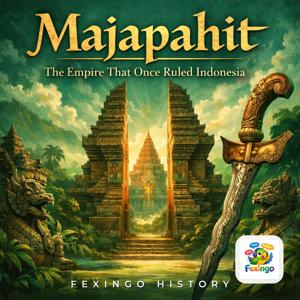


Long before the legendary Gajah Mada and the golden age of Hayam Wuruk, the keris was already being forged in the volcanic heart of Java. In this episode, Lucas and Luna delve into the keris — not just as a weapon, but as a spiritual artifact, a symbol of authority, and a political tool in the Majapahit Empire. They explore the origins of the keris, its connection to the Indian subcontinent's wavy-bladed swords, and its evolution into a distinctly Javanese heirloom. The conversation covers the role of the empu — the master smith — who was believed to channel supernatural forces, the importance of the pamor pattern, and how the keris became a source of magical power and political legitimacy. Lucas recounts the story of Empu Tan and the poisoning of a Majapahit prince, and discusses how the keris was used in royal succession conflicts, including the Paregreg civil war. The episode also touches on the keris's decline under Dutch colonialism and its revival as a cultural symbol in modern Indonesia. References include Pamalayu, Gajah Mada's Palapa Oath, and the keris's role in wayang kulit performances.
#Majapahit #Keris #IndonesianHistory #SoutheastAsia #EmpuTan #Pamor #Paregreg #WayangKulit #GajahMada #Trowulan #Java #Kris #SpiritualWeapon #Blade #BhinnekaTunggalIka #Nusantara #History #FexingoHistory
Keep every episode free: buymeacoffee.com/fexingo
Episode 88 revisits the twilight of the Majapahit Empire, focusing on the final decades of the 15th and early 16th centuries. Lucas and Luna explore the rise of the Demak Sultanate under Raden Patah, the shifting power dynamics on Java's north coast, and the last known king, Girindrawardhana. They discuss the key sources: the Babad Tanah Jawi, Tomé Pires's Suma Oriental, and archaeological evidence from Trowulan. The episode examines the role of the Wali Songo, the spread of Islam, and the gradual fragmentation of Majapahit's vassal states. A critical look at the known facts and lingering mysteries of the empire's collapse, without rehashing the earlier coverage of the Paregreg civil war or Bhre Wirabhumi.
#Majapahit #DemakSultanate #RadenPatah #Girindrawardhana #WaliSongo #SumaOriental #TomePires #BabadTanahJawi #Trowulan #IslamicSpread #JavaHistory #15thCentury #16thCentury #SoutheastAsia #EmpireCollapse #History #FexingoHistory #Indonesia
Keep every episode free: buymeacoffee.com/fexingo
In the late 14th century, the Majapahit Empire controlled the world's most valuable commodity: spices. But when the Sultanate of Malacca rose as a rival port, Majapahit's grip on the Malacca Strait began to slip. This episode dives into the brutal trade war that followed — a naval blockade, a shadow fleet of Chinese junks, and a desperate gamble by Majapahit's last great admiral, Mpu Nala. We explore the economic warfare that reshaped the Indonesian archipelago, the fall of the spice monopoly, and how a kingdom built on maritime trade slowly lost its lifeline. Featuring the 1357 blockade of Malayu, the role of the Zheng He expeditions, and the Palembang pirates who played both sides.
#Majapahit #SpiceTrade #MpuNala #MalaccaStrait #TradeWar #NavalBlockade #Malayu #ZhengHe #Palembang #PalapaOath #GajahMada #Nusantara #SoutheastAsia #Srivijaya #SeaPower #EconomicHistory #History #FexingoHistory
Keep every episode free: buymeacoffee.com/fexingo
In this episode, Lucas and Luna explore the enigmatic Candi Sukuh, a 15th-century temple on the slopes of Mount Lawu that defies Majapahit's typical Hindu-Buddhist architecture. Shaped like a pyramid, it features stark reliefs of linga, yoni, and a giant stone tortoise with a flat face — imagery that has sparked theories of fertility rites, tantric Buddhism, and even a link to the Maya. Lucas explains how Sukuh was built during the empire's decline, around the Paregreg civil war, and why its iconography may reflect a shift toward pre-Hindu ancestral worship. They discuss its inscription, the 'consecration of the earth' date of 1440 CE, and the mysterious 'Gapura Wringin Lawang' split gate. The episode also covers the temple's connection to the Gunung Lawu spiritual complex and its possible role as a site of royal meditation or political statement. No prior knowledge assumed—just a curious mind.
#CandiSukuh #Majapahit #MountLawu #Paregreg #TantricBuddhism #JavaneseTemple #FertilityRite #LingaYoni #PyramidTemple #15thCentury #HinduBuddhist #Archaeology #Indonesia #SoutheastAsia #GunungLawu #EmpireDecline #History #FexingoHistory
Keep every episode free: buymeacoffee.com/fexingo
In this episode, Lucas and Luna explore the shadowy story of Empu Tan, a legendary keris maker whose deadly creation may have changed the course of Majapahit history. They discuss the ritual and political uses of poison in the Majapahit court, the blurred line between magic and politics in medieval Java, and how the tale of Empu Tan has been preserved through the Pararaton and oral tradition. The episode also touches on the wider tradition of weapon-as-pusaka, the role of empus as spiritual craftsmen, and the eventual decline of Majapahit's esoteric power amid the rise of Demak and the Wali Songo.
#Majapahit #EmpuTan #Keris #Pusaka #Pararaton #Trowulan #Nusantara #Poison #Ritual #Politics #WaliSongo #Demak #Jawa #BhinnekaTunggalIka #SoutheastAsia #MedievalHistory #History #FexingoHistory
Keep every episode free: buymeacoffee.com/fexingo
In this episode, Lucas and Luna explore the shadowy world of poison in Majapahit — not just as a weapon, but as a tool of ritual, politics, and justice. They dive into the story of Empu Tan, a legendary poison-maker mentioned in the Pararaton, and examine how arsenic and plant-based toxins were used in court intrigues and by secret police. The conversation also touches on the keris as a possible poison delivery device, the role of poison in pre-Islamic Javanese justice, and the ethical debates around its use. Along the way, they wonder: was Majapahit's poison a sign of sophisticated statecraft or a dark necessity? And they ask listeners to support the show at buy me a coffee dot com slash fexingo.
#Majapahit #EmpuTan #PoisonHistory #Pararaton #JavaneseHistory #SecretPolice #Keris #Arsenic #Toxicology #Statecraft #Justice #Ritual #Nusantara #Trowulan #SoutheastAsia #History #FexingoHistory #Podcast
Keep every episode free: buymeacoffee.com/fexingo
In this episode, Lucas and Luna explore the iconic split gate (candi bentar) of Majapahit, a simple yet profound architectural form that marked the threshold between the mundane and the sacred. They trace its origins to the Majapahit capital of Trowulan, where gates like Bajang Ratu and Wringin Lawang still stand, and discuss how the candi bentar evolved from Hindu-Buddhist cosmology, symbolizing the dualities of the universe. The conversation touches on the gate's role in processions, its spread across Java and Bali after Majapahit's fall, and what it reveals about Javanese concepts of space, power, and ritual purity.
#Majapahit #CandiBentar #SplitGate #Trowulan #BajangRatu #WringinLawang #HinduBuddhism #JavaneseArchitecture #Cosmology #SoutheastAsianHistory #IndonesianHistory #Nusantara #Gateways #SacredSpace #MajapahitArchitecture #BalineseArchitecture #History #FexingoHistory
Keep every episode free: buymeacoffee.com/fexingo
In 1389, the death of Majapahit's greatest king, Hayam Wuruk, plunged the empire into a bitter succession crisis that would ultimately lead to civil war. This episode explores the rivalry between his daughter Kusumawardhani and her husband Wikramawardhana, and his illegitimate son Bhre Wirabhumi from a lesser wife. We trace the political maneuvering, the factional divides between the royal heartland and the eastern court at Blambangan, and the bloody Paregreg war that erupted in 1404. Drawing on the Pararaton and Chinese Ming records, we examine how this conflict drained Majapahit's resources, alienated its vassals, and set the stage for the empire's slow decline. We also discuss the role of the Wali Songo and the rise of coastal Muslim polities like Demak in the aftermath. A story of ambition, betrayal, and a golden era's unraveling.
#Majapahit #HayamWuruk #Kusumawardhani #BhreWirabhumi #Paregreg #Pararaton #MingShilu #Trowulan #Blambangan #Wikramawardhana #WaliSongo #Demak #MajapahitSuccession #CivilWar #SoutheastAsianHistory #IndonesianHistory #History #FexingoHistory
Keep every episode free: buymeacoffee.com/fexingo
When we think of Majapahit, we think of Hayam Wuruk and Gajah Mada. But behind the throne—and sometimes on it—were powerful women who shaped the empire's destiny. In this episode, Lucas and Luna explore the queens and royal women of Majapahit: from Rajapatni, the formidable grandmother who held the kingdom together after Kertanegara's death, to Tribhuwana Wijayatunggadewi, the first ruling queen of the empire, who appointed Gajah Mada as mahapatih. They discuss the role of the Bhre (princesses) in provincial governance, the legal rights women held under the Negarakertagama, and how Majapahit's relatively high status of women compared to later Islamic kingdoms was recorded by Chinese and European visitors. Drawing on the Pararaton, copperplate inscriptions, and the Old Javanese legal text Agama, they piece together a portrait of a society where royal women were not just consorts but regents, diplomats, and patrons of religion. The episode also touches on the controversial figure of Dyah Pitaloka, the Sundanese princess whose death at the Bubat war may have been a political sacrifice, and the legend of Queen Suhita, who personally led troops against a rebellion. For anyone who thought Southeast Asian history was all male generals and sultans, this is a corrective: a look at the women who held the keys to the palace.
#Majapahit #Queens #Rajapatni #TribhuwanaWijayatunggadewi #DyahPitaloka #Suhita #Bubat #Negarakertagama #Pararaton #Agama #SoutheastAsianHistory #FemaleRulers #Bhre #Trowulan #AncientJava #WomenInHistory #History #FexingoHistory
Keep every episode free: buymeacoffee.com/fexingo
In episode 80 of our Majapahit series, Lucas and Luna walk through the ruins of Trowulan, the empire's capital at its peak in the 14th century. They explore the city's grid layout, massive water canals, brick gates like Bajang Ratu, and the residential-industrial zones. How did Majapahit manage a city of perhaps 200,000 people without modern infrastructure? The conversation touches on the Negarakertagama's description of the city, archaeological evidence from the 2009 Trowulan water management project, and the role of the Great Mosque as a later layer. They also discuss the city's decline after the Paregreg civil war and what the ruins tell us about Majapahit's sophistication. A donation segment early on reminds listeners that small contributions keep the ad-free show alive.
#Majapahit #Trowulan #UrbanPlanning #IndoPacificHistory #WaringinLawu #BajangRatu #Negarakertagama #MpuPrapanca #Paregreg #JavaneseHistory #SoutheastAsia #MedievalCity #Archaeology #WaterManagement #BrickArchitecture #MajapahitEmpire #History #FexingoHistory
Keep every episode free: buymeacoffee.com/fexingo
From the publisher's feed