
Sign up to save your podcasts
Or

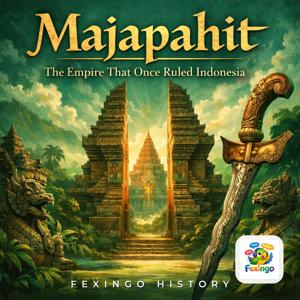


While we have explored Majapahit’s naval might, its spice trade, and its royal intrigue, we rarely pause to consider the physical medium that held this empire together: paper. In Episode 228, Lucas and Luna trace the journey of the scribe in medieval Java, a profession far more complex than simple transcription. We examine how the introduction of paper from China and the Arab world revolutionized administration, allowing the state to manage vast land grants and legal codes with unprecedented precision. Through the lens of the lontar leaf tradition versus imported paper sheets, we uncover the tension between sacred oral preservation and bureaucratic efficiency. You will learn about the specific tools of the trade, the social hierarchy of the wong tulih, and how the act of writing became an act of political power in Trowulan. This episode dives into the ink-stained fingers behind the Nagarakretagama, revealing that the empire’s longevity depended as much on the pen as it did on the sword.
#Majapahit #JavaneseHistory #SoutheastAsiaHistory #MedievalJava #PaperHistory #ScribesOfJava #Trowulan #Nagarakretagama #Lontar #OldJavanese #WritingSystems #Bureaucracy #Kakawin #IndonesianArchaeology #TradeRoutes #ChinesePaper #IslamicCalligraphy #HistoryPodcast #FexingoHistory
Keep every episode free: buymeacoffee.com/fexingo
While we have explored Majapahit’s naval fleet and spice trade in previous episodes, the true engine of its imperial dominance lay in the predictable fury of the monsoon winds. This episode examines how Majapahit’s strategists, particularly under Gajah Mada and later rulers, synchronized military campaigns with the seasonal shifts of the Southwest and Northeast monsoons. We look at the logistical mastery required to move jong ships across the archipelago without relying on modern navigation, using star charts and wave patterns to time invasions of rebellious ports like Sunda and Bali. You will hear about the Battle of Bubat not just as a diplomatic failure, but as a moment that highlighted the fragility of these wind-dependent alliances. We also discuss the role of the syahbandar in managing the volatile port cities of Tuban and Gresik, where control over the windward routes meant control over the empire’s revenue. From the rice harvests that fed the crews to the religious ceremonies invoking Dewi Sri for safe passage, this story reveals the deep integration of nature, faith, and statecraft in one of Southeast Asia’s greatest empires.
#Majapahit #GajahMada #MonsoonWinds #JongShip #Nagarakretagama #Trowulan #HayamWuruk #Syahbandar #Tuban #Gresik #Bubat #SundaKingdom #SoutheastAsiaHistory #MaritimeEmpire #Prapanca #DewiSri #PalapaOath #FexingoHistory
Keep every episode free: buymeacoffee.com/fexingo
While earlier episodes have explored the military might, trade routes, and royal courts of the Majapahit Empire, this episode turns its gaze to the invisible infrastructure that held it all together: the intelligence network. We dive into the role of the spion, or informants, who served as the eyes and ears of the kraton in Trowulan. Using evidence from the Nagarakretagama and local folklore, we reconstruct how Majapahit monitored its vast archipelago, managed dissent in distant provinces like Bali and Sunda, and maintained stability through a combination of surveillance and patronage. Lucas and Luna discuss the specific mechanisms of this spy network, the risks faced by those operating in the shadows, and how this system allowed one kingdom to exert influence across thousands of islands without maintaining a permanent military garrison everywhere. This is a look at the bureaucratic and social engineering behind imperial power in medieval Southeast Asia.
#Majapahit #Nagarakretagama #Spionage #Trowulan #IndonesianHistory #MedievalEmpires #IntelligenceNetwork #SoutheastAsia #HayamWuruk #GajahMada #Informants #ImperialPower #BaliHistory #SundaKingdom #Prapanca #Kraton #Archaeology #FexingoHistory #History
Keep every episode free: buymeacoffee.com/fexingo
In 1357, a diplomatic visit turned into a massacre that shattered Majapahit’s golden age. This episode explores the tragic events surrounding the Kingdom of Sunda and their proposed marriage alliance with King Hayam Wuruk. We examine the role of Gajah Mada in preventing the union, the Battle of Bubat where hundreds died, and how this single betrayal fractured the empire’s unity. Through the lens of the Pararaton and Nagarakretagama texts, we uncover the political tensions between the Javanese court and the Sundanese royal family. Discover why this event is often cited as the beginning of Majapahit’s decline, despite its military might remaining intact for decades more.
#Majapahit #BattleOfBubat #HayamWuruk #GajahMada #KingdomOfSunda #DyahPurnawijaya #Pararaton #Nagarakretagama #JavaneseHistory #IndonesianEmpire #SoutheastAsiaHistory #MedievalIndonesia #RoyalMarriage #DiplomaticFailure #Trowulan #Kediri #RajasaDynasty #History #FexingoHistory
Keep every episode free: buymeacoffee.com/fexingo
For over a century, historians have puzzled over the reign of Kertawijaya, also known as Rajasawardhana I, who sat on the throne of Majapahit between 1429 and 1447. Unlike his father Hayam Wuruk or his successor Suhita, Kertawijaya left behind almost no stone inscriptions and very little mention in the chronicles that usually detail royal activities. This episode explores the evidence we do have — scattered references in the Pararaton and Nagarakretagama commentaries, along with archaeological hints from Trowulan — to reconstruct a period often dismissed as a dark age. We examine whether this silence indicates a weak ruler, a puppet king controlled by powerful ministers like Gajah Mada’s successors, or perhaps a deliberate political strategy to maintain stability after the empire’s peak. By looking at the administrative records and the subtle shifts in religious patronage during this time, we uncover how an empire can remain vast and influential even when its central figure remains largely invisible to history.
#Majapahit #Kertawijaya #RajasawardhanaI #Trowulan #Pararaton #Nagarakretagama #HayamWuruk #Suhita #GajahMada #JavaneseHistory #SoutheastAsiaHistory #IndonesianEmpire #Archaeology #MedievalHistory #SilentReigns #RoyalSuccession #HinduBuddhistJava #History
Keep every episode free: buymeacoffee.com/fexingo
While earlier episodes explored Majapahit’s military might and royal ceremonies, this episode examines the economic engine that truly sustained the empire: the spice trade. We dive into the role of the syahbandar, the port officials who managed foreign merchants in Tuban and Gresik, and how the flow of cloves, nutmeg, and pepper from the Maluku Islands created a complex web of tribute and taxation. Lucas traces the journey of these aromatic goods from the Moluccas to the bustling markets of Trowulan, explaining how the empire’s wealth was not just seized by force but negotiated through diplomacy and controlled access to shipping lanes. Luna asks clarifying questions about the daily operations of these ports and the specific taxes levied on Chinese and Arab traders. Together, they uncover how the Nagarakretagama lists tributary states not just as conquered lands, but as essential partners in a vast commercial network that connected Southeast Asia to India and China.
#Majapahit #SpiceTrade #Trowulan #Syahbandar #MalukuIslands #Cloves #Nutmeg #Nagarakretagama #Prapanca #Tuban #Gresik #ZhengHe #MingDynasty #SoutheastAsiaHistory #MaritimeEmpire #IndianOceanTrade #KawiLiterature #FexingoHistory
Keep every episode free: buymeacoffee.com/fexingo
While Trowulan serves as the ceremonial heart of the Majapahit Empire, the true engine of its wealth flowed through the coastal city of Tuban. In this episode, we leave the inland capital to explore the bustling harbor that connected Java to the wider Indian Ocean trade network. Lucas and Luna examine how Tuban’s strategic position on the Bengawan Solo river allowed it to become a critical hub for the pepper and sandalwood trades long before the rise of Malacca. We look at the archaeological evidence found in the region, including Chinese porcelain shards and local kiln sites, which reveal a society deeply integrated into global commerce. The conversation also touches on the political tension between the inland aristocracy and the maritime merchants who controlled the flow of goods. By understanding Tuban, we gain a clearer picture of how Majapahit maintained its dominance not just through military might, but through economic leverage and diplomatic ties with foreign powers like the Ming Dynasty.
#Majapahit #Tuban #SoutheastAsiaHistory #IndonesianHistory #MaritimeTrade #BengawanSolo #IndianOceanTrade #ChinesePorcelain #PepperTrade #SundaStrait #MingDynasty #Archaeology #JavaIsland #ColonialHistory #SpiceTrade #FexingoHistory #HistoryPodcast #AncientCivilizations
Keep every episode free: buymeacoffee.com/fexingo
When Hayam Wuruk's envoys rode out from Trowulan, they often traveled with an escort of war elephants — beasts that were at once symbols of kingship, engines of terror, and living links between the Javanese heartland and the wider Indian Ocean world. In this episode, Lucas and Luna trace the elephant's path through Majapahit: from the forested slopes of Sumatra and the Malay Peninsula, where elephants were trapped and trained, to the royal stables in the capital, where they thundered in processions and on campaign. They examine the practical economics of keeping a herd — the fodder, the mahouts, the chains — and the craft of the gajah tunggal, the lone elephant that could smash a gate or turn a battle. They also untangle the legend of Gajah Mada, whose name means 'elephant commander', and ask whether the man really commanded elephants or simply borrowed their image. Drawing on the Nagarakretagama, the Pararaton, and Chinese accounts from the era, they paint a vivid picture of a creature that was both a weapon of war and a marker of Majapahit's reach across the archipelago.
#Majapahit #WarElephants #GajahMada #Trowulan #HayamWuruk #Nagarakretagama #Pararaton #OldJavanese #SoutheastAsia #IndianOcean #ElephantCorps #JavaneseHistory #History #FexingoHistory #MilitaryHistory #TradeRoutes #Sumatra #MalayPeninsula
Keep every episode free: buymeacoffee.com/fexingo
In this episode, Lucas and Luna explore the keris, the wavy-bladed dagger that became the soul of Majapahit. They trace its origins to the 9th century, its forging in iron, nickel, and meteorite, and its transformation from a weapon into a spiritual heirloom, a marker of status, and a bearer of cosmic power. They discuss the legendary empu (bladesmiths) who were believed to possess supernatural abilities, the keris's role in royal ceremonies, and its connection to the Palapa Oath and Gajah Mada's ambition. They consider the keris as a physical repository of power, discussing the pamor patterns that held hidden meanings, and the way the blade's layered steel mirrored the archipelago's own complexity. They also touch on the keris's survival through the rise of Islam and into the present, where it remains a symbol of Javanese identity. This episode offers a close look at how a single object can carry an empire's history, politics, and mysticism.
#Majapahit #Keris #IndonesianHistory #GajahMada #PalapaOath #Empu #Pamor #Nusantara #SoutheastAsia #JavaneseCulture #Bladesmithing #MeteoriteIron #RoyalRegalia #SpiritualHeirloom #Trowulan #HayamWuruk #History #FexingoHistory
Keep every episode free: buymeacoffee.com/fexingo
Step into the bustling night markets of Trowulan, the capital of the Majapahit Empire at its 14th-century height. In this episode, Lucas and Luna wander through the lantern-lit stalls, tasting satay, rice cakes, and palm wine while uncovering the daily rhythms of an imperial city. Discover how the Nagarakretagama's poetic verses hint at a vibrant street economy, how Chinese coins and local trade shaped the markets, and what the babat and archaeological finds tell us about food, drink, and social class in the empire's shadow. From law and order to the gossip of the marketplace, this episode peels back the palace walls to reveal the living, breathing heart of Majapahit's urban life.
#Majapahit #Trowulan #NightMarkets #StreetFood #Nagarakretagama #MpuPrapanca #HayamWuruk #GajahMada #SoutheastAsianHistory #AncientEconomy #UrbanLife #IndonesianHistory #JavaneseCulture #Satay #ChineseCoins #14thCentury #History #FexingoHistory
Keep every episode free: buymeacoffee.com/fexingo
From the publisher's feed