
Sign up to save your podcasts
Or

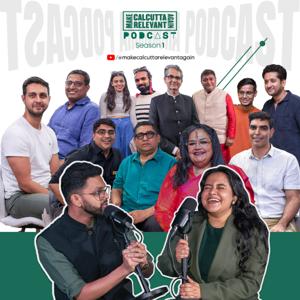


In this episode of Make Calcutta Relevant Again, host Meghdut Roychowdhury engages in a profound dialogue with renowned historian Tapati Guha Thakurta to explore the city’s evolving soul.
From her instrumental role in securing UNESCO recognition for Durga Puja to the systemic decay of our iconic libraries and museums, Tapati reflects on the shifting identity of Kolkata. The conversation sheds light on the tragic loss of the "human component", the scholars and curators that once made this city a global intellectual magnet.
These stories of our past and the challenges of the present are a call to action for all of us. We hope this conversation helps bring back the intellectual pride that defines our city. By understanding our history, we can work together to build a stronger, more vibrant future for Calcutta. Thank you for listening and for caring about the spirit of our city.
Meet Harshavardhan Neotia, the man who built Calcutta's skyline and rewrote India's real estate rulebook forever. While every other builder was making excuses for delayed projects, he did something nobody in India had ever done, invented a penalty clause that made HIM pay for every single day of delay.
In this episode of Make Calcutta Relevant Again, we sit down with the quiet empire builder who chose Calcutta when everyone else ran away and turned it into his biggest win.We talk real estate, accountability, Calcutta's untapped potential, and why this one rule scared an entire industry. This isn't just a business story. This is Calcutta's story.
In this episode of Make Calcutta Relevant Again, host Meghdut Roychowdhury sits down with the visionary Ajay Rawla, the founder of Rajbari Bawali and a champion of heritage restoration in Bengal. Ajay shares the inspiring journey of transforming a crumbling 300-year-old palace into an international landmark.
From navigating complex family ownerships to finding healing through restoration after personal tragedy, Ajay’s story is one of profound resilience. Discover his philosophy of restraint in design, the economic empowerment of local village women, and his mission to make rural Bengal a global destination through sustainable, community-driven projects.
In this episode of Make Calcutta Relevant Again, host Meghdut RoyChowdhury chats with comedian Anuvab Pal about Kolkata's unique cultural identity. They explore why the city's "slower" pace is actually its charm, discuss Durga Puja as the world's largest public art festival, and examine how Kolkata shapes cosmopolitan thinking globally.
Pal encourages embracing the city's rich intellectual and cultural heritage with pride and authenticity. A thoughtful conversation about identity, belonging, and rediscovering what makes Calcutta truly remarkable.
The best therapy sometimes comes wrapped in a beat and a rhyme. In this episode of Make Calcutta Relevant Again, we meet Dr. Ranjan Ghosh, a doctor who refuses to stay in one box.
He talks about his journey from India to the US, why mental health conversations need to break free from clinical walls, and how rap became his tool for healing. We also explore his brand Good Karma, the intersection of medicine and music, and why vulnerability is strength. A conversation about trauma, truth, and the unexpected paths that lead us home.
What makes Calcutta timeless?
In this episode of Make Calcutta Relevant Again, Dr. Debanjan Chakrabarti talks about Sukumar Roy as a meta-modernist, how Satyajit Ray shaped our childhoods, and why humility is India’s most overlooked cultural strength. We also explore how Kolkata remains a global city, the beating heart of cosmopolitanism, and a hub for science and culture today.
A conversation about Calcutta’s past, present, and why it still matters.
Before he ever picked up a camera, he was learning the rhythm of the city through classical music.
Trained by the maestro Tanmoy Bose, Pubarun Basu brings a rhythmic, human-centric approach to his photography. In this sit-down, he reveals how his father’s advice to "connect before you click" shaped his career.
We explore a range of "Calcutta realities" from why the riverfront is the ultimate sanctuary for lovers and friends, to the uncomfortable truth about our air pollution being ignored in favor of more 'marketable' environmental causes. This is a conversation about seeing the city for what it truly is, beyond the filters.
What does it really take to change a city?
In this powerful and deeply personal episode of Make Kolkata Relevant Again, we sit down for the second time with Mudhar Patherya — widely known as Kolkata’s Lover-in-Chief — the man behind the citizen-led illumination of over 145 heritage buildings across the city.
This is not a story about awards, applause, or grandstanding.
It’s about accountability, collaboration, and getting your hands dirty.
From lighting up Raj Bhavan, St. Paul’s Cathedral, Victoria Memorial’s Angel of Victory, and the GPO, to dancing on the streets to celebrate employment for persons with disabilities — this episode captures how real civic change actually happens.
In this episode of Make Calcutta Relevant Again, features Monica Lui, a successful Chinese restaurant owner who started her journey in the 90s and today runs eight outlets across Kolkata. From her childhood and family roots to building a trusted name in the food industry, Monica shares her inspiring journey, challenges, and lessons from decades of entrepreneurship.
Tangra was once known for violence, neglect, and lost futures.
Today, it tells a different story — because of music.
In this powerful conversation, we meet Sanjay Mondal, a cultural activist and musician who has spent over 15 years transforming the lives of children from one of Kolkata’s most stigmatized neighborhoods. Using discarded materials to create musical instruments, Sanjay built a movement that gave Tangra’s youth purpose, pride, and a voice.
From performing on India’s Got Talent to reviving Bengali folk music, kirtan, and theatre, this is a story about resilience, culture, and how real change begins at the grassroots.
This episode dives deep into:
The harsh realities of growing up in Tangra
How music became an escape from crime and despair
The failures of systems — and the power of community
Why culture is essential for social reform
How Tangra is slowly reclaiming its identity
Change doesn’t come from outside. It starts within.
From the publisher's feed