
Sign up to save your podcasts
Or

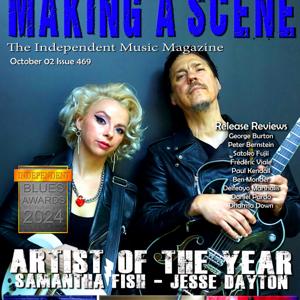


Making a Scene Presents - A Buyer’s Guide to Recording Interfaces
There is a certain kind of gear mistake that musicians make all the time. They obsess over microphones, plugins, monitors, and shiny rack toys, then they treat the recording interface like a boring utility purchase. That is backward. Your interface is the center of the studio. It is the box that decides how your microphone gets into the computer, how your speakers get fed, how your headphones behave, how low your latency feels, how your outboard gear connects, and how easy it will be to grow from a simple home setup into a serious project studio. Pick the right one and the whole room feels smooth. Pick the wrong one and everything becomes friction.
http://www.makingascene.org
Making a Scene Presents an Interview with the Avery Set
The Avery Set began in the early 2000s in Frankenmuth, Michigan, growing out of a close friendship between Chris (lead singer) and Jake (drummer). What started as two friends making noise quickly turned into a real band with a shared sense of purpose—writing songs, chasing shows, and building a sound that felt honest and lived-in.
In 2006, the band released their debut record, Wishful Thinking, capturing the early energy of a group finding its voice. A year later, in 2007, The Avery Set relocated to Nashville, a move that pushed the band into new rooms, new influences, and a wider circle of musicians. With an expanded lineup, they released Returning to Steam in 2009, a record that marked a clear step forward in confidence and craft.
http://www.makingascene.org
Making a Scene Presents - Subtractive EQ vs Additive EQ: The Secret to Clean Mixes
There is a reason so many home studio mixes sound busy, cloudy, and weirdly tired even when every track is “exciting” on its own. It is not always the mic. It is not always the room. It is not always that you need some expensive boutique plugin blessed by a guy on YouTube wearing a beanie in July. A lot of the time, the problem is simpler and a little more humbling. We boost before we listen. We decorate before we clean. We keep reaching for more when the track is begging for less. That is where subtractive EQ comes in, and it is why this one move can make a mix feel more expensive, more open, and more professional without adding a single new sound. Fender Studio Pro is built on the Studio One platform, and Fender’s current Studio Pro pages describe its Standard EQ as a parametric EQ with dynamic EQ and visual feedback, while the platform also includes broader mix tools like multiband dynamics and a modernized workflow in version 8. That makes it a very good place to learn restraint instead of hype.
http://www.makingascene.org
Making a Scene Presents an Interview with Christina Crofts
Christina Crofts is a singer, songwriter, guitarist, and slide guitarist—and a true veteran of Australia’s blues and rock scene. Known for her uncompromising bottleneck tone and a “big sound” that far exceeds her small frame, Crofts has spent years building a reputation as one of the country’s most commanding live performers and distinctive slide players.
Born in the coastal town of Coffs Harbour, Christina grew up in a multicultural household with a Norwegian immigrant father and an Australian mother. Her family later moved to Brisbane, where her passion for guitar took hold in her early teens and quickly became central to who she was. As her playing developed, she headed to Sydney, where she met guitarist Steve Crofts. What began as guitar lessons eventually became a lifelong musical partnership, and the two later married.
http://www.makingascene.org
Making a Scene Presents - Creating a Touring Syndicate for Increased Leverage
For years, indie artists have been told the same tired story about touring in America. Build your streaming numbers. Pray for algorithm luck. Hope a promoter notices. Spend money on ads. Guess which city might work. Book the run. Drive the miles. Cross your fingers. Lose money in three towns, break even in two, and call the whole thing “building.” That story has made a lot of middlemen comfortable. It has not made a lot of artists stable.
The next version of touring is going to look different. It is going to be less like gambling and more like infrastructure. Less like each band wandering alone through the dark and more like a network of artists carrying a flashlight together. And the artists who get there first are going to stop acting like their fan data is just a mailing list and start treating it like a shared economic engine.
That is where the idea of a touring syndicate comes in.
http://www.makingascene.org
Making a Scene Presents - Predictive Touring: Using AI to Decide Where You Should Play Before You Book the Show
There used to be a standard indie-touring ritual. You stared at a map, circled cities you had heard were “good markets,” texted a few friends, checked which clubs had an open Thursday, and called it strategy. Then came the long drive, the half-full room, the weak merch table, the gas bill, the post-show talk where everyone said, “It was still good exposure,” which is music-business language for “the math did not work.”
That old way is not brave. It is lazy. Or, more accurately, it is what artists were forced to do when the people with the good data kept it for themselves.
Now the wall is cracking. An indie artist can look at streaming geography, social engagement, ticket-click behavior, search interest, audience segments, and most important of all, owned fan data, before they ever email a promoter. AI can take that messy pile and help turn it into a map. Not a fantasy. Not a guarantee. A map. A risk map. A money map. A “where are my real people actually concentrated?” map.
http://www.makingascene.org
Making a Scene Presents - Stop Sending Fans Back Into the Machine
There is a bad habit all over independent music right now. An artist works hard to get attention on Instagram, TikTok, YouTube, Facebook, Threads, or X. A new fan finally bites. They click. And what do they find? Another stack of links, another rented profile, another platform asking them to wander off and forget why they came in the first place. That is not a funnel. That is a leak. Pew’s latest U.S. social media data still shows huge reach on YouTube and Facebook, with Instagram and TikTok especially strong with younger adults, which is exactly why these platforms matter for discovery. But reach is not ownership, and attention is not the same thing as a relationship.
http://www.makingascene.org
Making a Scene Presents Gerry Casey's Interview with Jamie Williams and The Roots Collective
Jamie Williams & the Roots Collective are a roots-driven live band built for one thing: a great night out. Fronted by singer-songwriter Jamie Williams on vocals and rhythm guitar, the band also features Dave Milligan on lead guitar, Jake “The Dude” Milligan on bass, and James Bacon on drums. Together, they walk what they describe as an imaginary tightrope between Tom Petty and The Rolling Stones—hooky songs, swaggering grooves, and a rootsy bite that lands somewhere between country blues, rock, and Americana.
http://www.makingascene.org
Making a Scene Presents an Interview with the Badrock Blues Band
Shadows, the debut album from The Badrock Blues Band, is a record built on perseverance—three decades of hard-earned chemistry, a sudden global shutdown, and the heartbreaking loss of a bandmate who helped define their sound.
Formed in 1992 by Gerald “Mercy” Schuldenzucker (guitar, vocals), Siegfried Horvath (bass, vocals), and Franz Kollmann (guitar), Badrock spent more than 30 years shaping their own take on the meeting point between blues and rock. Over countless shows across Europe, they steadily refined a style that pulls from nearly every corner of the blues spectrum while staying connected to the roots of rock ’n’ roll. Their reputation grew the old-school way—through relentless live performance, loyal audiences, and a sound that kept getting sharper with time.
http://www.makingascene.org
Making a Scene Presents - Your AI Twin: Building a Digital Version of Yourself That Markets While You Sleep
There used to be a simple rule in the music business. If you wanted more reach, you needed more people. A label. A manager. A publicist. A radio plugger. A street team. A content person. A marketing assistant. Maybe even somebody whose whole job was just following up on emails you forgot to answer.
That old system did not disappear because it got fair. It disappeared because it got too expensive, too centralized, and too slow for the average independent artist. The jobs are still there. The work still has to get done. The difference is that now the artist is usually the one doing all of it.
That is where the idea of an AI twin gets interesting.
Not because you need a robot version of yourself making fake handshakes and fake friendships. Not because fans want a plastic imitation of your soul. And definitely not because art should sound like software. The real reason is much simpler than that. A working indie artist needs scale. You need to answer more messages, write more posts, send better emails, follow up with more promoters, and keep your voice steady across a dozen channels, even when you are in a van, loading out at 1 a.m., or half asleep after a six-hour drive.
http://www.makingascene.org
From the publisher's feed
14,248 Listeners