
Sign up to save your podcasts
Or



Send us Fan Mail
You make time for core training, but are your exercises accomplishing what you think they are?
In this episode of Making Muscle Memories, Lauren Eirk shares three essentials for building a stronger core, with practical examples from yoga, Pilates, and resistance training. Discover why getting into a position doesn’t always mean you’re strong there, why control matters, and how resistance changes which muscles you challenge.
Plus, a bonus principle to help you maintain the strength you build throughout your life.
Timestamps:
00:00 Are you training everything you think you are?
00:43 Why core strength deserves your attention
06:22 Essential 1: Learn to activate your muscles
10:41 Essential 2: Develop control through your available range
17:19 Essential 3: Match the resistance to the muscles
23:01 Putting the three essentials together
24:16 Bonus: Maintain what you build
If you’re ready to build strength in a way that supports your joints, reduces pain, and helps you stay active as you age…
You can explore my full training platform, FIS OnDemand, at www.fisondemand.com and start your 7-Day Free Trial
WHO IS LAUREN EIRK?
Lauren is a 40-year fitness veteran, MAT-Rx Full-Body Specialist, Certified Yoga Therapist C-IAYT, and Certified Yoga Instructor E-RYT 500. She is the founder of FIS OnDemand™, The 5-Step Isometric Method™, and Fitness Integrated Science. She focuses on joint longevity for adults 50+ through science-backed resistance training to help you pinpoint your weak areas, correct strength imbalances, reduce pain and inflammation, and restore mobility.
*New episodes every week.
If this episode helped you, please share it with someone who needs it.
FOLLOW ME @fitnessintegratedscience:
YouTube
Instagram
Facebook
TikTok
LinkedIn
Website
Send us Fan Mail
You feel better after an injury. But what happens next?
ABOUT THIS EPISODE:
You finished physical therapy. The pain has eased. You’re ready to get back to the activities you love. But there’s a part of injury recovery that nobody seems to prepare you for.
In this episode of Making Muscle Memories, I share the story of a young volleyball player after knee surgery, along with lessons from my own injuries. We’ll explore why feeling better may not tell the whole story—and what it means to care for your muscles long after an injury.
Timestamps:
00:00 Introduction
00:51 Helping clients maintain their muscles
01:53 A volleyball player’s experience after knee surgery
05:03 A lesson from my dad
09:07 Why our bodies need maintenance, too
15:14 Lessons from my own injuries
18:06 Integration: how muscles work together
22:27 Encouragement to keep going
24:11 Muscle Maintenance
If you’re ready to build strength in a way that supports your joints, reduces pain, and helps you stay active as you age…
You can explore my full training platform, FIS OnDemand, at www.fisondemand.com and start your 7-Day Free Trial
WHO IS LAUREN EIRK?
Lauren is a 40-year fitness veteran, MAT-Rx Full-Body Specialist, Certified Yoga Therapist C-IAYT, and Certified Yoga Instructor E-RYT 500. She is the founder of FIS OnDemand™, The 5-Step Isometric Method™, and Fitness Integrated Science. She focuses on joint longevity for adults 50+ through science-backed resistance training to help you pinpoint your weak areas, correct strength imbalances, reduce pain and inflammation, and restore mobility.
*New episodes every week.
If this episode helped you, please share it with someone who needs it.
FOLLOW ME @fitnessintegratedscience:
YouTube
Instagram
Facebook
TikTok
LinkedIn
Website
Send us Fan Mail
Who decided that's an "old person" exercise?
Have you ever looked at a chair exercise, a shorter range of motion, or a lighter weight and thought, “I’m not old enough to need that”?
I used to judge exercises by how they looked, too. After years of working with people through injuries—and getting older myself—I see them differently. A chair can give you the support to challenge a muscle more precisely. Slowing down can reveal where you need more control. Adjusting an exercise can help you keep training consistently.
The question isn’t whether an exercise looks impressive. It’s whether it helps your muscles meet the challenge you need today.
In the final episode of my Exercise Rules to Break After 50 series, I’m sharing why we need to retire the “old people exercise” label—and what to focus on if you want to keep exercising for life.
What exercise have you dismissed because of how it looked? Tell me in the comments. 👇
Timestamps:
00:00Introduction: The fifth exercise rule to throw out
00:57A quick recap of the series
01:31Why aging changes how we see exercise
05:49Does an exercise have to look intense to work?
06:14How our training goals change with age
07:25Why I used to judge modifications
10:32Aging is a privilege: what Edward taught me
12:13What a chair, a prop, or a smaller range can do
13:24Better rules: consistency, control, and curiosity
15:04You don’t have to prove you’re young
15:56Exercise for life and closing thoughts
If you’re ready to build strength in a way that supports your joints, reduces pain, and helps you stay active as you age…
You can explore my full training platform, FIS OnDemand, at www.fisondemand.com and start your 7-Day Free Trial
WHO IS LAUREN EIRK?
Lauren is a 40-year fitness veteran, MAT-Rx Full-Body Specialist, Certified Yoga Therapist C-IAYT, and Certified Yoga Instructor E-RYT 500. She is the founder of FIS OnDemand™, The 5-Step Isometric Method™, and Fitness Integrated Science. She focuses on joint longevity for adults 50+ through science-backed resistance training to help you pinpoint your weak areas, correct strength imbalances, reduce pain and inflammation, and restore mobility.
*New episodes every week.
If this episode helped you, please share it with someone who needs it.
FOLLOW ME @fitnessintegratedscience:
YouTube
Instagram
Facebook
TikTok
LinkedIn
Website
Send us Fan Mail
Modifying an exercise doesn’t mean you’re a beginner. It means you’re paying attention.
ABOUT THIS VIDEO:
Somewhere along the way, we were taught that the hardest version of an exercise is always the best—and that modifying means we aren’t strong enough.
That simply isn’t true.
Reducing your range of motion, changing a joint angle, using support, slowing down, holding an isometric, or separating a complex exercise into smaller parts can help you:
• Improve muscular control
• Strengthen weak links
• Reduce unnecessary joint stress
• Get more from the exercise
• Continue progressing without forcing your body
A modification isn’t automatically easier—and it certainly isn’t inferior. It is a strategic way to make an exercise fit your body, your goal, and what you need that day.
You are allowed to modify for the rest of your life. That isn’t beginner thinking. That is intelligent training.
Listen to Rule #4 of my Five Exercise Rules to Break After 50 series on Making Muscle Memories.
What exercise have you learned to modify for your body?
Timestamps:
00:00 Introduction: Modifications Are Only for Beginners
01:38 Why Modifications Are Misunderstood
02:08 The Experience That Changed My View
04:44 Modification #1: Change Your Range of Motion
07:11 Modification #2: Change the Joint Angle
08:54 Modification #3: Use External Support
10:19 Modification #4: Slow the Exercise Down
11:42 Modification #5: Use Isometrics in the workout
13:59 Modification #6: Strengthen Your Weak Links
16:08 What Smart Modifications Can Include
17:46 You Are Allowed to Modify for Life
18:45 Final Thoughts
If you’re ready to build strength in a way that supports your joints, reduces pain, and helps you stay active as you age…
You can explore my full training platform, FIS OnDemand, at www.fisondemand.com and start your 7-Day Free Trial
WHO IS LAUREN EIRK?
Lauren is a 40-year fitness veteran, MAT-Rx Full-Body Specialist, Certified Yoga Therapist C-IAYT, and Certified Yoga Instructor E-RYT 500. She is the founder of FIS OnDemand™, The 5-Step Isometric Method™, and Fitness Integrated Science. She focuses on joint longevity for adults 50+ through science-backed resistance training to help you pinpoint your weak areas, correct strength imbalances, reduce pain and inflammation, and restore mobility.
*New episodes every week.
If this episode helped you, please share it with someone who needs it.
FOLLOW ME @fitnessintegratedscience:
YouTube
Instagram
Facebook
TikTok
LinkedIn
Website
Send us Fan Mail
If you finish a workout feeling good instead of exhausted, did it count?
ABOUT THIS VIDEO:
For years, I struggled with that question. After injuries and knee surgeries forced me to slow down, a focused yoga, Pilates, or isometric session often felt like it wasn’t “enough.” Yet slowing down helped me notice where I lacked strength and control.
In Rule #3 of my Exercise Rules to Break After 50 series, I’m challenging the idea that a workout must leave you sweaty, sore, or depleted to be worthwhile. We’ll talk about what a 15-minute isometric session can teach you, why soreness isn’t a scorecard, and how to choose a useful challenge for the body you have today.
Listen to the new episode of Making Muscle Memories. What makes a workout feel like it “counts” to you?
#StrengthTrainingOver50 #MuscleHealth #IsometricExercise #ExerciseAfter50 #MakingMuscleMemories
If you’re ready to build strength in a way that supports your joints, reduces pain, and helps you stay active as you age…
You can explore my full training platform, FIS OnDemand, at www.fisondemand.com and start your 7-Day Free Trial
WHO IS LAUREN EIRK?
Lauren is a 40-year fitness veteran, MAT-Rx Full-Body Specialist, Certified Yoga Therapist C-IAYT, and Certified Yoga Instructor E-RYT 500. She is the founder of FIS OnDemand™, The 5-Step Isometric Method™, and Fitness Integrated Science. She focuses on joint longevity for adults 50+ through science-backed resistance training to help you pinpoint your weak areas, correct strength imbalances, reduce pain and inflammation, and restore mobility.
*New episodes every week.
If this episode helped you, please share it with someone who needs it.
FOLLOW ME @fitnessintegratedscience:
YouTube
Instagram
Facebook
TikTok
LinkedIn
Website
Send us Fan Mail
You don't have to keep up to get stronger.
After 50, one of the most important exercise rules you can break is the belief that you need to keep pace--with an instructor, a workout video, the person next to you, or even the person you used to be.
In Rule #2 of my five-part Exercise Rules You’re Allowed to Break After 50 series, we're talking about what happens when “keeping up” becomes more important than muscular control.
Your muscles don't know how much weight someone else is lifting or how many repetitions they're completing. They respond to the challenge placed on your body.
When pace becomes the goal, we may begin borrowing momentum, sacrificing range of motion, shortening recovery, compensating, or even ignoring pain just to finish the workout.
In this episode of Making Muscle Memories, I'll show you why slowing down isn't necessarily going backward—and why learning to “keep up with yourself” may be one of the smartest things you can do if you want to stay strong and active for life.
Timestamps:
00:00 – Introduction
00:57 – Why your muscles don't care who's beside you
02:38 – The problem with trying to keep pace
03:33 – Do you really need the same reps as everyone else?
03:54– The range-of-motion comparison trap
04:32 – Stop comparing how much weight you lift
06:36– What if you need more recovery?
07:32 – Why no two bodies should train exactly alike
10:07 – The advantage of training at your own pace
10:56 – How we “borrow” momentum
11:35 – Pace vs. muscular control
13:37 – When keeping up creates compensation
16:21 – When keeping up makes us ignore pain
16:38 – What my mini-marathon taught me
18:56 – You were not created to be somebody else
20:53 – Keep up with yourself
21:10– A smarter way to train after 50
#StrengthTrainingOver50 #FitnessOver50 #HealthyAging #MuscleHealth #MakingMuscleMemories
If you’re ready to build strength in a way that supports your joints, reduces pain, and helps you stay active as you age…
You can explore my full training platform, FIS OnDemand, at www.fisondemand.com and start your 7-Day Free Trial
WHO IS LAUREN EIRK?
Lauren is a 40-year fitness veteran, MAT-Rx Full-Body Specialist, Certified Yoga Therapist C-IAYT, and Certified Yoga Instructor E-RYT 500. She is the founder of FIS OnDemand™, The 5-Step Isometric Method™, and Fitness Integrated Science. She focuses on joint longevity for adults 50+ through science-backed resistance training to help you pinpoint your weak areas, correct strength imbalances, reduce pain and inflammation, and restore mobility.
*New episodes every week.
If this episode helped you, please share it with someone who needs it.
FOLLOW ME @fitnessintegratedscience:
YouTube
Instagram
Facebook
TikTok
LinkedIn
Website
Send us Fan Mail
What if “no pain, no gain” is one exercise rule you’re better off breaking?
In Episode 1 of Five Exercise Rules You’re Allowed to Break After 50, Lauren Eirk explains the important difference between muscular effort and pain, and why pain shouldn't be treated as proof that your workout is working.
Discover several reasons an exercise may hurt, how load, joint position, muscle weakness, compensation, and preparation can affect what you feel, and why the right starting point can ultimately help you become stronger.
As we get older, the goal isn't to stop challenging yourself. It's to challenge your body in a way it can actually adapt to.
#StrengthTrainingAfter50 #ExerciseAfter50 #HealthyAging #MuscleHealth #JointHealth
Timestamps:
00:00 — Five Exercise Rules You’re Allowed to Break After 50
01:55 — Rule #1: “No Pain, No Gain”
03:23 — Muscle Effort vs. Joint Pain
05:15 — The Knee Pain I Wish I Had Listened To
08:07 — 5 Reasons Exercise May Be Causing Pain
18:29— A Smarter Way to Build Strength After 50
If you’re ready to build strength in a way that supports your joints, reduces pain, and helps you stay active as you age…
You can explore my full training platform, FIS OnDemand, at www.fisondemand.com and start your 7-Day Free Trial
WHO IS LAUREN EIRK?
Lauren is a 40-year fitness veteran, MAT-Rx Full-Body Specialist, Certified Yoga Therapist C-IAYT, and Certified Yoga Instructor E-RYT 500. She is the founder of FIS OnDemand™, The 5-Step Isometric Method™, and Fitness Integrated Science. She focuses on joint longevity for adults 50+ through science-backed resistance training to help you pinpoint your weak areas, correct strength imbalances, reduce pain and inflammation, and restore mobility.
*New episodes every week.
If this episode helped you, please share it with someone who needs it.
FOLLOW ME @fitnessintegratedscience:
YouTube
Instagram
Facebook
TikTok
LinkedIn
Website
Send us Fan Mail
You don’t need your old body back. You need to build strength for the body—and the life—you have now.
In this episode of Making Muscle Memories, Lauren explores why using your younger body as your fitness benchmark can keep you stuck in a cycle of frustration, pain, and inconsistency.
You’ll learn why accepting how your body has changed does not mean giving up, how your training can evolve after 50, and why identifying weak links, building strength progressively, and staying consistent may matter far more than exercising the way you did decades ago.
You’re not training to go backward. You’re training for what comes next.
#StrengthAfter50 #MuscleHealth #HealthyAging #StrengthTrainingOver50 #MakingMuscleMemories
Timestamps:
00:00 — Introduction
02:21 — Stop Comparing Your Body to Your Younger Self
05:37— Acceptance Does NOT Mean Giving Up
10:29 — Stop Using Your Old Body as Your Exercise Prescription
12:00 — Break the Pain–Injury–Stop Cycle
15:08 — Train for the Body You Want in Your 70s, 80s & 90s
16:09 — Progressive Strength: Build From Where You Are Now
18:47 — You’re Allowed to Be Who You Are Now
21:25 — Conclusion
If you’re ready to build strength in a way that supports your joints, reduces pain, and helps you stay active as you age…
You can explore my full training platform, FIS OnDemand, at www.fisondemand.com and start your 7-Day Free Trial
WHO IS LAUREN EIRK?
Lauren is a 40-year fitness veteran, MAT-Rx Full-Body Specialist, Certified Yoga Therapist C-IAYT, and Certified Yoga Instructor E-RYT 500. She is the founder of FIS OnDemand™, The 5-Step Isometric Method™, and Fitness Integrated Science. She focuses on joint longevity for adults 50+ through science-backed resistance training to help you pinpoint your weak areas, correct strength imbalances, reduce pain and inflammation, and restore mobility.
*New episodes every week.
If this episode helped you, please share it with someone who needs it.
FOLLOW ME @fitnessintegratedscience:
YouTube
Instagram
Facebook
TikTok
LinkedIn
Website
Send us Fan Mail
What if the diagnosis you were given explains what you're dealing with, but doesn't define who you are?
ABOUT THIS EPISODE:
A diagnosis can give you valuable information about your health—but what happens when that diagnosis becomes your identity?
In this episode of Making Muscle Memories, Lauren Eirk explores how the stories we tell ourselves about pain, injury, aging, and health can influence what we believe our bodies are capable of.
Lauren discusses fear avoidance, neuroplasticity, self-efficacy, and what can happen when fear causes us to stop using and strengthening our bodies. She also shares her own experience of being told in her 20s that a knee replacement was likely in her future—and why, approaching 57, that prediction has still not become her story.
You'll also hear why Lauren's faith has shaped her perspective on labels and limitations, and what the stories of Moses, Peter, Paul, and Jacob can teach us about refusing to let our weaknesses define our future.
A diagnosis is information. It is not your identity.
If pain, weakness, or fear has caused you to lose confidence in your body, FIS OnDemand can help you begin rebuilding it with progressive, joint-friendly strength training.
If this episode speaks to you, share it with someone who may need to hear this message today.
If you’re ready to build strength in a way that supports your joints, reduces pain, and helps you stay active as you age…
You can explore my full training platform, FIS OnDemand, at www.fisondemand.com and start your 7-Day Free Trial
WHO IS LAUREN EIRK?
Lauren is a 40-year fitness veteran, MAT-Rx Full-Body Specialist, Certified Yoga Therapist C-IAYT, and Certified Yoga Instructor E-RYT 500. She is the founder of FIS OnDemand™, The 5-Step Isometric Method™, and Fitness Integrated Science. She focuses on joint longevity for adults 50+ through science-backed resistance training to help you pinpoint your weak areas, correct strength imbalances, reduce pain and inflammation, and restore mobility.
*New episodes every week.
If this episode helped you, please share it with someone who needs it.
FOLLOW ME @fitnessintegratedscience:
YouTube
Instagram
Facebook
TikTok
LinkedIn
Website
Send us Fan Mail
Muscle loss doesn’t always feel like weakness. Sometimes it looks like changing your life without even realizing you’re doing it.
Using your hands to get out of a chair. Avoiding stairs. Feeling less steady. Being tired or tight all the time. Giving up activities you used to enjoy.
These changes are easy to dismiss as “just getting older,” but they may be signs that your muscles aren't functioning as well as they once did.
In this episode of Making Muscle Memories™, I share 7 hidden signs you may be losing muscle before you actually feel weak—and what you can start doing now to rebuild strength and function.
The good news? It's never too late to start asking more of your muscles.
👍 If this episode helps you, subscribe and share it with someone who needs to hear it.
If you’re ready to build strength in a way that supports your joints, reduces pain, and helps you stay active as you age…
You can explore my full training platform, FIS OnDemand, at www.fisondemand.com and start your 7-Day Free Trial
WHO IS LAUREN EIRK?
Lauren is a 40-year fitness veteran, MAT-Rx Full-Body Specialist, Certified Yoga Therapist C-IAYT, and Certified Yoga Instructor E-RYT 500. She is the founder of FIS OnDemand™, The 5-Step Isometric Method™, and Fitness Integrated Science. She focuses on joint longevity for adults 50+ through science-backed resistance training to help you pinpoint your weak areas, correct strength imbalances, reduce pain and inflammation, and restore mobility.
*New episodes every week.
If this episode helped you, please share it with someone who needs it.
FOLLOW ME @fitnessintegratedscience:
YouTube
Instagram
Facebook
TikTok
LinkedIn
Website
From the publisher's feed
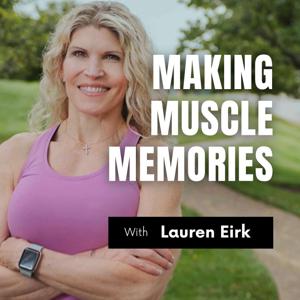
Making Muscle Memories is a biomechanics-driven strength podcast for adults over 50 who feel their bodies changing and want a safe way to stay strong, capable, and independent.
Hosted by…
Instead of chasing intensity, burning calories, or following generic programs, you’ll learn how to:
• Rebuild muscle strength in a way that supports your joints
• Reduce pain by improving how your body functions
• Restore confidence in how your body moves
• Understand why traditional approaches often lead to injury
• Train with structure, purpose, and long-term progression
Each episode blends personal stories, real-life experiences, and practical teaching to help you better understand your body and what it truly needs as you age.
Start your free 7-day Strength Experience here:
https://fisondemand.com
This 7 day series is designed to introduce you to how your body can feel when you train with intention, precision, and joint respect. Experience the kind of progression you will see inside FIS OnDemand, called the 5 Step Isometric Method™, so you can start feeling better right away!