
Sign up to save your podcasts
Or



Send us Fan Mail
I used to leave aerobics class the second we started strength work so I could get back on the StairMaster. Now I’m 57, and I can make one slow crunch more challenging than the dozens I used to rush through. It took me years to figure out where to put my effort.
I used to think the best workouts left me sweaty, sore, and completely spent. I’d do cardio before aerobics class, then sneak back to the StairMaster as soon as the instructor started strength work. When I got into yoga, I brought that same mindset with me. I practiced falling out of headstands on purpose and figured I’d move past the basic poses as soon as I could.
In this episode of Making Muscle Memories, I share what made me rethink all of that. I talk about the moment in plow pose that changed how I approached yoga, why I’m still learning from downward dog after decades of practice, and what Pilates taught me about breathing and control during a single crunch.
If you’ve ever finished a workout exhausted and still wondered whether you were getting stronger, this episode will give you a different way to look at the exercises you already know. I’ll leave you with a challenge you can try the next time you sit down in a chair. You might be surprised by what you notice when you give yourself time to pay attention.
Timestamps:
00:00 The workout I used to roll my eyes at
01:34 Why I skipped strength work for the StairMaster
02:54 From hot yoga to chasing headstands
05:09 The plow pose adjustment that changed my training
06:21 Why I came back to the basics
06:56 What downward dog still teaches me at 57
09:54 What Pilates can bring to strength training
12:17 How I relearned a simple crunch
15:43 What happens when you think you’ve mastered the squat
16:30 The slow sit-down challenge
18:08 What can a familiar exercise still teach you?
If you’re ready to build strength in a way that supports your joints, reduces pain, and helps you stay active as you age…
You can explore my full training platform, FIS OnDemand, at www.fisondemand.com and start your 7-Day Free Trial
WHO IS LAUREN EIRK?
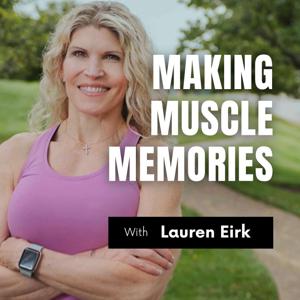
Lauren is a 40-year fitness veteran, MAT-Rx Full-Body Specialist, Certified Yoga Therapist C-IAYT, and Certified Yoga Instructor E-RYT 500. She is the founder of FIS OnDemand™, The 5-Step Isometric Method™, and Fitness Integrated Science. She focuses on joint longevity for adults 50+ through science-backed resistance training to help you pinpoint your weak areas, correct strength imbalances, reduce pain and inflammation, and restore mobility.
*New episodes every week.
If this episode helped you, please share it with someone who needs it.
FOLLOW ME @fitnessintegratedscience:
YouTube
Instagram
Facebook
TikTok
LinkedIn
Website
Send us Fan Mail
You’re exercising regularly, but how can you tell if you’re actually getting stronger? Maybe you can get up off the floor with less effort, carry the groceries in one trip, or control a weight that used to feel shaky. Those are the kinds of changes I want you to notice.
In this episode of Making Muscle Memories, I share how my years of overexercising shaped the way I think about doing “enough.” We’ll talk about what makes a workout effective for your goals, what to pay attention to when you repeat an exercise, and how to adjust one thing at a time when your body or your priorities change.
I’ll also share why I taught the same 12 exercises for a year and how small changes in the way we did them kept the workouts interesting. If you’re over 50 and trying to build strength around a busy schedule or an old injury, you’ll come away with a few ways to spot progress in the workouts you already do.
Timestamps:
00:00 Are You Doing Enough?
02:33 My Years of Overexercising
04:16 Does a 15-Minute Workout Count?
07:39 What Makes a Workout Effective?
11:08 Can You Recover From Your Workout?
13:42 When It Pays to Repeat a Workout
13:48 How to Tell You’re Getting Stronger
25:59 When It’s Time to Change Your Routine
27:04 How to Keep Going When Your Body Changes
If you’re ready to build strength in a way that supports your joints, reduces pain, and helps you stay active as you age…
You can explore my full training platform, FIS OnDemand, at www.fisondemand.com and start your 7-Day Free Trial
WHO IS LAUREN EIRK?
Lauren is a 40-year fitness veteran, MAT-Rx Full-Body Specialist, Certified Yoga Therapist C-IAYT, and Certified Yoga Instructor E-RYT 500. She is the founder of FIS OnDemand™, The 5-Step Isometric Method™, and Fitness Integrated Science. She focuses on joint longevity for adults 50+ through science-backed resistance training to help you pinpoint your weak areas, correct strength imbalances, reduce pain and inflammation, and restore mobility.
*New episodes every week.
If this episode helped you, please share it with someone who needs it.
FOLLOW ME @fitnessintegratedscience:
YouTube
Instagram
Facebook
TikTok
LinkedIn
Website
Send us Fan Mail
“I used to be stronger.” For men over 50, changes in strength, energy, and recovery can feel personal, but there is still room to grow.
Drawing on 41 years in fitness and one client’s struggle to keep up with his younger self, Lauren explores changing training needs and three principles: controlled range of motion, deliberate muscular force, and stability.
The episode closes with a reflection on Romans 12:2 and building strength for the life ahead.
What do you want to stay strong enough to do?
Timestamps:
00:00 Men over 50: What are you training for?
01:59 A client’s struggle to keep up
04:36 Muscle changes and consistent resistance training
06:03 Testosterone: A conversation with your doctor
07:32 Why your training needs can change
09:43 Are golf and yard work enough?
11:50 Principle 1: Train within the range you can control
13:08 Principle 2: Produce deliberate muscular force
19:14 Principle 3: Create stability while you move
19:39 Romans 12:2: Strength for the life ahead
21:18 Muscle Memory Minute: Your age is information
Resource:
Griffen, C., Duncan, M., Hattersley, J., Weickert, M. O., Dallaway, A., & Renshaw, D. (2022). Effects of resistance exercise and whey protein supplementation on skeletal muscle strength, mass, physical function, and hormonal and inflammatory biomarkers in healthy active older men: a randomised, double-blind, placebo-controlled trial. Experimental gerontology, 158, 111651. https://doi.org/10.1016/j.exger.2021.111651
If you’re ready to build strength in a way that supports your joints, reduces pain, and helps you stay active as you age…
You can explore my full training platform, FIS OnDemand, at www.fisondemand.com and start your 7-Day Free Trial
WHO IS LAUREN EIRK?
Lauren is a 40-year fitness veteran, MAT-Rx Full-Body Specialist, Certified Yoga Therapist C-IAYT, and Certified Yoga Instructor E-RYT 500. She is the founder of FIS OnDemand™, The 5-Step Isometric Method™, and Fitness Integrated Science. She focuses on joint longevity for adults 50+ through science-backed resistance training to help you pinpoint your weak areas, correct strength imbalances, reduce pain and inflammation, and restore mobility.
*New episodes every week.
If this episode helped you, please share it with someone who needs it.
FOLLOW ME @fitnessintegratedscience:
YouTube
Instagram
Facebook
TikTok
LinkedIn
Website
Send us Fan Mail
Menopause is real. But does it mean you’re powerless over what comes next?
A conversation in a locker room decades ago left me with a frightening prediction: enjoy your body now, because menopause will change everything.
If you’ve heard something similar—or started wondering, “Is this really my future?”—this episode is for you.
Drawing on my own experience and 40 years in the fitness industry, I explore menopause, muscle maintenance, and the way we train as our bodies change. I share three practical strength-training principles, discuss why your daily activity matters, and offer a faith-based reflection on replacing fear with a more hopeful approach to caring for yourself.
You don’t have to have everything figured out to begin building confidence in your body again.
If this episode encourages you, share it with someone who needs a more hopeful conversation about menopause.
Resource:
Greendale, G. A., Sternfeld, B., Huang, M., Han, W., Karvonen-Gutierrez, C., Ruppert, K., Cauley, J. A., Finkelstein, J. S., Jiang, S. F., & Karlamangla, A. S. (2019). Changes in body composition and weight during the menopause transition. JCI insight, 4(5), e124865. https://doi.org/10.1172/jci.insight.124865
Timestamps:
00:00 Menopause is real—but are you powerless?
01:58 The locker room conversation I never forgot
06:12 Muscle loss, aging, and why strength training matters
07:35 Is your metabolism really slowing down?
09:39 Daily activity: What has changed over the years?
11:13 Why your training may need to change
12:48 Principle 1: Train and own your available range
15:46 Principle 2: Produce force, don’t just count reps
18:47 Principle 3: Make your setup match your goal
20:47 Renewing your mind: A reflection on Romans 12:2
23:34 What can you change starting today?
If you’re ready to build strength in a way that supports your joints, reduces pain, and helps you stay active as you age…
You can explore my full training platform, FIS OnDemand, at www.fisondemand.com and start your 7-Day Free Trial
WHO IS LAUREN EIRK?
Lauren is a 40-year fitness veteran, MAT-Rx Full-Body Specialist, Certified Yoga Therapist C-IAYT, and Certified Yoga Instructor E-RYT 500. She is the founder of FIS OnDemand™, The 5-Step Isometric Method™, and Fitness Integrated Science. She focuses on joint longevity for adults 50+ through science-backed resistance training to help you pinpoint your weak areas, correct strength imbalances, reduce pain and inflammation, and restore mobility.
*New episodes every week.
If this episode helped you, please share it with someone who needs it.
FOLLOW ME @fitnessintegratedscience:
YouTube
Instagram
Facebook
TikTok
LinkedIn
Website
Send us Fan Mail
You make time for core training, but are your exercises accomplishing what you think they are?
In this episode of Making Muscle Memories, Lauren Eirk shares three essentials for building a stronger core, with practical examples from yoga, Pilates, and resistance training. Discover why getting into a position doesn’t always mean you’re strong there, why control matters, and how resistance changes which muscles you challenge.
Plus, a bonus principle to help you maintain the strength you build throughout your life.
Timestamps:
00:00 Are you training everything you think you are?
00:43 Why core strength deserves your attention
06:22 Essential 1: Learn to activate your muscles
10:41 Essential 2: Develop control through your available range
17:19 Essential 3: Match the resistance to the muscles
23:01 Putting the three essentials together
24:16 Bonus: Maintain what you build
If you’re ready to build strength in a way that supports your joints, reduces pain, and helps you stay active as you age…
You can explore my full training platform, FIS OnDemand, at www.fisondemand.com and start your 7-Day Free Trial
WHO IS LAUREN EIRK?
Lauren is a 40-year fitness veteran, MAT-Rx Full-Body Specialist, Certified Yoga Therapist C-IAYT, and Certified Yoga Instructor E-RYT 500. She is the founder of FIS OnDemand™, The 5-Step Isometric Method™, and Fitness Integrated Science. She focuses on joint longevity for adults 50+ through science-backed resistance training to help you pinpoint your weak areas, correct strength imbalances, reduce pain and inflammation, and restore mobility.
*New episodes every week.
If this episode helped you, please share it with someone who needs it.
FOLLOW ME @fitnessintegratedscience:
YouTube
Instagram
Facebook
TikTok
LinkedIn
Website
Send us Fan Mail
You feel better after an injury. But what happens next?
ABOUT THIS EPISODE:
You finished physical therapy. The pain has eased. You’re ready to get back to the activities you love. But there’s a part of injury recovery that nobody seems to prepare you for.
In this episode of Making Muscle Memories, I share the story of a young volleyball player after knee surgery, along with lessons from my own injuries. We’ll explore why feeling better may not tell the whole story—and what it means to care for your muscles long after an injury.
Timestamps:
00:00 Introduction
00:51 Helping clients maintain their muscles
01:53 A volleyball player’s experience after knee surgery
05:03 A lesson from my dad
09:07 Why our bodies need maintenance, too
15:14 Lessons from my own injuries
18:06 Integration: how muscles work together
22:27 Encouragement to keep going
24:11 Muscle Maintenance
If you’re ready to build strength in a way that supports your joints, reduces pain, and helps you stay active as you age…
You can explore my full training platform, FIS OnDemand, at www.fisondemand.com and start your 7-Day Free Trial
WHO IS LAUREN EIRK?
Lauren is a 40-year fitness veteran, MAT-Rx Full-Body Specialist, Certified Yoga Therapist C-IAYT, and Certified Yoga Instructor E-RYT 500. She is the founder of FIS OnDemand™, The 5-Step Isometric Method™, and Fitness Integrated Science. She focuses on joint longevity for adults 50+ through science-backed resistance training to help you pinpoint your weak areas, correct strength imbalances, reduce pain and inflammation, and restore mobility.
*New episodes every week.
If this episode helped you, please share it with someone who needs it.
FOLLOW ME @fitnessintegratedscience:
YouTube
Instagram
Facebook
TikTok
LinkedIn
Website
Send us Fan Mail
Who decided that's an "old person" exercise?
Have you ever looked at a chair exercise, a shorter range of motion, or a lighter weight and thought, “I’m not old enough to need that”?
I used to judge exercises by how they looked, too. After years of working with people through injuries—and getting older myself—I see them differently. A chair can give you the support to challenge a muscle more precisely. Slowing down can reveal where you need more control. Adjusting an exercise can help you keep training consistently.
The question isn’t whether an exercise looks impressive. It’s whether it helps your muscles meet the challenge you need today.
In the final episode of my Exercise Rules to Break After 50 series, I’m sharing why we need to retire the “old people exercise” label—and what to focus on if you want to keep exercising for life.
What exercise have you dismissed because of how it looked? Tell me in the comments. 👇
Timestamps:
00:00Introduction: The fifth exercise rule to throw out
00:57A quick recap of the series
01:31Why aging changes how we see exercise
05:49Does an exercise have to look intense to work?
06:14How our training goals change with age
07:25Why I used to judge modifications
10:32Aging is a privilege: what Edward taught me
12:13What a chair, a prop, or a smaller range can do
13:24Better rules: consistency, control, and curiosity
15:04You don’t have to prove you’re young
15:56Exercise for life and closing thoughts
If you’re ready to build strength in a way that supports your joints, reduces pain, and helps you stay active as you age…
You can explore my full training platform, FIS OnDemand, at www.fisondemand.com and start your 7-Day Free Trial
WHO IS LAUREN EIRK?
Lauren is a 40-year fitness veteran, MAT-Rx Full-Body Specialist, Certified Yoga Therapist C-IAYT, and Certified Yoga Instructor E-RYT 500. She is the founder of FIS OnDemand™, The 5-Step Isometric Method™, and Fitness Integrated Science. She focuses on joint longevity for adults 50+ through science-backed resistance training to help you pinpoint your weak areas, correct strength imbalances, reduce pain and inflammation, and restore mobility.
*New episodes every week.
If this episode helped you, please share it with someone who needs it.
FOLLOW ME @fitnessintegratedscience:
YouTube
Instagram
Facebook
TikTok
LinkedIn
Website
Send us Fan Mail
Modifying an exercise doesn’t mean you’re a beginner. It means you’re paying attention.
ABOUT THIS VIDEO:
Somewhere along the way, we were taught that the hardest version of an exercise is always the best—and that modifying means we aren’t strong enough.
That simply isn’t true.
Reducing your range of motion, changing a joint angle, using support, slowing down, holding an isometric, or separating a complex exercise into smaller parts can help you:
• Improve muscular control
• Strengthen weak links
• Reduce unnecessary joint stress
• Get more from the exercise
• Continue progressing without forcing your body
A modification isn’t automatically easier—and it certainly isn’t inferior. It is a strategic way to make an exercise fit your body, your goal, and what you need that day.
You are allowed to modify for the rest of your life. That isn’t beginner thinking. That is intelligent training.
Listen to Rule #4 of my Five Exercise Rules to Break After 50 series on Making Muscle Memories.
What exercise have you learned to modify for your body?
Timestamps:
00:00 Introduction: Modifications Are Only for Beginners
01:38 Why Modifications Are Misunderstood
02:08 The Experience That Changed My View
04:44 Modification #1: Change Your Range of Motion
07:11 Modification #2: Change the Joint Angle
08:54 Modification #3: Use External Support
10:19 Modification #4: Slow the Exercise Down
11:42 Modification #5: Use Isometrics in the workout
13:59 Modification #6: Strengthen Your Weak Links
16:08 What Smart Modifications Can Include
17:46 You Are Allowed to Modify for Life
18:45 Final Thoughts
If you’re ready to build strength in a way that supports your joints, reduces pain, and helps you stay active as you age…
You can explore my full training platform, FIS OnDemand, at www.fisondemand.com and start your 7-Day Free Trial
WHO IS LAUREN EIRK?
Lauren is a 40-year fitness veteran, MAT-Rx Full-Body Specialist, Certified Yoga Therapist C-IAYT, and Certified Yoga Instructor E-RYT 500. She is the founder of FIS OnDemand™, The 5-Step Isometric Method™, and Fitness Integrated Science. She focuses on joint longevity for adults 50+ through science-backed resistance training to help you pinpoint your weak areas, correct strength imbalances, reduce pain and inflammation, and restore mobility.
*New episodes every week.
If this episode helped you, please share it with someone who needs it.
FOLLOW ME @fitnessintegratedscience:
YouTube
Instagram
Facebook
TikTok
LinkedIn
Website
Send us Fan Mail
If you finish a workout feeling good instead of exhausted, did it count?
ABOUT THIS VIDEO:
For years, I struggled with that question. After injuries and knee surgeries forced me to slow down, a focused yoga, Pilates, or isometric session often felt like it wasn’t “enough.” Yet slowing down helped me notice where I lacked strength and control.
In Rule #3 of my Exercise Rules to Break After 50 series, I’m challenging the idea that a workout must leave you sweaty, sore, or depleted to be worthwhile. We’ll talk about what a 15-minute isometric session can teach you, why soreness isn’t a scorecard, and how to choose a useful challenge for the body you have today.
Listen to the new episode of Making Muscle Memories. What makes a workout feel like it “counts” to you?
#StrengthTrainingOver50 #MuscleHealth #IsometricExercise #ExerciseAfter50 #MakingMuscleMemories
If you’re ready to build strength in a way that supports your joints, reduces pain, and helps you stay active as you age…
You can explore my full training platform, FIS OnDemand, at www.fisondemand.com and start your 7-Day Free Trial
WHO IS LAUREN EIRK?
Lauren is a 40-year fitness veteran, MAT-Rx Full-Body Specialist, Certified Yoga Therapist C-IAYT, and Certified Yoga Instructor E-RYT 500. She is the founder of FIS OnDemand™, The 5-Step Isometric Method™, and Fitness Integrated Science. She focuses on joint longevity for adults 50+ through science-backed resistance training to help you pinpoint your weak areas, correct strength imbalances, reduce pain and inflammation, and restore mobility.
*New episodes every week.
If this episode helped you, please share it with someone who needs it.
FOLLOW ME @fitnessintegratedscience:
YouTube
Instagram
Facebook
TikTok
LinkedIn
Website
Send us Fan Mail
You don't have to keep up to get stronger.
After 50, one of the most important exercise rules you can break is the belief that you need to keep pace--with an instructor, a workout video, the person next to you, or even the person you used to be.
In Rule #2 of my five-part Exercise Rules You’re Allowed to Break After 50 series, we're talking about what happens when “keeping up” becomes more important than muscular control.
Your muscles don't know how much weight someone else is lifting or how many repetitions they're completing. They respond to the challenge placed on your body.
When pace becomes the goal, we may begin borrowing momentum, sacrificing range of motion, shortening recovery, compensating, or even ignoring pain just to finish the workout.
In this episode of Making Muscle Memories, I'll show you why slowing down isn't necessarily going backward—and why learning to “keep up with yourself” may be one of the smartest things you can do if you want to stay strong and active for life.
Timestamps:
00:00 – Introduction
00:57 – Why your muscles don't care who's beside you
02:38 – The problem with trying to keep pace
03:33 – Do you really need the same reps as everyone else?
03:54– The range-of-motion comparison trap
04:32 – Stop comparing how much weight you lift
06:36– What if you need more recovery?
07:32 – Why no two bodies should train exactly alike
10:07 – The advantage of training at your own pace
10:56 – How we “borrow” momentum
11:35 – Pace vs. muscular control
13:37 – When keeping up creates compensation
16:21 – When keeping up makes us ignore pain
16:38 – What my mini-marathon taught me
18:56 – You were not created to be somebody else
20:53 – Keep up with yourself
21:10– A smarter way to train after 50
#StrengthTrainingOver50 #FitnessOver50 #HealthyAging #MuscleHealth #MakingMuscleMemories
If you’re ready to build strength in a way that supports your joints, reduces pain, and helps you stay active as you age…
You can explore my full training platform, FIS OnDemand, at www.fisondemand.com and start your 7-Day Free Trial
WHO IS LAUREN EIRK?
Lauren is a 40-year fitness veteran, MAT-Rx Full-Body Specialist, Certified Yoga Therapist C-IAYT, and Certified Yoga Instructor E-RYT 500. She is the founder of FIS OnDemand™, The 5-Step Isometric Method™, and Fitness Integrated Science. She focuses on joint longevity for adults 50+ through science-backed resistance training to help you pinpoint your weak areas, correct strength imbalances, reduce pain and inflammation, and restore mobility.
*New episodes every week.
If this episode helped you, please share it with someone who needs it.
FOLLOW ME @fitnessintegratedscience:
YouTube
Instagram
Facebook
TikTok
LinkedIn
Website