
Sign up to save your podcasts
Or



Cicada (Tan, 2018) tells the story of a hardworking cicada trapped in a human world. Teachers at one of the participating schools were uncomfortable with some of the implicit themes. In this conversation, we discuss why that should be, and what it says about our fears for the innocence of children.
Professor Jayne, Doctor Quack, and Muttley discuss microbes in general, and Corona virus in particular, have impacted the minds and educational conditions of 4-year-olds.
Reconsidering tiny critters away from anthropomorphic frameworks, and taking seriously their vital contributions to world-making. We discuss the importance of making visible the imperative for adults to unlearn and relearn, taking their lead from children and attuning to the generative potentials that surface when hierarchies (human and non-human) are dismantled.
Thinking with the way women saved and collected leftover bits and pieces and scraps, Schapiro and Myer’s 1977 term “femmage” encompassed decoupage, collage, photomontage and assemblage. Defenders of “slow” early childhood pedagogies (eg. Clark’s “Mosaic” approach 2017, and Tishman’s “Slow Looking”, 2018) have employed collage as visual, participatory research frameworks for listening to young children’s views and experiences, and as a means of enquiry and representation.
From the publisher's feed
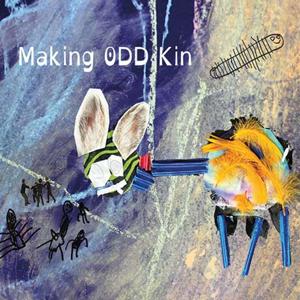
Making Odd Kin is a research and development pilot project that takes a novel approach to re-thinking relationships to the environment by investigating how important multispecies flourishing is to…
The arts-based processes involved in the project recognise the capacities that children have to tell fresh and insightful stories. The project will culminate in the production of a children’s picturebook, created with local children