Global efforts to control malaria are entering a pivotal phase, as scientists and health agencies report both promising advances in vaccination and stubborn setbacks in disease control.
According to the World Health Organization’s World Malaria Report 2024, malaria cases have risen to an estimated 263 million in 2023, up 11 million from 2022, with most infections concentrated in sub‑Saharan Africa and parts of the Asia–Pacific region. WHO warns that climate change, conflict, and fragile health systems are driving transmission, even as new tools such as vaccines become available.
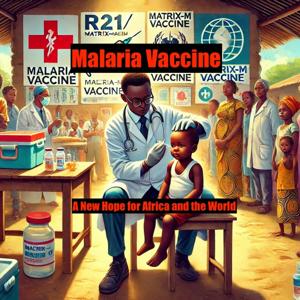
The first malaria vaccine to reach widespread use, RTS,S/AS01 (Mosquirix), is now being rolled out in several African countries through Gavi-supported programs. WHO says early implementation data show substantial reductions in severe malaria and hospitalizations among vaccinated children, confirming earlier trial results. At the same time, a second vaccine, R21/Matrix‑M, is beginning phased introduction after WHO issued a recommendation in 2023, citing comparable efficacy to RTS,S and lower cost, which could ease supply constraints. UNICEF and Gavi report that combined manufacturing plans for the two shots are expected to reach well over 100 million doses per year later this decade, enough to cover all children in the highest-burden areas if funding and delivery systems keep pace.
Recent scientific work continues to fine‑tune vaccine targets. Contagion Live reported in May 2025 on a large computational study that mapped more than 67,000 malaria epitopes to guide next‑generation vaccine design, an approach researchers hope will improve durability of protection and help counter parasite diversity and evolving resistance. Although these candidates remain in early stages, vaccinologists say they could eventually complement RTS,S and R21 or form the basis of multistage vaccines that block both infection and transmission.
Yet new research underlines that vaccines alone will not be enough. A study published in 2025 in the journal Infectious Diseases of Poverty, accessible via PubMed Central, found that access to antimalarial drugs declined in five of six Asia–Pacific countries examined during the COVID‑19 pandemic, even as malaria incidence rose. The authors report that the predominant medicines in use were those with documented resistance, while more effective artemisinin‑based combinations often remained scarce or unaffordable. They argue that strengthening local drug production and increasing health spending are essential to keep pace with rising cases and to preserve gains that vaccines may deliver.
Global health analysts note that integrating the new vaccines into routine child immunization, ensuring a stable supply of effective antimalarial drugs, and maintaining bed nets and vector control will determine whether the world can bend the malaria curve downward after several years of stalled progress.
This content was created in partnership and with the help of Artificial Intelligence AI



 View all episodes
