
Sign up to save your podcasts
Or



Send us a text
Your Instagram-perfect Christian couple is lying to you.
Behind those Sunday smiles and "blessed" captions lies the bloodied reality nobody warns you about: Marriage is God's battlefield where your selfishness goes to die—painfully.
In this episode, we dissect Ephesians 5 like a spiritual autopsy, exposing how modern Christians have neutered Paul's radical vision of marriage.
We confront the uncomfortable truth that most "Christian marriages" are functionally atheistic—operating on the world's terms while slapping Jesus bumper stickers on their dysfunction.
You'll discover:
- Why submission isn't just a wife's duty—it's the explosive foundation that either builds or destroys everything
- How your words as a husband literally create your wife's spiritual reality
- The brutal reason most men can't handle biblical headship (hint: you're not Christ-like enough)
- Why God designed marriage to be 100/100, not the pathetic 50/50 compromise pastors preach from their third marriages If you're tired of cotton-candy marriage conferences that send you home feeling good but changing nothing, this episode will either offend you or transform you.
No middle ground. This isn't relationship advice.
It's spiritual combat training. Come armed.
Send us a text
In this episode of the Manifest podcast, the hosts discuss various life challenges, the importance of overcoming negative thoughts, and the journey of personal transformation through faith. They emphasize the significance of making intentional choices in health and relationships, the role of grace in personal growth, and the need for mindfulness in nutrition. The conversation also touches on the influence of society on behavior and the importance of personal responsibility in living a fulfilling life.
Send us a text
Picture this: A small room in a boarding house in Adams, New York, 1826. The floorboards worn smooth in small patches where knees have pressed against them, day after day, hour after hour. The wallpaper, whatever pattern it once held, now faded from the moisture of a man's desperate breath. It is the breath of Daniel Nash.
Nash is not a man you would notice on the street. Not tall or particularly handsome. Not wealthy or well-dressed. His pastorate had failed. His health was poor. But in that room, on those worn floorboards, Nash is conducting a kind of alchemy that would reshape the spiritual landscape of an entire nation.
You can almost hear him now, can't you? The low moans, the whispered names of townspeople, the occasional sob that might cause the landlady downstairs to glance nervously at the ceiling. Nash isn't putting on a show. There's no audience here except the one he believes matters most.
While the celebrated evangelist Charles Finney prepares his sermons, while church boards arrange the logistics of revival meetings, while newspaper editors set type announcing the coming spiritual campaign, Nash works in obscurity. He arrives in towns weeks before Finney, carrying little more than a notebook filled with names—the town drunkard, the skeptical physician, the bitter shopkeeper, the mocking intellectual.
And one by one, he wrestles for their souls.
Consider for a moment what it would mean to believe in prayer this way. Not as a ritual performed before meals or bedtime. Not as a public performance to impress the congregation. But as the fundamental mechanism by which human need connects with divine provision. Nash understood something that seems almost foreign to our self-sufficient age: human beings are creatures of profound dependency.
We are not, as much as we might protest, self-made. We are not, despite our technological advances, self-sufficient. We are, at our core, beings designed for connection—with each other and with something greater than ourselves.
The great irony of Nash's story is this: while thousands would point to Charles Finney as the architect of their conversion, Finney himself pointed to Nash. "The man who can prevail in prayer," Finney once remarked, "can prevail in all things." When Nash died in 1831—physically spent from his spiritual labors—Finney's ministry never quite recovered. Within months, the great evangelist took a church position in New York City. The revival fires that had swept through the northeastern United States began to dim.
It's strange, isn't it? The man whose name appears in no history textbooks, whose face graces no seminary walls, whose writings fill no volumes in theological libraries—this man may have been the linchpin of America's Second Great Awakening.
What would it look like if we took prayer as seriously as Daniel Nash? If we saw it not as an add-on to our spiritual lives but as the engine that drives everything else? What would happen in our communities, our churches, our homes?
Nash never asked these questions. He was too busy on his knees, wearing smooth those patches of floor in rented rooms across New York and New England, calling down heaven one name at a time.
In a world obsessed with platforms and influence, with metrics and visibility, Daniel Nash stands as a quiet rebuke. His legacy whispers a truth we are often too busy to hear: sometimes the most powerful acts are the ones no one sees.
Listen to our full exploration of Daniel Nash's extraordinary prayer ministry in our latest podcast episode. We trace the human need for connection, the transformative power of prayer, Nash's remarkable partnership with Charles Finney, and the lasting impact of his hidden ministry. Chapters include: The Human Condition and Our Needs (00:00), The Power of Prayer (03:07), The Life o
Send us a text
Let me tell you about the men who count pills instead of blessings on Christmas Eve.
December in Chicago, 1929. The kind of cold that doesn't just bite – it devours. Wind howling between buildings like a hungry beast, searching for stragglers who've lost their way home. Because some don't have homes to lose.
A boarding house clerk fumbles with his keys – room inspections, standard procedure. The routine mechanical until room 14. Pills scattered across the floor like confetti from some grotesque celebration. Old Joe, they called him. Nobody knew his last name. Nobody asked.
"What a way to celebrate your last Christmas," the officer mutters, jotting notes in his pad. "Makes you wonder why we look forward to them, right?"
But there was another man – Frank Holm, a Czechoslovakian with watery eyes and a thick accent – who understood exactly why Joe had chosen Christmas for his exit. Because Christmas, with its forced joy and family gatherings, is the cruelest season for the forgotten.
Twenty years earlier, Frank stood on a platform in his homeland, steam from a locomotive shrouding him as his mother clutched his hand, begging: "Promise me, son, you will never go where you cannot take the Lord Jesus with you."
The promise was easy to make. Impossible to keep.
Frank arrived in Chicago with determination and skill, a mechanic ready to build his fortune. Instead, he met Hank – a man who taught him that America wasn't about working hard but about "easing off" and "unwinding." First it was drinks after work. Then during work. Then instead of work.
One Thanksgiving, Frank visits his cousins – hardworking immigrants who'd built a life while he'd dismantled his. They owned their home. A piece of the American dream. Frank owned nothing but the stink of failure and the weight of a broken promise.
He leaves abruptly, the smell of their roasted turkey and clean linens following him like an accusation.
Back in his filthy rented room, Frank decides to follow Old Joe's path. Drink until the darkness takes him. No more struggling. No more disappointment.
But Christmas Eve brings an unexpected sound – carols floating through his window from mission workers on the street below.
"Who are those people?" Frank asks another derelict they call Norski.
"Christians. From the mission. They do programs."
Programs. Church. Warmth.
Inside the mission building, it's clean and filled with music that feels almost obscene against their desperate lives. The director announces "a gift that can give you a brand new start."
A new start. The words echo in Frank's hollowed-out soul as he returns to his boarding house. Could anyone really start over after wasting twenty years?
Christmas morning arrives with Frank postponing his suicide just long enough to hear about this gift. Just long enough for one more free meal.
"Because of Jesus," the mission director explains to the room of forgotten men, "we're offered freedom from sin and a chance to start over. No matter who you are or what you've done."
A woman approaches, inviting Christians to kneel and pray. Frank, desperate to belong, agrees. But as his knees hit the floor, twenty years of failure come crashing down. The weight of a forgotten promise. The knowledge that he's been running toward death when life had been offered all along.
Frank weeps. Confesses. Believes. Beside him, Norski does the same, though he protests: "It's too late for me."
"You don't know what I've done," Norski whispers.
"It doesn't matter," Frank tells him. "He said we all qualify for the free gift."
They walked out into the cold Chicago streets differently than they entered – still homeless, still poor, but carrying something no one could take away. Hope.
Years later, Frank would stand be
Send us a text
There's a particular sound a pistol makes when fired into the air above an open grave. It doesn't echo like you might expect. It disappears, swallowed by grief and blue sky, as if even sound knows better than to linger at such moments.
David Spurgeon had heard this sound forty-one times.
Forty-one friends. Forty-one funerals. The motorcycle brotherhood's ritual remained unchanged each time: pistols raised skyward, voices raw with emotion declaring, "God forgives. We don't."
The irony wasn't lost on him, not really, but irony makes poor company when you're burying your third friend in as many months.
In the quiet moments between the roar of his Harley and the numbing embrace of cocaine, Spurgeon sometimes wondered about Ralph. It had been nearly a decade since the night an assassin's bullets tore through his friend instead of him. The quiet horror of realizing those rounds were meant for the club's vice president – for David himself.
Ralph had left behind a wife. Two little girls with eyes that would search crowds for a father who chose the brotherhood over bedtime stories. Eyes that would eventually stop searching.
Time doesn't heal all wounds. Sometimes it just teaches you to carry them better.
By 1990, Spurgeon had mastered the art of wounded living, his veins humming with chemical courage, his home an arsenal that would make militias envious. When police kicked in his door that October morning, they weren't even looking for him – just the landlord's son. But fate has its own warped sense of timing.
There's a particular light in prison cells that strips everything down to its essence. Not bright enough to illuminate, just enough to cast shadows that follow you into sleep. In solitary confinement, labeled a "menace to society," Spurgeon found himself surrounded by shadows of his own making.
The prison preacher appeared like an apparition amid the institutional gray, voice steady as he spoke of judgment, of fire, of wailing and gnashing of teeth. Words that should have bounced off the hardened biker instead sank like stones into still water.
November 30th dawned like any other day behind bars, until Spurgeon realized what day it was – exactly ten years since Ralph's murder. Ten years since death had mistaken its appointment.
The Bible they'd given him felt foreign in his calloused hands as he knelt on the concrete floor. No witnesses except whatever angels hover over the most unlikely of prayers. No soundtrack except the mechanical breath of the prison's ventilation system and the whispered confession of a man who had run out of road.
In that moment, something ancient and patient reached through time and touched the motorcycle club's vice president. Not with the vengeful backhand of justice, but with the inexplicable mercy that waits at the end of every prodigal journey home.
Seventy church members filled the federal courtroom when Spurgeon returned for sentencing. Not fellow bikers with leather vests and thousand-yard stares, but ordinary people with extraordinary hope. The judge, bewildered by the transformation before him, departed from mandatory sentencing guidelines with words that would change everything:
"Mr. Spurgeon, I believe you have a message that people need to hear. I sentence you to tell others how you got off liquor, drugs, and out of the gang lifestyle."
The federal court had effectively sentenced him to preach the gospel.
The pistols that once fired over graves now lay silent. The voice that once commanded respect through fear now speaks life into broken places. The man who counted forty-one dead friends now counts souls reconciled to their Creator.
There's a particular sound redemption makes when it enters a life. It doesn't arrive with trumpets and ceremony. It whispers like keys turning in
Send us a text
You think you know betrayal? Try watching your ministry partner sell you out for pocket change.
In this raw conversation with Dylan (Adam—Biblical Man’s oldest son) , we rip open the comfortable lies Christians tell themselves about trust, holiness, and God's brutal sovereignty.
Forget your fluffy Jesus. The real Christ weeps with compassion but doesn't need your permission to exist. He'll let your dreams die if it serves His glory.
We expose the Judas archetype hiding in every congregation—sometimes in your own mirror. That Bible school friend who stabbed you in the back? That pastor who fell from grace? They're not anomalies. They're warnings.
Dylan's journey through Christian communities reveals an uncomfortable truth: God works through broken vessels while letting others shatter. And He doesn't owe you an explanation.
Your suffering isn't random. Your confusion isn't pointless. But make no mistake—you're not the main character in this story. He is.
This episode isn't for Christians who want to be coddled. It's for believers ready to face the God who is both loving Father and consuming fire.
Are you brave enough to meet Him?
The Biblical Man is a reader-supported publication. To receive new posts and support my work, consider becoming a free or paid subscriber.
Send us a text
“For God hath not given us the spirit of fear; but of power, and of love, and of a sound mind." - 2 Timothy 1:7
🎙️ The Call We Couldn't Ignore
Brothers and sisters in Christ,
There's something powerful about two men sitting down with microphones and letting God lead the conversation. That's exactly what happened when Brandon and I launched the Manifest Podcast.
We didn't start this because we're experts. We started because we're seekers.
🔥 Raw and Unfiltered: Episode 5 Breakdown
In our latest episode, we pulled back the curtain on everything:
- Why we really started this podcast (hint: it wasn't our idea)
- The controversies rocking our community (and why we're not afraid to address them)
- How two regular guys ended up behind microphones
- What's coming next (including some guests that will challenge everything you think you know)
🤔 Three Hard Truths We Learned
1. The Technical Truth
- Recording isn't the hard part
- Getting the message right is
- God's timing is perfect, even when our audio isn't
2. The Community Truth
- You're not alone in your struggles
- Your story matters more than you think
- The church needs real conversations now more than ever
3. The Biblical Truth
- Sound doctrine doesn't mean safe doctrine
- Controversy comes with conviction
- Truth speaks louder than tradition
📖 What's Really Happening Here
This isn't just another Christian podcast. It's a movement of authenticity in a world of fake faith. We're seeing:
- Men stepping up to lead their families
- Communities having hard conversations
- Biblical truth cutting through cultural noise
🎯 Action Steps for Our Listeners
1. Listen to Episode 5 - Get the full story and join the conversation
2. Share Your Story - Comment below with your thoughts
3. Join Our Community- Subscribe for weekly updates and behind-the-scenes content
🙏 The Prayer Behind The Production
"Lord, use these microphones for Your glory. Let every word point to Your truth. Amen."
🔮 What's Coming Next
- Guest interviews with controversial truth-tellers
- Deep dives into biblical masculinity
- Real stories from real believers
- Community Q&A sessions
Your Turn: What topics do you want us to cover? What questions keep you up at night? Drop them in the comments below.
The Biblical Man is a reader-supported publication. To receive new posts and support my work, consider becoming a free or paid subscriber.
Adam and Brandon are the hosts of the Manifest Podcast, where they tackle tough topics with biblical truth and raw authenticity. New episodes drop weekly.
Send us a text
I was hauling garbage at 4 AM when God showed me why He passes some people by. It wasn't pretty, but neither is truth.
Let me be blunt: Jesus never called a lazy man.
The Pattern That'll Shake Your Theology
Look at who Jesus called:
- Peter and Andrew? Throwing nets when He found them
- Matthew? Working his tax booth
- Paul? Zealously persecuting Christians (wrong direction, but man was he working)
Notice something? Every single one was DOING something when the Master found them.
The Hard Truth Nobody's Preaching
Here's what the comfortable church won't tell you: Jesus isn't scanning the couches for His next disciple.
Think I'm being harsh? Let's look at what Scripture shows us:
"And Jesus, walking by the sea of Galilee, saw two brethren, Simon called Peter, and Andrew his brother, casting a net into the sea: for they were fishers." - Matthew 4:18 KJV
They weren't "finding themselves." They weren't "waiting for their calling."
They were working.
Why God Passes Some People By
Listen close, because this might sting:
God's hand isn't shortened that He cannot save. His training program isn't full. His power isn't limited.
The problem? It's us.
Some folks want the crown without the cross. The calling without the commitment. The platform without the preparation.
Raw Truth From a Garbage Man's Heart
Every morning at 4 AM, when I'm lifting those bins, I'm reminded: God's looking for people who are already moving.
He's not looking for:
- Professional conference attendees
- Prophecy collectors
- Spiritual tourists
He's looking for workers. Doers. People with spiritual calluses on their hands.
The Selection Process You Never Knew About
Here's what my pastor revealed that shook me:
God immediately identifies who He can work with and who He can't. Not because He's limited, but because He's wise.
Think about it:
- Some have the makeup for discipleship
- Others are in infant stage but show potential
- And some? He won't even call because He sees it's not there
Your Wake-Up Call
Stop waiting for a burning bush while you're binge-watching Netflix.
Stop praying for a ministry while your Bible collects dust.
Stop asking for a calling while you're calling in sick to life.
The Question That Changes Everything
What are you doing RIGHT NOW that shows God you're ready for more?
Not what you plan to do.
Not what you want to do.
What are you DOING?
Because here's the brutal truth: Jesus is still walking by seas, still looking for disciples, still calling workers into His harvest.
But He's passing by the lazy.
And maybe - just maybe - that's why He's passed by you.
The Biblical Man is a reader-supported publication. To receive new posts and support my work, consider becoming a free or paid subscriber.
Send us a text
The wildest Christian grift of 2025 just imploded.
Meet "Patriarchy Hannah":
• Trad wife influencer
• Mother of 14
• Living debt-free
• Custom-built farmhouse
• Perfect submission
Except NONE of it was real.
Not the kids.
Not the house.
Not even "Hannah."
In this deep dive:
• The real identity (37-year-old single woman)
• How she fooled the "Theo Bros"
• Stolen photos & fake receipts
• The Arkansas paper trail
• Why "discernment bros" got played
PLUS: What this reveals about:
• Online Christian grifting
• False prophets in designer suits
• Why we're so desperate for heroes
• The REAL war on biblical womanhood
🎧 LISTEN NOW
Send us a text
Before you read this - we're just two guys. Coming off 12-hour shifts, recording in a makeshift studio crammed into a homeschool office. The sound quality sometimes sucks. We stumble over our words. But we're in the arena, throwing punches at darkness while others hide in their pews.
You think you're protected.
Wrapped in your comfortable faith like bubble wrap.
Armed with your memorized verses like magic spells.
How painfully naive.
Let me tell you what real spiritual warfare looks like:
It's my brother choking on his own vomit at 3AM, demon-twisted PTSD turning his mind into a slaughterhouse.
No amount of "Jesus loves you" stops that kind of bleeding.
Your pastor never warned you about this part, did he? The part where darkness doesn't just whisper - it rips through your skull and nests in your brain like a parasite.
Because that would scare the tithe right out of your wallet.
Here's what they sold you instead:
- Prayer warriors (who've never seen battle)
- Spiritual armor (made of cotton candy faith)
- Divine protection (that breaks on first contact)
Meanwhile Hell's laughing so hard it's raining brimstone.
We're not perfect. Not even close.
But we're done pretending.
Done playing church.
Done watching people die in designer faith.
You want to know what real spiritual armor looks like?
It's not your Sunday best.
It's not your cross necklace.
It's not your WWJD bracelet.
It's scars.
Deep ones.
The kind that only come from losing fights with demons and getting back up anyway.
My brother found that out.
In a parking lot.
In his car.
Purging twenty years of military-grade trauma while something with too many teeth smiled from the mirror.
Your "warfare" is a costume party.
His was an exorcism.
Want to know why your prayers bounce off heaven like rubber bullets?
Because you're:
- Playing church instead of wielding faith
- Singing worship instead of screaming truth
- Posting inspiration instead of fighting principalities
The enemy isn't impressed by your Instagram devotionals.
Demons don't fear your Bible app notifications.
Satan doesn't flinch at your retweets of false prophets.
He's too busy celebrating while you:
- Medicate instead of meditate
- Therapize instead of exorcise
- Comfort instead of confront
You're not wearing armor.
You're wearing a spiritual snuggie.
Brandon and I learned this the hard way:
Real protection costs blood.
Real faith leaves marks.
Real warfare brings scars.
But keep playing dress-up with your Pinterest Christianity.
Keep pretending your "covering" means something.
Keep thinking your sugar-coated songs scare anything in Hell.
Just don't be surprised when the real war starts and you're standing there in spiritual lingerie instead of battle armor.
The darkness isn't coming.
It's already here.
Laughing at your preparations.
Mocking your protection.
And your "armor" is made of tissue paper.
We're not experts. Not gurus. Not polished preachers.
Just two guys with callused hands and battle-scarred faith, recording truth between shift work and family life.
The sound might crack. The edits might be rough. But the warfare is real.
Want the raw, unfiltered truth about spiritual warfare? Join us on this week's MANIFEST podcast. Two regular guys, one desperate mission: to strip the makeup off modern Christianity and show you what real battle looks like.
The Biblical Man is a reader-supported publication. To receive new posts and support my work, consider becoming a free or paid subscriber.
From the publisher's feed
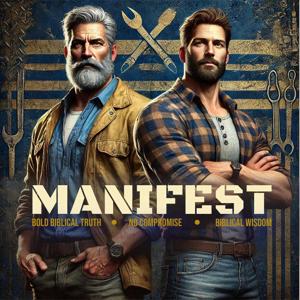
Manifest Podcast: Where Biblical Truth Meets Real Talk
Two ordinary men. One unshakable mission: Expose the lies, challenge the culture, and equip believers for the spiritual war we’re…
No fluff. No compromise. No fear.
We tackle current events, biblical wisdom, and spiritual discipline—delivering hard truths without apology.
In a world drowning in deception, it’s time to manifest the truth.
New episodes every week.
Biblical. Raw. Unfiltered.
Available on all major podcast platforms.
Listen now. Join the fight.
biblicalman.substack.com