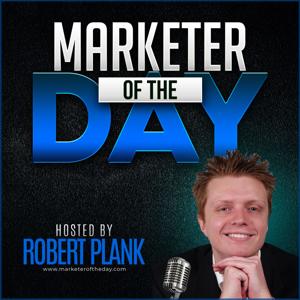
Marketer of the Day with Robert Plank: Business Growth & Entrepreneur Stories

Marketer of the Day with Robert Plank: Business Growth & Entrepreneur Stories

Download on the App Store

Marketer of the Day with Robert Plank: Business Growth & Entrepreneur Stories episodes

  • 1670: Authority Economy, AI Trust and Business Growth with Tracy Repchuk
    In today’s rapidly shifting AI-driven landscape, business owners and coaches are discovering that information alone is no longer enough to stand out. Tracy Repchuk explains how artificial intelligence has turned information into a cheap commodity, wiping out the advantage once held by experts who simply “knew more.” Instead, she introduces the concept of the Authority Economy, where trust, positioning, and credibility have become the true currencies of choice. Rather than trying to shout louder in a noisy marketplace, leaders must intentionally build authority capital that clearly separates them from AI-generated noise and short-term imitators. Tracy shares how decades of navigating technological disruption have shown her that those who adapt and elevate their leadership rise above the chaos. This episode is a roadmap for anyone who feels overshadowed by AI and wants to become the obvious, trusted choice in their niche.
    The Authority Economy Framework that Tracy reveals is built on three core phases: diagnosis, alignment, and signals. First, she helps entrepreneurs identify the hidden authority gaps in their pricing, offers, positioning, and messaging so they stop guessing at what’s broken. Next, she walks through authority alignment across seven critical pillars, ensuring that everything from premium pricing to buyer-fit messaging reinforces a powerful, trust-building narrative. Only then does it make sense to amplify visibility and broadcast authority signals such as results, recognition, media features, and leadership presence. This strategic sequence prevents visibility from simply magnifying what is not working and instead turns it into a multiplier for impact and revenue. Listeners will walk away understanding why random posting, networking, and speaking are not enough without a solid authority infrastructure behind them.
    https://youtu.be/Wm0iBk-XrgA?si=ADOwSiNy1K81xJ-Y
    Tracy also opens up about her personal journey as an introvert who has spent 40 years in business, spoken in 47 countries, and weathered every major technological shift from early PCs to the internet to social media and now AI. She shares how a near-death experience clarified her purpose: to help others fulfill their mission by combining her technical background with marketing and strategic thinking. The conversation highlights why leaders must claim a category-of-one position, let go of being merely “good,” and step fully into visible, confident authority before AI creates endless clones of their expertise. Listeners are encouraged to begin with her Authority Alignment Assessment at AuthorityIndexScore.com to diagnose their own authority leverage gaps and get a customized report on what to fix first. Tracy also discusses her new book, “12 Laws of the Authority Economy,” which lays out the governing principles entrepreneurs can use right now to organize and future-proof their businesses. If you want to transform from overlooked expert to sought-after authority in an AI-saturated world, this episode delivers the insights and next steps to make that shift real.
    Quotes:
    “Artificial intelligence made information abundant; what used to be our greatest asset is now the cheapest commodity in the room.”
    “Visibility and authority are not the same thing; visibility simply magnifies reality, so if your message and positioning are off, getting seen more just exposes what’s not working.”
    “You have to start focusing on authority-building assets, your authority capital, because that’s what makes you the trusted choice in an AI-saturated world.”
    Contact Details:
    Explore Tracy Repchuk’s Authority Economy and Turn Your Expertise Into Lasting Authority
    Ready for Your Next Level? Turn your Expertise Into Lasting Authority, Impact, and Growth
    Discover Your Authority Score: Unlock Your Next Level
    Connect with Tracy on LinkedIn and Elevate Your Authority
    Follow Tracy for Insights that Elevate your Authority and Impact
    Get Fresh Insights to Build your Authority, Influence, and Impact: Follow Tracy on X
    Unlock Powerful Business Insights: Follow the Tracy Repchuk YouTube Channel
    Grow your impact: Get inspired on Tracy Repchuk’s Pinterest
    12 Laws of the Authority Economy on Amazon
    28 min
  • 1669: A Life of Impact and Kidney Transplant Legacy with Dr. David Kountz
    Segregation, poverty, and a complete lack of role models didn’t stop pioneering kidney transplant surgeon Dr. Samuel L. Kountz from transforming modern medicine, and his story is finally being told in depth. In this episode of Marketer of the Day, Dr. David Kountz, M.D. shares insights from his book A Life of Impact, a biography of his father’s journey from rural Arkansas in the segregated South to worldwide recognition as a transplant innovator. Listeners will hear how a childhood incident watching a surgeon repair a friend’s broken leg sparked an “impossible” dream for a young Black boy with no clear path into medicine. The episode explores how Dr. Samuel Kountz navigated racist barriers, built key relationships such as with future Senator William Fulbright, and persisted through under-resourced schooling to eventually enter the University of Arkansas medical school. You’ll learn how his background in chemistry and immunology positioned him perfectly to enter the brand-new field of organ transplantation in the late 1950s and early 1960s. This conversation sets the stage for understanding not just one man’s rise, but how his determination changed what was medically and socially possible.
    The episode dives into Dr. Kountz’s remarkable surgical career, during which he performed over 500 kidney transplants at a time when the procedure was still viewed as highly experimental. Dr. David Kountz explains how his father combined technical excellence with extraordinary bedside manner, earning the trust of patients and families facing terrifying, unproven treatments. Listeners will hear how consent conversations in that era were radically different from today, requiring patients to take a leap of faith on what felt like science fiction, moving organs from one human to another to save a life. The story highlights that while modern audiences may take kidney, heart, and organ transplants for granted, in the 1960s this work was “like landing on the moon.” Beyond the operating room, the episode emphasizes how Dr. Kountz championed teamwork, insisting that transplant success depended on nurses, surgeons, and the entire care team performing in sync. These details give the audience a vivid look into the human, ethical, and emotional dimensions behind a procedure that is now routine but was once controversial and feared.
    https://youtu.be/4bX8oFK7iw0?si=4pZP_r7cTEVIgbhq
    A key highlight of the conversation is the 1976 live kidney transplant on the Today Show, an audacious public education effort that led to roughly 20,000 new organ donors signing up in the weeks after it aired. Dr. David Kountz describes watching that broadcast as a teenager, understanding the enormous risk to his father’s reputation if anything went wrong, and witnessing his calm confidence born of repetition and mastery. The episode explores how this national TV moment helped demystify transplantation for both the public and skeptical physicians, shifting it from fringe experiment to mainstream medicine. Listeners also learn how Dr. David Kountz forged his own path in internal medicine and medical education, intentionally avoiding being a “carbon copy” of his father while still being guided by his example of joy, optimism, and purpose-driven work. He shares powerful life lessons, including his personal mantra of taking work seriously but not taking oneself too seriously, and using humor and levity to ease anxiety for students and patients. By the end, the episode frames A Life of Impact not just as a medical biography, but as a universal blueprint for resilience, focus, and staying committed to your goals despite discrimination, doubt, and seemingly insurmountable obstacles.
    Quotes:
    "He understood he needed to demystify it; to make it a very real kind of event so that people could see transplantation not as science fiction, but as a medical reality that would become more and more common."
    "You should never not be willing to look for help and look for others who can help you achieve your dreams."
    "Anywhere he would go and try to start a new transplant program, you could educate one very smart person who's the surgeon, but you also have to educate that entire team."
    Contact Details:
    Discover a Legacy That Changed Medicine: Explore the Official Website of Dr. David Kountz
    Connect With Dr. David Kountz on LinkedIn for Insights that Inspire Healthier, Stronger Leadership
    Follow Dr. David Kountz on Instagram to Be Inspired; Think Differently; Live Purposefully
    Follow Dr. David Kountz on Facebook to Discover Insights that Inspire Change
    A Life of Impact: A Biography of Samuel L. Kountz, MD on Amazon
    28 min
  • 1668: Rapture Timing, Tribulation and End-Times Clarity with Howard Hunt
    End-times prophecy can be confusing, especially when popular teachings seem to conflict with Scripture and history. In this episode, Howard Hunt, author of “Warning Rapture: The Great Disappearance, An Eventual Problem in Timing,” shares insights from over four decades of intensive study on the rapture and the tribulation. He explains why he believes the widely accepted pre-tribulation rapture view is based more on assumptions, recent history, and financial interests than on clear biblical foundations. Drawing from passages like Daniel 9, Ezekiel 38–39, and 2 Thessalonians 2, he lays out a detailed sequence of prophetic events that challenges conventional thinking. Howard also uncovers the historical roots of rapture theory in the 1830s and how it spread through movements, teaching institutions, and study Bibles. His research raises tough questions about why so many believers expect to be removed from suffering when the apostles themselves endured great hardship. This conversation is designed to help listeners think critically about what they have been taught and return to a deeper, Scripture-first understanding of end-times doctrine.
    Howard walks through the idea that a coming war involving Israel, Russia, and surrounding nations could trigger a peace treaty that marks the start of the seven-year tribulation. He explains how this covenant, linked to the Antichrist, sets prophetic “time” in motion and why the midpoint when the Antichrist stands in the temple and declares himself to be God is so crucial. Listeners hear how Howard differentiates between the general tribulation and the “great tribulation,” connecting it to the true wrath of God described in Revelation. He also discusses why miscalculations about rapture dates have caused real-world damage, from people selling possessions in anticipation of escape to believers becoming disillusioned when predictions fail. Through personal stories from ranching life, time in Israel, and ministry experiences, he illustrates how easily people can follow spiritual trends like sheep led astray. Howard emphasizes that a misguided hope of avoiding hardship could leave many unprepared for deception, persecution, and apostasy. This episode challenges Christians to rethink comfort-driven beliefs and to anchor their expectations in careful, contextual biblical study.
    https://youtu.be/57ZVhwqT4YU?si=7DLaG93uYGUEkv66
    At the heart of Howard’s message is a call to spiritual readiness, genuine faith, and a living relationship with God rather than reliance on sensational timelines. He urges believers to “study to show yourself approved,” describing true worship not just as outward expression but as a lifelong pursuit of knowing God and His Word. The conversation highlights the urgency of preparing hearts, sharing the gospel, and strengthening the kingdom of God within, especially if current global tensions point toward a rapidly approaching prophetic season. Howard also shares how near-death experiences, personal loss, and hardship deepened his dependence on grace and convinced him that God can meet people anywhere, even at their lowest point. He reminds listeners that faith is activated through listening being quiet before God, using our “two ears and one mouth” to hear more than we speak. The episode closes with an encouragement to be ready, watchful, and compassionate toward others as prophetic events unfold. For those wrestling with questions about the rapture, tribulation, and what lies ahead, this discussion offers clarity, challenge, and a powerful invitation to seek truth beyond popular theories.
    Quotes:
    "It's the Bible that says to study to show yourself approved, a workman rightly dividing the word of truth. To worship God is to learn of Him."
    "End-times deception is basically monetary. The rapture teaching went into the Scofield Bible, it went to the universities, and it really brought in the money."
    "I just want to share information that may be beneficial to the brethren and to people who do not know the Lord, because there’s a lot of pre-trib stuff going on all over, and it’s deceptive."
    Contact Details:
    Warning Rapture: The Great Disappearance, An Eventual Problem in Timing on Amazon
    30 min
  • 1667: Data-Driven Podcast Audience Growth with David Ledgerwood
    Podcast downloads alone rarely prove whether a campaign reached the right audience or delivered business value. In this episode of Marketer of the Day, entrepreneur David Ledgerwood of Listen Network Co explains how targeted podcast distribution and audience analytics can help agencies move beyond vanity metrics and demonstrate ROI. Drawing on decades of entrepreneurial experience, Ledgerwood shares how he has built and bootstrapped a portfolio of niche businesses through changing markets and economic downturns. He discusses the value of pattern recognition, patience, and knowing when to refine an idea, or move on. His practical business philosophy centers on keeping cash reserves, limiting debt, and letting complementary ventures support one another. The conversation offers useful perspectives for founders, agency leaders, and marketers seeking sustainable growth.
    Ledgerwood describes Listen Network’s approach to making podcast advertising more measurable by connecting campaigns with human downloads from carefully defined target audiences. With demographic and professional insights such as age, household income, and job titles, agencies can better understand who engaged with a podcast campaign. That data can help teams report on performance, build client confidence, and shape editorial decisions around audience response. He also explains why podcasting’s open RSS ecosystem can make attribution difficult, and why measurement tools can make the channel easier to evaluate alongside other digital marketing. Beyond podcast analytics, Ledgerwood outlines RIGGG’s owned-media strategy, spanning video, podcasts, newsletters, webinars, and community building. His approach emphasizes creating content infrastructure a company controls rather than depending entirely on social platforms, paid media, or third-party PR.
    https://youtu.be/DKiSg8zSoQw?si=Ide4a_Yf0hOfMzSr
    The episode also explores how to manage several ventures without scattering time and attention. Ledgerwood says his partner group uses a shared backlog and Scrum-like prioritization, shifting focus toward the work closest to revenue while accounting for capacity and well-being. He cautions against assuming every available hour will be productive and encourages founders to plan realistically, make deliberate progress, and avoid rushing. Family is central to his perspective: as a father of five, he prioritizes parenting and recommends putting phones away and making time for meaningful conversations with children. His guiding reminder, “Slow is smooth, smooth is fast,” captures the value of preparation, focus, and doing the work carefully. For entrepreneurs interested in podcast ROI, owned media, bootstrapping, sustainable business growth, and work-life balance, this conversation offers practical ideas and hard-earned lessons.
    Quotes:
    "The most important thing isn’t the money, it’s your time. You can only work on one or two things at the same time, so what rises to the top really matters."  
    "I’ve always been passionate about the podcast agency space, but we’ve all been fighting against an open, anonymous protocol. Podcasts don’t play along with traditional marketing data." 
    "If we can get really precise about who your podcast reaches, that becomes statistically representative of how your target audience behaves when presented with your show."
    Contact Details:
    Put Your Podcast in Front of the Right Audience: Visit Listen Network
    Ready to Win Bigger Deals? Build Your Enterprise-Ready Agency Today
    Turn Your Expertise Into Content That Compounds: Start With Riggg
    Discover New Ways to Grow Your Business. Connect with David Ledgerwood on LinkedIn
    Follow David Ledgerwood on Instagram for More Business Insights
    Learn, Think, Grow: Follow David Ledgerwood on X
    32 min
  • 1666: Employee Wellness, Sleep Habits with Cynthia Conigliaro
    Business owners and corporate leaders aren’t just juggling deadlines and revenue goals they’re also battling exhaustion, information overload, and conflicting health advice. Today’s guest, Cynthia Conigliaro, founder of Work Well Webinars, brings over 25 years of experience in health, mental health, and organizational wellness to help professionals finally make sense of it all. With a background in weight loss, social work, and an MBA in organizational development, Cynthia bridges physical, emotional, and workplace well-being in a way that’s practical and sustainable. In this episode of Marketer of the Day, Cynthia breaks down why so many ambitious, health-conscious people still feel confused and frustrated. Between contradictory nutrition headlines, evolving research, and the constant buzz around new wellness trends, it’s easy to feel paralyzed. Cynthia explains how to cut through the noise by using trusted sources, listening to your own body, and partnering with qualified professionals while still taking advantage of the best that AI and modern tools have to offer. 
    A major focus of the conversation is sleep as a non-negotiable pillar of health. Cynthia shares simple but powerful strategies to improve sleep quality, from getting morning light within 15–30 minutes of waking, to building a consistent bedtime routine, to handling those middle-of-the-night wakeups without spiraling into anxiety. She also reframes self-care for busy entrepreneurs and leaders: it’s not indulgence, it’s an operational necessity. When leaders model healthy boundaries like not sending 10 p.m. emails they create cultures where employees are more energized, loyal, and productive. The episode also dives into AI and wellness, emphasizing how tools like ChatGPT can support prevention, self-awareness, and better doctor visits without replacing the human element of care. Cynthia shares how AI can help track habits, organize observations, and reduce fear in the moment, while still keeping medical professionals at the center of diagnosis and treatment. AI becomes a complement, not a substitute, for real-world expertise.
    https://youtu.be/ebgmjPpBiTg?si=pPlZv73fuMkhhoZz
    Finally, Cynthia explores the role of resilience in both life and business. She explains that resilience isn’t something a lucky few are born with; it’s a skill developed through facing stress, setbacks, and even trauma. By recognizing how much we’ve already overcome, we can build confidence to handle what’s next. Her philosophy of “count your rainbows, not your thunderstorms” captures the mindset shift that allows high achievers to pursue big goals without burning out. If you care about longevity, mental fitness, and building a healthier company culture, this episode will give you practical tools and a fresh, encouraging perspective.
    Quotes:
    “No one size fits all. What’s good for someone may not be good for you, so a lot of wellness is really listening to your body and choosing strategies that help you live optimally.”
    “Sleep is a non-negotiable pillar of health. Some people need more, some need less, but we all need to understand why we actually need to sleep.”
    “You really can’t pour from an empty cup. If a leader is exhausted and practicing unhealthy coping styles, it’s not going to set a good example for their employees.”
    Contact Details:
    Bring Wellness to Your Team: Visit Work Well Webinars
    Start Your Wellness Journey: Book Your Wellness Coaching Session with Cynthia
    Ready to Take the Next Step Toward Better Well-Being? Connect With Cynthia on LinkedIn
    Follow Cynthia on Instagram and Book Your Wellness Coaching Session
    27 min
  • 1665: Fandom Marketing to Create Passionate Fans with David Meerman Scott
    Turning customers into raving fans isn’t just for rock bands and blockbuster brands, it's a repeatable business strategy backed by neuroscience. In this episode of Marketer of the Day, David Meerman Scott bestselling author of The New Rules of Marketing and PR, Fanocracy, and the upcoming The Fandom Playbook (late 2026) breaks down how fandom marketing can transform the way you grow your business in an era of AI slop and online chaos. Instead of chasing shallow clicks and fleeting attention, David shows how to build deep, emotional connections with the people you serve. You’ll hear how mirror neurons and our hardwired need for tribe and belonging explain why video, live events, and in‑person gatherings can create “I feel like I know you” relationships at scale even when you’ve never met your audience in real life. David shares practical ways to bring that same energy into your brand, from hosting conferences and meetups to simple client dinners that turn customers into a community. If you’ve ever wondered why fans camp out for product launches, travel across the world for events, or tattoo logos on their bodies, this conversation connects the dots and shows how those same principles apply to your business.
    David also reveals one of the most surprising fandom strategies from his new book: tearing down the wall between your personal and professional life. Through stories like the skateboarding dentist who grew new patients by 33% and revenue by 23% just by sharing his passion online, David illustrates how authentic quirks and hobbies such as surfing, classic cars, Lindy Hop dancing, and more make you memorable and magnetic. Passion is contagious, and when you let people see what you genuinely love, you stop being just another provider and start becoming someone they root for. Another underused play David unpacks is unlocking hidden data inside your organization to create value that fans can’t get anywhere else. You’ll learn how companies like Hagerty Insurance built a massive fandom by freely sharing aggregated classic car values, and how a secure data‑room provider turned anonymized M&A activity into must‑have market intelligence for Wall Street. These examples show how so‑called “boring” data, when opened up and packaged well, can become a powerful fandom engine that attracts, educates, and retains your ideal audience.
    https://youtu.be/89r57MhEuV8?si=IUsMic0G3SU10-LE
    Throughout the episode, David ties these ideas together with a clear promise: in a world dominated by algorithms, automation, and AI‑generated noise, leaning into humanity is the contrarian advantage. The Fandom Playbook: How to Create Passionate Fans in a World of Online Chaos distills his 20+ years of research into nine concrete plays you can start using today, whether you’re a startup founder, consultant, CMO, nonprofit leader, or creator. If you’re ready to escape online chaos, build a real tribe around your work, and make your marketing feel fun again, this episode will give you both the inspiration and the roadmap to start building your own fanocracy.
    Quotes:
    "As I was researching this idea of fandom, this thing came up again and again and again: it's a genuine human connection."
    "If you can build a tribe of like‑minded people in your business, any way that you can have in‑person connections, you are building fans because you're building a tribe."
    "Show us in your business world who you are as a person. What are those things you're passionate about? Because passion is infectious."
    Contact Details:
    Turn Customers Into Fans → Explore David’s Strategies
    Stop Selling. Start Creating Fans. Discover the Fandom Marketing Strategy
    Discover Smarter Ways to Create Fans: Connect with David Meerman Scott on LinkedIn
    Follow David Meerman Scott on Facebook for Fresh Marketing Insights
    Want to Build a Fan-First Brand? Follow David Meerman Scott on X
    The New Rules of Marketing & PR on Amazon
    Fanocracy: Turning Fans into Customers and Customers into Fans on Amazon
    The Fandom Playbook on Amazon
    26 min
  • 1664: Authentic Networking Dinners with Brandie Weaver
    Traditional networking is getting louder, colder, and more automated, and that leaves a lot of business owners feeling disconnected. Instead of forcing small talk over stale coffee, Brandie Weaver of The Listening Table is bringing people back around a real dinner table, where intentional conversation, chef-led meals, and live music create authentic relationships that actually matter. Her traveling supper club attracts Americana music fans, entrepreneurs, and business owners who are tired of transactional networking and ready for genuine community. In this episode, Brandie shares how she turned a decade of producing large-scale music festivals into a high-touch, relationship-driven business model.
    She explains how The Listening Table is carefully curated long before guests ever sit down: researching attendees in advance, placing people at the right tables, and using personalized place cards with funny facts to spark conversation and laughter. Phones are put away, awkwardness is eased, and even the most extroverted attendees feel supported walking into the room. The result is a space where people don’t just exchange business cards, they form friendships, travel to shows together, and collaborate on real projects. Brandie also walks through the business side of creating premium, intimate experiences in an industry with tight margins. Running The Listening Table alongside her experiential marketing agency, she uses per-seat pricing, memberships, and smart negotiation with chefs and artists to make each event sustainable without sacrificing quality. For guests, the ticket isn’t just a fancy night out, it's an immersive experience that would easily cost as much as a high-end concert and dinner, but with deeper connection built in.
    https://youtu.be/XxskL_dPRz4?si=-9NDi9cNdPgdHTZw
    A big focus of the conversation is Brandie’s belief that the smallest details can have the biggest emotional impact. From vintage 1960s Reader’s Digest books hollowed out to reveal branded flasks, to desserts paired with guests’ favorite cocktails, every touchpoint is designed to make people feel seen, valued, and part of something special. As she looks ahead to future dinners in Driftwood and Bentonville and an expanded calendar of events in 2027, Brandie is committed to one simple goal: ensuring that everyone who joins The Listening Table walks out feeling better, more connected, and more human than when they walked in. If you’ve been craving deeper, more meaningful networking in a fast, AI-driven world, this episode offers a powerful blueprint for creating experiences that people never forget.
    Quotes:
    "All I can say is, you just have to come to a dinner and experience it; you'll understand, it's magic."
    "We don’t just go to attend an event to wander around a room, never have anyone speak to us, and walk out feeling more lonely than we did before we arrived."
    "As we disconnect in order to bring us all back together for connection, we just need to be nice to one another and think about these things."
    Contact Details:
    The Table Is Waiting; Come Be Part of the Experience: Visit The Listening Table Today
    Turn Your Vision Into Meaningful Results: Explore Brandie Weaver Official Website
    Connect with Brandie on LinkedIn for Her Latest Insights and Ideas
    Follow Brandie on Facebook for Personal Stories, Honest Insights, and Ideas Worth Sharing
    Follow Brandie on TikTok for Quick Insights on Leadership, Partnerships, and Growth
    Don’t miss Brandie’s Next Insight: Follow Her on Instagram
    22 min
  • 1663: AI Companions, Careers, and Corporate Culture with Josef Stetter
    Business and career success in the age of AI won’t come from using more tools; it will come from using them more humanely and strategically. Today’s guest, Josef Stetter of Cultural Transformation Systems and TEDx speaker behind “Humans, Not Headcounts,” has helped over 12,000 people land jobs they love, with a 90% success rate of getting them employed in under three months using proven systems that blend AI with authentic human storytelling. In this episode of Marketer of the Day, Josef reframes AI not as a task-running “agent” but as a deeply personalized AI companion a system that knows your history, values, style, and accomplishments so well that it can write in your voice, surface forgotten strategies, and even preserve your legacy for your kids long after you’re gone. He shares how his own AI companion has already written successful summit applications, matched his exact tone, and helped him show up more powerfully in his career without losing authenticity.
    Josef also dives into the brutal reality of today’s AI-driven job market, where a single remote posting can attract 20,000 resumes and applicant tracking systems decide who gets seen. He explains why generic AI-written resumes fail, and how to stand out by combining AI with quantified impact stories: not “I answered phones,” but “I handled 60 calls a day across 12 lines,” proving capacity, performance, and value at a glance. He reveals how he reverse-engineered top resume scanners and ATS platforms so clients can hit 95%+ match scores across dozens of systems with just one strategically built resume. Beyond individual careers, Josef tackles the crisis of corporate culture and employee disengagement, where disengaged workers are costing the global economy trillions of dollars in lost productivity. He argues that culture isn’t pizza Fridays; it's what people say when managers leave the room. Josef shows how misaligned values, unclear leadership, and the misuse of AI (every department running its own rogue tools) create compliance risks, burnout, and massive internal conflict. He outlines how organizations can introduce AI responsibly by setting clear guardrails, centralizing standards, and preserving human authority over decisions that truly require empathy, ethics, and lived experience.
    https://youtu.be/IGs9AWImaNk?si=YmMgenluZIU_jwBt
    This conversation is a powerful guide for anyone who wants to use AI to enhance human potential, not erase it. Whether you’re a job seeker trying to break through automated filters, a leader worried about AI chaos inside your company, or a professional who wants an AI “second brain” that actually sounds like you, Josef’s perspective will help you navigate the AI wave with strategy, heart, and integrity. Stay tuned to learn how to build AI companions, design standout resumes, and create workplaces where humans are treated as people not headcounts.
    Quotes:
    “AI can simulate empathy, but it cannot be empathetic. It can say ‘I’m sorry for your loss,’ but it will never feel the pain of an unfinished conversation with someone who’s gone.”
    “It's not about just using AI for marketing tasks; it's about companionship; about having something that knows your stories, your traumas, and how you moved through them so it can help you connect more deeply with other human beings.”
    “I’m not here to tell a company how to run its business; I’m here to tell leadership: if this is the culture you want, own it, and then attract the people who actually thrive in that culture.”
    Contact Details:
    Discover How Cultural Transformation Systems Can Help You Build a Culture That Drives Results
    Ready to Turn Ideas Into Real Growth? Connect With Josef on LinkedIn and Start the Conversation
    Follow Josef on Facebook for Insights that Drive Change
    Follow Josef on Instagram for Powerful Insights that Can Change How you Lead and Grow
    Follow Josef on X for Fresh Insights that Spark Growth and Action
    Learning My Why on Amazon
    Humans, Not Headcounts on YouTube
    37 min
  • 1662: AEC Project Controls and Cash Flow Mastery with Percy Williams
    A technically successful AEC project can still turn into a financial disappointment when profits quietly fade and cash flow stalls. Today’s guest, Marine veteran and senior project controls leader Percy M. Williams has spent over 20 years on the financial front lines of architecture, engineering, and construction projects from sub-$10,000 jobs to $100+ million programs. Drawing on experience with major multidisciplinary firms like Aecom, Percy wrote “The AEC Project Controls Playbook” to help firms safeguard profitability, improve cash flow, and deliver on their promises with integrity. In this episode of Marketer of the Day, Percy breaks down why project controls aren’t just back-office paperwork; they're the guardrails that protect margins, stabilize cash, and prevent “profit fade” and “margin erosion.” He explains how seemingly small deviations from standard procedures, such as starting work without a fully executed contract, can snowball into seven-figure problems, delayed billing, and strained vendor relationships. Cash truly is king in the AEC world, and Percy shows how disciplined controls keep money moving and projects viable.
    Percy also introduces his leadership framework built on character, competence, courage, and communication, with character as the foundation. Drawing from his Marine Corps background, he shares how a personal “code” values, ethics, and principles you refuse to compromise directly shapes project outcomes and financial performance. Technology and AI can help process data, but they cannot replace the human leadership required to influence behavior, honor commitments, and deliver projects within the profit and margin targets originally sold to the client. This conversation dives into lessons learned, common pitfalls, and practical best practices for AEC project managers, project accountants, and controllers. Percy highlights why frontline leaders must be treated as true business partners, empowered to make timely decisions in the best interest of both the project and the organization because by the time issues reach corporate finance, it’s often already damage control. The AEC Project Controls Playbook serves as a desktop reference, giving both new and seasoned professionals a way to regularly revisit fundamental principles, refresh their discipline, and continuously improve.
    https://youtu.be/n1hRh9T1P8I?si=UjJXTNZoep8eUd-w
    If you’re responsible for projects, profitability, or cash flow in AEC or any business that depends on contracts, billing, and delivery this episode offers a clear roadmap to protect margins, strengthen financial resilience, and ensure that what looks good on paper actually holds up in reality.
    Quotes:
    "When I say deliver projects with integrity, I mean if we sold a project at a certain profit and margin, it’s our responsibility to actually deliver within those parameters."
    "You can have a project that looks healthy on paper, but if you don't maintain those project controls disciplines, you will experience profit fade or margin erosion."
    "Character plays a key role in the project manager doing the right thing to deliver not just the services and materials, but also the financial commitments we said we would honor."
    Contact Details:
    Your Path to Financial Wellness Starts Here: Discover PM&JM Financial Services
    Ready to Transform Your Financial Future? Connect with Percy Williams on LinkedIn
    Build a Stronger Financial Future: Follow Percy Williams on Facebook Today
    The AEC Project Controls Playbook on Amazon
    24 min
  • 1661: Christian Trauma Healing and Forgiveness with Kari Dumouchel-Parker
    Pain, loss, and unanswered questions about God can leave people feeling stuck, bitter, and far from hope. Guest author Kari Dumouchel-Parker has walked through decades of both mountaintop beauty and real-life trauma, and she’s turned those experiences into powerful stories designed to help readers heal. Drawing from over 30 years of backpacking in the Smoky Mountains, Kari weaves together physical danger, solitude, and problem-solving on the trail with the emotional and spiritual work required to face heartbreak, abuse, grief, and fear. In this episode, Kari shares how her long-distance hiking adventures, getting lost, crossing dangerous rivers, facing washed-out trails, and pushing through exhaustion became living metaphors for navigating life’s hardest seasons. She talks about the moment she chose to trust God’s sovereignty in the face of real-world danger on the Appalachian Trail, and how that same trust shows up in her characters and stories. These wilderness experiences shape the emotional landscape of her novel Sanctuary, where the main character, Tess, leaves everything familiar in Florida to start over in the West, confront her pain, and rediscover who she is.
    Kari also dives into her core belief that real growth comes through pain. An easy life rarely forces anyone to look inward, but hard events expose our character, our blind spots, and our patterns. She explains the crucial choice we all face after a traumatic or painful event: either get stuck in bitterness and stay emotionally frozen in that moment, or take time to analyze what happened, what we contributed, and what we’re being invited to learn. For Kari, forgiveness is not about excusing the offender or pretending the hurt didn’t matter; it’s about stepping out of the emotional “ring” with that person and handing them over to God, so we can finally move forward with mental and emotional freedom. Her nonfiction book God Reigns introduces readers to who God is, what His attributes reveal about His heart, and the hidden snares that quietly stall spiritual growth. It tackles the everyday battles believers face, the lies that keep people stuck, and the reality that God deeply loves and pursues each person. Sanctuary, by contrast, uses the vehicle of romance and adventure to explore wounds, identity, and the longing for a great love. Tess encounters two very different men and experiences two distinct kinds of love, all while wrestling with grief, past trauma, and the search for purpose. Kari draws from her own loss of her husband, as well as real-life professional experiences that inspired the backstory of the antagonist, to ground the novel in emotional truth.
    https://youtu.be/xd3sMDFUkbY?si=iFSLKPXu3ivsyikU
    Throughout the conversation, Kari emphasizes identity, calling, and the current cultural confusion over who we are. She believes that knowing you are deeply loved by God and understanding something as basic yet profound as truly embracing your identity unlocks the ability to live out your calling with clarity and confidence. Her hope is that Sanctuary and God Reigns will help readers process their pain, release lifelong bitterness, and recognize the quiet ways God has been calling and “wooing” them all along. If you’re wrestling with trauma, spiritual questions, or the fear of starting over, Kari’s stories and insights offer both a challenge and an invitation: you don’t have to stay stuck in the past; you can step into healing, forgiveness, and a new chapter of life with God at the center.
    Quotes:
    “A lot of people don’t want to forgive because they feel like if they forgive, they’re releasing the other person from the bad event. They think they’re punishing the other person, when in fact they’re punishing themselves.”
    “If your life is easy, you don’t have any reason to grow because you don’t have any chance. You think you’re okay; you don’t see that there’s a personality issue that may have led you down the wrong road.”
    “When you forgive, God says they’re My problem; they’re not your problem. You can get out of the ring, go on and live your life, and whatever that person’s situation is, it’s not yours anymore.”
    Contact Details:
    Discover Stories of Hope & Healing: Explore Kari’s Books Today
    Need Hope for Your Next Chapter? Follow Kari on Facebook for Faith, and Inspiration
    Don’t Let Your Past Define Your Future: Follow Kari on Instagram for Faith, Healing, and Hope
    God Reigns on Amazon
    Sanctuary on Amazon

    20 min

About Marketer of the Day with Robert Plank: Business Growth & Entrepreneur Stories

From the publisher's feed

Marketer of the Day with Robert Plank is a daily business podcast for entrepreneurs, solopreneurs, consultants, agency owners, coaches, authors, speakers, and expert-led service businesses that want…