
Sign up to save your podcasts
Or

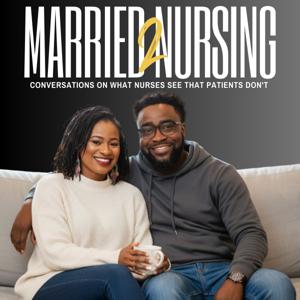


What really happens behind the scenes in a hospital? There are plenty of hospital myths and misconceptions about nurses, doctors, medications, hospital monitors, and patient care that can leave patients and caregivers confused about what is actually happening.
In this episode of Married 2 Nursing, Enna and Armand break down five common hospital myths and explain what patients and families should know about nursing care and hospital safety.
We discuss why nurses don’t simply follow doctor’s orders, what nurses actually do before and after administering medications, whether bigger hospitals really provide better care, why hospital monitors constantly beep, and how hospitals determine which patients need attention first.
In This Episode, We Bust These 5 Hospital Myths:
1. “Nurses only follow doctor’s orders.”2. “Nurses just hand out medications.”
3. “Bigger hospitals always provide better care.”
4. “If the monitor alarms, it’s an emergency.”
5. “The loudest patient gets seen first.”
What Patients and Caregivers Should Know
Understanding how hospitals and nurses actually work can help patients become better advocates for themselves and their loved ones.
You don’t need to be the loudest person in the hospital to get appropriate care. Instead, communicate clearly when something changes, ask questions about your medications and treatment, and tell your healthcare team when something doesn’t feel right.
Because what patients see at the bedside is only one small part of everything happening behind the scenes.
Key Takeaways
* Nurses use clinical judgment and don’t simply follow orders.
* Medication administration involves multiple safety checks.
* A bigger hospital isn’t automatically the best hospital for every patient.
* A monitor alarm doesn’t always mean an emergency.
* Hospital patients are prioritized according to clinical urgency.
* Patients and caregivers play an important role in healthcare safety and advocacy.
🎧 Listen to Married 2 Nursing on Spotify and Apple Podcasts, and watch on YouTube.
If this episode helped you understand what really happens behind the scenes in a hospital, share it with a patient, caregiver, nurse, or family member who needs to hear it.
__________
Stay Connected
Subscribe to the Married 2 Nursing on Spotify, Apple Podcasts, and YouTube.
Follow along on Instagram @married.nursing for behind-the-scrubs content.
Email us at [email protected]
What is healthcare really like outside of the United States?
In Episode 15 of Married 2 Nursing, we take a patient-focused look at the differences between healthcare in the United States and West African countries like Nigeria and Togo.
From access to healthcare and hospital resources to medical costs, nursing care, family involvement, technology, and emergency services, we explore why the patient experience can look so different depending on where you receive care.
As nurses, we’ve seen how much patients and families may not realize about what happens behind the scenes in healthcare. This conversation isn’t about deciding which country has the “better” healthcare system. It’s about understanding the strengths, challenges, resources, and realities that shape healthcare around the world.
In This Episode, We Discuss:
* 🇺🇸 Healthcare in the United States vs. West Africa
* 🏥 Access to hospitals, doctors, specialists, and emergency care
* 💰 The cost of healthcare and how patients pay for medical treatment
* 👩🏾⚕️ Differences in nursing care and healthcare staffing
* 🩺 Medical equipment, technology, medications, and hospital resources
* 👨👩👧 The important role families can play in patient care
* 🚑 Emergency medical services and access to urgent treatment
* 🌍 Why healthcare experiences can vary dramatically within the same country
* ❤️ What patients everywhere have in common
* 💡 What Americans may take for granted about healthcare
* 🌎 What different healthcare systems can learn from one another
The Bigger Conversation
Healthcare is more than hospitals, doctors, and technology. Healthcare systems are shaped by culture, economics, infrastructure, geography, and available resources.
A patient receiving care in the United States may have access to technology and specialists that aren’t readily available in another country. At the same time, patients in other healthcare systems may experience stronger family involvement and community support.
And regardless of where you receive care, patients deserve respect, compassion, communication, advocacy, and safe healthcare.
If you’ve ever wondered what healthcare is like in Nigeria, Togo, or other countries outside the United States—or you’ve received medical care while traveling abroad—this episode is for you.
💬 Join the Conversation
Have you ever received healthcare in another country?
What was the biggest difference you noticed?
Share your experience with us on social media and let us know what healthcare topic you want us to discuss next.
Married 2 Nursing is the podcast where we talk about what nurses see but patients don’t—breaking down healthcare, nursing, and the patient experience in a way everyone can understand.
🎧 Listen on Spotify and Apple Podcasts.▶️ Watch the full episode on YouTube.
Email: [email protected]
**This podcast is for educational and informational purposes only and is not a substitute for professional medical advice.**
Can you refuse medical treatment? Can you ask for another nurse? What if you disagree with your doctor? Do you have the right to request a second opinion?
In this episode of Married 2 Nursing, we’re talking about patient advocacy, patient rights, and how to speak up for yourself or a loved one in healthcare.
Being a patient can feel overwhelming—especially when you’re sick, scared, or unfamiliar with medical terminology. Many patients and caregivers don’t know what questions they’re allowed to ask, what decisions they can make, or how to raise concerns without feeling like they’re being “difficult.”
As nurses, we’re breaking down what it really means to be an advocate in the hospital and healthcare setting.
We’ll discuss how to advocate for yourself as a patient, how family members can advocate for a loved one, and how to communicate effectively with nurses, doctors, and other members of the healthcare team.
In This Episode, We Discuss:
* Can I refuse medical treatment?
* What informed consent means and why it matters
* What happens when a patient refuses medication, testing, or a recommended procedure
* Can I request another nurse?
* When it may be appropriate to ask for a different nurse
* What are my rights as a hospital patient?
* Can you ask questions about your diagnosis and treatment plan?
* What if I disagree with my doctor?
* Can you request a second opinion?
* Can I request another doctor?
* How to respectfully question a medical recommendation
* What to do when you feel like nobody is listening
* How to escalate a concern in the hospital
* How family members and caregivers can advocate without speaking over the patient
* Common mistakes patients make when trying to advocate for themselves
* Practical phrases you can use when talking with your healthcare team
How to Speak Up Without Being “That Patient”
Patient advocacy doesn’t mean being rude, confrontational, or distrustful of your healthcare team.
It means asking questions, understanding your options, communicating your concerns, and participating in decisions about your care.
We’ll share practical ways to say:
“I don’t understand. Can you explain that?”
“What are my options?”
“What are the risks and benefits?”
“Can I have some time to think about this?”
“Can I get a second opinion?”
These simple questions can help patients and caregivers become more confident participants in their healthcare.
For Patients & Caregivers
Whether you’re preparing for a hospital stay, helping an aging parent, supporting a spouse, or simply trying to better understand your healthcare rights, this episode is designed to help you feel more confident speaking up.
Because you don’t have to be a nurse or doctor to be an advocate for yourself.
You just need to know that your voice matters.
🎧 Listen to Married 2 Nursing on Spotify and Apple Podcasts.
▶️ Watch the full episode on YouTube.
If this episode helped you, share it with a patient, caregiver, family member, or friend who needs to hear it.
Disclaimer: This podcast is for educational and informational purposes only and is not a substitute for professional medical, legal, or healthcare advice. Patient rights and healthcare policies can vary depending on the situation and location.
__________
Stay Connected
Subscribe to the Married 2 Nursing on Spotify, Apple Podcasts, and YouTube.
Follow along on Instagram @married.nursing for behind-the-scrubs content.
Email us at [email protected]
Have you ever gone to the emergency room (ER) expecting to be seen quickly, only to find yourself sitting in the waiting room for hours? Or watched someone arrive after you and get called back before you?
You’re not alone—and there’s usually more happening behind the scenes than patients and families can see.
In this episode of Married 2 Nursing, we’re pulling back the curtain on the emergency room process and explaining what patients and caregivers can realistically expect during an ER visit.
We answer some of the most common questions people have about emergency departments, including:
* Why am I waiting so long in the ER?
* Why did someone who came after me get seen first?
* What determines who gets called back?
* How does ER triage work?
* What happens behind those ER doors?
* Does arriving by ambulance mean you’ll be seen immediately?
* Why can the emergency room suddenly become extremely busy?
* What does the triage nurse look for?
* Why are some patients prioritized over others?
* What should patients and caregivers know before going to the ER?
What You’ll Learn
We’ll explain why emergency rooms don’t operate on a first-come, first-served basis and how medical urgency determines which patients are seen first.
You’ll also learn what happens during ER triage, why patients can be reassessed while waiting, and why a long wait doesn’t necessarily mean you’ve been forgotten.
We’ll take you behind the scenes to discuss the many moving parts inside an emergency department—from nurses and physicians to respiratory therapists, radiology, laboratory staff, pharmacists, specialists, and other members of the healthcare team.
Most importantly, we’ll talk about what patients and caregivers can do to make an emergency room visit safer and more productive, including what information to bring, what questions to ask, and when it’s important to speak up if your condition changes.
Disclaimer: This podcast is for educational and informational purposes only and is not a substitute for professional medical advice, diagnosis, or treatment. If you believe you are experiencing a medical emergency, seek emergency medical care.
Follow Married 2 Nursing
Have you ever had an emergency room experience that left you wondering what was really happening behind the scenes?
Share your story or question with us!
🎧 Listen to Married 2 Nursing on Spotify and Apple Podcasts.📺 Watch full episodes on YouTube. - https://www.youtube.com/@Married2Nursing
Married 2 Nursing — What nurses see but patients don’t.
__________
Stay Connected
Subscribe to the Married 2 Nursing on Spotify, Apple Podcasts, and YouTube.
Follow along on Instagram @married.nursing for behind-the-scrubs content.
Email us at [email protected]
Artificial intelligence is changing healthcare—and it may already be playing a role in your care without you realizing it.
In this episode of Married 2 Nursing, we’re taking a patient-first look at AI in healthcare and nursing and answering one of the biggest questions in healthcare today: Will AI replace nurses?
From AI-assisted charting and patient monitoring to predictive technology and clinical decision support, hospitals are increasingly using artificial intelligence behind the scenes. But while AI may make healthcare more efficient, it also raises important questions about patient safety, privacy, accuracy, bias, and the role of human judgment in nursing care.
We’re breaking down what patients, caregivers, nurses, and families need to know about the growing role of artificial intelligence in healthcare.
In This Episode, We Discuss:
🤖 Will AI replace nurses?We explore what artificial intelligence can do and, more importantly, what it cannot replace when it comes to bedside nursing, human connection, clinical judgment, patient advocacy, and hands-on care.
🏥 How hospitals are already using AI behind the scenesAI is being used in areas such as patient monitoring, medical imaging, predicting patient deterioration, documentation, staffing, and clinical decision support.
📝 What patients should know about AI chartingAI-assisted documentation may help healthcare professionals spend less time documenting and more time with patients—but what happens when AI gets something wrong?
⚠️ The scary side of AI in hospitalsWe discuss concerns surrounding inaccurate information, automation bias, patient privacy, algorithmic bias, over-reliance on technology, and the potential impact of AI errors on patient safety.
👩🏽⚕️ Why nurses still matterHealthcare is more than data and algorithms. We talk about the human skills nurses bring to patient care that technology cannot easily replicate.
What Patients and Caregivers Should Take Away
AI isn’t necessarily replacing the healthcare professionals caring for you—but it is changing how healthcare is delivered.
As artificial intelligence becomes more common in hospitals, patients should feel empowered to ask questions, understand how technology may be involved in their care, and speak up when something doesn’t seem right.
The future of healthcare may involve more AI, but patient care should never lose the human connection.
🎧 Listen to Married 2 Nursing on Spotify and Apple Podcasts.▶️ Watch the full episode on YouTube.
If this conversation made you think differently about AI in healthcare, share this episode with a patient, caregiver, nurse, or healthcare professional who needs to hear it.
__________
Stay Connected
Subscribe to the Married 2 Nursing on Spotify, Apple Podcasts, and YouTube.
Follow along on Instagram @married.nursing for behind-the-scrubs content.
Email us at [email protected]
Have you ever felt your heart race, your blood pressure rise, or your anxiety spike the moment you walk into a doctor’s office or hospital? You’re not alone.
In this episode of Married 2 Nursing, we’re talking about white coat syndrome, medical anxiety, fear of hospitals, and why some people avoid going to the doctor—even when they know something may be wrong.
As nurses, we’ve seen how fear can affect a patient’s healthcare experience. Sometimes it’s fear of receiving a serious diagnosis. Sometimes it’s a previous negative experience with healthcare. Other times, patients are afraid of needles, procedures, hospitals, medical bills, or simply being judged.
But what happens when that fear causes you to delay care?
In this conversation, we break down what white coat syndrome actually means, why healthcare can make people anxious, and how avoiding medical care can potentially lead to delayed diagnosis or treatment.
In This Episode, We Discuss:
* What is white coat syndrome?
* Why does blood pressure sometimes increase at the doctor’s office?
* Why are so many people afraid of hospitals and doctors?
* How previous healthcare experiences can affect future medical visits
* The fear of receiving a serious diagnosis
* Why some patients avoid routine checkups and screenings
* How fear and anxiety can affect the healthcare experience
* What nurses and healthcare professionals wish anxious patients knew
* How to communicate your medical anxiety to your healthcare team
* Practical ways to make doctor’s appointments less stressful
* When healthcare anxiety becomes a reason to seek additional support
* Why being afraid of healthcare shouldn’t stop you from getting the care you need
What We Want Patients to Remember
Being nervous about going to the doctor doesn’t make you difficult, dramatic, or weak. Healthcare can make people feel vulnerable, especially when you’re worried about what a test, diagnosis, or examination might reveal.
But avoiding healthcare doesn’t make the uncertainty disappear.
Sometimes, the most important step is simply making the appointment.
Tell your nurse or healthcare provider that you’re anxious. Bring someone you trust. Write down your questions. Ask them to explain what’s happening. And don’t be afraid to speak up when you don’t understand something.
Your fear is real—but it doesn’t have to control your healthcare.
Join the conversation and let us know: Have you ever avoided going to the doctor or hospital because you were afraid of what might happen?
Subscribe to Married 2 Nursing for more real conversations about nursing, healthcare, patient advocacy, and what happens behind the scenes of patient care.
This podcast is for educational and informational purposes only and is not a substitute for professional medical advice, diagnosis, or treatment.
__________
Stay Connected
Subscribe to the Married 2 Nursing on Spotify, Apple Podcasts, and YouTube.
Follow along on Instagram @married.nursing for behind-the-scrubs content.
Email us at [email protected]
Have you ever wondered what nurses experience during a hospital shift that patients never see?
In this episode of Married 2 Nursing, we’re pulling back the curtain on some of the craziest, funniest, most shocking, and unforgettable real-life hospital stories we’ve experienced as nurses. From unexpected patient encounters to bizarre situations that happened in the middle of caring for patients, these stories highlight the unpredictable reality of life inside a hospital.
While these stories may sound unbelievable, each one offers valuable lessons about patient safety, communication, compassion, and the challenges nurses face every day.
Whether you’re a patient, caregiver, nursing student, healthcare worker, or simply fascinated by what really happens inside hospitals, this episode will leave you laughing, surprised, and with a whole new appreciation for nurses.
In this episode, we discuss:
* Crazy hospital stories from real nursing experience
* The most unexpected patient encounters
* Funny moments that happened during hospital shifts
* Serious situations that quickly turned chaotic
* What patients don’t realize happens behind hospital doors
* Lessons every patient and caregiver can learn
* Why nurses always have unforgettable stories to tell
* The reality of working in healthcare
Every shift is different, and no amount of training can prepare you for everything nurses experience.
If you’ve ever asked yourself, “What’s the craziest thing you’ve ever seen as a nurse?”—this episode is for you.
Listen & Watch
🎧 Listen on Spotify, Apple Podcasts, or wherever you get your podcasts.
📺 Watch the full video podcast on YouTube.
If you enjoy this episode, please leave a review, share it with someone who loves healthcare stories, and follow Married 2 Nursing for new episodes every week.
Hospital stays are stressful—not just for patients, but for their families too. When someone you love is in the hospital, it’s natural to want to protect them, ask questions, and make sure they’re receiving the best care possible. But did you know that some well-intentioned actions can unintentionally make patient care more difficult?
In this episode of Married 2 Nursing, husband-and-wife nurses Armand and Enna take you behind the scenes of hospital nursing to explain what happens when family members become heavily involved in patient care. From documenting everything a nurse does to managing combative patients, confused elderly patients, and emotionally charged family dynamics, this honest conversation sheds light on one of the biggest challenges nurses face every day.
You’ll learn why nurses welcome family advocacy, where the line between helping and interfering can blur, and how families can become valuable partners in the healing process. Whether you’re caring for a hospitalized loved one, preparing for an upcoming hospital stay, or simply curious about what nurses experience behind the scenes, this episode offers practical advice that can improve communication, build trust, and ultimately lead to better patient outcomes.
In This Episode:
* Why family members sometimes distrust the healthcare team
* Is writing down everything a nurse does helpful or harmful?
* The difference between advocating and interfering with patient care
* Why elderly patients suddenly become confused in the hospital
* Understanding hospital delirium and dementia
* What nurses do when patients become combative or aggressive
* Why families sometimes become the most challenging part of patient care
* Common misunderstandings between nurses and families
* How to communicate effectively with your loved one’s healthcare team
* Practical ways families can support nurses while improving patient safety
* What nurses wish every hospital visitor knew
If you’ve ever wondered what nurses are thinking behind the scenes—or how to become the best advocate for a loved one—this episode is for you.
🎧 Listen now on Spotify, Apple Podcasts, or wherever you get your podcasts.
📺 Watch the full video episode on YouTube.
If this episode helped you better understand the hospital experience, be sure to follow Married 2 Nursing, leave a review, and share this episode with someone who may have a loved one in the hospital.
__________
Stay Connected
Subscribe to the Married 2 Nursing on Spotify, Apple Podcasts, and YouTube.
Follow along on Instagram @married.nursing for behind-the-scrubs content.
Email us at [email protected]
If your loved one isn’t in the ICU, does that mean they’re out of danger?
Not necessarily.
In this episode of Married 2 Nursing, we pull back the curtain on one of the most misunderstood areas of hospital care—the “gray zone” between the Intensive Care Unit (ICU) and a regular medical-surgical floor.
Many hospitalized patients are sick enough to require continuous monitoring but not critically ill enough to stay in the ICU. These patients often receive care in step-down units, telemetry units, or intermediate care units, where nurses closely monitor for subtle changes that could signal a medical emergency.
We explain what families often misunderstand about step-down units, what “stable” really means in healthcare, how nurses recognize patient deterioration before it becomes obvious, and why someone can look perfectly fine while still being at high risk.
Whether you’re caring for a loved one in the hospital, preparing for surgery, or simply want to better understand how hospitals work, this episode gives you an inside look at what nurses are watching every minute of every shift.
In This Episode You’ll Learn:
• What a hospital step-down unit actually is• The difference between ICU, telemetry, intermediate care, and medical-surgical units• Why “not ICU” does not always mean a patient is safe• What nurses monitor that families often don’t see• How subtle changes can lead to rapid patient deterioration• What happens when a nurse notices a patient getting worse• How Rapid Response Teams help prevent emergencies• Common misunderstandings families have about hospitalized patients• Why patients can appear stable while still being critically ill• What caregivers should know when visiting someone in the hospital
If you’ve ever wondered why nurses check on patients so often, why monitoring equipment is so important, or why a patient may leave the ICU but still require close observation, this episode answers those questions with real-world nursing insight.
Subscribe to Married 2 Nursing for honest conversations about what nurses see behind the scenes and what every patient and caregiver should know before stepping into a hospital.
Listen now on Spotify, Apple Podcasts, YouTube, or wherever you get your podcasts.
__________
Stay Connected
Subscribe to the Married 2 Nursing on Spotify, Apple Podcasts, and YouTube.
Follow along on Instagram @married.nursing for behind-the-scrubs content.
Email us at [email protected]
Things Patients Do That Scare Nurses: Warning Signs Most People Miss
Have you ever wondered what makes a nurse stop and think, "Something isn't right?"
Most people assume nurses are only concerned during dramatic emergencies, but many of the situations that worry nurses the most begin with subtle changes that patients and families often overlook.
In this episode of Married 2 Nursing, we discuss the patient behaviors, comments, symptoms, and warning signs that immediately put nurses on high alert. From sudden personality changes and unusual confusion to patients trying to get out of bed alone or saying they "just don't feel right," we explore the behind-the-scenes clinical instincts nurses develop to recognize when a patient may be getting worse.
You'll learn:
• Why nurses pay close attention when a patient suddenly feels "different"• The surprising patient behaviors that can signal a medical emergency• Why falls remain one of the biggest concerns in hospitals• What changes in behavior can indicate serious health problems• How nurses identify early warning signs before a patient crashes• Common mistakes patients and families make that can increase risk• What patients can do to help nurses provide safer care• Real-life nursing insights from years of bedside experience
Whether you're a patient, caregiver, family member, nursing student, or healthcare professional, this episode will help you better understand the warning signs nurses never ignore and how early recognition can save lives.
Married 2 Nursing is the podcast where we pull back the curtain on healthcare and discuss what nurses see that patients don't.
Listen now on Spotify, Apple Podcasts, YouTube, or wherever you get your podcasts.
__________
Stay Connected
Subscribe to the Married 2 Nursing on Spotify, Apple Podcasts, and YouTube.
Follow along on Instagram @married.nursing for behind-the-scrubs content.
Email us at [email protected]
From the publisher's feed