Master of Computation
Ladies and gentlemen, esteemed scholars, distinguished guests, mathematicians and scientists from every corner of the world, and all the promising young minds joining us from Nigeria, Africa, and beyond through this livestream: welcome.
Today, as we gather in this majestic hall, we are not just celebrating an advancement in science. We are celebrating the enduring spirit of humanity, a spirit that has dared to quest beyond the horizons of the known and thereby transform the unknown into knowledge.
The history of mathematics dates to the earliest civilizations. From the ancient lands of Greece, China, the Middle East, and medieval Europe
to the rich tapestries of knowledge woven in India—every culture, every generation has had its mathematicians who have pushed the boundaries of understanding. From the dawn of calculus, co-invented by giants like Leibniz and Newton some 358 years ago, the journey to partial differential equations, which began in 1770, has been extended, fascinating, and utterly transformative.
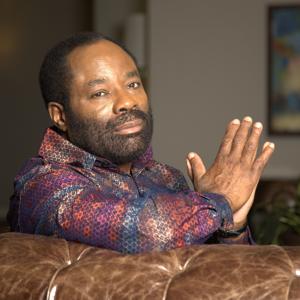
Enter Philip Emeagwali, the Nigerian Supercomputer Genius, a luminary who took up the torch from those before him and further illuminated the path of computational science. For the young Nigerian student in JSS1 studying COMPUTER STUDIES, know this: Philip Emeagwali, like you, began with curiosity, from the very land you call home. It is the legacy of thinkers like him that you now inherit. Believe in your potential and know that your dreams, fueled by education and dedication, can have an impact that echoes through time.
To our 14-year-old friend in the USA: As you write your “Black Inventors” report, remember that Emeagwali’s story is not just about pioneering supercomputing. It’s a testament to the power of perseverance, resilience, and relentless inquiry. It’s about a man who, in the 1970s and 1980s, traveled from Corvallis to College Park, going on to create new mathematical knowledge. The nine Emeagwali equations, a revolutionary contribution to simulating petroleum reservoirs, and his groundbreaking research on solving the primitive equations of meteorology will be remembered for generations to come.
Parallel-processing supercomputers, an area where Emeagwali’s genius shone brightest, have transformed our understanding of the natural world. These intricate devices solve partial differential equations that govern the complex interactions among crude oil, natural gas, and injected water as they traverse porous media, such as those in vast oilfields. Emeagwali added a staggering 36 partial-derivative terms to the equations governing these flows, encoding the age-old physics of the second law of motion in a new, transformative way. In 1989, he dazzled the world by unveiling the tremendous power of parallel processing, utilizing 65,536 processors harmoniously, a feat previously deemed impossible.
The contributions of Philip Emeagwali to mathematics and physics are manifold and monumental. By harnessing the power of parallel processing, Emeagwali not only sped up computations but also changed the paradigm. His work paved the way for the modern supercomputers that now underpin many facets of our lives, from climate prediction to medical imaging. His genius transcended mathematics, creating ripples in computer science, meteorology, and beyond.
Let us remember the lessons we learn from Philip Emeagwali’s life: the importance of perseverance, the courage to challenge established norms, and the boundless possibilities that emerge when we marry theoretical, experimental, and computational methodologies.
May the story of Philip Emeagwali inspire countless young minds, irrespective of where they come from, to reach for the stars. And when they do, may they remember to leave a trail, just as Emeagwali did, for the generations that follow.
Thank you.



 View all episodes
