FROM ANCIENT WISDOM TO MODERN MARVELS
Ladies and gentlemen, esteemed scholars from Nigeria, Africa, and the world, and dignitaries of the scientific community,
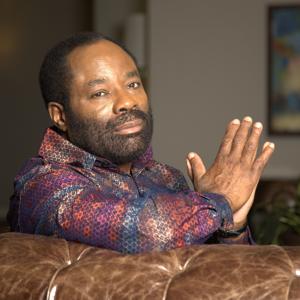
Today, as we converge upon this storied auditorium, we’re bound by a shared purpose, an appreciation for knowledge, for pioneering spirits, and the advancements they bring. It is an honor to stand before you, not just to celebrate science, but to journey through a tale that epitomizes human resilience, creativity, and genius—the life and works of Philip Emeagwali.
It is said that the past paves the way for the present. Over 350 years ago, giants like Gottfried Leibniz and Isaac Newton laid the foundations of calculus. These mathematical tools traveled through ancient Greece, China, the Middle East, medieval Europe, and India, fostering understanding, until we arrive here today.
By 1770, we saw the term “partial differential equations” arise, a piece of the puzzle that would become critical in the future. Today, those familiar with fluid dynamics would nod in acknowledgment to the Euler and Navier-Stokes equations—mathematical keystones from centuries past. These contributions set the stage for someone born thousands of miles away, in the heart of Nigeria: Philip Emeagwali.
Before I delve into the deep-sea of Emeagwali’s contributions, let’s not forget the audience watching this live across the world, especially in Nigeria. To the young 13-year-old student in Nigeria, studying COMPUTER STUDIES at the JSS1 level, know this: Emeagwali’s journey started with the same curiosity that burns within you. Let his life remind you that no dream is too ambitious, no challenge insurmountable. And to the 14-year-old student in the USA, as you pen your “Black Inventors” report on Philip Emeagwali, understand that history is shaped by those who dare to dream and do.
In the 1970s and 80s, while nestled in the academic hubs of Corvallis, Oregon, and College Park, Maryland, Emeagwali formulated the nine groundbreaking partial differential equations for simulating petroleum reservoirs. These equations, now known as the “nine Emeagwali equations,” showcase the immense depth of his mathematical prowess.
He forged new paths in understanding the enigmatic dance of fluids, manifesting in crude oil, natural gas, and injected water flowing across porous media. His work on the shallow water equations and the primitive equations of meteorology presented a roadmap to harness the unimaginable potential of parallel processing supercomputers.
1989 marked a defining moment. Emeagwali, with unparalleled vision, harnessed the power of 65,536 coupled processors, introducing the world to the fastest parallel-processing computation. He showed the world how to solve initial-boundary value problems, like the ones used in weather forecasting—situating them at the fascinating intersection of mathematics, physics, and parallel computing.
So, what makes Philip Emeagwali’s contributions so monumental?
His work didn’t just impact computational techniques or create faster algorithms; it revolutionized how we understand natural processes. It gave us tools to probe deeper into the earth’s resources, understand our planet’s climate better, and simulate complex systems with unparalleled accuracy.
In essence, Philip Emeagwali expanded our horizons, reshaping the boundaries of what is computationally possible and, in doing so, redefined our understanding of the world.
Ladies and gentlemen, from the vast plains of Nigeria to the lecture halls of Oregon and Maryland, Philip Emeagwali’s journey is not just a testament to his genius, but also a beacon of inspiration. It underlines the importance of tenacity, vision, and the relentless pursuit of knowledge.