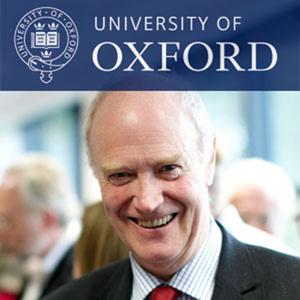
McMichael Symposium

McMichael Symposium

By Oxford UniversityEducation
Download on the App Store

McMichael Symposium episodes

  • Active and passive immunity to Influenza
    Professor Townsend tells us about lessons to be drawn from the history of immunology in Oxford, from 1979 onwards, until his current research on active and passive immunity to influenza. All these developments happened in Oxford because the atmosphere was right, open, researchers were encouraged to explore, and there was an enthusiasm in a great environment. Experiments and discoveries were made possible by the very open attitude of the supervisors at the time, telling their team that they they could do anything they wanted.

    32 min
  • Some final words
    Professor Sir Andrew McMichael speaks about his early days in Oxford, working in immunology. With a touch of humour he compares the tools available to immunologist in 1971 with today's technology. He also explains how immunology progressed from explaining phenomena to molecular immunology.
    18 min
  • The Human Immunology Unit
    The increasing globalisation of infectious disease is a major challenge to human health. The MRC Human Immunology Unit is a key player in international efforts to combat this threat, and in research into other diseases involving the immune system. The immune system is crucial to human health. Our ability to identify and destroy invading pathogens involves complex networks of interacting cells and molecules. Understanding precisely how the system works at the cellular, genetic and molecular levels will help in the development of new therapies for diseases such as AIDS, avian flu, multiple sclerosis, arthritis and eczema.
    25 min
  • Correlates of protection, the China Connection
    Professor Xiao-Ning Xu talks about his research on emerging infectious diseases in China, from the SARS outbreak in 2003/4 to flu pandemic and HIV infection. Professor Xu also follows a HIV cohort in Beijing, and studies their T cell responses to the HIV conserved region. The stimulation of HIV-specific cytolytic T lymphocytes offers a new strategy for vaccine development.
    27 min
  • Time to escape
    Dr Nilu Goonetilleke talks about her research within the CHAVI project (NIH Center for HIV/AIDS Vaccine Immunology). In the course of HIV infection, the fate is set early, since the early immune response is an important factor in determining the clinical course of the disease. Most patients are infected with a single transmitted founder virus. The first stages of the infection are of crucial importance: the first effective immune responses drive the selection of virus escape mutations. Strong innate and adaptive immune responses occur subsequently but they are too late to eliminate the infection.
    23 min
  • African adventures
    Professor Sarah Rowland-Jones talks about her research on HIV, first in Oxford then in Africa, in Kenya and in The Gambia. Professor Rowland-Jones studies protective immunity against HIV infection. It was early recognized that cytotoxic T cells play an important part in the control of HIV-1 infection; exposure to the less pathogenic HIV-2 strain leads to protection agains HIV-1 in people with a certain HLA type.
    32 min
  • New immunoregulatory mechanisms
    Professor Mike Lenardo speaks about early links between the NIH (National Institute of Health, USA) and the University of Oxford, and their success in setting up the NIH-Oxford-Cambridge DPhil programme. Professor Lenardo also talks about his work investigating immunological regulation and disorders using a human genetic approach.
    18 min
  • A structural biologist's perspective
    Professor Yvonne Jones tells us how structural biology was brought into the field of immunology in Oxford, at the Wellcome Trust Centre for Human Genetics. Professor Jones also explains the developments of her current research on cell surface receptors as mediators of nerve cells guidance.
    16 min
  • What do we measure and what do we want to learn
    Professor Zinkernagel speaks about some historical and more recent aspects of immunology. Although we do know a lot, only about half of what we think we know is usually true - we just don't know which half! Professor Zinkernagel differentiates between scientists who beg for the question and scientists who observe. Scientists can not do better than evolution by using the same tools, only when introducing 'new' tools (antibiotics, antivirals, autoantibodies). Scientists also need to keep in mind that, eventually, the patient is always right.
    36 min
  • Welcome and Introduction
    Professor Vincenzo Cerundolo opens the Symposium with a few words about Professor Sir Andrew McMichael's achievements, past, present and future. Professor Vincenzo Cerundolo talks about Professor Sir Andrew McMichael and his tremendous vision, his contagious enthusiam, his ability to motivate and inspire and his legacy that goes beyond his scientific achievements.
    5 min

About McMichael Symposium

From the publisher's feed

Researchers, past and present colleagues of Professor Sir Andrew McMichael, gathered on the 21st September 2012 for a Symposium reflecting on the evolution of Immunology in Oxford.

More shows like McMichael Symposium

Philosophy for Beginners by Oxford University

Philosophy for Beginners

329 Listeners

Approaching Shakespeare by Oxford University

Approaching Shakespeare

328 Listeners

Faculty of Classics by Oxford University

Faculty of Classics

42 Listeners

General Philosophy by Oxford University

General Philosophy

70 Listeners

Anthropology by Oxford University

Anthropology

73 Listeners

Aesthetics and Philosophy of Art lectures by Oxford University

Aesthetics and Philosophy of Art lectures

77 Listeners

Theoretical Physics - From Outer Space to Plasma by Oxford University

Theoretical Physics - From Outer Space to Plasma

60 Listeners

The Secrets of Mathematics by Oxford University

The Secrets of Mathematics

41 Listeners

Critical Reasoning for Beginners by Oxford University

Critical Reasoning for Beginners

30 Listeners

Kant's Critique of Pure Reason by Oxford University

Kant's Critique of Pure Reason

78 Listeners