https://linktr.ee/MESECOND
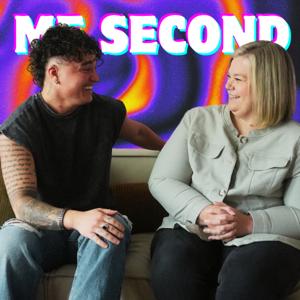
Who are you if you strip away your job, your relationship, your hobbies, your beliefs—even your memories?That question drives this episode of Me Second, as Rachel and Quel try to figure out what actually makes you, you.We use words like personality, identity, authenticity, and “self” almost interchangeably—but are they really the same thing? And how much of what we call our identity is actually something we chose versus something we inherited, absorbed, performed, or learned to become?We dig into the different layers of self, rank the traits and experiences we believe have shaped us most, and debate whether childhood, trauma, genetics, relationships, values, or our own choices ultimately have the biggest influence on who we become.The conversation explores:-Personality vs. identity—and whether healing can change your personality without changing who you are-The “borrowed” parts of ourselves we pick up from family, relationships, work, religion, politics, culture, and social media-Why labels can feel validating at one point in our lives and restrictive at another-The tension between authenticity and belonging-The inner child and the versions of ourselves we continue carrying into adulthood-Intention vs. perception—and whether other people get to define who we are-How much of ourselves can change before we stop feeling like “us”And because this is Me Second, somehow a conversation about personality eventually leads to death, consciousness, and one of the biggest identity questions there is: if everything that makes you “you” disappears, what—if anything—is left?Along the way, we also get into accountability, resentment, manipulation, and the stories we tell about what has happened to us. At some point, understanding how you became who you are has to meet another question: who do you want to become from here?Maybe identity isn’t one fixed thing. Maybe we’re a collection of selves—some chosen, some inherited, some borrowed, some outgrown, and some we’re still trying to understand.Come think with us. You don’t have to agree.