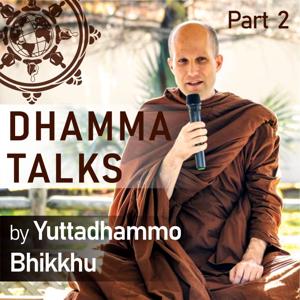
This talk / Q&A was originally posted on Ven. Yuttadhammo Bhikkhu’s YouTube Channel. To watch it on YouTube kindly click here.
06:47 What should we note when we feel lost or off track in meditation? Blurriness? Fogginess? Or is this too conceptual?
07:40 Are moving, faded lights that move around in the vision whilst meditating nimitta?
08:28 Maybe because of language (Italian) I can't really grasp the difference between vedana and the first two hindrances. Is there a way to discern precisely? For example, is eating pizza “pleasure” or “liking”? What about nausea?
10:23 I am on medication for anxiety. I would like to go off my medication, but have had trouble with anxiety relapses in the past. Would I find more success staying off my meds through meditation?
14:16 I have been meditating a lot lately, and at night I get a lot of nightmares, terror attacks, and so on. Is this related?
15:28 How prepared I should be to attend the first at-home session? I have been trying to do 15-minute sitting and walking sessions, and have read the booklet.
17:24 Is it normal for someone to not get any kind of benefit from meditation after years of samatha or vipassana. I’ve learned how life is impermanent, but I don't feel any different.
18:57 You often say that noting the rising and fall of the abdomen is for beginners. What do experienced meditators focus on when starting a meditation session?
21:59 I find it very hard to stay on the breath. Is it more important to stay on it or to keep coming back to it?
22:40 Besides noting experience, is there anything I can do to encourage insight? I had a deep insight experience long ago and have not had another since. I wonder if it will ever happen again.
28:23 Is it a bad sign to feel fear during meditation? Recently I have discovered that when I meditate, I frequently feel fear and see scary images and have to frequently open my eyes. Should I continue?
29:34 How to note when there are difficulties with breathing (asthma)?
30:24 In the booklet you indicate to send the mind to the object and make the note at the location of the experience. While it's clear what to do for the body, first foundation, what about the other three?
32:17 I find it easy to hold my breath mindfully. I think it helps my meditation experience. It may be unconventional, but do you advocate against it?
33:33 I am 20 years old, and admit I am embarrassed by my practice, for some reason. I find it very difficult to be mindful around others. Is it best to practice in seclusion, or to get out of my comfort zone?
34:21 With my practice, I have found my thoughts to become clearer, lighter, and less complex. Is this a sign of progress?
35:39 Is it the job of the mediator to see the cause of the object being attended by the mind, or to see why the mind is attending it? Is this even a duality?
36:38 I feel like I have missed out on many things in life. This feeling has overwhelmed me. Does this make my progress harder? I am full of embitterment.
37:45 In a Christian background, I developed the habit to refrain impulses of guilt, hate, and fear, to which I passively submit in a painful knot of emotion. How would you note? I see disliking of the liking.
39:58 Does being in nature have an effect on meditation? If you feel so, then what's the difference between being in a rural setting versus being in a more populated urban setting?
42:18 When I do vipassana meditation, my head and neck start shaking at times. Is this normal?
43:46 Can I take the at-home-course if I’m on medication for psychosis? I am stable and I'm meditating for some time already.
45:20 Can vipassana make problems like psychosis more pronounced in the beginning? And will it be eventually cured if I just stick with it?
48:34 As a beginner, should I try to explain the practice or dhamma as I understand them if I'm asked or criticized? Does it matter if I think the other person may be less than receptive?
51:20 How long do some pleasures take to uncondition the mind from? Such as unhealthy foods, or keeping the mind stimulated via random activities on a daily basis. Goal being less activity in the mind?
52:31 Why do we note "sad/happy," like "I am" sad/happy? After reading the Anattalakkhana Sutta, I've tried to practice saying “sadness/happiness" and a great flow of clarity and detachment arose.
54:23 What am I supposed to do when flies are bothering me in my house?
55:14 I find myself full of anger most of the time; this results in painful headaches. If I manage to get into a peaceful state, the anger simply arises again quickly. How can I help stop this?
57:37 If you feel aversion to formal walking/sitting practice, should you just try to note experiences during regular life until you organically move back toward walking and sitting meditation? Or force yourself to do formal meditation?
58:46 Sadhu...
Our podcasts: https://podcast.sirimangalo.org/
How To Meditate Booklet: https://htm.sirimangalo.org/
Our Meditation Community and At-Home Meditation Course signup page: https://meditation.sirimangalo.org/
Our Website: https://www.sirimangalo.org/
Supporting This Work: https://www.sirimangalo.org/support




 View all episodes