
Sign up to save your podcasts
Or



Northside HIgh School - opened in 1968 - was the jewel of the Klondike neighborhood, surrounded by other important institutions such as Klondike Elementary, the North Branch Library, Katie Sexton Community Center, and Klondike Park. Northside closed in 2016 due to declining enrollment and has been vacant since then. But now, the former school building is being turned into a community hub, including affordable housing, job training, health services, art activities, and more. In this program, we welcome Roshun Austin of the Works CDC to explain the community-led vision for the new space and how her organization is partnering with residents, alumni, and other stakeholders to bring that vision to reality.
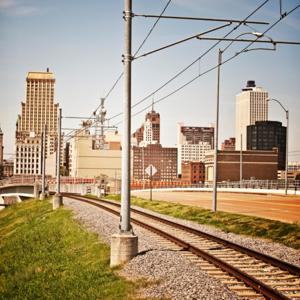
In late March, Memphis Area Transit Authority (MATA) announced that it was testing a new kind of trolley car on the Madison line, in hopes of restoring service to that and the Riverfront loop. John Lancaster and Joel Cox from MATA visited Memphis Metropolis to talk about what's different about the new cars (for one, they are air-conditioned!) and how the recent redevelopment of the Medical District may attract a new type of rider. Later in the show, regular commentator and University of Memphis professor Charlie Santo joins Emily to reflect on the extensive streetcar system Memphis once enjoyed and why it and similar systems around the U.S. disappeared in the first place.
Additional Resources
Testing underway for Madison Ave. trolley service - from The Daily Memphian
MATA web site
Memphis Street Railway Map (1913)
The Very Best Songs About Mass Transit (from Citylab)
Local Initiatives Support Corporation (LISC), a national community development funding intermediary, recently began working in Memphis. Longtime community development leader Kathy Cowan is heading up that effort, and she visits the program this week to discuss her career accomplishments and which programs and partnerships are kicking off the LISC work in Memphis.
More information
LISC web site
Memphis Metropolis welcomes Caroline Carrico from Storyboard Memphis to the show, to discuss her recent article about the important role Gayoso Bayou played in Memphis history, and a little-known adjacent settlement called Catfish Bay. Later in the program, regular commentator Charlie Santo and Emily veer off into a wide-ranging discussion about the role infrastructure plays in urban development and Memphis' role as an innovator in the development of sanitary sewer technology.
Learn More
Gayoso Bayou and Catfish Bay: Where are They Now?
How Memphis Found Its Water
Over the past two years, William Townsend of Townsend has acquired - in fairly quick succession - the Luciann Theater on Summer Avenue, the Desoto Masonic Lodge at Court Avenue and Fourth Street, and the historic Lowenstein mansion on Jefferson Avenue and Manassas Street. In this episode, Bill explains his passion for old buildings, which dates back to his childhood in Memphis, and his plans to use the properties' renovations to spur or support the revitalization of the surrounding neighborhoods.
The 2022 Cooper Young Garden Walk is coming up May 21-2, but that's just one piece of what's going on at the Cooper Young Garden Club. In this program, club organizer Kim Halyak visits to discuss the club's seventh annual walk (featuring 90 gardens!), their gateway landscaping project along the neighborhood's southern border, the Cooper Young Arboretum, and much more. Kim and Emily also talk about how gardens and other green spaces are an integral part of the built environment, contributing significantly to a city's livability and attractiveness to visitors.
More Information
Cooper Young Garden Club and Walk
Commercial real estate broker Darrell Cobbins visits Memphis Metropolis to discuss the 15-year anniversary of Universal Commercial, the firm he founded 15 years ago. Darrell has played a role in a wide range of projects in the community, from helping the Crosstown Concourse developers acquire property at the beginning of his firm's tenure to most recently assisting Junior Achievement in moving its local headquarters from downtown to Binghampton. Darrell also talks with Emily about Lakeview Gardens, one of the first subdivisions built for African American homeowners, developed by his grandfather. This wide-ranging discussion also touches on the lack of diversity in the commercial real estate industry, and how intentional hiring strategies can benefit the field and the larger community.
Later in the show, regular commentator Charlie Santo stops by to talk about how the urban planning profession is also facing diversity challenges and the strategies the University of Memphis is deploying to recruit a student body that is diverse not only in race but also in terms of socioeconomic status, gender identity, and more.
In this show, Memphis Metropolis welcomes Deveney Perry, executive director BLDG Memphis. BLDG Memphis is a 22-year old community development organization, working in the areas of organizational capacity building, community engagement, and public policy advocacy. Later in the show, regular commentator joins host Emily Trenholm to talk about the origins of BLDG Memphis and examine the history of community development corporations in Memphis in a national context.
For more information
BLDG Memphis website
Tom Bailey, recently retired after a long career in local journalism, visits the show for a conversation about the most significant real estate and community development projects and trends of the past decade or so. In this wide-ranging discussion, Tom and Emily talk about projects that succeeded against all odds - such as Crosstown and the Tennessee Brewery redevelopments - as well as smaller but significant events that helped ignite broader change, such as the addition of bike lanes to Madison Avenue and the New Face for an Old Broad event.
Late last year, Congress passed the bipartisan Federal Investment and Jobs Act, which represented the largest investment in the country's infrastructure in generations - some $500 billion in new funding to be utilized over five years. In this program, City of Memphis public works director Robert Knecht visits Memphis Metropolis to discuss why the infrastructure bill is so important for cities like Memphis, and how the city hopes to utilize its funding for projects of all types, from long-planned street repaving to broadband and resilience initiatives. Later in the show, regular commentator Charlie Santo and Emily do a deeper dive into the bill itself, including the different funding categories, and tee up a future program on how future city investments could connect Memphis workers and communities to the Blue Oval electric car manufacturing plant.
From the publisher's feed