
Sign up to save your podcasts
Or

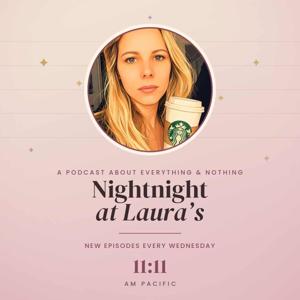


When I spoke about the empty space in my family photo album and the possibility that the best picture was still to come, I didn’t expect those words to travel all the way to London, but they did, and that’s how I met Princess Luminous, a singer-songwriter in her 60s who told me something I absolutely loved: “I haven’t started my life yet.”
In this episode of Mentally Un…Scripted, we talk about the strange timing of creativity, the grief that changes us, and a poem legendary lyricist Pete Brown wrote for her decades ago. A poem she couldn’t connect with back then, but that eventually became Moon Song. We also talk about the freedom of reinventing ourselves, the ridiculous expiration dates society puts on our dreams, and why perhaps everything we’ve experienced so far was simply preparation for what’s coming.
Because life loves its little coincidences, she’s my first guest since the podcast’s rebranding, and I’m her first podcast as Princess Luminous. She even performs a little of Moon Song for us.
Maybe the best picture really is still ahead of us. Or maybe we haven’t even picked up the camera yet.
Thank you, Princess Luminous, for sharing your light.
Good night.
— L. 💋
Meet My Guest: Princess Luminous
Princess Luminous is a London-based singer-songwriter and pianist whose music blends bossa nova, Latin rhythms, jazz, pop, and cinematic storytelling. Singing in both English and Spanish, she brings her distinctive dark, expressive voice to original compositions and reinterpretations of timeless classics.
Her musical journey includes New Day, The Girl from Ipanema, The Windmills of Your Mind, Smile, Moon River, Dance Forever, and Artemis the Goddess, a song co-written with composer Jason Tarver celebrating female independence and resilience. Her interpretation of Moon River was featured as Song of the Day by All About Jazz in July 2026.
Her latest release, Moon Song, grew from a poem written for her decades earlier by Pete Brown, the celebrated lyricist behind several iconic songs by Cream. After experiencing profound personal loss, Princess Luminous rediscovered the poem and transformed it into music, finding new meaning in words that hadn’t spoken to her all those years ago.
Now in her 60s, she’s building a musical career on her own terms, preparing her debut album, and embracing the belief that age should never dictate when we’re allowed to begin.
Moon Song was released October 16, 2026. The intimate acoustic version she discusses in our conversation is scheduled for November 27, 2026.
Connect with Princess Luminous
* Official website: https://princessluminous.com
* Listen to Moon Song: https://idm.fm/moon-song
* Instagram: https://www.instagram.com/princessluminous33/
* YouTube: https://www.youtube.com/@PrincessLuminous7
* TikTok: https://www.tiktok.com/@princessluminous7
* Spotify:
* Featured in All About Jazz: https://www.allaboutjazz.com/media/track-moon-river-by-princess-luminous
Mentally Un…ScriptedNew episodes every Wednesday at 11:11 AM Pacific.
Life doesn’t follow a script, but I can write mine. 💋
This Substack is reader-supported. To receive new posts and support my work, consider becoming a free or paid subscriber.
Welcome to Mentally Un…Scripted! 💗
Yes, we’ve officially retired Nightnight at Laura’s. Same voice, same curiosity, same tendency to turn everyday experiences into existential questions. Just a new name, a new look, and perhaps a slightly different perspective. As a writer, I’ve always believed that inspiration comes from the most unexpected places, including the people closest to us. Sometimes the things we experience become stories. Sometimes they become lessons, and sometimes they become an entirely new podcast title.
For this first episode under the new name, I wanted to explore something that made me stop and think. I recently watched a video featuring Terry Real, the founder of Relational Life Therapy, in which he discussed the importance of replacing complaints with requests when communicating with a partner. The idea is simple: instead of criticizing what someone is doing wrong, tell them what you need, and I can see the value in that. A clear request creates an opportunity for connection rather than defensiveness, but it also made me wonder: what happens when you’ve already made the request and nothing seems to have changed?
We spend so much time learning how to communicate correctly. Choose your words carefully, use “I” statements, don’t accuse, don’t generalize, regulate your emotions, find the right moment, soften your tone. All valuable advice, of course, but sometimes it feels as though we’re preparing for international peace negotiations rather than having a conversation with someone we love. While learning to communicate more constructively is important, I wonder whether we sometimes place so much responsibility on the person expressing hurt that we forget to ask whether the person receiving it is equally willing to listen.
In this episode, I explore the difference between complaining and requesting, the ways defensiveness can turn a simple conversation into an exhausting cycle, and why emotional responsibility has to work in both directions. We also talk about the labels we casually attach to people during disagreements, the difference between feelings and facts, and the uncomfortable possibility that not every communication problem can be solved by finding a better arrangement of words.
There’s also something personal I wanted to include: an apology. Not because I’ve suddenly decided that every disagreement I’ve ever had was my fault, but because reflection means very little if we’re unwilling to recognize our own contribution to difficult situations. I’ve sometimes allowed frustration to get the better of me. I’ve pushed for explanations when perhaps I should have allowed more space. I’ve relied on words when listening might have served me better. To anyone I’ve ever hurt in those moments, I’m sincerely sorry. Growth isn’t about accepting every label someone gives us but recognizing the behaviors we genuinely want to change.
Ultimately, this episode is about curiosity, accountability, emotional maturity, and the possibility of learning to understand one another without turning every disagreement into a courtroom drama. Because sometimes the question is whether both people are willing and able to meet each other somewhere in the middle.
Maybe that’s what healthy communication is really about: not finding the perfect words to guarantee the outcome we want, but creating enough honesty and understanding to discover what’s actually possible.
🎙️ Listen to the new episode of Mentally Un…Scripted, and tell me what you think: when does a complaint become a request, and when does repeating a request become a sign that something deeper needs attention?
New episodes every Wednesday at 11:11 AM Pacific.
Life doesn’t follow a script. But I can write mine. 💋
Music credits
Music licensed through Soundstripe.Code: ASAKYY2XRWLYFFVM
#MentallyUnscripted #Relationships #Communication #EmotionalIntelligence #HumanBehavior #PersonalGrowth
This Substack is reader-supported. To receive new posts and support my work, consider becoming a free or paid subscriber.
Sixteen years ago, at Mount Holyoke College, I met a woman from Costa Rica who loved Italian, music, and languages. I was teaching Italian, she was studying it, and we became friends. Fast-forward sixteen years, and here we are talking about angels, fifth-dimensional beings, yoga, waterfalls, and the universe. You know, the usual catching-up-with-an-old-friend conversation. Mónica Emanuele is now the founder of Kairos, a holistic wellness project in Costa Rica that combines yoga, meditation, spiritual practices, and a deep connection with nature. And apparently, our reunion wasn’t entirely our idea, because Mónica informed me that her oracle cards wanted to participate in the conversation. Naturally, I welcomed them.
She pulled a card for me from The Celestial Nine: Uriel, associated with wisdom, maturity, and patience. Patience. Of all the messages the universe could have sent me, it chose patience. Very funny. But that reading opened up a fascinating conversation about intuition, spiritual beliefs, ancestral healing, and the possibility that there’s more to our existence than what we can see. From there, we moved to the natural world, discussing why spending time among trees, mountains, and waterfalls can make us feel so different, and how easily modern life disconnects us from our surroundings. Mónica had actually spent that very morning in the mountains of Costa Rica, immersing herself in a freezing waterfall to reset her energy. I admire the dedication. Personally, I prefer my water without the risk of hypothermia.
What I particularly enjoyed was Mónica’s philosophy of balancing Earth and cosmos: staying connected to our bodies and the natural world while making room for spirituality, intuition, and whatever else we might believe exists beyond the physical. Through Kairos, she helps people explore that connection, but she also makes an important point about personal growth. One yoga class, one retreat, or one beautiful weekend of meditation won’t magically transform your life. Apparently, consistency is required. How inconvenient. We also explored the meaning of Kairos, the idea of the right or opportune moment, as opposed to Chronos, the time measured by clocks. Mónica believes in trusting life’s timing, even when we’re desperate for something to happen yesterday. And considering that my oracle card had already delivered a lecture on patience, I was beginning to suspect a theme.
You don’t have to believe in angels, energies, or divine timing to find something worth thinking about in this conversation. Perhaps it’s simply about being more present, listening to our bodies, spending a little more time outside, and accepting that we can’t control absolutely everything. Or perhaps there’s something more to explore. Either way, I loved reconnecting with an old friend and discovering how much we still have to talk about after all these years. And if the universe really is trying to teach me patience, I have just one question: could we possibly speed up the process?
Good night.
— L.
Meet My Guest: Mónica Emanuele
Mónica Emanuele is a holistic coach, yoga teacher, and founder of Centro Holístico Kairos, based in San José, Costa Rica. Through Kairos, she offers yoga and meditation classes, holistic coaching, Reiki, workshops, retreats, and personalized wellness experiences. She also offers Club Kairos, an online platform with yoga, meditation, and movement classes that can be accessed from anywhere in the world.
Connect with Mónica and Kairos:
* Website: https://kairos-mentor.com/
* Instagram: @coachingholisticokairos
* LinkedIn (Kairos): Coaching Holístico Kairos
* LinkedIn (Mónica): Mónica Emanuele Sandí
* Insight Timer: Guided Meditations
* YouTube: My Story Behind Kairos
There’s something strange about living between two countries. You start noticing things you probably wouldn’t notice if you only lived in one. Like the fact that apparently we don’t all live in the same world.
I mean, geographically, yes. Same planet. Same collection of increasingly questionable human decisions. But turn on the news in Italy, then turn on the news in the United States, and you might find yourself wondering whether one of the two countries has accidentally switched dimensions.
Over the past couple of weeks, I’ve been following what’s happening across Italy and Europe. People protesting living costs, wages, housing, public services, government decisions. Demonstrations, strikes, tensions, and the occasional person who apparently thinks throwing something at a police officer is an effective economic policy.
Meanwhile, here in America, we’re approaching the midterm elections, and the political circus is operating at full capacity. And before anyone starts: yes, American politics matters, obviously, but so does the rest of the world, which, inconveniently, continues to exist whether CNN is talking about it or not.
What fascinates me is how differently the same event can be presented. Show someone footage of a violent confrontation at a protest and they’ll probably have a very specific reaction. Show them thousands of people peacefully demonstrating for better living conditions and the reaction might be completely different.
Both things could have happened on the same day and yet we seem increasingly comfortable forming opinions about entire events, countries, and populations based on whatever thirty-second clip happens to land in our feeds. Then, naturally, we head to the comments to explain to complete strangers how stupid they are.
Because nothing says intellectual sophistication quite like screaming at someone whose entire argument you haven’t bothered to read. When did uncertainty become a sign of incompetence? And when did changing your mind become something to be embarrassed about? I think part of the problem is that we’ve become so attached to our opinions that we treat them like personality traits. Question someone’s political position, and they react as though you’ve insulted their mother, their dog, and their entire bloodline.
There’s a word for the ability to make these distinctions: discernment. It’s a word I wish we’d use more often. And there’s another part of this that bothers me even more: the information we never encounter in the first place.
Our feeds are personalized. Our news habits are selective. Our attention is limited. Two people can open the same app and come away with completely different impressions of what’s happening in the world. And how do you go looking for a story when you don’t even know it exists?
That’s what I wanted to explore in this episode.
So, for the first time in a while, I’m recording in Italian. Partly because the subject begins with what’s happening in Italy and Europe, and partly because sometimes there are things I just need to say in my own language. Preferably with a few inappropriate words thrown in.
The episode is available with English subtitles, because apparently I haven’t yet figured out how to be in two places at once, but I can at least try to make myself understood in two languages. But I’d love for us to become a little more comfortable saying, “I don’t know. Let me look into that.”
And maybe, the next time someone tells us to think for ourselves, we should check whether they’re also handing us a very detailed list of what we’re supposed to think.
Good night.
— L.
Il mondo che non vediamo
Su manifestazioni, informazione, confirmation bias e quella capacità sempre più rara di ragionare con la propria testa.
Episodio 24 di Nightnight at Laura’s.
C’è una cosa curiosa nel vivere tra due Paesi. Cominci ad accorgerti di dettagli che probabilmente non noteresti se vivessi sempre nello stesso posto.
Per esempio, del fatto che apparentemente non viviamo tutti nello stesso mondo.
Geograficamente sì, per carità. Stesso pianeta. Stessa umanità che continua a prendere decisioni sempre più discutibili. Ma provate ad accendere un telegiornale italiano e poi uno americano e ditemi se ogni tanto non vi viene il dubbio che uno dei due Paesi sia finito in una dimensione parallela.
Nelle ultime settimane ho seguito quello che sta succedendo in Italia e in diversi Paesi europei. Manifestazioni per il costo della vita, salari, abitazioni, servizi pubblici, decisioni dei governi. Proteste, scioperi, tensioni e, naturalmente, qualche fenomeno che pensa che lanciare oggetti contro un poliziotto sia un modo particolarmente efficace per risolvere un problema economico.
Nel frattempo, qui negli Stati Uniti, ci avviciniamo alle elezioni di metà mandato e il circo politico americano funziona a pieno regime. E prima che qualcuno cominci: sì, la politica americana è importante. Ovviamente. Ma lo è anche il resto del mondo, che ha la fastidiosa abitudine di continuare a esistere anche quando la CNN non ne parla.
La cosa che mi incuriosisce è quanto possa cambiare il racconto di uno stesso evento. Fate vedere a qualcuno un video di scontri violenti durante una manifestazione e probabilmente avrà una reazione molto precisa. Fategli vedere migliaia di persone che protestano pacificamente per condizioni di vita migliori e la reazione potrebbe essere completamente diversa. E magari entrambe le cose sono successe lo stesso giorno.
Eppure siamo diventati bravissimi a formarci opinioni su eventi, Paesi e intere popolazioni basandoci su quel video di trenta secondi che ci è capitato davanti mentre scorrevamo Instagram. Poi, naturalmente, andiamo nei commenti a spiegare a perfetti sconosciuti quanto siano stupidi. Perché niente dimostra una grande profondità intellettuale quanto insultare qualcuno senza aver nemmeno letto tutto quello che ha scritto.
Continuo a pensare alla differenza tra avere accesso alle informazioni ed essere effettivamente informati. Abbiamo a disposizione una quantità di conoscenza che nessun’altra generazione nella storia dell’umanità avrebbe potuto immaginare, e siamo riusciti a trasformare questo privilegio straordinario in una gara a chi dice la cazzata più grande con la maggiore sicurezza. Da quando l’incertezza è diventata sinonimo di incompetenza? E da quando cambiare idea è diventato qualcosa di cui vergognarsi?
Credo che una parte del problema sia il fatto che ci siamo affezionati talmente tanto alle nostre opinioni da trasformarle in caratteristiche della nostra personalità. Metti in discussione la posizione politica di qualcuno e quello reagisce come se gli avessi insultato la madre, il cane e sette generazioni di antenati.
Esiste una parola per indicare la capacità di fare queste distinzioni: discernimento. Una parola che mi piacerebbe sentire molto più spesso. E poi c’è un altro aspetto che mi inquieta ancora di più: tutte le informazioni che non incontriamo mai.
I nostri feed sono personalizzati. Le nostre abitudini di informazione sono selettive. La nostra attenzione è limitata. Due persone possono aprire la stessa applicazione e uscirne con due idee completamente diverse di quello che sta succedendo nel mondo.
E come fai a cercare una notizia se non sai nemmeno che esiste? È proprio da qui che nasce questa puntata.
E per una volta ho deciso di registrarla in italiano. Un po’ perché il discorso parte da quello che succede in Italia e in Europa, un po’ perché certe cose ogni tanto ho bisogno di dirle nella mia lingua. Possibilmente con qualche parolaccia, che non guasta mai.
La puntata è disponibile anche con i sottotitoli in inglese, perché ancora non ho imparato a essere in due posti contemporaneamente, ma almeno posso provare a farmi capire in due lingue.
Non pretendo che tutti sappiano tutto. Figuriamoci, io per prima.
Ma mi piacerebbe che diventassimo un po’ più capaci di dire: «Non lo so. Devo informarmi».
E magari, la prossima volta che qualcuno ci dice di pensare con la nostra testa, potremmo controllare che…
I was going to record this one in Italian. I started, froze, and realized there’s probably something interesting to unpack there eventually. But not today. Because something else was pushing harder: when did having a conversation become so f*****g complicated?
I grew up in Italy, where two people can interrupt each other, raise their voices, tell each other to f**k off and be amici come prima five minutes later. Then I moved to America, where someone can suggest getting coffee and apparently not mean actual coffee. It took some adjusting.
Living between the two has made me fascinated by how much meaning we attach to everyday interactions. A delayed reply becomes rejection. A disagreement becomes disrespect. A different tone becomes hostility. And sometimes, before anyone bothers to ask “Hey, are you mad?”, we’re already fighting about an argument that never needed to happen.
Then social media took that tendency and turned it into content. Someone says something. Someone reacts. Someone reacts to the reaction. Another person explains why the reaction was problematic. Somewhere in the comments, a complete stranger demands accountability. And we’ve somehow become incredibly good at prosecuting people based on thirty-second clips and incredibly bad at asking, “Wait—what did you mean?”
So this episode is about that increasingly blurry line between being harmed and being uncomfortable. About disagreement, cultural differences, outrage, freedom of expression, and our apparent inability to tolerate the possibility that another person might see something differently.
And, naturally, I somehow get Dante involved. Because if we’re going to argue about people refusing to take a side, the ignavi were sitting right there.
Are we actually becoming too easily offended? Or are people finally refusing to tolerate things they used to let slide? Probably both.
Come argue with me. I promise I can take it.
While I wait… Good night.
— L.
P.S. Yes, I’m fully aware of the irony of using the internet to complain about what the internet has done to us. I’m not anti-social media—I’m literally here, using it to publish a podcast about how social media affects the way we communicate. The point isn’t that the internet is inherently bad. It’s that maybe we should be able to use something, enjoy parts of it, and still question what it’s doing to us. If anything, participating in it probably makes that conversation more necessary, not less.
Also, if this post makes someone angry enough to share it, I suppose the algorithm and I both win.
This Substack is reader-supported. To receive new posts and support my work, consider becoming a free or paid subscriber.
Thanks for reading! This post is public so feel free to share it.
The Black Eyed Peas asked Where Is the Love? I’m asking where the f**k humanity went.
And before anyone tells me that people have always enjoyed watching other people suffer — I’m Italian. I know history. We had gladiators. I’m aware this isn’t exactly a new hobby for humankind.
I recently came across a news post about an execution, and the comments genuinely disturbed me. People were excited. Popcorn was mentioned. Apparently, the possibility of watching someone die is entertainment now. Meanwhile, we live in a society that can’t go five minutes without talking about empathy. Empathy at work, empathy in relationships, empathy in leadership. We’ve practically turned it into a marketing strategy. And somehow, we’ve become incredibly good at discussing something we’re increasingly terrible at practicing.
Which, naturally, got me thinking about Hollywood. Because apparently, my brain can connect a public execution to Girl, Interrupted in under thirty seconds. Welcome to my world.
I’ve been fascinated by the way movies portray emotional suffering for years. I watched Girl, Interrupted when I was younger and remember wondering why Winona Ryder’s character was even in a psychiatric hospital. She seemed sad, overwhelmed, sure. But Angelina Jolie’s character? Now that looked like someone who belonged there. Which tells you quite a lot about what I thought mental illness was supposed to look like. Years later, after studying psychology and cinema, I started revisiting those films with different eyes.
Fatal Attraction. Silver Linings Playbook. Eternal Sunshine of the Spotless Mind. Brain on Fire. Different stories, different decades, but the same fascination with people whose emotions don’t fit neatly into what society considers acceptable. Hollywood loves a breakdown. The obsessive girlfriend, the explosive husband, the unstable ex. Give someone an intense emotional reaction and you’ve got yourself a plot. Give them a particularly spectacular meltdown and congratulations, you’ve got a thriller.
And look, I’m a screenwriter. I understand conflict. Nobody wants to watch two hours of people communicating perfectly, respecting boundaries, and going to bed at nine. Although, personally, I’d watch that movie. Sounds peaceful.
What brought all this back recently was I Love You Forever. I actually watched it because of a discussion I came across on social media, which is rather ironic considering what happened next. The film explores an emotionally abusive relationship, but what fascinated me was how quickly the conversation around it became a psychological investigation. Suddenly, everyone seemed to know what was wrong with the characters, what diagnosis explained their behavior, and what that supposedly revealed about the real people viewers associated with the story.
And I thought: when did watching a movie become a group diagnostic session?
Because we’ve been doing something similar in real life. Your ex was selfish? Narcissist. Your girlfriend needed reassurance? Borderline. Your boyfriend struggled to communicate? Avoidant. Someone remembers an argument differently? Gaslighting. At this point, I’m surprised nobody has diagnosed their refrigerator with an attachment disorder because it doesn’t respond when they talk to it.
The problem is that some of the psychology being shared online is perfectly legitimate. The terminology exists for a reason. But knowing a psychological concept doesn’t make you qualified to apply it to a stranger, much less someone you’ve only heard about through another person’s breakup story. And yet there are people building entire businesses around telling you exactly what’s wrong with your ex. Five signs you’re dating a narcissist. Seven ways to identify an avoidant. Ten red flags you missed. And if you’re still confused, don’t worry — there’s a course for that. Probably discounted if you subscribe before midnight.
Here’s something I wish we’d all sit with for a moment: someone who hurts you doesn’t need a psychiatric diagnosis for your pain to be valid. You can recognize that a relationship was unhealthy, establish boundaries, and leave without turning the other person into a clinical case study. Sometimes people are selfish. Sometimes they’re overwhelmed. Sometimes they’re incompatible. Sometimes they’re abusive. Those things aren’t interchangeable, and attaching a diagnosis doesn’t automatically make your interpretation more accurate.
This is where Hollywood and social media make a particularly interesting couple. Movies have spent decades giving us recognizable character types. Social media has turned those characters into checklists. We watch the obsessive girlfriend on screen, then scroll through a video explaining which personality disorder she supposedly has, and suddenly we’re applying the same logic to people whose entire lives we know absolutely nothing about.
Except real people don’t have screenwriters deciding their motivations. They don’t have editors choosing which moments we get to see. And they certainly don’t have a conveniently timed flashback explaining why they behaved the way they did.
There’s another part of this that bothers me. Think about Good Will Hunting, BoJack Horseman, or The Bear. We spend time understanding these men’s emotional struggles, their childhood experiences, their grief, their fear. We’re given context. Meanwhile, emotionally intense women are so often remembered as crazy, needy, obsessive, or unstable. I’m not saying this happens in every movie — we don’t deal in absolutes in this household — but I do wonder which characters we’re encouraged to understand and which ones we’re encouraged to fear.
And then there’s emotional dysregulation itself, which has become another one of those expressions people throw around without necessarily understanding. It isn’t a diagnosis. It can be associated with psychiatric or neurological conditions, but it can also happen when someone is grieving, exhausted, burned out, going through a divorce, dealing with chronic stress, or simply having a terrible f*****g year. Sometimes people struggle to manage their emotions because life is overwhelming. Sometimes an intense emotional response is entirely appropriate. And feeling something intensely doesn’t automatically tell us how someone will behave.
Which brings me to the thing I keep wishing Hollywood would show us more often: the next scene.
The one after the breakdown. After the relationship ends. After someone realizes they’ve hurt another person. Where’s the character who spends two years in therapy and learns to respond differently? The one who still feels everything intensely but has stopped letting every emotion dictate their behavior? The person who grows, changes, and builds a meaningful life while remaining beautifully, inconveniently human?
Those stories exist too. And as a writer, I’d love to see more of them.
Because we spend an extraordinary amount of time telling people to work on themselves, go to therapy, become more self-aware, and grow. But when someone actually changes, are we willing to recognize it? Or have we already decided who they are based on their worst moment? Nobody owes anyone forgiveness, and change doesn’t erase harm. But if we genuinely believe in personal growth, we have to believe that people are capable of becoming different from who they used to be.
I think that’s what connects all these seemingly unrelated things for me. The execution comments. The movies. The relationship influencers. The diagnoses thrown around like insults. We’ve become incredibly comfortable reducing human beings to whatever makes them easiest to judge, dismiss, or categorize. And the more certain we become about who everyone else is, the less curious we seem to be about what we might not know.
Hollywood created the character. Social media supplied the diagnosis. And somewhere along the way, the human being disappeared. I’d like to put them back.
So tonight, it’s just me, a microphone, a few movies, some actual research, and a…
Jahan and I hadn’t seen each other in six years, since right when the pandemic started, back when I was renting his mom’s pool house. We drifted, the way people do. And then, this year, his mom sent a text meant for his girlfriend, who is also named Laura, to me, accidentally.
When the world shut down, Jahan — living alone, watching every friend he had in Burbank pack up and move back to wherever they’d come from — did the thing a lot of us didn’t: he got in a Subaru Outback he wasn’t even sure he liked, and circumnavigated half the western United States for an entire summer. He traces the restlessness back further than the pandemic, actually — to 2015, a serious breakup, and a decision that if the people in his plans weren’t there anymore, the plans still were. He stopped waiting for someone to come explore the world with him and just went.
That’s how he found the festival and rave scene — generators towed into the desert, DJ equipment hooked up in the middle of nowhere, and what he calls one of the best nights of his life. He’s about to turn 47, still chasing new music instead of romanticizing old music, which he says is the thing that separates him from a lot of people his age: the ones who show up to a party still playing what was popular thirty-five years ago and call it the good stuff. He wants the new stuff. He still goes looking for it.
Then there’s the story about the Burning Man ticket he turned down in 2004. A friend — an actual original burner from the early scene — tried to sell him on it with a slideshow at a work lunch meeting, and somehow made the pitch almost entirely about the porta-potties overflowing by day three. Jahan said no. Twenty-some years later, he still hasn’t gone, and he counts it as a real regret, not just because he missed the party, but because he missed the version of it that existed before it became what it is now.
Which took us somewhere I keep landing on this show no matter who’s sitting across from me: money, access, and the human factor. Jahan’s take was more generous than mine: he doesn’t think a tech millionaire showing up to Burning Man ruins anything, he thinks closing the door on anyone, including people you disagree with, is how nothing ever changes. Fair. But I pushed back anyway, because a ticket that costs thousands of dollars isn’t really an open door, it’s a very polite “you can’t afford to be here.” He didn’t disagree with that part either. He just pointed out there’s another layer most people never see: the crew, the vendors, the people who live entirely outside the festival circuit and travel from one to the next just to build the thing for everyone else. That’s where he thinks the real counterculture still survives. Not in the ticket line. In the people who never bought one.
We never even got to how we originally met until the end: his cousin, who was my colleague at the time, told us we should be friends cuz I just moved to Los Angeles and didn’t know anybody, and so, we started talking thanks to his family. Fitting, honestly, because always through family, that’s how we reconnected recalling the good old days pre-pandemic.
Thank you, Jahan. And thank you Josephine, Jay’s mom! Miss you both.
Good night.
— L.
Keely and I met the way half of LA seems to meet each other: at the bottom of Runyon Canyon, before sunrise, hauling camera equipment up a hill for a stranger’s short film. I had an asthma attack that morning — the air was weirdly cold — which, in hindsight, is a pretty on-brand way for me to make a new friend.
She found her way into filmmaking through Tiziano, one of my friends, and through a director named Shane Hurlbutt, through a summer spent wrapping color-coded cable on a film set because someone needed hands. One of those projects turned into a night wandering LA’s metro stations with a composer named Javier, filming strangers-turned-collaborators as they rode the trains — the kind of project that only happens in this city, where someone says meet me at an apartment downtown at six, we promise we won’t murder you, and you just go.
But the real heart of this episode is her film Roses — and the fact that there isn’t a single rose in it.
Years ago, in college, she made an intaglio print — copper plate, acid, ink, a press — of her own face traced in different directions, with roses drawn around it. Like most art from college, it went into a box. Years later, mid-conversation with a filmmaker she’d just met — one of those rare four-hour talks where you don’t want to hang up because it feels like a spark lighting up in your chest — he saw the print on her wall and said: you should make a film out of that.
So she did, slowly, over years, stitched together from three unlikely threads: the seamless match-cuts in Hozier’s Work Song music video, where one dancing couple turns into another mid-spin; the way cinematographer Mandy Walker talked about filming Elvis, treating the camera not as equipment but as a third dancer in the room; and a folder of Pinterest stills she’d collected of bodies making shapes — the space between two curved arms, the focus pulled just to a pair of hands. She cast two real dancers who were already a couple, because she wanted the chemistry to be real before the camera ever rolled.
And she kept the title Roses — even though the roses never made it into the final film — because, as her composer put it when she asked whether it needed explaining: you told me it was called Roses, and I never once questioned why. Nobody does. It just is. That’s the whole soul of the project, right there in the title nobody questions.
We spent a long stretch of the conversation on the thing I keep circling on this show: why does the industry keep trying to strip the human part out of art? Keely’s answer was more honest than most — she doesn’t think it’s evil, she thinks it’s situational. An executive deciding whether to fund your project doesn’t need the five-year backstory of how you got there; they need thirty seconds and a budget. But put those same people in a museum, or on a studio tour, or at a dinner table — and suddenly they crave the human detail, the accident that became the best part, the story behind the story. The backstory isn’t unimportant. It’s just being asked for in the wrong room.
I still think that’s a little bit of a tragedy — that the story of why you made something only gets to exist once the selling is already done. But I loved that she didn’t let me stay simply outraged about it. She’s right. It depends on the room.
Before we wrapped, she gave me the practical, unglamorous truth of being an independent filmmaker in this city right now: festival submission fees add up fast with zero guarantee of ever being seen, so instead she’s routing Roses straight to local LA screenings, letting her own community find it first. And she’s also a photographer — her series Shaken Not Stirred is showing at an event here in LA on October 17th.
Thank you, Keely. Keep the door open — link’s yours whenever you want the world to find Roses.
— L.
Find more about Keely here
Keely’s INSTA PAGE
Keely’s website
Tonight’s guest is a ghost.
Not like that — nobody died, there’s no séance happening here. This one’s dedicated to everyone who didn’t feel like coming, or couldn’t, for whatever reason. So instead of canceling, I decided to just talk to them the way you talk to someone in your head. If you don’t know what that means, honestly — are you even human?
We all have a little graveyard of people like that. The college roommate whose wedding you found out about through a mutual friend’s Instagram story. The work best friend who was your whole personality for two years, until the project ended and so did you two. The person you dated for a handful of months who still, somehow, likes your posts at 2am like nothing happened.
Tonight was for them. And for a few real, current ghosts too — people who said “I’d love to, but I don’t feel comfortable,” or “I don’t have time right now, ask me in a month.” I want to be honest about something: I’m not mad at any of you. And I mean that — not the version of “I’m not mad” that actually means the opposite. Anyone gets to close a door. Nobody owes anyone, me included, an open one forever just because it used to swing easy.
Some of those doors, I’ve left cracked on purpose. If you’re one of the ghosts who actually wants to stop being one — you know where to find me.
I could tell every one of these stories the other way — make every “no” into a villain, cast myself as the woman who got left, said-no-to, ghosted by half of Los Angeles. That version exists. I could write that letter too. I just don’t want to.
I’d rather be the person who wants good things for people, even the ones who didn’t choose me. Because I’ve done the grudge version before, and here’s what it actually costs: nothing, to them. They’re out there living their lives, blissfully unaware I’ve been renting them space in my head, rent-free, for months. The only person who ever pays rent on a grudge is the one holding it.
I’ve built this whole podcast around being the woman who writes letters — most of which I never send, because sending was never the point. The point was saying the true thing out loud so it stops living in my chest, and then closing the notebook. Tonight, I just did that into a microphone instead of a journal. Same thing, louder room.
And then, near the end, my brother gave me the ending I needed. He keeps a photo album with room for ten pictures — and he always leaves one slot empty. I asked him why, once. He said: that one’s for the best picture. It hasn’t happened yet.
The empty chair is the slot my brother leaves open — space held for the guest who’s still coming, the ones who’ll walk through the door someday because they want to, not because they were asked. I’d love that, genuinely — someone showing up one day just to say I love your podcast, put me on it. Until then, the chair stays empty on purpose. Not sad. Just waiting for its picture.
If you’ve got a ghost of your own — someone who left, someone who said no, someone you’re still quietly rooting for from a distance — do what I did tonight. Talk to them. In the car, in the shower, wherever. You don’t have to send it anywhere. You just have to say it.
That’s it for now, from Nightnight at Laura’s — a podcast about everything and nothing…
Good night.
We met at the Rainbow — the rock-and-roll landmark in West Hollywood, sister venue to the Whiskey a Go Go — at Jowell’s 39th birthday party. She was quietly telling a small circle of friends that she was finally writing the book she’d been carrying since she was 27. I was in that circle. I said, wait, I can help — do you need my help? And that’s the whole origin story of this episode: two strangers, one book, one very fated party.
Jowell wanted to be a rock star as a kid (remind you of someone? lol) — she has a letter she wrote to her best friend in elementary school saying so, but she can’t sing, so the dream took a different shape. It became Imperfect Rockstar, her brand, her coaching practice, and now her memoir, all built on a mantra she loves so much she has it tattooed on her skin: perfectly imperfect.
The book is really about growing up first-generation Middle Eastern in Los Angeles, inside a version of “supposed to” that left very little room to actually be a person — perfect grades, perfect marriage, perfect obedience, perfect everything. She told me she didn’t understand how not American she still was until she started dating someone who was — the exact cultural whiplash I felt getting my own citizenship here, discovering which parts of me were still entirely my own culture, even after a lifetime in this one. Neither of us grew up in the same place, but we both grew up between two worlds — which, fittingly, is a chapter title in her book. She thinks it’s less about which two cultures you’re straddling and more about the specific ache of straddling any two — and I think she’s right.
She almost wrote this book at 27, right after a breakup, and didn’t. Life gave her ten more years, another relationship that reopened the same old wound, and — she said it herself — more maturity to actually write it whole. Turning 40 became the finish line she set for herself, and she made it.
The part of this episode that’s really her, underneath the branding, is what she does with the pain she’s already survived. Her nonprofit, Show Me the Truth — named for the Audioslave lyric — was born out of the same week in 2017 when the music world lost two of its own to suicide. She’d already been planning a small charity show for mental-health awareness; she had to remake the flyer twice that week. What started as one bar show became Midnight Wonderland, now heading into its tenth year at the Whiskey a Go Go every December, raising money for the Midnight Mission of Downtown LA — which she was careful to point out isn’t just a homeless shelter, it’s a place people choose to walk into to get clean, get a GED, get counseling, get their kids a safe place to sleep.
That’s the whole shape of Jowell, if you ask me: someone who took her own hardest years and turned them into other people’s exits. What a star! Actually, rockstar!
She told me she’s a little tired — it’s been a hard year, and she’s ready to close it with a bang and breathe a little in the next one. Fair. She’s earned it. Book, wellness retreats, and Midnight Wonderland’s tenth anniversary, all landing at once — that’s not overwhelm, Jowell, that’s a rockstar’s year.
I hope we’re doing round two once the book is actually in our hands, so she can read us her own chapters in her own voice and I can’t wait.
Thank you, Jowell. Perfectly imperfect, exactly as advertised.
Good night,
— L.
Find out more about Jowell and her work:
* Jowell’s Instagram
* Jowell’s brand
* Jowell’s jewelry line Stone and Relic
* Jowell’s coaching — imperfectrockstar.com
* Midnight Wonderland (Dec 13, at the Whisky a Go Go) @midnightwonderland_
* The Midnight Mission (who Midnight Wonderland benefits): midnightmission.org
* Show Me the Truth Foundation — showmethetruthfoundation.org
* To Write Love on Her Arms — twloha.com