
Sign up to save your podcasts
Or

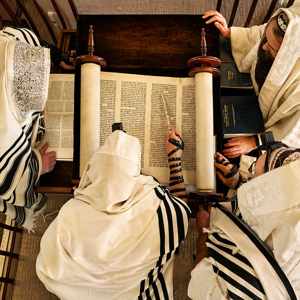


Yom Kippur is the Day of Atonement. It is well known as a day of fasting, repentance, and lots of prayers. But there is so much more to observing Yom Kippur than simply showing up at synagogue and not eating anything! Make Yom Kippur even more special and meaningful this year by plugging into the full Yom Kippur experiences. Learn all about Yom Kippur and its associated themes, practices, and prayers.
Are you ready for Rosh Hashanah and the High Holidays? A teaching on the basic observances of the festival of Rosh Hashanah. This practical how-to teaching covers all the essentials with a few quick explanations regarding the major themes of the holiday.
Here are links to additional teachings referenced in the audio:
Rosh Hashanah Menu includes an audio about the significance of the ritual foods and a pdf of the handout.
Are Two Heads Better than One explains why we celebrate Rosh HaShanah for two days, even in the Diaspora.
The Torah speaks of two types of thieves. One who comes by day and one who comes by night. Yeshua referred to himself as one coming like "a thief in the night." In this Rosh HaShanah teaching, we meditate on the meaning of that title as we prepare for the high holidays.
In Romans 11, Paul speaks of the Gentile disciples as branches from a wild olive tree, grafted in to a cultivated tree, but the symbolism leaves room for ambiguity. Who is who in the metaphor, and where does the rest of Israel fit in to the picture? Who are the broken branches, who are the roots, and how do they all fit together? This teaching examines the famous "grafted-in" passage in the context of the broader discussion of Romans 9-11 and by comparing it with a similar Talmudic teaching.
The Chassidc tale of Rabbi Levi Yitzchak of Berdichev and the shofar that would not blow provides us with insights into the coming of the Messiah. This teaching from Rosh HaShanah 2014 looks into the source texts which associate the coming of the Messiah with the sound the shofar and derives a solemn warning for his disciples as we prepare for the high holidays.
Has God rejected his people? Did Israel stumble and fall? Romans 10-11 offers us a crash course on Paul's theology regarding the election of Israel, the Messianic Jewish remnant, the inclusion of the Gentiles, and the final redemption. This Bible study fills in the missing pieces in Paul's arguments to make sense out of these difficult passages:
In Romans 10:4, Paul declares that "Christ is the end of the law for righteousness to everyone who believes." Does this verse mean what most people think that it means? Does Paul mean to contradict Yeshua's own statement that he did not come to cancel the Torah? Unravel the riddle of this difficult saying in the midst of Paul's continuing discussion about the election of Israel despite the Jewish rejection of Yeshua.
Life is full of good intentions: "One of these days, I'm going to start exercising and eating healthy." "One of these days, I'm going to get my life back on track." Have you ever noticed that "one of these days" never comes? This teaching about the Sabbath and God's Holy Days demonstrates how HaShem's appointed times are designed to interrupt our routine and provide opportunities for self-improvement, increasing godliness, and drawing nearer to God. We call this the "cycle of sanctification." We learn about how, just as Israel was commanded to sacrifice only at the place God chose to put his name, likewise, God's holy days function as "sanctuaries in time," chosen by God for all his people's participation. The forty days of repentence before the high holy days are an ideal time to get life back on track with renewed focus on repentance, prayer, and charity.
This teaching was originally presented to the community of Beth Immanuel on Rosh Chodesh Elul, Shabbat Re'eh, August 15, 2015 / Av 30, 5775, at the beginning of the forty days of repentance.
Yeshua said that Miryam chose the good portion and it would not be taken away from her. What is the "good portion" that Miryam chose? In this teaching from Parashat Ekev, the Mitzvah of saying the grace after meals opens a discussion about the story of Miryam and Marta in Luke 10 and the importance of speaking words of Torah and the words of the Master at the Sabbath table. An important reminder about the distractions of materialsim.
This teaching was originally presented to the community of Beth Immanuel on Shabbat Ekev, August 8, 2015 / Av 23, 5775.
What about the Jewish people who rejected the Messiah? Did God "harden" their hearts? Why did they stumble over Yeshua, and what were the implications? Did the Messianic promises fail? Romans 9 is a pivotal passage for understanding Paul's theology regarding Messiah and Israel. This teaching takes the most difficult chapter of the Epistle to the Romans head on from a Messianic Jewish perspective.
From the publisher's feed