
Sign up to save your podcasts
Or

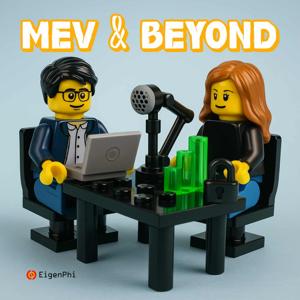


Dive into the hidden mechanics of MEV and DeFi with the 5th episode! We’ll unpack:
🕳️ Dark Forest mempool revelations
💰 DeFi Summer & MEV Gold Rush
⚡ Flashbots & MEV-Boost
🥪 Jaredfromsubway.eth 2.0’s rise
😱 2024’s most shocking sandwich losses (98% drained)
Featuring three industry leaders:
Luis Bezzenberger (@bezzenberger), Founder of ShutterNetwork
Dr. Yixin Cao (@playerYixin), Chief Data Scientist at EigenPhi
Hildobby (@hildobby_), Data Specialist at Dragonfly
Co-hosted by
Benjamin Hunter (@philosowrapter), VP Engineering at Nasdaq BTCS
Dive into the epic 6-sandwich-in-5-minutes saga, a wild ride through the realms of PBS, MEV Boost, and the searcher-builder alliance. Let @philosowrapter, Engineering VP of BTCS guide you through the beast's lair.
Are TEEs the secret weapon for squashing MEV chaos and building truly decentralized blockchains? Or are we just swapping one central point of failure for another by trusting hardware giants like Intel?
During this talk, we have these thought leaders:
* Shea Ketsdever, Product Lead at Flashbots.
* Chua Zheng Leong, Co-Founder at Automata Network
Blair Marshall, MEV Solution Architect of Fastlane, will be our co-host again.
Here are the topics we will discuss.
* Given the inherent trust in hardware manufacturers when using TEEs, can we truly consider MEV auctions run within TEEs to be "trustless" and sufficiently decentralized?
* What security considerations and safeguards can enhance TEE-based MEV auction implementations?
* Considering the argument that TEEs are a good short-term solution for achieving both performance and decentralization in areas like MEV auctions and block building, how long will this "short term" last, and how might TEE technology evolve alongside competing solutions like MPC or FHE in MEV auction design?
* How can TEE-based partial block building complement other approaches like deterministic algorithms and advanced cryptography?
* What design principles can optimize TEE integration in partial block building for security and decentralization?
* Suppose TEE technology becomes dominant among validators and block builders, exceeding 51% adoption, and regulators respond with compliance requirements demanding greater data transparency. How can we reconcile the inherent privacy features of TEEs with the need for regulatory oversight?
We examine the role of TEEs in revolutionizing MEV auctions and enabling decentralized block building while exploring potential vulnerabilities and long-term viability. Get ready for a thought-provoking discussion on the future of blockchain technology and the delicate balance between trust, decentralization, and regulation.
Check out our last MEV Myth Buster series.
Click this link or open https://bit.ly/hfdefi to download the free ebook Head First DeFi, Decoding the DNA of Crypto Transactions & Strategies.
Follow us via these to dig more hidden wisdom of DeFi:
EigenTx | Website | Discord | Twitter | YouTube | Substack | Medium | Telegram
Searcher-builder integration has evolved from a natural PBS (Proposer-Builder Separation) ecosystem development into a dominant force, raising critical questions about market competition, privacy, and the long-term health of Ethereum's MEV landscape.
This episode features diverse perspectives on one of Ethereum's most complex and evolving challenges, from privacy solutions to market dynamics research.
The top 2 builders have been consistently producing over 85% of all the blocks and more than 95% of mev-boost blocks during most of 2024. In Nov, they processed 87% of all private and 79% of all public transactions. They also took 80% of overall builder rewards, including priority fees and builder tips. That's 14.6K ETH, worth 45M, at the price of $3,100. Today, we have this all-star roster, and I believe we can inspire new and solid ideas to solve this crisis.
From the publisher's feed