
Sign up to save your podcasts
Or



Send us Fan Mail
Blink and the holidays vanished, but the lessons stuck. We headed to California expecting pure magic at Disneyland and walked away with something bigger: a live masterclass in how the world’s strongest brands turn customers into fans. We break down immersive lands that feel like movie sets, fast pass systems that stall your day, and the high-cost, high-delight choices families make to skip lines. Then we compare it with Universal Studios, where lower expectations met smoother logistics, punchier ride design, and an experience that hits harder for adults.
From there, the story moves courtside. At the Intuit Dome, facial recognition handles entry, food, and merch with near-zero friction, while NBA entertainment keeps the energy up every minute. We talk about why that matters—because frictionless systems and constant engagement are what modern audiences expect everywhere. On the flight, a small act of care from Qantas turned anxiety into loyalty. That’s the blueprint: great product, memorable service, and thoughtful touches when it counts.
We also get honest about price and identity. Why do people wear Disneyland merch head to toe? Why do Yeti bottles command a premium? How did Porsche make ownership feel like joining a family while a service quote elsewhere did the opposite? Add Secretlab’s packaging and support, and you get a simple pattern: performance earns trust, service cements it, and symbols broadcast belonging. We connect those dots to practical takeaways for any founder or marketer—engineer emotional moments, remove buying friction, reward loyalty, and create artifacts people want to show off.
If you’re planning a theme park trip, curious about the economics behind billion-dollar experiences, or focused on building a brand that compels people to say “I only buy from them,” this conversation will spark ideas you can use now. Subscribe, share with a friend who loves brand strategy, and tell us: which brand has your unwavering loyalty—and why?
Send us Fan Mail
Ready to make 2026 the year you stop flirting with your goals and start owning them? We kick off with a bold reset: set “exceptional” as the baseline, not the bonus. That shift pulls everything else into focus—clearer standards, faster decisions, and the courage to pick risks that actually make your stomach flip. If the mind quits before the body, we build the kind of daily rules that carry us when motivation vanishes.
We unpack how comfort becomes the quiet ceiling on growth and why comparison is only toxic when it steals your joy. Observation, on the other hand, is a lever; study bigger players to spot your constraints and redesign your systems. We talk real stakes too—rolling the dice on a $10M+ project, using long-term strategy to eat small costs and win bigger trust, and building resilience so a hit that once ruined your week barely dents your morning. You’ll hear practical tactics for replacing hype with habits: no-snooze mornings, non-negotiable blocks, and micro-bravery reps that compound into macro wins.
There’s also a mindset audit: choose courage where fear lives, aim for bigger problems that elevate your capacity, and protect your home life from business shrapnel. We’re bringing in more guests this year—people who don’t always agree with us—to sharpen ideas and stress-test beliefs. If you want to play a bigger game, this conversation gives you the playbook: standards over slogans, discipline over dopamine, and smart risks over safe routines.
If you felt this, hit follow, subscribe on your favorite platform, and share it with a friend who’s ready to roll the dice in 2026. Then tell us: what’s your word of the year—and what scary move are you committing to this week?
Send us Fan Mail
Time doesn’t slow down just because the calendar does. We take a hard, honest look at the year that was—what worked, what hurt, and what taught us more than we wanted to learn—and then we sketch a sharper plan for what comes next. From the joy of rest as a real strategy to the shock of how fast wins normalize, this one’s about choosing progress on purpose.
We get into high-performance mindset without the fluff: early mornings on January 1, the quiet edges that stack over time, and a year defined by persistence. George shares how eight tough months demanded grit, the big personal milestones that still mattered, and a difficult leadership decision that forced clarity on values. Robbie opens up about building systems that dwarf last year’s, the frustration of delayed results, and the question that stings but guides: are you playing the right game on the right horizon?
Risk takes center stage with a $12.5M contract that could propel or punish. We walk through worst-case thinking, legal realities, cash flow danger, and the equally scary alternative—staying the same. Then we dismantle New Year’s resolutions and rebuild a practical approach: start tomorrow, not “someday.” Set one meaningful goal in each pillar—health, wealth, relationships, and experiences—and back it with habits, deadlines, and systems that make progress likely. We also confront hedonic adaptation head-on: why the office, the car, and the win all fade fast, and how to anchor your efforts to purpose, not novelty.
If you want a smarter way to end the year and a cleaner way to begin the next, this conversation gives you prompts, guardrails, and momentum. Subscribe, share with someone who needs a nudge, and leave a review with your one-word summary of the year—we’ll read our favorites on the show.
Send us Fan Mail
A howling wind shreds a campsite, a lonely mate nearly gets blown away, and a highway stop turns into a $1,018 gut punch over an unregistered company car. That flash of blue lights opens the door to a bigger question we’ve all felt: why do the systems that happily take your money fail at the moments that matter? We pull apart VicRoads bureaucracy, the dead weight of outdated taxes, and the slow grind of council delays that can sink a project long before a slab is poured.
Then we go straight at the sacred cow: owner builders. George takes the gloves off—most people don’t have the time, the trade leverage, or the coordination to deliver a safe, durable home without paying for it twice in delays and defects. We break down how trades price owner builders, why vague drawings explode into variations, and where hidden risks live behind paint and plaster. Robbie presses on freedom, AI as a coach, and whether a smarter framework could unlock a better path for those who can’t or won’t hire a builder.
We search for a middle ground that respects ambition and protects outcomes: short, targeted education on sequencing, codes, contracts, and estimating; mandatory stage inspections beyond slab and frame; and independent oversight from registered builders or project managers who can approve each gate before you move forward. Along the way we share practical buying signals—documentation quality, real branding, transparent communication, and how a well-run process beats a too-cheap quote every time.
If you care about building—your home, your business, or the industry—this conversation gives you usable filters and a clear sense of where things break and how to fix them. Join us, then tell us where you stand: should anyone be allowed to build a house, or is it time to reform the rules? Subscribe, share this with a mate who’s planning a build, and leave a review to help more people find the show.
Send us Fan Mail
A twenty-second jet ski gag beat months of polished business content. That gut punch sparked a bigger conversation: are we chasing views, or building value? We walk through the strange math of the internet—why entertainment wins the scroll, why educational content wins the sale, and how to align your strategy so the numbers that go up are the ones that pay you.
We compare platforms and unpack why reposting a proven clip can still outperform most of your feed. Then we zoom out to the metric that matters: revenue. Alex Hormozi’s pivot back to tactical content is a case study in choosing money over fame. Sponsorship stories, comment-section chaos, and brand choices show up here not as theory, but as decisions you need to make if you want a business that lasts.
From there, we dive into procrastination—the hidden tax on growth. Fear of judgment, perfectionism, and comfort masquerade as standards while they steal your time, focus, and deals. Pain avoided is pain intensified. You’ll hear simple tools we actually use: a four-quadrant board (do now, do later, delegate, eliminate), deep work instead of multitasking, and a bias toward fast, reversible decisions. We talk blind spots and why you probably can’t remove your own—mentors and peers exist to show you what you can’t see.
If you’ve been putting off a task, a call, or a launch, break it into the next tiny step and do it today. Subscribe for more straight talk on content strategy, business growth, and execution. Share this with someone who needs the push, and leave a review telling us the one thing you’ll finish before the day ends.
Send us Fan Mail
Year-end hits different when you’re running a team, a site, or a whole business. We open with the reality most leaders feel but rarely say out loud: the last few weeks of the year are hectic, attention is split, and in construction that can turn risky fast. We dig into why injuries and mistakes spike before the holidays and how simple, disciplined planning—four-week look-aheads, proactive trade bookings, clear durations—pulls teams out of chaos and back into control.
From there we get practical about mental load. Do Not Disturb windows, email rules, and centralized accounts aren’t “nice to have,” they’re risk controls for your attention. We talk about training the system to solve problems without you: telling suppliers to call ops, consolidating invoicing, running ABA pay cycles, and resisting the reflex to be everyone’s switchboard. The payoff is fewer fires and more time for real work—process, brand, and strategy that actually moves the business.
Can an owner truly switch off? Maybe not until the business is mature enough to run without you. We get honest about laptop-on-holiday decisions, the tension between control and freedom, and the leap required to hire people better than you. It’s uncomfortable, and it’s the point. We explore how mentors and paid expertise can ethically “skip the grind,” compressing years into months while accepting that you’ll still pay tuition in mistakes.
There’s heart in here too. We laugh about Disneyland prices and fast passes while making a bigger point: core memories beat line items. Presence with family, a reception-free bush trip, or a rare quiet week between Christmas and New Year can be a strategy, not a cop-out. Discipline isn’t doing what you love; it’s doing what you don’t want to do without quick rewards—like showing up weekly for 111 episodes. If you want a sharper, safer, calmer 2025, this conversation gives you the operating system to start now.
If this helped, follow and subscribe, share it with a friend who needs better boundaries, and drop a review telling us your best end-of-year system tweak.
Send us Fan Mail
Where’s the line between empathy and excellence? We dive deep into the messy middle ground leaders face when standards slip, projects stack up, and “we’ll sort it out after the holidays” becomes the silent policy. From construction sites that live or die by early starts to content teams deciding whether to keep publishing during shutdowns, we unpack how small choices shape culture, safety, and brand.
We share non-negotiables that prevent chaos before it starts: supervisors on site before trucks arrive, office teams online when trades need support, and social posts scheduled so your pipeline doesn’t go dark. You’ll hear how “the standard you walk past is the standard you accept” plays out on real projects, plus why direct feedback outperforms passive-aggressive nudges. Instead of swinging between extremes—hands-off complacency or headline-grabbing tyranny—we make the case for a blended leadership style anchored in values and measured by outcomes.
You’ll also get a framework for diagnosing performance gaps without lowering the bar: is the issue skill, time, tools, or ownership? That lens helps decide whether to train, reprioritize, standardize, or escalate. We talk hiring with intent—paying for capability while setting the line on day one—so A-players stay engaged and mediocrity has nowhere to hide. If you’ve ever wondered whether you’re being patient or just avoiding a hard talk, this conversation gives you the language, cadence, and confidence to act.
If this resonates, subscribe and share with a leader who needs it. Want to contribute your story? Visit milliondollardays.com.au/guests to apply. And if you’re on YouTube, help us hit 1,000 subscribers by Christmas—tap subscribe and join the journey.
Send us Fan Mail
What if your “fun night out” quietly steals a full day of your best work? We dig into a rare midweek blowout that turned the next morning into a slog, then use that hangover tax to dissect what actually drives sustained performance: real leverage, deep sleep, clean inputs, and simple recovery habits that compound.
We get practical fast. Instead of worshiping long hours, we separate $100,000 decisions from $25 tasks and talk about how to defend your best brain hours. Alcohol takes center stage as a cultural norm with a real cost. The confidence it buys is short-lived; the bill comes due in slower thinking, duller judgment, and lost momentum. The point isn’t moralizing—it’s picking connection without sacrificing tomorrow’s output.
Sleep anchors the whole system. We compare Oura and Whoop as feedback loops, not flexes, and share the eye-opening daylight savings pattern linking an hour less sleep with next-day spikes in heart attacks. That’s how vital sleep is to cognition and health. We then zoom into daily levers: food choices that avoid the 2 p.m. slump, caffeine without the rebound crash, and a recovery stack that actually gets used—sauna, ice, strength, mobility—so you age into capacity, not out of it.
We also challenge the allure of pricey “preventative” health packages that upsell fear but deliver vague insights. Better to build a simple, evidence-based routine: regular bloodwork with clear targets, a training plan you can keep, and recovery tools you’ll use weekly. The through line is ownership: stop collecting knowledge you don’t apply. Set non-negotiables—sleep window, training days, alcohol boundaries—and guard them like revenue. That’s how you win more days than you lose.
If this resonates, tap follow, share with a friend who’s chasing their next level, and leave a quick review to help more people find the show. Your support helps us grow a community built on clear thinking, consistent energy, and meaningful work.
Send us Fan Mail
A terrible $8.50 latte at the airport sparked a bigger question: why do we accept premium prices for mediocre products—and what does that teach us about business, loyalty, and how we spend our time? We unpack the power of location, the limits of traffic, and why quality plus service recovery is the real engine of retention. Price can ride on footfall once; value is what brings people back.
From there we zoom out to life design. We compare expensive that disappoints to expensive that delights—a thousand-dollar steak night that earns a repeat visit—and draw a straight line to bucket lists that actually happen. Disneyland with the kids isn’t a flex; it’s a memory machine. We talk practical goal setting, writing the list, and turning “someday” into dates, budgets, and bookings. If you only have forty more summers, which one gets Japan, the F1 with your son, or that first-time trip you keep postponing?
We also get tactical about home and health. Building a dream house with a sauna, ice bath, or hot tub isn’t just aesthetics; it’s a system for recovery, conversation, and better habits. We break down running the numbers, scoping the basement, and deciding which luxuries are actually life upgrades. On the health front, we favor habits over heroics: protein-forward eating, simple strength training, and sleep that sets up decades of energy. The goal is resilience that lets you say yes to experiences, not just grind through work.
The episode winds through leadership, regret, and what “providing” really means. Great businesses align price with experience and fix mistakes fast. Great lives do the same: set standards, be present, and choose moments you won’t trade away. Your move—write the list, pick one item, and put a date on it. If this resonated, follow the show, share it with a friend, and leave a quick review so more people can design their next forty summers with intention.
Send us Fan Mail
What if “made it” keeps moving every time you get closer? We open the door on a candid, no-fluff conversation about AI hype, billion-dollar valuations, and how platforms will really make money—then bring it home to the gritty choices founders face when both opportunity and risk spike at the same time.
We walk through a very real 2025: milestone construction projects, a potential $12.5m build, and a national events tour designed to help builders scale. That momentum forces a decision—go bigger in construction or double down on a leaner, higher-ROI consulting engine? Along the way we break apart the psychology of risk. Posting 16 times a day feels easy when you’ve built the reps; saying yes to a new project as a court case looms feels impossible until you decide to earn through the storm. The practical rule emerges: discipline only counts where it’s hard for you.
You’ll hear sharp takes on gratitude without complacency, why fun can’t be deferred for a decade, and how to structure your team with KPIs, weekly cadences, and quarterly reviews that actually shift performance. We probe the idea of work if money vanished entirely, and we land on a simple operating system for clarity: schedule reading at dawn, review your week, interrogate your blind spots, and make the next asymmetric bet. Expect straight talk on AI monetization, scaling pathways, cash flow, and the often-hidden cost of playing safe.
If you’ve been juggling growth, reputation, and the fear of stretching too far, this one will push you to choose with intent. Subscribe, share with a friend who needs the nudge, and leave a quick review with the one risk you’ll take before year’s end.
From the publisher's feed
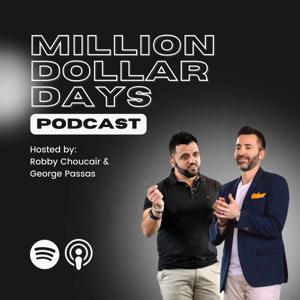
Welcome to Million Dollar Days with Robby Choucair & George Passas. Your go-to podcast for a deep dive into the world of Life and Business Mastery.
Join hosts Robby Choucair and…
Robby brings his marketing expertise to the table, offering insights into the latest strategies and trends. George, with his extensive experience in business, provides a grounded, practical perspective. Together, they explore everything from the feasibility of alien existence to effective goal setting, and even the nuances of religion.
Million Dollar Days is not just about business acumen; it's an exploration of life's many facets, wrapped up in conversations that are as enlightening as they are entertaining.
Tune in and be part of our journey, where every day is a million-dollar day, filled with learning, laughter, and the pursuit of mastery.
Ranked by our users in the last 21 days