
Sign up to save your podcasts
Or

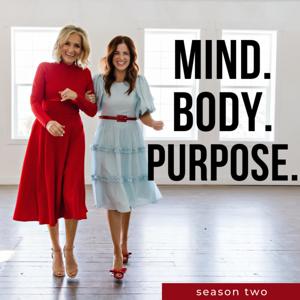


Today is all about experiencing the holidays how we want to; we're talking expectations, family dynamics, indulging, communication, non-tangible parts of Christmas, and even some on how to give and receive gifts
MIND: Rehearse your experiences mentally in advance.
Taking the time to create in our minds our own experience helps us to create the feelings and the energy we bring into situations. If we know we will be seeing someone who is difficult or if we are simply wanting to be our most loving self, we can visualize and mentally create that experience in advance for ourselves, making it much easier to show up in the demeanor and presence and awareness that we want to.
BODY: Make your physical well-being a priority.
As we tend to take on additional tasks during the holidays, it's easy to let our regular regime shift in favor of less supportive behaviors. If we can keep our physical well-being a priority, we are more likely to have the energy, the patience, the presence, the intentionality, and the supportive choices that we really want.
PURPOSE: Reflect on what is important to you during the holidays.
Communicate clearly to yourself and your loved ones what is important to you. We behave as though physical tasks are the most important, but in reality the reasons behind them is what helps us to feel and experience the things we want to. Spending time with people we love, showing love and appreciation to those who mean so much, cultivating connection, helping others feel seen and loved, and ultimately looking for ways to emulate the Savior.
Feeling the overwhelm of things to-do and/or other mental noise? Today we are sharing three strategies to help bring more enjoyment into our everyday life experiences, and less of the chaos we feel in overwhelm.
MIND: Find a way to make the task more enjoyable.
This us were we intentionally choose a way to shift energy: we add music or movement or a friend or a drink --just something that "sweetens the deal." Remember that enjoyment is always an option. Tasks can get accomplished wether we are feeling stressed or not. The stressful part is actually optional.
BODY: Transfer the mental clutter.
When our minds get filled up, it's easy to get lost and not even know where to begin. It's like being in a room full of piles and not being able to move around. Moving the mental clutter out of our heads and onto paper gives us mental space to move around in our head. It frees up precious brain activity for our higher thinking mind, and helps us consolidate or find better solutions, simply by getting it all out of our spinning brain and onto paper.
PURPOSE: Remember your higher purpose.
Taking a higher perspective helps us to gauge what we really value most, and let that steer our decisions. For example, at times our values might be in conflict and we need to choose what reflects our highest purpose best: Maybe the laundry can wait. Maybe it's okay to be late to an event. Maybe we can be peaceful and productive at the same time.
Life is full of messy emotions.
Today we are sharing real-life examples and breaking it all down to see exactly how we can handle the messiness with grace, capacity, and confidence.
Every emotion serves us as long as we interpret it in a way that adds a powerful meaning to our life; something that moves us forwards instead of backwards.
MIND: Aware - Identify the emotion as it comes
Expanding our emotional vocabulary can make all the difference in understanding what's really going on inside of us. Rather than feeling "mad" or "hurt," maybe we are actually feeling jealous or inferior. Identifying the emotion when it comes up can be very instructive and help us gain a better understanding of ourselves.
Click HERE for a downloadable Feeling Wheel from the Gottman Institute.
BODY: Allow - Sit with the Sensation
There is power in experiencing emotions. It’s part of our human experience, and we are supposed to feel.
So often we push our messy emotions down or away or pretend they aren't the truth, and then they rear up causing problems later. If we can learn to sit with the uncomfortable sensations, knowing that they aren't a sign of weakness and our value is not at stake, then we can learn a lesson from the uncomfortable messenger of messy emotions.
PURPOSE: Assess - What is the underlying wisdom?
Assessing our messy emotions is not about punishing ourselves or justifying ourselves. Rather, it’s about coming to the center of compassion, curiosity and understanding.
Generally, when we truly gain a new perspective or new wisdom surrounding a messy emotion, there is an element of increased love. There's a new way of understanding ourselves and each other, and new way we get to practice love-- and that's actually what we are here on earth for-- to practice our capacity to love.
We are all about gratitude over here-- in fact, we do a gratitude segment on our instagram page every Thursday (AND last year, we recorded episode 74 on how gratitude cures-it-all.) We will shout it from the roof-tops because we are such big believers in the power of gratitude!
Science shows that people who are grateful:
Gratitude boosts all that is good, and takes the edge off of all that is difficult; we like to think of it as "emotional ibuprofen."
Today's takeaways:
MIND: Know that being grateful and wanting more is not a conflict.
Being grateful for what we have and simultaneously wanting more is how we are designed to progress (in fact, it’s how we are taught to pray).
When we want from a place of gratitude, our desires can be a guide, or a pointer in the direction of what we can offer the world. It can steer us in the toward our natural talents, instincts, or gifts that we can both enjoy and share with the world.
Feeling guilty for wanting something only keeps us where we are. It prevents progress.
BODY: Practice creating the physical feeling of gratitude.
Gratitude has the potential to become a habit; the more we practice, the stronger the neural pathways become and it gets easier to “default” to gratitude.
Consider how it feels in the body, and how we are the creators of that feeling (whether it comes intentionally or not).
I feel gratitude largely in my heart or chest area-- it’s where the tangible parts of life and the non-tangible parts meet. (Earth and heaven come together here.)
Listen to hear as April shares her experience getting to a sincere place when needing to offer an important apology; she has found herself making a list reasons why she's grateful for the other person, shifting thoughts and feelings to an entirely different experience. It takes mental effort, but it tangibly shifts the experience in the body and makes all the difference in the world.
PURPOSE: Start today becoming the person you eventually want to be.
(Quote from Dieter Uchtdorf)
Rather than thinking we'll eventually have more wisdom or eventually be "that" kind of person, gratitude helps us begin now to experience the future version of ourselves, as we simultaneously experience our current circumstances.
It's like having "one foot" in our current experience and another "foot" in the grounded place of peace and love and gratitude, aware of who we are being. It brings perspective wether we are experiencing something beautiful or something difficult.
Part 2 from last week's episode on feeling judged!
When we feel judged, we often will simultaneously find ourselves in a space of judging. Whether we are the "judgor" or the "judgee," we end up experiencing judgement. We are calling this the "pit of judgement."
MIND: What am I revealing about myself with this judgement?
When we judge another, we aren't defining them, rather we are defining ourselves. It can reveal to us something that we are judging ourselves about, or something that is unhealed in us, or something that we feel insecure or shameful about. Being curious and even amused by our own judgments of others can be instructive because it's like showing ourselves a mirror --it can teach us something about what is going on inside of us.
BODY: How can I re-write this story to feel compassionate?
Rather than judging ourselves for be judgmental, this is an opportunity to re-wire our thoughts or re-write the story that we have created. It's an intentional shift in our minds to find compassion. I like to think of people in terms of their future self --the version of them that has learned all the lessons and has become wise and glorified, because it helps me see the current moments with less judgement and more understanding and patience and love. Whatever we are in judgment about, is actually just a moment in their story, a blip in the eternal scheme of things. Having this perspective feels a lot better and gives space for me to feel better about myself too.
"Don't judge me because I sin differently than you." -Dieter F. Uchtdorf
PURPOSE: How can I shift from judgement to discernment?
I used to believe that loving and accepting all meant to allow all into my space. Over the years, I discovered that there's a difference between being loving and accepting and simultaneously using wise judgement or discernment to choose what influences to allow into my life space. It's totally possible to love and accept other people who we don't agree with. We don't have to hate or shun or push away in order to choose not to have something as an influence in our lives.
Part of the human experience is judging and feeling judged. When we feel judged, our instinct is usually to either fight back, be defensive, prove our case and justify, OR to turn our back, build a wall, discredit the source, and feel divided.
Rather than responding to judgement with "fight" or "flight," today we are discussing other ways to address judgement, so that we can experience our lives more intentionally, more peaceably, more connectedly, and more in line with who we want to be.
MIND: Know that your worth is not at stake.
Regardless of feedback or judgement we might receive from others (or even from ourselves), the truth is that our value is constant. Even though we might feel terrible or we might think that we have done something wrong and we are deserving of judgement, at the core we are still of worth. Always.
If we feel defensive and like we need to build a case for our choices, we are probably feeling fearful or shameful, and looking for validation. If we are already sure of our innate goodness, our well-intendedness, our love, then we don't need to fear or defend or explain, but rather we can sit in peace, knowing the truth of who we are. Don't fight back, don't defend, don't judge back.
BODY: Choose what to let in to your space.
Visualize a "bubble" of protection and know that the energy of other people's feedback doesn't have to internalize in your space. Give yourself the gift of choosing what to consider and what to let slide away. Be an "energy ninja," capable of staying grounded and at peace no matter what is coming your way, because you can gracefully move and dodge and shift to let foreign energy pass on by.
This is also an opportunity to practice feeling amused; being able to "sit back" and be an observer brings some lightness instead of unnecessary gravity to perceived judgement. Amusement helps us to forgive ourselves as well as others.
PURPOSE: Do something kind.
When we feel judged, kindness is not typically our default. BUT it is a powerful place to direct ourselves, because kindness has a way of shifting our current experience into something that feels nourishing and beautiful. It takes us out of our "lower" brains and into a higher place where we get to experience more of who we really are.
The best example we have of someone who dealt with being judged is Jesus Christ; he knew who he was, and therefore wasn’t shaken by other people’s judgements or opinions. Kindness was his default. Judgements didn’t enter and influence his spirit; he had the personal authority to see the truth, and stay in a place of love.
In this episode, we discuss why nurturing the feminine is so powerful and important, no matter your gender.
All humans have both masculine and feminine energy.
“Both energies exist within each of us in varying amounts. Learning how to engage both fully is what ends up making a person psychologically, emotionally, and physically well. Just as you wouldn’t operate a remote control with only one battery, you need both of these energies as your power sources. They’re necessary tools for shaping your life.” (Alissa Vitti)
Our world tends to value thing associated with masculinity because it is results based. It's what our physical world reminds us of-- work to do, things to accomplish, and goals to achieve.
Feminine energy on the other hand is experiential. It's soothing, nurturing, connecting, compassionate, rejuvenating, and slower paced. It's the space where creativity, spontaneity, and emotions live.
When we experience an imbalance of masculine energy, we find ourselves over-worked, under-rested, anxious, resentful, and critical of our lack of accomplishments.
Finding more of a balance with feminine energy and feminine traits helps us to live our best lives.
MIND: Silence the inner critic, and access the voice that encourages and celebrates you
Our inner critic will always point to our areas of lack. Rather than listening to this voice, cultivate a different inner voice that is your support, your inner wisdom, your inner cheerleader.
BODY: Incorporate creativity: laughter, song, dance, art, music, soulful expression
“Laughter, song, and dance create emotional and spiritual connection; they remind us of the one thing that truly matters when we are searching for comfort, celebration, inspiration, or healing; We are not alone.” -Brene Brown
PURPOSE: Access femininity in roles of support and leadership
Roles of leadership are often associated with the masculine energy of power and accomplishment; when we can add to it the feminine powers of creativity, connection, transformation, and nurturing support, we create a more complete offering as leaders.
We believe that women helping each other is paramount in our lives. Listen to hear why and how to have more of this experience in your life:
MIND: Seek support, ditch competition
When we are playing and truly having fun --laughing, dancing (the kind when you’re not self-conscious), sharing, bonding, giving a shoulder or a foot massage-- there’s no hierarchy. No one is better than or less than.
We need people (women) that we can have fun with.
We need people (women) that we can feel safe with, that we can share with.
When we are sharing our love and our stories and our insights and our struggles, there’s no better than, less than, it’s just love. And it’s simultaneously humbling and ennobling.
If we find ourselves in a "one up, one down" or "hierarchy" mode (thinking we are better-than or less-than), chances are we haven't had enough serotonin, or feel-good hormones, in our bodies. This is a natural default that our brains tend to fall into when we are low on serotonin.
BODY: Make contact, be seen
If we are going to support each other and feel supported, we have to have contact with each other.
Find ways to boost serotonin! This could be through physical contact like hugs, foot rubs, swapping massages. Or it could be phone calls, texts, conversations, questions, being interested, listening-- simply making the effort to have contact in some way.
Feeling alone or isolated has serious physical and mental health consequences. We aren’t intended to go through life alone; we need each other.
PURPOSE: Give love, receive love
Ask yourself if you are needing to work on giving more love, or practice receiving more love? When we give genuinely, and the receiver is a graciously receives, the exchange can be beautiful and somewhat magical. The same is true for being a genuinely gracious recipient. We can only give as deeply as we can receive.
For purposes of this episode, our definition of personal authority is: the right to know, choose, speak, and act what is true for yourself and live it in the world. (Very much agency related.)
Versions of personal authority discussed in this episode:
MIND: Trust in the most authentic version of your voice.
Notice what "voices" in our life are the loudest, and what voices we are giving “authority” to, knowing that we can choose. Is the voice that we are giving authority to kind and loving?
BODY: Trust that your body always knows best.
Honoring our body signals will always always always serve us. Practice being aware of body signals and learn to understand what our bodies really need; maybe we need a deep breath, a minute to close our eyes, a drink of water, a change of scenery or body position, a stretch, or some time outside.
PURPOSE: Trust in your ability to create and live a purposeful life.
Rather than waiting to be needed or waiting for someone else to see our gifts or talents, we have the ability (and even the responsibility) to contribute and create and serve and share in the ways that we can. We all have the capacity to create and live a purposeful life.
Fixed beliefs might seem “comfortable” because they feel stable and secure and predictable. BUT if we get overly dogmatic about our beliefs, our ability to grow and progress can be seriously limited, and the world can feel very scary and unpredictable. It can also cause us to be stuck and defensive when we are overly concerned with our "rightness."
Today we are talking about how having space for flexibility in our beliefs can be really fun and expanding and provides increased understanding and growth.
Today's takeaways:
MIND: Ask "are my beliefs useful?"
BODY: Ask "what do I want to believe about my body?"
PURPOSE: Ask "in what way can I allow myself to shine?"
From the publisher's feed