
Sign up to save your podcasts
Or

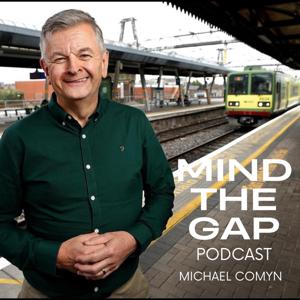


Episode 90 of Mind the Gap is a pause rather than a conclusion.
Looking back through the archive, Michael listens again to the ideas, questions, certainties and contradictions that have shaped the first ninety episodes. What has changed? What still holds true? And what can we learn from the gap between what we say matters and how we actually behave?
This episode is an invitation to revisit the archive, sit with the questions that have stayed with you, and notice what you may hear differently now.
Mind the Gap will return later in the year.
#MindTheGap #Podcast #PodcastEpisode #SelfReflection #PersonalGrowth #HumanBehaviour #Leadership #Psychology #Mindfulness #Change #Curiosity #ListenBack
You know the Dunning-Kruger effect. "The dumbest people are the most confident." Except that's not what the 1999 study actually found — and the correction most people haven't heard is stranger than the myth itself.
Michael Comyn traces the real finding, the statistical critique that's since called the famous graph into question, and — instead of handing you a tidier myth to replace the old one — lands somewhere more honest: we know less about this than either the popular version or its takedown would have you believe. A confession as much as an episode.
Keywords/tags: Dunning-Kruger effect, cognitive bias, critical thinking, psychology myths, statistics, epistemic humility, self-assessment
"We're a family here." You've heard it, probably from someone who meant it warmly. This week, Michael Comyn takes the phrase more seriously than it usually gets taken — and asks the question nobody stops to ask first: which kind of family, exactly?
Because not every family is the good kind. Every office has its golden child, its black sheep, its uncle nobody sits near at Christmas. And even the good kind offers something no employer legally can, or should try to: love that isn't contingent on output. Drawing on years spent moving between organisations rather than living inside one, Michael asks what's really being borrowed when a workplace reaches for the warmest word in the language — and what it usually means when that word shows up loudest.
Gentle, a little mischievous, and not aimed at anyone who's ever said it sincerely.
Keywords/tags: workplace culture, organisational psychology, leadership language, company culture, employee relations, corporate cliché
The Space Shuttle Challenger disaster wasn't a surprise. Engineers had seen the same O-ring damage on earlier, successful flights — reviewed, discussed, waved through.
Nobody hid it. Something quieter had happened first: sociologist Diane Vaughan called it normalisation of deviance — the process by which a rule bent once, safely, quietly resets what "normal" looks like, until the next bend doesn't register as a bend at all.
Michael Comyn traces the same mechanism into a hospital corridor — how a routine scan becomes "stat" by drift rather than decision, how a diagnosis narrows without anyone deciding to skip a step — and asks the harder question underneath: how do you tell a bend worth making from one that's quietly rewriting your baseline?
Not every shortcut is a countdown to disaster. That's what makes this one hard to see coming.
Keywords/tags: normalisation of deviance, Diane Vaughan, Challenger disaster, patient safety, diagnostic error, organisational culture, quality improvement, decision-making
You already know the voice. This week, a different kind of gap — the one between the life you're living and the plot you never actually chose.
Michael Comyn draws on psychiatrist Eric Berne's idea of the life script — the unconscious plan for how things are supposed to go, written long before anyone had a vote in it — and lays out six shapes that plot commonly takes. Not a diagnosis. A mirror, held up long enough to notice which shape you flinch at.
Five episodes into Season 5, Michael turns from what we say to each other to the older question underneath it: who wrote the story you're currently running, and how far back?
For more on the space between intention and impact, Michael's book Mind the Gap is out now on Amazon. https://amzn.eu/d/irNfaHO
The sentence arrives about a second and a half after the remark, and it is always delivered lightly: I'm only joking.
Notice where it sits. It doesn't withdraw what was said — it leaves the remark exactly where it is and changes what you're allowed to do about it.
Michael Comyn on deniable aggression: why a thirteenth-century West African institution got the rules right, what a linguist in Harlem discovered about the one thing a ritual insult is never allowed to be, and why the person doing the teasing and the person being teased are not in the same joke.
Last week, Michael Comyn made the case for silence. This week, the exception — because there's a second kind of silence, the sentence that was formed, weighed, and then never said.
Aviation has a name for the conditions that produce it: the authority gradient, the slope of rank and reputation that information has to climb to reach the person in charge.
On a first officer who hinted four times instead of shouting once, on the three words a captain said that saved a hundred and eighty-five people, and on why we, in this country, are world-class at not quite saying the thing.
The voice that tells Ireland to mind the gap spent thirty years being trained never to let silence happen. In radio, they call it dead air — eight seconds of quiet and alarms sound in rooms you'll never see.
Then Michael found himself in coaching rooms where the silence after a question turned out to be the only part that mattered.
On studio clocks, Irish funerals, the forensic recall of two men avoiding one true sentence, and the answer that only arrives after eleven seconds.
Twenty-six years ago, a voice was recorded in a studio in Manchester. Two takes. The first was used. The second was a safety copy. Nobody thought it would matter.
That voice now tells millions of people to mind the gap. Every day. Several thousand times.
And still, people fall in the gap.
In this Season 5 opener, Michael Comyn returns to the recording studio, to the moment a four-word warning was created almost by accident, and asks the uncomfortable question that the Irish rail network has been wrestling with: why does the most repeated instruction in someone's daily journey arrive when nobody's home?
It's a season about the conversation underneath the conversation. About what's said versus what's heard. About the strange truth that the words you weigh the most are almost never the ones that carry the furthest.
Welcome back to Mind the Gap.
Sometimes the most intelligent thing in the room is the thing left unsaid.
We had a friend called Bob. When someone was being foolish — not malicious, just foolish — Bob wouldn't argue, correct, or sigh. He would go quiet. And in that quiet, the person speaking would hear themselves. Really hear themselves.
Be more Bob.
In this season finale of Mind the Gap, Michael Comyn explores silence not as an absence but as one of the most powerful tools available to anyone who leads, communicates, or shares a room with others.
The silence of restraint — the reply you don't send, the correction you swallow — is the gap between stimulus and response, finally being practised rather than just described.
The silence of generosity — stepping back so someone else can step forward — is one of the most demanding things a leader can do.
Eighty-one episodes. All of them words. This one is about what the words were always surrounding.
Season 4 ends here. Back in June, with a new season and a different set of questions.
#MindTheGap #Silence #Leadership #EmotionalIntelligence #Communication #Podcast #PersonalDevelopment #SelfAwareness #IrishPodcast #BeMoreBob
From the publisher's feed
You already know my voice.
For twenty-five years, I've been telling you to mind the gap on trains across Ireland. This is the same instruction. The gap is just different now.
Mind the Gap is a podcast about the space between what we think we're doing and what we're actually doing. Between intention and impact. Between the behaviour we display and the one we'd choose if we were paying attention.
Each episode is a short reflection — drawn from psychology, philosophy, and the texture of everyday life — on one of those gaps. Why do we give advice nobody asked for? Why do we lie more after the mistake than during it? Why do we perform contentment, perform listening, perform strength? And what it costs us when we do.
I'm Michael Comyn — coach, broadcaster, and the voice on the platform. New episodes weekly.