
Sign up to save your podcasts
Or



TL;DR: The 2026 midterms are becoming a referendum on AI-driven growth, who pays for electricity grid expansion, and which balance sheets support the next monetary system.
📄 Summary
The Midterms as a Grid Policy Referendum (00:01:25)
Matt Dines describes November’s election as a “grid policy referendum.” The AI/superintelligence buildout is a major U.S. growth engine, but rising electricity demand raises a critical question: will ratepayers, utilities, taxpayers or hyperscalers absorb the infrastructure costs and financial risks?
Ratepayer Protection Act: Who Bears the Risk? (00:07:45)
H.R. 9340 passed the House 417-3 but fell three votes short of the Senate’s 60-vote threshold.
* The bill would require data centers drawing 100 MW+ to provide utilities with “financial assurances or contributions” for grid upgrades, without prescribing specific collateral or guarantees (00:10:17).
* Matt frames the political dispute as a choice between stronger federal regulation and state-led implementation with private contracting (00:12:20).
Political Coalitions Divide on AI (00:17:04)
Pew polling cited in the show puts Democrats with little/no confidence in federal AI regulation at 74%, up from 54% in 2024; Republicans declined from 70% to 61%.
* The hosts see a growing divide between regulatory caution and growth-oriented AI adoption, with the November election testing these competing coalitions (00:23:00).
Credit Markets Price the AI Buildout (00:25:00)
Widening Oracle bond spreads suggest hyperscalers may increasingly have to finance and backstop infrastructure expansion rather than rely on sovereign balance sheets.
* In France, rising OAT yields, sovereign CDS and EDF credit spreads signal related debt and energy constraints, highlighting different national responses to the same funding challenge (00:27:16).
UK DIGIT vs. ECB Pontes vs. U.S. GENIUS Act (00:33:20)
Cameron Otsuka compares three approaches to modernizing monetary infrastructure:
* UK DIGIT uses HSBC’s Orion platform to tokenize government gilts, while cash settlement remains within HSBC.
* ECB Pontes/Appia emphasizes central-bank settlement infrastructure.
* The U.S. GENIUS Act focuses on privately issued dollar stablecoins and private-sector adoption of distributed ledger technology (00:36:40).
The Mine Print Hash Framework (00:37:50)
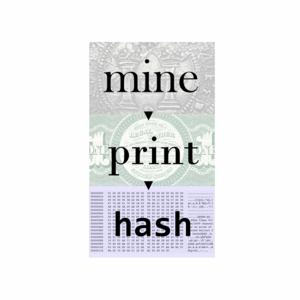
Matt explains three tools for defending monetary systems: mining (commodity money), printing (ledgers and liabilities), and hashing (cryptographic security, including Bitcoin).
* “These are all just print,” he says of the sovereign tokenization programs (00:41:01). New digital ledgers alone do not solve the larger monetary challenge.
Sovereign Debt Tokenization Accelerates (00:42:19)
The UK targets its first digital gilt issuance by Q1 2027 amid pressure in long-term gilt markets. Matt contrasts this state-led issuance approach with the U.S. strategy of encouraging private-sector monetary innovation.
Competing Visions of Western Leadership (00:44:07)
The hosts contrast Marco Rubio’s Acropolis speech about the American republic and Western civilization with Chrystia Freeland’s “Unreliable Boyfriend” framing of U.S.-Canada relations (00:50:02).
* They see a broader philosophical divide over governance, economic growth and geopolitical leadership that echoes the domestic AI debate.
🔑 Key Takeaways
* The AI infrastructure debate ultimately concerns who carries the credit risk of rapid grid expansion and potential overbuilding.
* Monitor hyperscaler credit spreads, French sovereign/EDF CDS and UK gilt yields for signs of financial stress.
* Track how DIGIT, Pontes/Appia and the GENIUS Act connect sovereign debt, digital money and private-sector balance sheets.
* The November midterms will test competing political philosophies around growth, regulation and state power.
* Monetary innovation and political competition are interconnected: the institutions that finance growth may shape the next global monetary order.
📱 Social Media
* Mine, Print, Hash: https://x.com/MinePrintHash
* Matt Dines: https://x.com/LeveredUSTs
* Cameron Otsuka: https://x.com/CameronOtsuka
🔗 Links
* 🎧 Subscribe to Mine, Print, Hash: https://api.substack.com/feed/podcast/3184485.rss
* 🌎 Build Asset Management: https://getbuilding.com
* ⚓ Build Bond Innovation ETF: https://bfix.fund
* 📈 Build Secured Income Fund I: https://buildbitcoin.com
TL;DR: Credit is tightening, AI capex is shifting toward a harvesting phase, and America.gov may be an early model for agentic digital government.
📄 Summary
Sovereign Debt Moves Into the Mainstream
Matt Dines uses the “shoeshine boy” analogy to argue that sovereign-debt stress is moving from macro specialists toward broader public awareness. U.S. interest-rate searches are elevated but still below the March 2020 peak, while Japan and France remain comparatively quiet despite yield breakouts.
* His takeaway: “we’re in the first inning of this process,” with the sovereign-debt story likely to unfold over years rather than culminate immediately (00:01:00).
MOVE, Credit Spreads & Monetary Tightness
Matt explains the MOVE Index as a gauge of the financial system’s capacity to transfer interest-rate risk. MOVE rose from roughly 80 to above 110, while high-yield spreads have begun widening.
* The combination suggests balance-sheet capacity is tightening, especially for weaker borrowers, but the stress is still far below 2022-style extremes (00:08:55).
Record Debt Issuance Tests Market Capacity
The Paramount Skydance financing for Warner Bros. Discovery becomes a case study in tightening credit. Matt cites a $52B issuance spanning maturities from two to 40 years, with bonds subsequently trading near 95 cents on the dollar.
* Coming after SoftBank’s large high-yield borrowing, he sees these deals as another sign that dollar funding capacity is being stretched (00:18:19).
Micron Signals an AI “Harvesting” Phase
Micron’s earnings surge and cash buildup show the payoff from its 2023 investment cycle, while debt is now falling as new capacity approaches completion.
* Matt focuses on the slowing rate of earnings acceleration and says management appears to be “degrossing” rather than starting another major investment wave.
* Together with Oracle reportedly stepping back from a New Mexico data-center project, he views this as evidence of a cyclical breather in AI investment—not an end to AI growth (00:22:38).
America.gov & the Agentic Government Model
Cameron Otsuka describes America.gov as a basic chatbot today but highlights its stated ambition to become a single interface where citizens can eventually complete government transactions in plain language.
* He compares it with Ukraine’s Diia and Abu Dhabi’s TAMM, which already point toward more agentic services, and contrasts those with South Korea’s approach of broadly subsidizing AI access (00:30:05).
* Cameron flags future questions around model choice, privacy, centralization, and how the user experience changes as underlying AI capabilities evolve.
From Bureaucracy to AI-Mediated Governance
Matt argues that America.gov could mark an early shift away from the traditional centralized bureaucratic model toward a lower-overhead, technology-mediated relationship between citizens and the state.
* He compares the potential transition to the iPhone consolidating many devices into one interface, while stressing that this is an early, decades-long process rather than a finished model (00:38:20).
🔑 Key Takeaways
* Sovereign-debt stress is becoming more visible, but Matt sees the cycle as early rather than climactic.
* MOVE and widening high-yield spreads point to tighter financial-system capacity.
* Record corporate borrowing offers a real-world test of how much credit markets can absorb.
* Micron suggests AI infrastructure is moving from aggressive buildout toward harvesting and consolidation.
* America.gov is framed as the first step toward agentic government services, with major implications for how citizens interact with the state.
📱 Social Media
* Mine, Print, Hash: https://x.com/MinePrintHash
* Matt Dines: https://x.com/LeveredUSTs
* Cameron Otsuka: https://x.com/CameronOtsuka
🔗 Links
* 🎧 Subscribe to Mine, Print, Hash: https://api.substack.com/feed/podcast/3184485.rss
* 🌎 Build Asset Management: https://getbuilding.com
* ⚓ Build Bond Innovation ETF: https://bfix.fund
* 📈 Build Secured Income Fund I: https://buildbitcoin.com
TL;DR: Energy and credit scarcity are repricing sovereign debt while Europe builds tokenized rails to expand financing capacity.
📄 Summary
Sovereign Debt Breakout & the Diesel Constraint
Developed-market long yields are breaking higher, with the U.S. 10-year testing/breaking 5% and France showing a more acute acceleration (00:01:17). Matt links the move to tightening real-economy inputs: refinery outages, constrained diesel supply, and rising financing costs. His shorthand is “diesel equals growth” — if fuel and credit become scarce, projects become harder to complete and the late-cycle contraction deepens (00:05:37).
* The throughline: energy, commodities, and credit are all inputs to growth, so shortages in one reinforce pressure in the others.
SoftBank as an AI Financing Node
SoftBank is presented as a key balance-sheet conduit keeping the AI build-out funded, aggressively tapping bonds, margin loans, bank facilities, and private credit to support its OpenAI commitment (00:16:13).
* The record bond deal included 8.625% and 9.75% yields, underscoring how expensive tech credit has become (00:21:59).
* Matt compares the borrowing to “maxing every credit card you have” and says SoftBank CDS is the key stress gauge for when risk-transfer capacity starts to break (00:25:13).
* Despite the strain, “the show goes on until it doesn’t” — repricing can persist longer than expected before a hard break (00:29:20).
Pontes: The ECB’s Bridge to Tokenized Markets
Pontes — Portuguese for “bridge” — links the existing Eurosystem/TARGET settlement architecture with a new permissioned DLT/API layer for tokenized financial assets (00:32:07).
* This is not a retail digital euro. It is “distributed and closed,” restricted to permissioned banks, central banks, and large institutions; settlement finality remains in the legacy Eurosystem (00:36:48).
Unlocking TARGET Balances for Sovereign Debt
Matt argues Pontes could turn accumulated TARGET balances into usable balance-sheet capacity for buying tokenized sovereign debt, helping route surplus Euro-area savings toward deficit countries such as France (00:44:53).
* In his framing, this gives the ECB another distribution and potential monetization channel for sovereign debt rather than solving the underlying shortage of real-economy savings.
Tokenization Is Early, but Strategic
Non-U.S. tokenized government debt is described as only about $1B outstanding, far too small to finance major sovereign deficits today (00:54:12).
* Matt sees a long-duration transition: Europe is building a centralized, tokenized central-bank route, while the U.S. is moving toward short-duration stablecoin dollars and private-sector underwriting of long-lived investment (00:56:49).
🔑 Key Takeaways
* Energy scarcity and expensive credit are two sides of the same growth constraint.
* SoftBank’s borrowing and CDS are important pressure points for the AI capex cycle.
* Pontes is a wholesale, permissioned settlement bridge — not a consumer CBDC.
* Its strategic significance is connecting existing Eurosystem balances with tokenized sovereign debt markets.
* The infrastructure shift is real, but the transcript frames it as a multi-year-to-decade transition, not an immediate financing solution.
📱 Social Media
* Mine, Print, Hash: https://x.com/MinePrintHash
* Matt Dines: https://x.com/LeveredUSTs
* Cameron Otsuka: https://x.com/CameronOtsuka
🔗 Links
* 🎧 Subscribe to Mine, Print, Hash: https://api.substack.com/feed/podcast/3184485.rss
* 🌎 Build Asset Management: https://getbuilding.com
* ⚓ Build Bond Innovation ETF: https://bfix.fund
* 📈 Build Secured Income Fund I: https://buildbitcoin.com
TL;DR: The Fed hike confirms the contraction phase.
📄 Summary
Fed Hike as a Business-Cycle Signal
Matt Dines uses Gordon Pepper’s framework: “Bond prices tend to reach a trough shortly after the boom turning point.” He argues the two-year Treasury moving above the policy corridor and a four-week T-bill auction above it forced the Fed to hike, with Epic Fury/resource constraints pushing the real and financial economies out of balance (00:02:49).
* The key question is whether short-term tightening can flatten long yields, attract savings, and preserve long-term credit capacity for CapEx rather than simply choke off growth (00:13:20).
2022 Playbook vs. 2026
The episode compares the current cycle with 2021–23: Bitcoin rolled first, Nasdaq followed, Russia/Ukraine squeezed oil and copper, then Fed hikes culminated in hard commodities rolling over—treated as evidence monetary tightening had regained control (00:15:53).
* In the current cycle, Bitcoin and gold already peaked before Epic Fury and the Fed’s first hike. Dines says signs the tightening is working could include falling breakevens, wider credit spreads, weaker transport/refined-product demand, and two-year yields rolling back below the corridor (00:23:43).
AI CapEx and the Depth of Contraction
With AI build-out described as a major contributor to U.S. real growth, the hosts frame the AI-safety debate as economically consequential: slowing data-center/AI investment could deepen the contraction, while continued CapEx could make the trough shallower. They contrast safety/guardrail arguments from Sam Altman and Dario Amodei with growth-first views associated with Jensen Huang and Jamie Dimon (00:29:16).
Treasury Maturities and the Next Expansion
Dines argues the eventual bottom in long-term yields would be a signal the next expansion can begin, while future Treasury coupon issuance and lower long-end rates could reopen financing capacity for investment (00:35:31).
Geopolitical Realignment
The final section discusses what the hosts see as shifting Western alliances: UK internal strains, Canada moving closer to EU defense structures, a Canada-Ukraine defense pact, and tighter U.S.-Poland military ties. Their throughline is that old relationships are fragmenting while new economic/security blocs form, feeding back into resource constraints and money markets (00:36:47).
🔑 Key Takeaways
* Watch the two-year Treasury vs. the policy corridor as the clearest signal of whether further hikes are needed.
* Commodity rollovers and weaker real-economy demand would suggest tightening is working.
* The depth of the contraction may hinge partly on whether AI CapEx keeps running or is deliberately slowed.
* A sustained fall in long-term yields would point toward the next credit/CapEx expansion.
* The episode treats geopolitical realignment as part of the same macro story: supply chains, defense spending, and capital flows are reshaping the cycle.
📱 Social Media
* Mine, Print, Hash: https://x.com/MinePrintHash
* Matt Dines: https://x.com/LeveredUSTs
* Cameron Otsuka: https://x.com/CameronOtsuka
🔗 Links
* 🎧 Subscribe to Mine, Print, Hash: https://api.substack.com/feed/podcast/3184485.rss
* 🌎 Build Asset Management: https://getbuilding.com
* ⚓ Build Bond Innovation ETF: https://bfix.fund
* 📈 Build Secured Income Fund I: https://buildbitcoin.com
TL;DR: A potentially volatile central-bank week is colliding with higher long-end yields, while Treasury policy, reindustrialization and stablecoin enforcement increasingly look like parts of the same monetary transition.
📄 Summary
CPI, Housing & a Possible Fed Hike
Matt Dines says the next week could be “action-packed” for money markets as CPI lands ahead of Fed, Bank of England and Bank of Japan decisions (00:01:42).
* Housing is central to the inflation debate: shelter remains a major CPI component, but higher-end housing is slowing, listings are lingering and sellers are cutting prices (00:03:49).
* Fed Funds futures and OIS both imply roughly 3-to-1 odds of a Fed hike. Unlike prior cycles, Matt argues markets have received far less advance preparation, increasing the risk of a sharp repricing (00:08:24).
* The BOE is expected to hold for now, while the BOJ is expected to continue normalization with another 25 bps hike.
Treasury Buybacks Aren’t a Panic Signal
Treasury offered to buy back up to $6B of long-dated debt but accepted only about $5.1B. Matt argues the unused capacity matters: “They’re okay with long-term yields rising to a certain point” (00:13:22).
* Rather than suppressing yields at any price, the buyback removes discounted, low-coupon bonds from dealer balance sheets and frees dealer capacity.
Stablecoin Dollar + Reindustrialization
As Treasury debt shifts toward shorter maturities, Matt sees more bills becoming tokenized into a “new asset-backed stablecoin dollar standard” (00:14:21).
* U.S. reindustrialization still requires long-term credit for factories, energy infrastructure and supply chains. Rates therefore need to reward productive lending while still allowing projects to “pencil out” (00:15:02).
* Long-duration Treasury bonds are approaching prior stress levels where balance-sheet problems surfaced, suggesting another break lower could reveal the next weak link (00:18:10).
Toward a Nationalist Monetary-Fiscal Regime
The discussion ties tariffs, industrial policy, strategic energy/mineral capacity, domestic spending and digitally native monetary rails into what Matt calls a “nationalist monetary fiscal regime” (00:20:02).
* A proposed $5,000 citizen dividend is framed as a possible future example of fiscal transfers delivered through new digital-dollar rails rather than legacy payment systems.
Xinbi Guarantee Sanctions & Stablecoin Enforcement
Cameron Otsuka argues Treasury’s crackdown on Xinbi Guarantee is both anti-fraud policy and a test of U.S. sanctions power over stablecoin rails (00:22:52).
* The network used encrypted messaging, crypto payment infrastructure and related entities to facilitate scam activity.
* DOJ cooperation with Tether shows dollar-stablecoin issuers remain powerful enforcement chokepoints (00:27:10).
* After addresses were frozen, activity shifted toward USDD, but Cameron’s broader conclusion is that “if it touches the dollar rail, you’re still within the U.S.’s sanctions capability” (00:29:47).
🔑 Key Takeaways
* Watch CPI, the Fed, BOE and BOJ as a concentrated volatility catalyst.
* Treasury buybacks appear aimed at dealer balance-sheet capacity, not indiscriminate yield suppression.
* Higher long-term rates may help channel credit toward productive U.S. investment.
* Stablecoin rails are becoming intertwined with Treasury funding, fiscal policy and industrial strategy.
* U.S. sanctions power still matters when stablecoins ultimately depend on dollar-linked reserves or infrastructure.
Matt on Kontrarian Korner: https://www.kontrariankorner.com/p/kontrarian-korner-151-matt-dines
📱 Social Media
* Mine, Print, Hash: https://x.com/MinePrintHash
* Matt Dines: https://x.com/LeveredUSTs
* Cameron Otsuka: https://x.com/CameronOtsuka
🔗 Links
* 🎧 Subscribe to Mine, Print, Hash: https://api.substack.com/feed/podcast/3184485.rss
* 🌎 Build Asset Management: https://getbuilding.com
* ⚓ Build Bond Innovation ETF: https://bfix.fund
* 📈 Build Secured Income Fund I: https://buildbitcoin.com
TL;DR: Asheville’s message was growth — with private credit, industrial policy, and new monetary rails doing more of the work than a return to 2010s-style QE.
📄 Summary
Growth Is the G20’s Core Priority
Cameron Otsuka and Matt Dines highlight the conference’s repeated focus on growth: “Most fundamental priority is economic growth” (00:01:14).
* Matt’s throughline is that growth is the preferred way to manage the global debt overhang, while avoiding another cycle of crisis-driven stimulus and balance-sheet expansion.
China Is the Main Point of Friction
China objected to four paragraphs of the Asheville statement while the other 19 members aligned with the drafted text (00:02:20).
* The disputes centered on debt restructuring, external imbalances, and export-led growth. Matt connects this to China’s “involution” problem: subsidized excess capacity pushed into global markets (00:04:57).
* China sets competition guidelines for automakers expanding overseas: https://cnevpost.com/2026/09/01/china-sets-competition-guidelines-automakers-overseas/
* Sharp China Podcast: Five US-China (and Russia) Questions: https://sinocism.com/p/sharp-china-five-us-china-and-russia
AI, Stablecoins, and Crypto Move Into the G20 Plumbing
The Asheville statement brings new technology deeper into the financial architecture, with FSB work on responsible AI supervision (00:05:53).
* It also advances global stablecoin arrangements and data standards (00:07:53), plus stronger FATF AML/CFT implementation in jurisdictions with significant virtual-asset use (00:08:50).
* The implication: domestic stablecoin regimes are moving toward cross-border rules of the road.
From QE Toward Private-Sector Credit Expansion
Matt flags the U.S. Treasury bringing private-sector leaders into the G20 process as a major signal (00:12:51).
* His framework is that future monetary expansion may come through commercial-bank balance sheets rather than primarily through the central bank (00:15:29).
* The goal is productive credit creation for infrastructure, power, energy, manufacturing, and Main Street growth rather than indiscriminate asset inflation.
Reindustrialization Gets a Workforce Component
The Foundry School initiative is presented as another piece of the U.S. reindustrialization strategy, training workers for advanced manufacturing and concentrating much of that effort in former Rust Belt regions (00:22:53).
Quantitative Credit Guidance
Matt introduces Richard Werner’s “quantitative credit guidance” framework, also known historically as window guidance, where lending is steered toward productive state priorities (00:25:32).
* He argues this better fits the emerging policy mix than the old QE paradigm, especially alongside Kevin Warsh’s move away from forward guidance and dot plots (00:31:02).
Venezuela as a Real-World Supply-Chain Example
The episode closes on the new U.S.-Venezuela oil deal, which Matt views as part of an American-led supply-chain buildout and the broader sovereign-debt restructuring agenda (00:37:09).
* The deal includes long-duration concessions across 17 oil fields with 65 billion barrels of proven reserves, while Venezuela’s broader distressed-debt workout is discussed as potentially reaching roughly $240 billion.
🔑 Key Takeaways
* “Growth is the way out” is the organizing idea tying the G20 agenda together.
* China’s export model is the clearest fault line in an otherwise unusually aligned G20 statement.
* Stablecoins, AI oversight, and virtual-asset compliance are becoming components of global monetary coordination.
* The proposed policy shift is from central-bank-led QE toward bank credit directed into real-economy production.
* Watch the follow-up G20 meetings in Thailand and Doral for progress on debt restructuring, stablecoin coordination, and the new growth framework.
📱 Social Media
* Mine, Print, Hash: https://x.com/MinePrintHash
* Matt Dines: https://x.com/LeveredUSTs
* Cameron Otsuka: https://x.com/CameronOtsuka
🔗 Links
* 🎧 Subscribe to Mine, Print, Hash: https://api.substack.com/feed/podcast/3184485.rss
* 🌎 Build Asset Management: https://getbuilding.com
* ⚓ Build Bond Innovation ETF: https://bfix.fund
* 📈 Build Secured Income Fund I: https://buildbitcoin.com
TL;DR: Economic pressure on Iran and competition over stablecoin infrastructure are presented as two fronts in a broader reshaping of the dollar system.
📄 Summary
Operation Economic Outcast: An “Economic D-Day”
The hosts frame the new Iran campaign as the next stage of a longer U.S.-led strategy, using Executive Order 13902 authority to target IRGC-linked activity across digital assets, technology, gold, aviation and shipping, including transactions routed through third countries (00:00:40).
* Secretary Bessent’s “economic D-Day” language is interpreted as a beachhead rather than a quick strike: after pressure on oil and financial institutions, the campaign is now moving deeper into the real economy and could take months or longer (00:03:41).
China, Iranian Oil & the Sanctions Network
China’s sharper public opposition to the sanctions is treated by the hosts as evidence that Chinese commercial interests may be exposed (00:09:18).
* They connect this to alleged Iranian fuel-smuggling networks that arbitrage subsidized domestic energy into external black markets, and speculate that Bank of Kunlun could be the major financial institution Bessent said would face sanctions (00:10:45).
* The broader thesis: Operation Economic Outcast is designed to disrupt cross-border trade and financial channels that support Iran’s state-survival mechanisms.
Banks Race to Build Stablecoin Infrastructure
The discussion shifts to U.S. banks responding to the stablecoin transition. Large banks, regional/community banks and payment networks are forming competing alliances after earlier efforts to resist interest-bearing stablecoins (00:17:53).
* The hosts contrast banks’ preferred “tokenized deposit” model with the GENIUS Act framework, which they describe as making the regulated stablecoin dollar effectively a tokenized Treasury bill backed one-for-one by T-bills (00:23:18).
* Their expectation is a decade of creative destruction as stablecoins become “the new dollar infrastructure,” producing winners and losers across banks, issuers and payment networks (00:25:33).
Jackson Hole: Payments, Crypto & a Less-Communicative Fed
This year’s Jackson Hole theme — “financial innovations, implications for payments and policy” — is read as confirmation that instant payments, cryptocurrencies and stablecoins now sit at the center of monetary-policy discussion (00:26:59).
* The hosts also see the limited advance agenda as consistent with a Kevin Warsh Fed moving away from forward guidance and toward a narrower lender-of-last-resort role (00:27:45).
G20 Asheville: Watching the New System Take Shape
Mine Print Hash says it has been invited as media to the G20 Summit in Asheville, where the team plans interviews and short-form coverage (00:28:18).
* They do not expect a “Bretton Woods” moment, but view the summit as one of the intermediate meetings where finance ministers, Treasury officials and central bankers advance the emerging monetary architecture (00:30:22).
🔑 Key Takeaways
* Operation Economic Outcast is framed as a long-duration economic campaign aimed at dismantling Iran-linked trade and financing networks.
* China’s reaction and a potential Chinese-bank sanction are the next developments the hosts are watching.
* Stablecoins are becoming a competitive battleground for banks, payment networks and issuers, with Treasury-backed dollars positioned as core infrastructure.
* Jackson Hole and the G20 are treated as institutional milestones in the same broader monetary transition.
📱 Social Media
* Mine, Print, Hash: https://x.com/MinePrintHash
* Matt Dines: https://x.com/LeveredUSTs
* Cameron Otsuka: https://x.com/CameronOtsuka
🔗 Links
* 🎧 Subscribe to Mine, Print, Hash: https://api.substack.com/feed/podcast/3184485.rss
* 🌎 Build Asset Management: https://getbuilding.com
* ⚓ Build Bond Innovation ETF: https://bfix.fund
* 📈 Build Secured Income Fund I: https://buildbitcoin.com
TL;DR: Global growth is slowing as the U.S.-Canada trade fight expands from tariffs into resources, mortgages, insurance and Treasury-market defense.
📄 Summary
The Slowdown Is Appearing Before GDP
Matt Dines links weaker Southeast Asian oil demand, a 349 billion yuan PBOC liquidity injection, Walmart’s Q2 consumer warning signs and slack in copper into one picture: growth is slowing across fragmented regional spheres (00:00:53).
* He argues the PBOC action was a liquidity injection—not the liquidity-removing “reverse repo” associated with the Fed—and a sign of stress reaching China’s banking system (00:01:47).
* Walmart suggests the same tide is reaching the U.S. consumer, though unevenly. Matt calls it a war of attrition: “You just want to be the last man standing” (00:07:36).
Copper Signals a Near-Term Pause
Trafigura delivered 20,000 tons of copper into LME warehouses, collapsing backwardation—the condition in which future prices sit below spot prices (00:07:39).
* Matt sees the available metal as evidence that someone elsewhere did not consume it, reinforcing the slowdown mosaic. “If you’re waiting for [GDP] to tell you the slowdown is taking place, you’re going to be late to the fact” (00:11:49).
* Copper remains structurally bullish because electrification and AI require more supply, but vanished backwardation points to a near-term pause (00:12:50).
Canada Is the Strategic Prize
The U.S. threatened 50% tariffs as Trump and Mark Carney negotiated into the deadline. Canada remains outside both Pax Silica and China’s AI cooperation bloc, preserving leverage while deciding which system to join (00:13:41).
* Matt argues Canada’s oil, gas and minerals are essential to a U.S.-led semiconductor and AI supply chain, while its warmer posture toward China raises the stakes (00:16:02).
* Brookfield becomes the lens for tracking the Canadian power faction behind the negotiation (00:19:23).
Insurance, Mortgages and Trophy Assets Reveal the Capital Fight
Mark Walter’s sports holdings, Guggenheim ties and transaction with Joshua Kushner are presented as signals of liquidity needs and coalition-building. The harder financial trail is United Wholesale Mortgage: a $1.65 billion financing led by Brookfield-owned Oaktree after a severe earnings setback (00:20:14).
* Matt sees a possible next phase after LIBOR-to-SOFR: a domestic reordering of U.S. wholesale mortgage and insurance markets, with households directly exposed (00:29:09).
* Carney’s prior senior role at Brookfield further connects this network to Canada’s strategic choice (00:30:19).
Treasury Buybacks Are More Than Yield-Curve Control
Matt frames Scott Bessent’s long-end buyback announcement around post-2008 Treasury bonds trading below par. Buying them, he argues, gives investment funds cash to absorb foreign secondary-market selling and defend U.S. yields during negotiations (00:31:39).
* Investment funds—not the Fed—are now key marginal buyers of 10- and 30-year issuance. Buyback capacity is finite, but Matt calls it a “show of force” against anyone pressuring the Treasury curve (00:37:24).
* To judge leverage, watch Brookfield’s relative performance, the final trade terms and whether Canada joins Pax Silica (00:44:07).
🔑 Key Takeaways
* Treat repo stress, earnings calls and commodity curves as leading signals; GDP arrives late.
* Separate copper’s long-term supply deficit from its near-term cyclical slowdown.
* The U.S.-Canada deal concerns resources, capital networks and AI-era supply chains—not tariffs alone.
* Treasury buybacks may recycle liquidity toward the marginal bond buyer rather than simply represent QE or permanent yield-curve control.
* The outcome reaches households through mortgages, insurance, pensions, asset prices and employment.
📱 Social Media
* Mine, Print, Hash: https://x.com/MinePrintHash
* Matt Dines: https://x.com/LeveredUSTs
* Cameron Otsuka: https://x.com/CameronOtsuka
🔗 Links
* 🎧 Subscribe to Mine, Print, Hash: https://api.substack.com/feed/podcast/3184485.rss
* 🌎 Build Asset Management: https://getbuilding.com
* ⚓ Build Bond Innovation ETF: https://bfix.fund
* 📈 Build Secured Income Fund I: https://buildbitcoin.com
TL;DR: Yen intervention is the opening move in a wider reset linking monetary negotiations, trade-route rewiring, and tokenized settlement rails.
📄 Summary
Yen Intervention Becomes a Negotiation
Matt Dines reads the July 31 U.S. yen intervention as a public first move designed to force a response, not a completed operation. Prime Minister Takaichi faces both political and financial pressure as the yen carry trade remains unresolved (00:00:57).
* The Aug. 29-Sept. 1 G20 finance and central-bank gathering in Asheville is framed as the next checkpoint. Matt rejects “new Bretton Woods” hype: “This is laying the groundwork” for sovereign debt workouts, open payment channels, anti-fraud cooperation, and a response to global imbalances (00:07:39).
Hormuz Shock Rewires Trade
The episode argues that shutting traffic through Hormuz and the Red Sea redirected energy flows away from Southeast Asia, contributing to weaker oil demand in Japan, South Korea, China, Bangladesh, and Pakistan. In Matt’s framework, the intervention confirms a coordinated shift from military pressure into finance: “the next battlefront in this engagement is moving into capital markets” (00:13:17).
* China’s new seasonal Arctic service from Ningbo to Felixstowe points to a faster route for high-value goods such as batteries, solar panels, EV components, and electronics (00:18:44).
* Greenland’s location between Alaska and the Arctic corridor, plus a reported record Panama Canal auction fee, illustrates how strategic geography and logistics bottlenecks are being repriced as global shipping reorganizes (00:21:17).
Tokenized Gold and Alternative Payment Rails
The UK’s possible FCA framework for tokenized gold is presented as an attempt to preserve London’s role in gold pricing and cross-border settlement while adapting Bitcoin-style hashing to vaulted metal. Matt sees custody as the unresolved weakness, even as Tether, HSBC/Hong Kong, and other hubs push the model forward (00:27:33).
* Russia’s state-backed A7 network, combining crypto and traditional banking, is treated as a grassroots response to sanctions and the fragmentation of the offshore dollar system—an effort for “order to emerge out of chaos” (00:32:22).
U.S. Fight Over the New Market Rails
The delayed Clarity Act leaves U.S. digital-asset rules “written in pencil,” with policy still dependent on executive and agency discretion (00:35:43).
* New York’s Kalshi lawsuit and the CFTC’s assertion of exclusive jurisdiction turn prediction markets into a state-versus-federal contest over 24/7, blockchain-settled capital markets (00:37:12).
* The throughline is a series of proxy fights—yen, shipping, gold, sanctions payments, and market structure—moving toward a new monetary framework that major powers can eventually accept (00:42:23).
🔑 Key Takeaways
* Watch Asheville for incremental progress, not a finalized global accord.
* Yen resolution is the near-term hinge connecting geopolitics to capital markets.
* Arctic and Panama routes reveal where trade, strategic territory, and growth markets are shifting.
* Tokenized gold and crypto-enabled payments are early replacements for fragmented offshore-dollar rails.
* U.S. regulatory clarity will determine who controls the next generation of financial infrastructure.
📱 Social Media
* Mine, Print, Hash: https://x.com/MinePrintHash
* Matt Dines: https://x.com/LeveredUSTs
* Cameron Otsuka: https://x.com/CameronOtsuka
🔗 Links
* 🎧 Subscribe to Mine, Print, Hash: https://api.substack.com/feed/podcast/3184485.rss
* 🌎 Build Asset Management: https://getbuilding.com
* ⚓ Build Bond Innovation ETF: https://bfix.fund
* 📈 Build Secured Income Fund I: https://buildbitcoin.com
TL;DR: The yen intervention is the opening move in a much larger fight over dollar liquidity, the yen carry trade, Fed authority, and Japan’s role in the next U.S.-aligned AI/industrial system.
📄 Summary
Yen Intervention as a Monetary Transition
The episode opens with the July 31 U.S. Treasury intervention to support the yen after USD/JPY moved beyond 160. Matt Dines argues this should not be read simply as a prelude to yen or Japanese sovereign collapse, but as a bridge from the post-1990 Japanese monetary order and the offshore-dollar system toward a new structure, potentially centered on a “stablecoin asset dollar” (00:01:26).
40 Years of Intervention & the Yen Carry Trade
Reviewing 13 intervention episodes over four decades, Matt highlights an asymmetry: when the yen is too weak, the U.S. has repeatedly been the external buyer; when it is too strong, broader Western partners have joined the selling. He interprets this as evidence of a large accumulated yen short/carry-trade exposure that becomes vulnerable if the yen strengthens (00:11:15).
* His framing: for Japan, in the present setup, it is effectively “the United States or nobody” (00:23:05).
From FX Buying to Secured Dollar Liquidity
Japan could defend the yen by selling U.S. Treasuries, but that risks pushing U.S. yields higher. The first intervention instead used the Exchange Stabilization Fund, while the next proposed step is access to a New York Fed repo facility with a $60B counterparty limit. That would let Japan borrow dollars against roughly $1.14T of Treasury holdings, defend the yen without outright Treasury sales, and give the BOJ more room to raise rates (00:24:16).
The Political Fight: Who Controls the Fed Tools?
The monetary mechanics become a governance battle over whether the repo facility can be used for yen support. Matt connects the media focus on Kevin Warsh’s credibility to the three-person Foreign Currency Subcommittee beneath the FOMC, where a 2-1 majority could determine access to the facility. The deeper issue is whether Japan gets secured dollar liquidity without destabilizing Treasury markets (00:37:30).
Japan, Pax Silica & SoftBank
The episode then links the yen fight to Japan’s strategic role in Pacific defense, semiconductor/material supply chains, and AI/robotics capital formation. Japan is described as a foundational Pax Silica partner, while SoftBank is presented as the balance-sheet bridge between Japanese capital and the AI build-out, including exposure to Arm and OpenAI through Vision Fund 2 (00:45:34).
🔑 Key Takeaways
* Watch the yen, the Fed repo-facility decision, and SoftBank as three windows into the same transition.
* A stronger yen threatens decades of carry-trade shorts and could force leveraged positions to cover.
* Secured dollar liquidity could support the yen while limiting forced Japanese Treasury sales.
* The ultimate question is bigger than next week’s FX move: “who wins and which coalition gets to build and capitalize the monetary and industrial architecture that comes next” (00:59:04).
📱 Social Media
* Mine, Print, Hash: https://x.com/MinePrintHash
* Matt Dines: https://x.com/LeveredUSTs
* Cameron Otsuka: https://x.com/CameronOtsuka
🔗 Links
* 🎧 Subscribe to Mine, Print, Hash: https://api.substack.com/feed/podcast/3184485.rss
* 🌎 Build Asset Management: https://getbuilding.com
* ⚓ Build Bond Innovation ETF: https://bfix.fund
* 📈 Build Secured Income Fund I: https://buildbitcoin.com
From the publisher's feed
Ranked by our users in the last 21 days