
Sign up to save your podcasts
Or

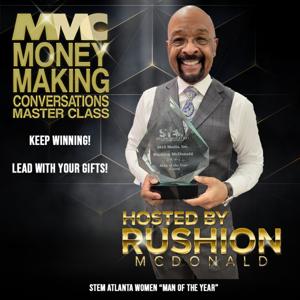


Listen and subscribe to Money Making Conversations on iHeartRadio, Apple Podcasts, Spotify, www.moneymakingconversations.com/subscribe/ or wherever you listen to podcasts. New Money Making Conversations episodes drop daily. I want to alert you, so you don’t miss out on expert analysis and insider perspectives from my guests who provide tips that can help you uplift the community, improve your financial planning, motivation, or advice on how to be a successful entrepreneur. Keep winning!
Two-time Emmy and Three-time NAACP Image Award-winning, television Executive Producer Rushion McDonald interviewed Gerron Duhon.
Purpose of the Interview
The conversation aimed to:
Key Takeaways
Personal Journey & Identity Shift
Misconceptions About Wealth
Financial Habits & Framework
Faith and Finance Connection
Generational Wealth
Practical Advice
Notable Quotes
#SHMS #STRAW #BEST
See omnystudio.com/listener for privacy information.
Listen and subscribe to Money Making Conversations on iHeartRadio, Apple Podcasts, Spotify, www.moneymakingconversations.com/subscribe/ or wherever you listen to podcasts. New Money Making Conversations episodes drop daily. I want to alert you, so you don’t miss out on expert analysis and insider perspectives from my guests who provide tips that can help you uplift the community, improve your financial planning, motivation, or advice on how to be a successful entrepreneur. Keep winning!
Two-time Emmy and Three-time NAACP Image Award-winning, television Executive Producer Rushion McDonald interviewed Demond Martin.
Co‑founder and CEO of Well With All, a Black‑owned purpose‑driven wellness brand—joins Rushion McDonald to discuss health equity, entrepreneurship, his life story, his upcoming book Friends of the Good, and his new $1M AI Health Equity Prize.
Martin shares how his difficult upbringing in the projects and rural North Carolina shaped his commitment to giving back. After a successful 21‑year career as the only Black partner at a major hedge fund, he launched Well With All to merge consumer products, wellness, and social impact. The brand donates 20% of its profits to health‑equity initiatives.
He discusses product innovation, the importance of supplements in underserved communities, the power of Black longevity, and the need to prepare younger generations for healthier futures. He also explains his upcoming book—which uses Aristotle’s philosophy of “friends of the good” to show how meaningful relationships enable success.
The conversation is energetic, inspirational, and focused on using business as a force for social good.
🎯 Purpose of the Interview
The interview aims to:
1. Introduce Well With All
A wellness company offering supplements and energy drinks while funding health‑equity solutions.
2. Share Martin’s Personal Journey
From poverty, trauma, and instability → to White House, Harvard Business School, and a top hedge fund.
3. Promote His Book, Friends of the Good
A philosophy‑driven exploration of friendship, mentorship, and community.
4. Announce the $1 Million AI Prize
A major initiative to scale AI tools that close health‑equity gaps.
5. Encourage Health Awareness in Underserved Communities
Particularly around longevity, dietary choices, energy consumption, and supplement use.
🔑 Key Takeaways 1. Health Equity Drives the Mission
Martin emphasizes that health is a human right and disparities in nutrition, maternal health, and mental‑health access must be addressed.
2. Well With All = Social Impact + Consumer Products
The company donates 20% of profits and creates healthier alternatives (energy drinks, supplements) to replace harmful daily habits like sugary sodas.
3. Personal Story Fuels Commitment
He overcame poverty, a traumatic home life, and limited opportunity—and believes he survived because others poured into him.
4. Mentorship Changed His Life
Major turning points included:
5. Expertise Matters
His success with Well With All is grounded in 21 years as an investor specializing only in consumer companies.
6. AI Can Close Health Gaps
The $1M Well With All Prize supports AI tools already impacting at least 1,000 lives with the potential to scale to 100,000+.
7. Black Longevity Documentary
His company created a film (NAACP Image Award–nominated) featuring Black elders aged 85–106 to redefine narratives around Black health.
8. The Power of Friendship
His book teaches readers how to identify “friends of the good,” the relationships that define one’s path and joy.
🗣️ Notable Quotes from Demond Martin (from the transcript)
(All quotes sourced from:)
On Health Equity
On His Upbringing
On Perspective and Survival
On His Mission
On Product Philosophy
On Expertise
On Friendship & His Book
On Confidence & Mastery
On AI
#SHMS #STRAW #BEST
See omnystudio.com/listener for privacy information.
Listen and subscribe to Money Making Conversations on iHeartRadio, Apple Podcasts, Spotify, www.moneymakingconversations.com/subscribe/ or wherever you listen to podcasts. New Money Making Conversations episodes drop daily. I want to alert you, so you don’t miss out on expert analysis and insider perspectives from my guests who provide tips that can help you uplift the community, improve your financial planning, motivation, or advice on how to be a successful entrepreneur. Keep winning!
Two-time Emmy and Three-time NAACP Image Award-winning, television Executive Producer Rushion McDonald interviewed
Here’s a structured summary of the Leona Barr‑Davenport interview with Rushion McDonald from Money Making Conversations Masterclass, including its purpose, key takeaways, and notable quotes.
🎯 Purpose of the Interview
The interview serves three primary purposes:
🧠 Key Takeaways 1. The Atlanta Business League Is a Historic Engine for Economic Empowerment
✅ Insight:
“We focus on the growth and development of African American business owners.” [LEONA BARR-DAVENPORT | Txt]
2. Atlanta’s Black Business Ecosystem Is Unique
✅ Insight:
“We had a voice… to help business owners move to the next level.” [LEONA BARR-DAVENPORT | Txt]
3. Education + Skill Development Drive Economic Mobility
✅ Insight:
4. Work Ethic and Self-Reliance Are Foundational
✅ Insight:
“You don’t wait… you go out and make a living.” [LEONA BARR-DAVENPORT | Txt]
5. Exposure and Recognition Create Opportunity
✅ Insight:
“By you simply being on the stage… that means something.” [LEONA BARR-DAVENPORT | Txt]
6. Success Comes from Solving Real Needs
✅ Insight:
“They created something that was missing… something people need.” [LEONA BARR-DAVENPORT | Txt]
7. Build Businesses Around Demand, Not Identity Alone
✅ Insight:
8. Adaptability Is Critical in Changing Systems
✅ Insight:
“It caused us to think differently… how I do business.” [LEONA BARR-DAVENPORT | Txt]
9. Collective Progress Requires Unity and Participation
✅ Insight:
10. Confidence and Ownership Drive Outcomes
✅ Insight:
💬 Notable Quotes On mission
“We focus on the growth and development of African American business owners.”
On opportunity and recognition
“Everyone does not make it to the stage.” [
On work ethic
“You don’t wait… you go out and make a living.”
On innovation
“They created something that was missing.” On adaptability
“It caused us to think differently… how I do business.” On community mindset
“We had a voice… to move the needle.”
🧾 Bottom Line
This interview is a leadership and economic empowerment conversation rooted in legacy and forward thinking.
Leona Barr‑Davenport’s core message:
#SHMS #BEST #STRAW
See omnystudio.com/listener for privacy information.
Listen and subscribe to Money Making Conversations on iHeartRadio, Apple Podcasts, Spotify, www.moneymakingconversations.com/subscribe/ or wherever you listen to podcasts. New Money Making Conversations episodes drop daily. I want to alert you, so you don’t miss out on expert analysis and insider perspectives from my guests who provide tips that can help you uplift the community, improve your financial planning, motivation, or advice on how to be a successful entrepreneur. Keep winning!
Two-time Emmy and Three-time NAACP Image Award-winning, television Executive Producer Rushion McDonald interviewed Dave Charest.
Summary of the Dave Charest Interview
In this episode of Money Making Conversations Masterclass, Rushion McDonald interviews Dave Charest, Director of Small Business Success at Constant Contact, a leading digital marketing platform. Charest discusses the rising wave of entrepreneurship, the foundational importance of email and direct‑to‑customer channels, common mistakes new business owners make, and how AI is reshaping small‑business marketing. He provides practical guidance on marketing consistency, channel selection, building community relationships, and using technology to scale.
Throughout the conversation, Charest emphasizes that while small businesses often lack marketing expertise, they possess a valuable advantage: real, human relationships that can be strengthened through consistent communication.
Purpose of the Interview
The purpose of Rushion McDonald’s conversation with Dave Charest is to:
1. Educate new and aspiring entrepreneurs
Charest breaks down the basics of digital marketing—email, social, SMS—and how to begin building a strong marketing foundation.
2. Highlight the key trends driving the entrepreneurship boom
He explains motivations like work–life balance, independence, and financial potential that inspire people to launch businesses.
3. Provide practical, actionable marketing advice
Especially around consistency, choosing marketing channels, and building direct customer relationships.
4. Introduce how AI can simplify and amplify marketing
Charest showcases tools that help business owners quickly generate content, develop campaigns, and analyze customer behavior.
Key Takeaways 1. Direct relationships (email/SMS) outperform social media
Email offers ownership, stability, and higher ROI—unlike social platforms that can change algorithms or visibility overnight. Charest stresses that “the money is in the list.”
2. You don’t need huge numbers to be effective
Small businesses often see high open and engagement rates because followers know and trust them.
3. Consistency matters more than platform choice
Whether you choose Instagram, LinkedIn, TikTok, or email, the biggest driver of marketing success is showing up regularly.
4. Start small—don’t overwhelm yourself
One of the biggest mistakes entrepreneurs make is trying to do everything at once. Begin with the basics and grow steadily.
5. Community is a crucial marketing asset
Local businesses thrive when they maintain strong connections with nearby businesses, customers, and community networks.
6. Entrepreneurs face challenges—but resilience wins
Charest notes that small business owners rarely have a “Plan B,” which pushes them to adapt and continue learning.
7. AI is transforming small‑business marketing
Constant Contact offers tools to:
Notable Quotes (from the transcript)
Here are direct paraphrases and key phrases—not copyrighted material but drawn from the transcript:
On email vs. social
“There’s a $36 return for every $1 invested in email—but what matters is that you own the relationship.”
“If a social platform goes away, so does your following. Email is a direct line.”
On audience size
On entrepreneurship motivations
On mistakes
On community
On choosing platforms
On AI’s role
#SHMS #STRAW #BEST
See omnystudio.com/listener for privacy information.
Listen and subscribe to Money Making Conversations on iHeartRadio, Apple Podcasts, Spotify, www.moneymakingconversations.com/subscribe/ or wherever you listen to podcasts. New Money Making Conversations episodes drop daily. I want to alert you, so you don’t miss out on expert analysis and insider perspectives from my guests who provide tips that can help you uplift the community, improve your financial planning, motivation, or advice on how to be a successful entrepreneur. Keep winning!
Two-time Emmy and Three-time NAACP Image Award-winning, television Executive Producer Rushion McDonald interviewed Damon Haley
Co‑founder of Glow and Flow Beauty, discussing his transition from entertainment and sports marketing into the beauty-supply industry, his mission to elevate service for Black and Brown communities, and the franchising model he is rolling out nationwide. Hosted by Rushion McDonald on Money Making Conversations Masterclass, the conversation highlights Haley’s business philosophy, community-driven approach, and long-term vision to create ownership opportunities through franchising.
🎯 Purpose of the Interview
The interview aims to:
1. Highlight Damon Haley’s entrepreneurial journey
How he moved from high-level event production and marketing (Nike, Pepsi, Coke) into beauty retail.
2. Explain why the beauty-supply industry needs Black ownership
Haley outlines the disconnect between Black consumer spending and the lack of Black-owned beauty-supply stores.
3. Promote Glow and Flow Beauty’s mission
A service-first retail model designed to uplift, educate, and serve Black and Brown consumers with dignity.
4. Introduce Glow and Flow’s franchising opportunity
Haley frames franchising as a path for individuals to enter business ownership with support and a proven model.
5. Inspire listeners to embrace change and pursue entrepreneurship
He shares personal experiences overcoming naysayers and trusting his instincts.
📌 Key Takeaways from the Interview 1. The Beauty Industry Is a Huge, Under-Owned Space for Black Entrepreneurs
2. Glow and Flow Beauty Focuses on Service, Experience, and Community
3. Franchising Eliminates the “Start From Zero” Problem
4. Hair Is the Cornerstone of the Business
5. Inventory & Capital Are Major Barriers to Entry
6. Data + Marketing Experience = Competitive Advantage
7. His Long-Term Vision: 40 Stores Nationwide
8. E-commerce and Community Outreach Expand Their Reach
💬 Notable Quotes (From the Transcript) On the power of beauty in the community
“When we look good, we feel good. When we feel good, we be good, we do good.”
On why Black beauty ownership matters
“We’re buyers… we’re consumers… we just don’t own.”
On moving into the beauty industry
“We’ve had the short end of the stick — not only from recycling our Black dollars, but the concept of service.”
On franchising
“You don’t start from zero with a franchise… you have a corporation behind you.”
On entrepreneurship and criticism
“There’s jealous, envy, and naysayers… but I’ve never been fearful of change.”
On customer service
“I try to give you other stuff… I give you a smile… if you cough, I’m gonna give you some water.”
On the importance of hair
“Hair is the cornerstone of our beauty industry.”
On long-term ambitions
“I would love to have maybe 40 Glow and Flows nationwide.”
#SHMS #BEST #STRAW
See omnystudio.com/listener for privacy information.
Listen and subscribe to Money Making Conversations on iHeartRadio, Apple Podcasts, Spotify, www.moneymakingconversations.com/subscribe/ or wherever you listen to podcasts. New Money Making Conversations episodes drop daily. I want to alert you, so you don’t miss out on expert analysis and insider perspectives from my guests who provide tips that can help you uplift the community, improve your financial planning, motivation, or advice on how to be a successful entrepreneur. Keep winning!
Two-time Emmy and Three-time NAACP Image Award-winning, television Executive Producer Rushion McDonald interviewed Michael Uadiale.
🔷 Interview Summary
Michael Uadiale, a seasoned CPA and master tax advisor with 25+ years of experience, explains how entrepreneurs can achieve financial freedom in 5–7 years through strategic tax planning and wealth systems.
The discussion centers on:
The interview reframes taxes from a burden into a strategic advantage.
🎯 Purpose of the Interview 1. Demystify taxes
2. Shift mindset from avoidance → strategy
3. Teach wealth-building through tax efficiency
4. Promote proactive financial planning
5. Provide actionable strategies
🔑 Key Takeaways 1. Wealth cannot be delegated
2. The tax code is a system of incentives
3. The wealthy don’t break rules—they learn them
4. Most people overpay taxes due to ignorance
5. Tax preparers vs. tax advisors
6. Tax planning must be year-round
7. Taxes directly impact your time and income
8. Simple strategies can create big gains
Example:
9. Compounding + tax efficiency = wealth
10. Structure determines outcomes
11. The DECIDA Framework (his system)
A structured approach to wealth building:
12. Financial freedom is accelerated through taxes
💬 Notable Quotes On personal responsibility
“Wealth cannot be delegated.” [MICHAEL UA...ALE iheart | Txt]
On the tax code
“The tax code was not written for the little guys… but if you understand it, you can get the same benefits.” [MICHAEL UA...ALE iheart | Txt]
On mindset
“You’ve got to embrace tax… it’s an education.” [MICHAEL UA...ALE iheart | Txt]
On opportunity
“The tax code is one of your fastest ways of getting to financial freedom.” [MICHAEL UA...ALE iheart | Txt]
On behavior incentives
“The tax law is a set of incentives… to make us behave the way the government wants.” [MICHAEL UA...ALE iheart | Txt]
On overpaying taxes
“Close to 80% of small business owners overpay in taxes.” [MICHAEL UA...ALE iheart | Txt]
On poor habits
“People only think about taxes when April 15th is around the corner.” [MICHAEL UA...ALE iheart | Txt]
On time lost to taxes
“Three hours out of every eight hours you work goes to the tax man.” [MICHAEL UA...ALE iheart | Txt]
On advisors vs preparers
“Most people work with tax preparers, not tax advisors.” [MICHAEL UA...ALE iheart | Txt]
On simple strategies
“Hiring your kids… everybody should be doing that if you have a business.” [MICHAEL UA...ALE iheart | Txt]
On wealth formula
“Wealth really is compounding interest… less taxes.” [MICHAEL UA...ALE iheart | Txt]
🧭 Bottom Line
Michael Uadiale’s message reframes taxes as a power tool for wealth creation:
👉 His core philosophy:
Understanding and leveraging the tax code is one of the fastest, most overlooked paths to financial freedom.
#SHMS #BEST #STRAW
Money Making Conversations Master Class with Rushion McDonald is America's premier entrepreneurship, business leadership, financial literacy, and wealth-building podcast featuring successful entrepreneurs, executives, founders, celebrities, and industry experts sharing actionable insights for professional and financial success.
Business Podcast
Entrepreneurship
Small Business
Business Growth
Financial Literacy
Wealth Building
Black Entrepreneurs
Minority Business
Leadership
Executive Leadership
Business Funding
Marketing Strategies
Personal Development
Startup Advice
Sales Training
CEO Interviews
Founder Stories
Professional Development
Economic Empowerment
Business Success
Networking
Brand Building
Innovation
How to start a business
Small business funding
Entrepreneur success stories
Business leadership podcast
Wealth building strategies
Black entrepreneur podcast
Minority business development
Marketing for small businesses
Business growth strategies
Startup funding opportunities
Executive leadership training
Financial literacy education
Success mindset podcast
See omnystudio.com/listener for privacy information.
Listen and subscribe to Money Making Conversations on iHeartRadio, Apple Podcasts, Spotify, www.moneymakingconversations.com/subscribe/ or wherever you listen to podcasts. New Money Making Conversations episodes drop daily. I want to alert you, so you don’t miss out on expert analysis and insider perspectives from my guests who provide tips that can help you uplift the community, improve your financial planning, motivation, or advice on how to be a successful entrepreneur. Keep winning!
Two-time Emmy and Three-time NAACP Image Award-winning, television Executive Producer Rushion McDonald interviewed Dr. Tiffany Bussey
Title: Director, Morehouse Innovation and Entrepreneurship Center (MIEC)
Dr. Tiffany Bussey discusses how the Morehouse Innovation and Entrepreneurship Center works to scale Black- and Brown-owned businesses, close the racial wealth gap, and intentionally connect entrepreneurs and workers to capital, contracts, and emerging industries, particularly in sustainability.
Purpose of the Interview
The interview serves to:
Key Themes & Takeaways 1. Entrepreneurship as a Tool for Closing the Wealth Gap
Key insight: The problem isn’t a lack of capable Black businesses—it’s visibility, access, and opportunity.
2. “Access to Opportunity” Matters as Much as Capital
Takeaway: Capital without revenue and customers won’t sustain a business.
3. The Three C’s of Business Growth
Dr. Bussey outlines MIEC’s core framework:
She stresses that connections only matter if relationships are mutual—it’s not enough to “know someone” unless they also understand your value.
4. Breaking Stereotypes About Black-Owned Businesses
Key idea: Preparation plus access dismantles bias.
5. Sustainability = One of the Largest Economic Opportunities
Dr. Bussey reframes sustainability as an economic opportunity, not just an environmental issue:
She urges listeners to stop defaulting to oversaturated businesses (e.g., nightclubs) and instead pursue industries that are expanding rapidly and globally.
6. Workforce Development + Business Development Must Align
Takeaway: Economic equity requires aligned systems, not isolated programs.
7. Entrepreneurship Is Rewarding—but Not Romantic
Dr. Bussey demystifies entrepreneurship:
Key message: Entrepreneurship is powerful, but it must be supported intentionally.
Notable Quotes
“Entrepreneurship and small businesses are one of the pathways to closing the racial income inequality gap.”
“We don’t just provide technical assistance for technical assistance’s sake—this is about creating real opportunity.”
“Capital dominates the conversation, but contracts are equally important.”
“People don’t buy products or services. They buy solutions.”
“We have to stop thinking only about what we feel we have access to.”
“Sustainability is not one industry—it’s multiple trillion-dollar opportunities.”
“Entrepreneurship is the most rewarding and the most fatiguing thing you’ll ever do.”
Overall Impact
The interview functions as both a masterclass and a call to action:
Dr. Tiffany Bussey presents a practical, data-backed roadmap for inclusive economic development—centered on ownership, access, and readiness.
#STRAW #SHMS #BEST
See omnystudio.com/listener for privacy information.
Listen and subscribe to Money Making Conversations on iHeartRadio, Apple Podcasts, Spotify, www.moneymakingconversations.com/subscribe/ or wherever you listen to podcasts. New Money Making Conversations episodes drop daily. I want to alert you, so you don’t miss out on expert analysis and insider perspectives from my guests who provide tips that can help you uplift the community, improve your financial planning, motivation, or advice on how to be a successful entrepreneur. Keep winning!
Two-time Emmy and Three-time NAACP Image Award-winning, television Executive Producer Rushion McDonald interviewed Michael Woodward.
🎯 Purpose of the Interview
The interview is designed to:
🧾 Summary of the Interview
Michael Woodward shares his journey from growing up in Liberty City (Miami) public housing projects to becoming a real estate investor, contractor, educator, and business owner in Atlanta.
He attributes his early entrepreneurial mindset to his upbringing—helping his grandmother sell goods in a community “candy lady” business and learning customer service and hustle.
Despite financial challenges, becoming a teen father, and limited initial direction, he:
He balanced:
Eventually, he:
He also became a Lowe’s contractor, emphasizing the power of relationships and partnerships to scale opportunities.
Along the way, he mentored students and created programs that exposed young people to college, STEM, and career paths, achieving nearly a 100% college placement rate for participants.
🔑 Key Takeaways 1. Early environment can build business instincts
2. Real estate is a powerful wealth-building tool
3. Avoid lifestyle inflation
4. Relationships create opportunities
5. Education is both a pathway and a pivot point
6. Multiple income streams are critical
7. Community mindset matters
8. Exposure creates opportunity
💬 Memorable Quotes
Here are standout quotes that capture his mindset:
On entrepreneurship and early lessons
On investing discipline
On financial mistakes
On ambition and growth
On education as leverage
On community mindset
On mentorship impact
On opportunity and partnerships
🧠 Overall Insight
The interview reinforces a clear message:
Wealth is built through discipline, smart investments, relationships, and consistent effort—not quick wins or appearances.
It also highlights a deeper theme:
Success is not just personal—it’s about lifting others through mentorship, exposure, and community investment.
#SHMS #BEST #STRAW
See omnystudio.com/listener for privacy information.
Listen and subscribe to Money Making Conversations on iHeartRadio, Apple Podcasts, Spotify, www.moneymakingconversations.com/subscribe/ or wherever you listen to podcasts. New Money Making Conversations episodes drop daily. I want to alert you, so you don’t miss out on expert analysis and insider perspectives from my guests who provide tips that can help you uplift the community, improve your financial planning, motivation, or advice on how to be a successful entrepreneur. Keep winning!
Two-time Emmy and Three-time NAACP Image Award-winning, television Executive Producer Rushion McDonald interviewed Cedric Walker.
Interview Purpose
The purpose of this interview is to highlight visionary entrepreneurship, cultural ownership, and perseverance, using Cedric Walker’s founding of Universoul Circus as a case study in building a purpose‑driven business that uplifts community while achieving long‑term success.
The conversation emphasizes how research, resilience, cultural authenticity, and belief in a vision can overcome skepticism and systemic barriers. It also positions Universoul Circus as more than entertainment—it is a multigenerational cultural institution rooted in Black excellence, inclusion, and family unity.
Major Themes & Key Takeaways 1. Vision Comes Before Validation
Cedric Walker shares that the vision for Universoul Circus came in the early 1990s, long before there was widespread belief that a Black‑owned circus centered on performers of color could succeed. Despite strong skepticism from both Black and white investors, Walker trusted the research, the cultural need, and his instinct.
Key takeaway: Vision must lead—even when validation comes much later.
2. Research Turns Ideas Into Reality
Walker did not rely on inspiration alone. He immersed himself in research, studying Black entertainment history, circus traditions, and global performance art. This foundation allowed him to confidently build a unique, sustainable model rather than copying existing formats.
Key takeaway: Preparation and research are critical when challenging industry norms.
3. Cultural Authenticity Is a Competitive Advantage
Universoul Circus was created to be authentically Black, not as a niche product, but as a universal experience rooted in joy, music, athleticism, and storytelling. Walker emphasizes that authenticity—not adaptation—is what attracts diverse audiences.
Key takeaway: When you are fully yourself, your work transcends culture and geography.
4. Family‑Centered Entertainment Fills a Real Need
A defining goal of Universoul Circus is to create an experience where multiple generations can sit together and all feel seen, engaged, and celebrated. Walker intentionally designed the show so grandparents, parents, and children could enjoy the same experience simultaneously.
Key takeaway: Businesses that bring families together create lasting emotional value.
5. Evolution Without Losing Identity
Over time, Universoul Circus evolved—from including animals to becoming a modern, high‑energy, animal‑free production—adapting to changing laws, audience preferences, and cultural shifts. However, Walker notes that the soul of the circus never changed.
Key takeaway: Successful brands evolve operationally without abandoning their purpose.
6. Global Talent, Long‑Term Investment
Walker details how Universoul Circus sources talent from around the world, including Ethiopia, Cuba, China, and the Caribbean. Performers often undergo years of training and development before appearing in the show, reinforcing Universoul’s commitment to excellence and safety.
Key takeaway: Excellence requires patience, investment, and a long‑term mindset.
7. Representation Changes Perception
Universoul Circus intentionally showcases elite Black performers in spaces where they were historically unseen or undervalued. Walker explains that representation is not symbolic—it reshapes belief and possibility for both audiences and performers.
Key takeaway: Representation is not aesthetic; it is transformative.
8. Perseverance Creates Legacy
Celebrating over 30 years of operation, Universoul Circus stands as proof that staying committed to purpose through adversity leads to longevity. Walker sees the circus as a living legacy and a foundation for future cultural innovation.
Key takeaway: Longevity is built by staying the course when others doubt the destination.
Notable Quotes
“Vision comes to you like that—you have to trust it.”
“Nobody believed it would work, but I felt it in my gut and in my research.”
“Our goal was to stay authentically Black—that’s what transcends culture.”
“We wanted something where a grandmother, a father, and a child could all enjoy the same show.”
“Nothing you see is by chance. Everything has meaning.”
“We invested years into these performers before they ever hit our stage.”
“This is more than a circus—it’s a family reunion under the big top.”
Overall Message
Cedric Walker’s interview is a masterclass in cultural entrepreneurship. It demonstrates how creativity, courage, and conviction can transform an idea into an enduring institution. His journey with Universoul Circus reinforces that purpose, preparation, and persistence are the true drivers of success—especially when building something that challenges expectations.
The conversation ultimately affirms that when a business is rooted in authenticity and community, it can achieve both economic sustainability and cultural impact.
#SHMS #BEST #STRAW
See omnystudio.com/listener for privacy information.
Listen and subscribe to Money Making Conversations on iHeartRadio, Apple Podcasts, Spotify, www.moneymakingconversations.com/subscribe/ or wherever you listen to podcasts. New Money Making Conversations episodes drop daily. I want to alert you, so you don’t miss out on expert analysis and insider perspectives from my guests who provide tips that can help you uplift the community, improve your financial planning, motivation, or advice on how to be a successful entrepreneur. Keep winning!
Two-time Emmy and Three-time NAACP Image Award-winning, television Executive Producer Rushion McDonald interviewed Marsha Evans.
A licensed mental health therapist, founder of Willow Tree Counseling & Educational Center, and creator of the FELT Experience and Marsha Listens wellness platform. The conversation centers on emotional health, nervous system education, sound therapy, community healing, and her evolution as a therapist and entrepreneur. Marsha shares her personal journey from being a competitive athlete to becoming a calming force for high‑functioning individuals dealing with burnout, stress, and emotional disconnection.
She explains the origins of her signature FELT Experience, a wellness model designed to help people reconnect with themselves through somatic movement, sound healing, intentional rest, and community. She also highlights the challenges and breakthroughs in mental health—particularly within the Black community—and reflects on 16+ years of therapeutic practice.
Purpose of the Interview
The interview aims to:
1. Introduce Marsha Evans’ holistic mental health approach
Rushion invites Marsha to explain how she blends psychology, somatics, and sound‑based healing to help people process stress differently.
2. Explain the FELT Experience and its healing framework
Marsha details her signature F.E.L.T. model—Free, Expand, Listen, Transform—and why embodied emotional experience is key to healing.
3. Share her personal journey
She discusses how sports, music, and modalities like breathwork and yoga helped her turn stress into purpose.
4. Encourage new perspectives on mental health in the Black community
She and Rushion address the stigma, evolution, and growing acceptance of mental health support.
5. Showcase community‑centered healing
Marsha emphasizes connection, shared experiences, and intentional spaces that allow vulnerability and transformation.
Key Takeaways 1. Healing Requires Intentionality
Marsha explains that activities like massage or yoga can be therapeutic—but only when approached with intentionality, presence, and consent to release emotional tension.
2. The Body Holds Stories (“The body keeps the score”)
She emphasizes that the body stores emotional experiences, and modalities like breathwork, sound healing, and somatic movement help release what the mind can’t articulate.
3. The FELT Framework
The FELT Experience moves participants through:
4. Safe Community Spaces Accelerate Healing
Marsha’s events often result in participants forming friendships, emotional breakthroughs, and even planning outings together—an indicator of her program’s power.
5. People Are Conditioned to Avoid Emotions
Growing up, she was taught to hide emotions in competitive sports—especially tears as a sign of weakness. Her therapeutic mission now is to help others unlearn similar conditioning.
6. Cultural Shifts Around Mental Health
Marsha highlights major strides in the Black community, especially post‑COVID, as more people (including athletes) publicly acknowledge mental health struggles.
7. Therapy Isn’t Just Talking
She incorporates nonverbal tools like:
8. Human Connection Still Matters—even in an AI World
Marsha is open to exploring AI in mental health but insists that physical presence, touch, and human empathy are irreplaceable.
Notable Quotes (from the transcript) On her calming presence
“I think laughter is good for the soul… just being able to find peace has been really big for me… It’s just a God‑given talent.”
On coping mechanisms
“As long as I had some type of music or some form of therapy… I could navigate any stressful environment.”
On cooking as therapy (reflecting Rushion’s habits)
“You’re creating new neural pathways… recalibrating your nervous system.”
On intentional healing
“Yoga and massages can be therapeutic, but you have to be intentional.”
On the purpose of the FELT Experience
“In order to release whatever your body is experiencing, you have to have a felt experience.”
On the challenge of transformation
“We are used to chaos… but we’re not used to healed environments.”
On the evolution of her practice
“I wanted to understand the whole person… and help them change the dial on their dashboard to fit their calling.”
On mental health in the Black community
“People perceive admission as a flaw… but healing is about understanding your story.”
On creating safe spaces
“By creating a space of safety and healing… people get to live the life they desired and not a life from survival.”
#SHMS #BEST #STRAW
See omnystudio.com/listener for privacy information.
From the publisher's feed
Money Making Conversations Master Class is more than a podcast. It's a front-row seat to the ideas, experiences, and breakthrough moments that inspire success. Hosted by Rushion McDonald, each episode features influential entrepreneurs, business leaders, celebrities, influencers, and nonprofit changemakers sharing the lessons, strategies, and mindset shifts that helped them turn ambition into achievement. The show empowers dreamers, doers, and leaders to think bigger, move smarter, and take action on their goals. As Rushion McDonald often says, "Stop reading other people's success stories and start planning your own."
Tune in, get inspired, and start writing your own success story, one conversation at a time.
https://www.moneymakingconversations.com
https://www.youtube.com/MoneyMakingConversations
https://www.facebook.com/MoneyMakingConversations/
https://twitter.com/moneymakingconv
https://www.instagram.com/moneymakingconversations/