
Sign up to save your podcasts
Or

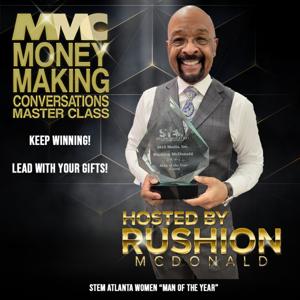


Listen and subscribe to Money Making Conversations on iHeartRadio, Apple Podcasts, Spotify, www.moneymakingconversations.com/subscribe/ or wherever you listen to podcasts. New Money Making Conversations episodes drop daily. I want to alert you, so you don’t miss out on expert analysis and insider perspectives from my guests who provide tips that can help you uplift the community, improve your financial planning, motivation, or advice on how to be a successful entrepreneur. Keep winning!
Two-time Emmy and Three-time NAACP Image Award-winning, television Executive Producer Rushion McDonald interviewed Dave Charest.
Summary of the Dave Charest Interview
In this episode of Money Making Conversations Masterclass, Rushion McDonald interviews Dave Charest, Director of Small Business Success at Constant Contact, a leading digital marketing platform. Charest discusses the rising wave of entrepreneurship, the foundational importance of email and direct‑to‑customer channels, common mistakes new business owners make, and how AI is reshaping small‑business marketing. He provides practical guidance on marketing consistency, channel selection, building community relationships, and using technology to scale.
Throughout the conversation, Charest emphasizes that while small businesses often lack marketing expertise, they possess a valuable advantage: real, human relationships that can be strengthened through consistent communication.
Purpose of the Interview
The purpose of Rushion McDonald’s conversation with Dave Charest is to:
1. Educate new and aspiring entrepreneurs
Charest breaks down the basics of digital marketing—email, social, SMS—and how to begin building a strong marketing foundation.
2. Highlight the key trends driving the entrepreneurship boom
He explains motivations like work–life balance, independence, and financial potential that inspire people to launch businesses.
3. Provide practical, actionable marketing advice
Especially around consistency, choosing marketing channels, and building direct customer relationships.
4. Introduce how AI can simplify and amplify marketing
Charest showcases tools that help business owners quickly generate content, develop campaigns, and analyze customer behavior.
Key Takeaways 1. Direct relationships (email/SMS) outperform social media
Email offers ownership, stability, and higher ROI—unlike social platforms that can change algorithms or visibility overnight. Charest stresses that “the money is in the list.”
2. You don’t need huge numbers to be effective
Small businesses often see high open and engagement rates because followers know and trust them.
3. Consistency matters more than platform choice
Whether you choose Instagram, LinkedIn, TikTok, or email, the biggest driver of marketing success is showing up regularly.
4. Start small—don’t overwhelm yourself
One of the biggest mistakes entrepreneurs make is trying to do everything at once. Begin with the basics and grow steadily.
5. Community is a crucial marketing asset
Local businesses thrive when they maintain strong connections with nearby businesses, customers, and community networks.
6. Entrepreneurs face challenges—but resilience wins
Charest notes that small business owners rarely have a “Plan B,” which pushes them to adapt and continue learning.
7. AI is transforming small‑business marketing
Constant Contact offers tools to:
Notable Quotes (from the transcript)
Here are direct paraphrases and key phrases—not copyrighted material but drawn from the transcript:
On email vs. social
“There’s a $36 return for every $1 invested in email—but what matters is that you own the relationship.”
“If a social platform goes away, so does your following. Email is a direct line.”
On audience size
On entrepreneurship motivations
On mistakes
On community
On choosing platforms
On AI’s role
#SHMS #STRAW #BEST
See omnystudio.com/listener for privacy information.
Listen and subscribe to Money Making Conversations on iHeartRadio, Apple Podcasts, Spotify, www.moneymakingconversations.com/subscribe/ or wherever you listen to podcasts. New Money Making Conversations episodes drop daily. I want to alert you, so you don’t miss out on expert analysis and insider perspectives from my guests who provide tips that can help you uplift the community, improve your financial planning, motivation, or advice on how to be a successful entrepreneur. Keep winning!
Two-time Emmy and Three-time NAACP Image Award-winning, television Executive Producer Rushion McDonald interviewed Shelby Williams.
🌟 Summary of the Shelby Williams Interview
(From “Money Making Conversations Masterclass” with Rushion McDonald)
The interview features Shelby English Williams, a registered nurse and founder of SEW Nursing, LLC, a luxury concierge nursing firm based in Atlanta. She shares her personal journey from childhood inspiration, to becoming an RN, to ultimately building a business that provides personalized, at‑home, patient‑first nursing services.
Shelby also discusses the challenges nurses face, the importance of compassionate care, entrepreneurship in healthcare, and her annual nursing celebration event called the Nursing Shindig.
🎯 Purpose of the Interview
The interview serves to:
1. Highlight Shelby Williams’ entrepreneurship journey
She demonstrates how nurses can expand beyond traditional clinical roles and launch independent nursing businesses.
2. Educate the audience about concierge nursing
Shelby breaks down what “luxury nursing care” means and how her services differ from standard home health and Medicare‑funded care.
3. Inspire nurses to pursue business ownership
She provides advice, real stories, and a transparent look into the challenges and rewards of being a nurse‑entrepreneur.
4. Promote her event — the Nursing Shindig
An annual celebration and empowerment gathering for nurses.
📌 Key Takeaways 1. Shelby’s Background & Calling
2. COVID‑19 Shaped Her Perspective
3. Why She Started SEW Nursing, LLC
4. What “Luxury Nursing” Means to Her
It’s not about extravagance — it’s about meeting patients where they are with:
5. Her Approach to Care
Shelby emphasizes:
She shares a story about driving over an hour on a Sunday to help a client’s mother without charging upfront — because the priority was care, not fees.
6. Hospice Wisdom
Shelby reframes the term:
7. The Nursing Shindig
A social + educational event for nurses.
Features:
Next event:
📅 August 8, 2026 — Atlanta (ATL Experience)
8. Her Message About Nursing & the System
9. Entrepreneurship Advice for Nurses
💬 Notable Quotes (Attributed to Shelby or Rushion) On purpose and calling
On entrepreneurship
On luxury nursing
On hospice
On patient families
On service vs money
On why she keeps returning to the profession
Rushion on trust
#SHMS #STRAW #BEST
See omnystudio.com/listener for privacy information.
Listen and subscribe to Money Making Conversations on iHeartRadio, Apple Podcasts, Spotify, www.moneymakingconversations.com/subscribe/ or wherever you listen to podcasts. New Money Making Conversations episodes drop daily. I want to alert you, so you don’t miss out on expert analysis and insider perspectives from my guests who provide tips that can help you uplift the community, improve your financial planning, motivation, or advice on how to be a successful entrepreneur. Keep winning!
Two-time Emmy and Three-time NAACP Image Award-winning, television Executive Producer Rushion McDonald interviewed Tim Mercer.
Author of Bootstrap Millionaire and CFO of Cadence Ventures, Inc.:
🎯 Purpose of the Interview
To inspire and educate aspiring entrepreneurs and professionals by sharing Tim Mercer’s journey from humble beginnings to financial success, emphasizing the importance of hard work, faith, planning, and leveraging government contracts and nontraditional financing.
🗝️ Key Takeaways
Background & Journey
Bootstrap Millionaire Philosophy
Importance of a Business Plan
Cadence Ventures, Inc.
Government Contracting
Success Requires Sacrifice
💬 Notable Quotes
#SHMS #STRAW #BEST #AMI
See omnystudio.com/listener for privacy information.
Listen and subscribe to Money Making Conversations on iHeartRadio, Apple Podcasts, Spotify, www.moneymakingconversations.com/subscribe/ or wherever you listen to podcasts. New Money Making Conversations episodes drop daily. I want to alert you, so you don’t miss out on expert analysis and insider perspectives from my guests who provide tips that can help you uplift the community, improve your financial planning, motivation, or advice on how to be a successful entrepreneur. Keep winning!
Two-time Emmy and Three-time NAACP Image Award-winning, television Executive Producer Rushion McDonald interviewed Ashley M. Fox.
Summary of the Interview
In this episode of Money Making Conversations Masterclass, Rushion McDonald interviews Ashley M. Fox—former Wall Street analyst, Howard University alum, financial educator, and founder/CEO of Emplify, a fintech platform focused on making wealth‑building accessible to everyday people.
Ashley shares her journey from working with ultra‑high‑net‑worth clients on Wall Street to becoming an entrepreneur determined to bring financial education and empowerment to communities traditionally excluded from wealth conversations. She discusses the creation of Amplify, her financial fall and recovery, her work in schools and prison systems, and how digital content has allowed her to scale her mission globally.
The discussion emphasizes mindset, self‑belief, access, and a practical path to wealth, even starting with as little as $20.
Purpose of the Interview
The interview aims to:
1. Inspire financial empowerment
Ashley explains how anyone—regardless of background or starting point—can begin building wealth and shift generational outcomes.
2. Demystify investing and wealth-building
She breaks down how simple investing can be, the power of small consistent contributions, and how wealth isn’t limited to entrepreneurs or high earners.
3. Highlight her fintech platform Emplify
She shares how Amplify democratizes financial education through online tools, community, and accessible investing classes.
4. Encourage a mindset shift
Ashley stresses the importance of eliminating fear, building confidence, and using logic instead of emotion when making financial decisions.
Key Takeaways 1. Wealth Begins with Belief and Mindset
Ashley learned on Wall Street that the biggest difference between wealthy and non-wealthy people is not education—it's self-belief. Many people don’t believe wealth is possible for them because they've never seen it.
2. You Don’t Need a Lot of Money to Start Investing
She urges people to start with $20, even buying fractional shares. It’s consistency—not starting amount—that builds wealth.
3. You Can Invest in Others’ Ideas—Not Just Your Own
Building wealth doesn’t require launching a business. Buying stock is one of the easiest ways to participate in wealth creation.
4. Ashley’s Own Journey Included Failure
After leaving Wall Street, she was evicted, slept on her parents’ couch for two years, and maxed out credit cards. Her purpose kept her going.
5. Financial Education Should Start Early
She developed financial education programs for schools, prison systems, and everyday families because adults often learn too late.
6. Emplify Scales Wealth Education
Her platform offers 300+ hours of videos and tools, helping members open 3,000+ investment accounts and invest $7.4M collectively.
7. Social Media Is Her Biggest Access Point
Ashley reaches millions by being authentic, relatable, and consistent—meeting people where they are.
8. You Must Pay Yourself First
Most people pay bills, companies, and creditors before investing in themselves. She emphasizes reversing that pattern.
9. Logic Over Emotion
Wealth requires logical decision‑making, especially in the market. Emotional reactions undermine long-term financial growth.
Notable Quotes (Taken From the Transcript) On Wealth Mindset
On Starting Small
On Investing
On Self-Reliance
On Purpose and Identity
#SHMS #STRAW #BEST
See omnystudio.com/listener for privacy information.
Listen and subscribe to Money Making Conversations on iHeartRadio, Apple Podcasts, Spotify, www.moneymakingconversations.com/subscribe/ or wherever you listen to podcasts. New Money Making Conversations episodes drop daily. I want to alert you, so you don’t miss out on expert analysis and insider perspectives from my guests who provide tips that can help you uplift the community, improve your financial planning, motivation, or advice on how to be a successful entrepreneur. Keep winning!
Two-time Emmy and Three-time NAACP Image Award-winning, television Executive Producer Rushion McDonald interviewed Dr. Melanye “Dr. Mac.”
Maclin joins Rushion McDonald to discuss the serious health risks associated with hair relaxers, permanent dyes, and synthetic braids—particularly among Black women. Drawing from over 25 years of research and patient experience, she explains how chemicals used in these products absorb through the scalp, disrupt hormones, and significantly increase the risks of breast cancer, ovarian cancer, uterine cancer, early puberty, fibroids, and infertility.
The conversation also highlights systemic resistance from the beauty industry, government agencies, and even consumers themselves—primarily due to financial incentives and lack of awareness. Dr. Mac advocates for safer hair practices, increased education, and protective measures to reduce exposure. She also discusses her pioneering internal hair‑health supplements, Bella Nutri, for women (2004) and men (2008), and how she helped introduce the U.S. market to nutritional hair support long before it was mainstream.
Purpose of the Interview
The purpose of the interview is to:
1. Educate listeners about the hidden health dangers
…of chemical hair treatments including relaxers, permanent dyes, and synthetic hair containing benzene.
2. Advocate for informed hair‑care decisions
Dr. Mac wants women—especially Black women—to understand how beauty practices impact long‑term health.
3. Encourage the beauty industry to adopt safety protocols
Such as scalp protection, warning labels, and honest communication about risks.
4. Highlight Dr. Mac’s work and products
Including her Bella Nutri supplements and educational platforms (Ask Dr. Mac).
5. Empower parents to protect children
By avoiding chemical treatments on young girls whose bodies are especially vulnerable.
Key Takeaways 1. Chemical relaxers and permanent hair dyes are strongly linked to increased cancer risks.
2. The danger comes from chemical absorption into the scalp.
3. Synthetic braiding hair contains benzene—a carcinogen.
4. The beauty industry resists change because of profit.
5. Children are especially vulnerable to chemical exposure.
6. Scalp protection is essential for anyone still using relaxers.
7. Dr. Mac pioneered the U.S. hair‑supplement industry.
8. She refuses to participate in relaxer‑related lawsuits.
Notable Quotes
On the impact of chemicals:
On the increased cancer risk:
On synthetic braids:
On industry pushback:
On relaxing children’s hair:
On the vicious cycle of damage and profit:
On caring more than her patients:
On pioneering supplements:
#SHMS #STRAW #BEST
See omnystudio.com/listener for privacy information.
Listen and subscribe to Money Making Conversations on iHeartRadio, Apple Podcasts, Spotify, www.moneymakingconversations.com/subscribe/ or wherever you listen to podcasts. New Money Making Conversations episodes drop daily. I want to alert you, so you don’t miss out on expert analysis and insider perspectives from my guests who provide tips that can help you uplift the community, improve your financial planning, motivation, or advice on how to be a successful entrepreneur. Keep winning!
Two-time Emmy and three-time NAACP Image Award-winning television Executive Producer Rushion McDonald interviewed Marcus Sonnier.
Founder of Snowie Atlanta:
🎯 Purpose of the Interview
To showcase Marcus Sonnier’s journey from corporate America to entrepreneurship, highlight the inspiration behind Snowie Atlanta, and share insights on financial literacy, legacy-building, and faith-driven decision-making.
🔑 Key Takeaways 1. From Corporate VP to Entrepreneur
“I looked at my wife and said, ‘Hey, I'm getting one more bonus check. And then I'm jumping off the plane.’”
2. The Product: Shaved Ice with a Twist
“We give away the shaved ice, but we sell you the smiles.”
3. Family Legacy & Financial Literacy
“I said, guys, look, we're going to be entrepreneurs in this business. We're going to do it together.”
4. Faith as a Driving Force
“I could feel God in my spirit saying, ‘Oh, you trust me, you really do.’”
5. Community Impact & Expansion
“I want all kids to want to go to a Braves game… to get a Snowie and have an experience.”
6. Giving Back
💬 Notable Quotes
#SHMS #STRAW #BEST
See omnystudio.com/listener for privacy information.
Listen and subscribe to Money Making Conversations on iHeartRadio, Apple Podcasts, Spotify, www.moneymakingconversations.com/subscribe/ or wherever you listen to podcasts. New Money Making Conversations episodes drop daily. I want to alert you, so you don’t miss out on expert analysis and insider perspectives from my guests who provide tips that can help you uplift the community, improve your financial planning, motivation, or advice on how to be a successful entrepreneur. Keep winning!
Two-time Emmy and Three-time NAACP Image Award-winning, television Executive Producer Rushion McDonald, interviewed Jocelyn Pearson.
Purpose of the Interview
The interview on Money Making Conversations Masterclass with Rushion McDonald and Jocelyn Pearson aimed to:
Key Takeaways
Scholarship System Approach
Common Myths Debunked
Avoiding Scholarship Scams
Role of Parents
AI in Scholarship Applications
Financial Aid Basics
For Current College Students
Entrepreneurial Journey
Notable Quotes
#SHMS #STRAW #BEST
See omnystudio.com/listener for privacy information.
Listen and subscribe to Money Making Conversations on iHeartRadio, Apple Podcasts, Spotify, www.moneymakingconversations.com/subscribe/ or wherever you listen to podcasts. New Money Making Conversations episodes drop daily. I want to alert you, so you don’t miss out on expert analysis and insider perspectives from my guests who provide tips that can help you uplift the community, improve your financial planning, motivation, or advice on how to be a successful entrepreneur. Keep winning!
Two-time Emmy and Three-time NAACP Image Award-winning, television Executive Producer Rushion McDonald interviewed Attorney Whitney Knox Lee
Explains practical estate‑planning strategies—wills, trusts, powers of attorney—and how entrepreneurs, families, and especially parents of disabled children can protect assets, avoid costly probate, and maintain eligibility for critical benefits. The conversation also touches on integrating insurance with estate planning, small‑business contingency planning, and Lee’s personal mission and background in civil rights work.
Purpose of the Interview
Key Takeaways 1) Wills vs. Trusts vs. Powers of Attorney
2) Why Insurance Belongs in the Plan
3) Minimizing Probate Costs and Taxes
4) Special‑Needs and Elder Planning
5) Business Continuity for Owners
6) Values, Audience, and Access
Notable Quotes (for pull‑quotes & captions)
Quick Action Items (for listeners inspired by the episode)
#SHMS #STRAW #BEST
Money Making Conversations Master Class with Rushion McDonald is America's premier entrepreneurship, business leadership, financial literacy, and wealth-building podcast featuring successful entrepreneurs, executives, founders, celebrities, and industry experts sharing actionable insights for professional and financial success.
Business Podcast
Entrepreneurship
Small Business
Business Growth
Financial Literacy
Wealth Building
Black Entrepreneurs
Minority Business
Leadership
Executive Leadership
Business Funding
Marketing Strategies
Personal Development
Startup Advice
Sales Training
CEO Interviews
Founder Stories
Professional Development
Economic Empowerment
Business Success
Networking
Brand Building
Innovation
How to start a business
Small business funding
Entrepreneur success stories
Business leadership podcast
Wealth building strategies
Black entrepreneur podcast
Minority business development
Marketing for small businesses
Business growth strategies
Startup funding opportunities
Executive leadership training
Financial literacy education
Success mindset podcast
See omnystudio.com/listener for privacy information.
Listen and subscribe to Money Making Conversations on iHeartRadio, Apple Podcasts, Spotify, www.moneymakingconversations.com/subscribe/ or wherever you listen to podcasts. New Money Making Conversations episodes drop daily. I want to alert you, so you don’t miss out on expert analysis and insider perspectives from my guests who provide tips that can help you uplift the community, improve your financial planning, motivation, or advice on how to be a successful entrepreneur. Keep winning!
Two-time Emmy and Three-time NAACP Image Award-winning, television Executive Producer Rushion McDonald interviewed Dr. LaToya Gilmore.
A licensed professional counselor with 20+ years of experience.
2. Dr. Gilmore’s Career Path
3. Mental Health and Career Change
4. Mental Health in the Black Community
5. HBCU Experience
6. Book Discussion: Communication Skills for Healthier Boundaries
7. Therapy Practice Model
8. Entrepreneurship Lessons
9. Betting on Yourself
10. Parenting and Child Development
11. Future of Mental Health Education
12. Boundaries in Social Settings
13. Closing
💡 Key Takeaways
🗣️ Notable Quotes
“You have to allow your voice to be above the external voices and opinions.”
“The individuals around you are not mind readers.”
“The pandemic put us on the forefront of mental health… you had to sit at home with your own thoughts.”
“Everyone is not going to be my client, but I do have resources.”
“Mental wellness is just another leg of healthcare. That’s all it is.”
“Don’t quit because you’re mad. Have an exit strategy.”
“Boundaries can be rigid or absent—both can disrupt your life.”
#SHMS #STRAW #BEST
See omnystudio.com/listener for privacy information.
Listen and subscribe to Money Making Conversations on iHeartRadio, Apple Podcasts, Spotify, www.moneymakingconversations.com/subscribe/ or wherever you listen to podcasts. New Money Making Conversations episodes drop daily. I want to alert you, so you don’t miss out on expert analysis and insider perspectives from my guests who provide tips that can help you uplift the community, improve your financial planning, motivation, or advice on how to be a successful entrepreneur. Keep winning!
Two-time Emmy and Three-time NAACP Image Award-winning, television Executive Producer Rushion McDonald interviewed Michelle Taylor Willis.
Interview Summary
Interview with Rushion McDonald – Money Making Conversations Masterclass
Interview Purpose
The purpose of this interview is to explore the difference between success and significance, with a particular focus on parenting, leadership, community impact, and intentional legacy building. Michelle Taylor Willis uses her personal journey, civic leadership, and her guide Raising Significance to challenge parents and professionals to think beyond individual achievement and toward collective responsibility.
The conversation positions success as a starting point—and significance as the multiplier, especially in how we raise children, build networks, and serve others.
Major Themes & Key Takeaways 1. Success vs. Significance
A central theme of the interview is Michelle’s distinction between success and significance. Success is defined as personal accomplishment—career, income, stability—while significance is about leveraging that success to change lives beyond your own.
Key takeaway: Success is self‑contained; significance is outward‑facing and transformational.
2. Raising Significant Children Requires Intention
Michelle emphasizes that significance does not happen by accident. Her guide outlines principles designed to raise independent, confident, disciplined, and service‑oriented children. These principles are meant to be instilled early so that giving back becomes instinctual, not optional.
Key takeaway: If significance isn’t taught intentionally, it rarely shows up later.
3. The Role of Healthy Fear and Authority
Michelle discusses the value of healthy fear—not intimidation, but respect for authority and consequences. This concept, often misunderstood in modern parenting, is framed as a safety and discipline tool that prepares children for real‑world structure.
Key takeaway: Healthy fear builds accountability and keeps children safe.
4. Discipline and Consistency Matter
Both Michelle and Rushion highlight that parenting—like leadership—requires consistency and follow‑through. Children must understand that boundaries are real and consequences are unavoidable.
Key takeaway: Consistency creates security, discipline, and trust.
5. Fraternities and Sororities as Leadership Training Grounds
Michelle credits her membership in Alpha Kappa Alpha Sorority, Incorporated with shaping her values around networking, service, accountability, and lifelong collaboration. These organizations provide built‑in support systems that extend far beyond college.
Key takeaway: Purpose‑driven networks accelerate leadership growth and impact.
6. Significance Is About Service, Not Recognition
Despite numerous awards and honors, Michelle makes it clear that recognition is not the goal—it’s simply feedback. True fulfillment comes from knowing her work has meaning and contributes to something larger than herself.
Key takeaway: Recognition is validation; service is the mission.
7. The Power of Music and Early Skill Development
Michelle strongly advocates for early exposure to music and structured learning, noting its connection to critical thinking, math skills, discipline, and brain development. She explains how musical training supports cognitive growth that carries into adulthood.
Key takeaway: Early skill development builds lifelong cognitive advantages.
8. Significance Requires Community Mindset
Michelle repeatedly reinforces that nothing meaningful is built alone. Whether parenting, leadership, or entrepreneurship, significance depends on strong teams, collaboration, and shared values.
Key takeaway: The most impactful leaders think in terms of “we,” not “me.”
Notable Quotes
“There’s a difference between success and significance.”
“Success is about you. Significance is about everybody else.”
“Most people are comfortable being successful—but uncomfortable being significant.”
“Healthy fear keeps you in check.”
“If you raise children intentionally, significance won’t be optional.”
“It’s never about me.”
“Significance creates a domino effect that changes the world.”
Overall Message
Michelle Taylor Willis’s interview is a thought‑provoking call to intentional living and leadership. Through her work and her guide Raising Significance, she reframes parenting—and success itself—as stewardship.
Her message is clear: the future depends not on how many successful people we create, but on how many significant ones we raise. In a world increasingly focused on individual achievement, Michelle challenges audiences to embrace responsibility, community, and purpose as the true measures of a meaningful life.
#SHMS #BEST #STRAW
See omnystudio.com/listener for privacy information.
From the publisher's feed
Money Making Conversations Master Class is more than a podcast. It's a front-row seat to the ideas, experiences, and breakthrough moments that inspire success. Hosted by Rushion McDonald, each episode features influential entrepreneurs, business leaders, celebrities, influencers, and nonprofit changemakers sharing the lessons, strategies, and mindset shifts that helped them turn ambition into achievement. The show empowers dreamers, doers, and leaders to think bigger, move smarter, and take action on their goals. As Rushion McDonald often says, "Stop reading other people's success stories and start planning your own."
Tune in, get inspired, and start writing your own success story, one conversation at a time.
https://www.moneymakingconversations.com
https://www.youtube.com/MoneyMakingConversations
https://www.facebook.com/MoneyMakingConversations/
https://twitter.com/moneymakingconv
https://www.instagram.com/moneymakingconversations/