
Sign up to save your podcasts
Or



Based on Podcast App listening data
As Australia begins its pioneering social media ban for under-16s, governments around the world will be watching closely. The move, which represents a significant challenge to Big Tech's dominance, aims to protect children from online harms like cyberbullying, grooming, exposure to violent/misogynistic content, as well as anxiety and depression linked to excessive screen time and addictive platform designs. Should other countries, including the UK, follow suit?
Evidence suggests social media ‘doom scrolling’ changes our brainwave activity, affecting attention spans (children are reading less than in the past), altering reward pathways with dopamine ‘hits’, and influencing emotional regulation and social processing (combined with a decline in outdoor play). Critics argue a blanket social media ban treats all under-16s as a homogeneous risk group, denying them moral agency, rather than distinguishing between responsible and problematic use. Others fear a loss of mainstream online community spaces could lead to further isolation and push some teenagers toward more dangerous platforms or behaviours.
Should children be banned from social media?
Chair: Michael Buerk
The jury trial has been around for almost 1,000 years. Magna Carta, in 1215, enshrined the principle that “No free man shall be... imprisoned… except by the lawful judgement of his peers.” That could be about to change, under the proposal by the Justice Secretary, David Lammy, to restrict jury trials to the most serious cases. The aim is to deal with an unprecedented backlog in the courts. Britain, thus far, has been in the minority: most countries around the world rely on judges – not juries – to evaluate the evidence, assess guilt, and deliver justice.
Chair: Michael Buerk
The Dutch historian Rutger Bregman, whose BBC Reith Lectures start this week, is calling for a moral revolution to change our societies for the better, charting how small groups of committed people – abolitionists, suffragettes, and temperance activists – have brought about positive social change.
Politics, Bregman argues, is in trouble in an age of apathy and backsliding democracy: “The moral rot runs deep across elite institutions of every stripe”, he says, “if the right is defined by its shameless corruption, then liberals answer with a paralyzing cowardice”.
So where might our moral salvation come? What are the deep values that underpin our contrasting political worldviews – left and right – and which should we look to prioritise now? Does any part of the political spectrum have the greatest claim to morality?
Chair: Michael Buerk
The Channel 4 documentary, ‘Hitler's DNA: Blueprint of a Dictator’ has carried out a controversial genetic analysis of the Nazi leader. The test shows "very high" scores - in the top 1% - for a predisposition to autism, schizophrenia and bipolar disorder. This not a diagnosis, however, and there have been concerns about whether such speculation stigmatises these conditions.
While we shouldn’t seek to explain a person’s moral character and actions simply through genetics, there are many other aspects of our lives we can’t control, and which can nevertheless influence our behaviour and the judgements of others. These, include our upbringing and the circumstances we happen to be placed in (war, oppression, abuse) as well as the outcome of our actions (e.g. whether someone happens get away drink-driving, or not). If this is all a question of moral luck, how much should it be taken into consideration in our judgments of others? And where does that leave human agency, responsibility and culpability?
One view is that moral blame should be based solely on someone’s intentions and the choices they make. Moral responsibility, it’s argued, rests on rational will, and unlucky life chances should not excuse bad or criminal behaviour. However, in the criminal justice system, mitigating circumstances, while not excusing bad behaviour, are presented to reduce the severity of a person's culpability.
How do we untangle what is in someone’s control, and what is a matter of luck, when it comes to the combinations of nature and nurture that make up the people we are? If we focus too much the things we can’t control, would we ever be able to make any moral judgments at all? Or should we think more about the presence of moral luck in our everyday lives and work harder to understand rather than blame?
Chair: Michael Buerk
This year’s John Lewis Christmas advert puts an emotional focus on a father-son relationship. It shows a dad and his teenage boy struggling to put their feelings into words. It points to what many observe as a wider crisis in fatherhood. Numerous studies suggest that an involved father significantly improves a child's life chances. However, in the UK, a teenager is more likely to own a mobile phone than live with their dad, according to a 2025 report from the Centre for Social Justice.
The reasons are complex. Traditionalists cite changing gender roles leading to conflicting societal expectations on men and a confusion of male identity. Progressives suggest the pressure on dads to be strong for their family, both financially and emotionally, makes it difficult for them to demonstrate vulnerability, and that leads to guilt, stress and burnout. Youth workers report how the lack of a male role model at home can make space for other damaging influences - in the real world and online, in gangs and in the “manosphere” - pushing a very narrow definition of masculinity, and begetting more ill-equipped fathers.
What should be the role of a father, practically, emotionally and morally? How, if at all, should it be different from that of the mother? Do we expect too much or too little of fathers? Do children always need fathers in their lives? How should we address the ‘rinse-and-repeat’ cycle of absent fathers?
Chair: Julie Etchingham
Later this month, millions of demonstrators are due to take to the streets across the USA for a second time, under the banner “No Kings”. Organisers say, “America has no kings, and the power belongs to the people”. They are mobilizing to protest against what they see as democratic backsliding during Trump’s second presidency.
Faith in democracy has been shaking all over the world. Recent Pew research suggests that, since 2017, public dissatisfaction with democracy far outweighs satisfaction across 12 high-income countries, including the UK, France and Germany. There are different interpretations of what’s causing this, and how to fix it.
Some observers think that Trump’s more controversial policies – from DOGE to attacks on elite institutions to the dismantling of DEI programmes – could have been inspired by the ideas of Curtis Yarvin, a computer engineer turned political theorist. He's known for founding an anti-democracy philosophical movement called ‘The Dark Enlightenment’, dismissing America's democratic values and instead calling for the return of an absolute monarchy, run by a 'CEO' figure.
Are democratic values a fiction, designed to prop up the elites? Or are they the only safeguard we have against tyranny?
Chair: Michael Buerk
*This is a special episode of the Moral Maze recorded at ‘How The Light Gets In’ philosophy and music festival: https://howthelightgetsin.org/festivals
Prime Minister Kier Starmer has described the UK’s formal recognition of a Palestinian state as a “moral duty”, saying the change in policy would, "revive the hope of peace and a two-state solution". The rising number of UN members following suit this week, marks a turning point in their approach to Israel since it began its war against Hamas in Gaza, following the October 7th atrocities. In that time, tens of thousands have been killed and more than one million displaced by Israel's military offensive.
The Israeli prime minister Benjamin Netanyahu said that he had long opposed a Palestinian state because it would constitute “an existential danger to Israel”. Meanwhile, over a century of colonial legacies, wars, and failed diplomatic endeavours has led to scepticism that Palestinians’ aspirations for equality and freedom can ever be achieved. To what extent is the recognition of Palestine a moral priority in such a long and intractable conflict between two peoples who have competing claims to land, and who see the other as a threat?
Chair: Michael Buerk
Graphic details of Charlie Kirk’s death have been almost unavoidable on social media in recent days. Similarly, shocking footage of an unprovoked knife attack on 23-year-old Iryna Zarutska on a train in Charlotte, North Carolina last month, has been widely circulated. Add to that the videos coming out of Gaza, Ukraine or Sudan. Seeing such images changes us. We can’t unsee them. They shock us, anger us, frighten us, stir our empathy, shift our moral compass.
Do we have a moral duty to watch real-life violence order to gain a deeper understanding of a situation? For example, would George Floyd’s death have had the same imaginative power if it hadn’t been filmed? Or is the truth-seeking instinct sometimes misplaced, driven by morbid curiosity and voyeurism, risking desensitisation, compassion fatigue or, conversely, chronic anxiety and stress? Do such stark images give us a moral anchor in a storm of spin and misinformation, or are we in danger of missing important context and using the intimately personal moment of a human death as a weapon in a heated political arena? With social media moderators being cut and TV news channels under pressure to beat the competition for pictures, what does the choice to publish and consume ever more extreme content say about us, and the dignity of those whose lives and deaths we are a witness to?
When should we choose to see or not to see – to know or not to know?
Chair: Michael Buerk
The party conference season kicked off with claims and counter claims about the viability of Nigel Farage’s proposals for government. One issue that unites Reform and Kemi Badenoch’s Conservatives is scrapping the 2050 net zero target, echoing US President Donald Trump's pledge to "drill, baby, drill" and embark on new oil and gas exploration.
This is a turbulent time in international politics. The prospect of achieving a global consensus on climate action seems a forlorn hope. What’s more, critics of the UK net zero target argue that the costs will cause a decline in living standards for little overall benefit.
Forget economic arguments: what is the moral thing to do in the face of a warming planet, rising sea levels, more extreme weather, food and water insecurity, and human displacement?
Readers of Immanuel Kant might be tempted to invoke his ‘categorical imperative’, a moral rule that says you should act in a way that you would want to apply to everyone, regardless of your personal desires or the potential outcomes of your actions. In climate terms, it means pursuing net zero as a moral good in itself. Utilitarian ethics, however, says that the right action is the one producing the most happiness and the least unhappiness for the greatest number of people. Therefore, it could be argued that the detrimental consequences of pursuing net zero in the UK, combined with its questionable global benefit, make it immoral.
Is ‘net zero’ a moral pursuit?
Chair: Michael Buerk
One story has been dominating the news for several weeks: immigration. Whether it’s debates about how to stop the small boats, protests outside asylum hotels, speeches pledging mass deportations or balaclavad ‘patriots’ painting red crosses on roundabouts, there’s been no shortage of reporting and impassioned opinions on the subject. It is no doubt an important issue for many people, but is it as big as our perception of it?
‘Media’ comes from the Latin word medius, meaning "middle". It is a form of communication which mediates between our perception of the world and reality. Print and broadcast media are governed by codes of practice which prohibit the distortion of truth through the publication of inaccurate or misleading information. But are there more subtle ways in which the media can influence public opinion, creating a feedback loop of ‘newsworthiness’?
Defenders of print journalism contend that it takes its news priorities and agenda from real public concern and real events of objective importance. Journalists and columnists may put a spin on them, but their concern is to report and dramatise, not to distort. Critics of the papers – particularly the right-wing press – believe they have their own political axes to grind, and they set the collective news agenda while having an interest in stirring public anger via commercial ‘clickbait’. Even the BBC has had its impartiality scrutinised by those who believe it has given undue prominence to Nigel Farage (who is currently experiencing a surge in the polls) in its political coverage for more than a decade. In that time, however, social media has completely changed how we consume the news. Mainstream media, for all its faults, has a process of accountability when its deemed to have made errors of editorial judgment. Whereas social media algorithms are designed to promote discontent above fact-checking.
On balance, does the media reflect or exacerbate public disquiet?
Chair: Michael Buerk
Producer: Dan Tierney.
From the publisher's feed
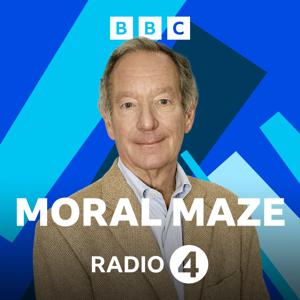
Combative, provocative and engaging live debate examining the moral issues behind one of the week's news stories. #moralmaze
Ranked by our users in the last 21 days

7,626 Listeners
874 Listeners
1,046 Listeners
157 Listeners

5,482 Listeners
1,798 Listeners
1,808 Listeners
1,031 Listeners
2,108 Listeners
1,904 Listeners
28 Listeners
35 Listeners

369 Listeners
161 Listeners
41 Listeners
59 Listeners
107 Listeners
693 Listeners
3,221 Listeners
725 Listeners
1,004 Listeners
3,021 Listeners

1,114 Listeners
773 Listeners
30 Listeners