
Sign up to save your podcasts
Or

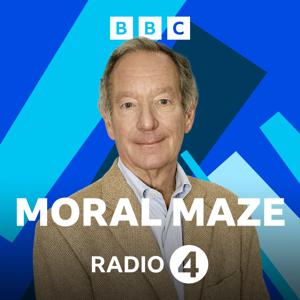

What is truth? In a special edition of The Moral Maze, we discuss perhaps the most significant question in all of human thought. It sits at the foundation of how we understand reality, and how we communicate and behave towards one another.
The obvious answer is that the strongest possible way to arrive at the truth in a shifting world of AI and authoritarian control is through a commitment to empirical data and provable facts. However, this can only ever get us so far because truth is always told from somewhere. Even objective facts can be curated from one perspective. Stories about ourselves and the world have been necessary, alongside partial data, to keep the social order and to prevent us from being overwhelmed. The historian uses limited sources to tell a story about our past. Language constrains how we articulate who we are, what we do and how we think and feel. Where science falters in expanding the horizons of truth, artists and theologians step in with their own insights that truth can be discovered through poetry and mysticism. That’s before the postmodernists come along and state that what we think of as truth is constructed rather than discovered; that the ‘truth’ we seek doesn’t really exist; that it’s all a fiction to give our lives meaning and purpose.
Chair: Michael Buerk
 View all episodes
 By BBC Radio 4

4.6
5151 ratings
What is truth? In a special edition of The Moral Maze, we discuss perhaps the most significant question in all of human thought. It sits at the foundation of how we understand reality, and how we communicate and behave towards one another.
The obvious answer is that the strongest possible way to arrive at the truth in a shifting world of AI and authoritarian control is through a commitment to empirical data and provable facts. However, this can only ever get us so far because truth is always told from somewhere. Even objective facts can be curated from one perspective. Stories about ourselves and the world have been necessary, alongside partial data, to keep the social order and to prevent us from being overwhelmed. The historian uses limited sources to tell a story about our past. Language constrains how we articulate who we are, what we do and how we think and feel. Where science falters in expanding the horizons of truth, artists and theologians step in with their own insights that truth can be discovered through poetry and mysticism. That’s before the postmodernists come along and state that what we think of as truth is constructed rather than discovered; that the ‘truth’ we seek doesn’t really exist; that it’s all a fiction to give our lives meaning and purpose.
Chair: Michael Buerk

7,697 Listeners

880 Listeners

1,048 Listeners
155 Listeners

5,542 Listeners

1,797 Listeners

1,770 Listeners

1,035 Listeners

2,108 Listeners

1,923 Listeners
30 Listeners
39 Listeners

396 Listeners

164 Listeners
42 Listeners
60 Listeners
112 Listeners
692 Listeners

3,173 Listeners

732 Listeners

1,003 Listeners
3,321 Listeners

1,152 Listeners
806 Listeners

44 Listeners