
Sign up to save your podcasts
Or

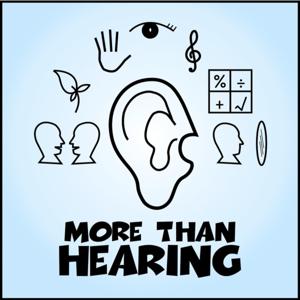


Greetings!! Welcome to More Than Hearing! This Sunday is The Big Day for the life of the church, and we are doing something different with the podcast this week in preparation for it. We decided to forego the usual format and instead talk about why we developed this show, how it has effected our own experiences, and ways that Multiple Intelligence Theory already has a home in Scripture.
We have three years of illustrations and special effects stored up for Pentecost, and those are linked below if you are looking for something specific for using this Sunday. We also have some work done specifically on John 14, which is the Gospel lesson for this Sunday. Those also are linked below.
Pentecost is a day in the life of the church where everything shifts in a fundamental way. Up to that day, the disciples were simply waiting, as Jesus had instructed them to do. Then, he ascended, and —- well, they waited some more. I sometimes wonder how they spent that time? We know what’s coming (or what came), so we have much to do to get ready and a lot of it involves the color red. Still, I believe that the Spirit’s inspiration can lead us to explore this old story with new ideas and a breath of fresh air. Pretty much what the Spirit did way back then!
I really like the third definition of inspiration linked above – to inhale. Inhaling is literally “in-spiring” so for the purposes of Pentecost, we might think of inspiration as “in-Spiriting.” (There’s some WORD smart illustration for the day!) Inspiration is behind this entire venture, because while David and I wanted to do a podcast together, we didn’t know what to do a podcast about. He remembered a time when we got together with a colleague and friend in Dayton to discuss an idea she had brought home from a conference led by Tom Troeger. It was a great idea, but as it turned out, it was an even greater opportunity to have coffee with Julia! So, years later, David suggested we blend Multiple Intelligence Theory and the Revised Common Lectionary and see what came out of it. Ta – DAH! Inspiration!
As we’ve been doing this podcast, our methods and our website have evolved, but the basic reasons have not changed. In using MIT, we have the chance to engage people by opening doors into imaginations, hearts, and souls that would otherwise be closed to access. Since one of the hallmarks of Pentecost is the sudden speaking in languages that are not native to the speaker, we get the opportunity to try “speaking” in other “languages” to reach people every week! Trying these illustrations and special effects engage the preacher, too. We have discovered our own sermons and worship leadership have been enhanced, and we’ve found ourselves pulled out of preaching ruts at times. Trying some of our more “gee whiz” special effects have led our congregations to deeper engagement and hopefully, has sent them out with the Word of God planted in fresh soil inside them, inspired to understand Scripture in a new way.
A couple months ago, David came across a book called Creating Holy Spaces: Worship Visuals for the Revised Common Lectionary by Delia Halverson (Author), and Karen Appleby (Author). The authors use EYE smart and Myers-Briggs personality inventory throughout their work in an effort to engage congregations with the RCL texts. One of the parts of the book that caught David’s eye was a section that traced how Jesus used multiple intelligences to teach, preach, and minister. For the past eight weeks or so, we’ve been adding a section to our own podcast that looks at how we think Jesus may have used these intelligences. In today’s podcast we talk about the parable he told of The Two Builders and how EYE, MATH, BODY, PEOPLE, SELF, NATURE, and even MUSIC smart can be utilized as this story is told (WORD). We also think the prophets did much the same thing, especially Jeremiah’s story about the Potter and the Clay.
We hope that as you listen to today’s podcast and go back to see what we’ve done with Pentecost and John 14 in years past, you will be “in-Spirited” to lead your people in ways that are fresh, fun, memorable, and enriching!
MUSIC smart BONUS: The title of the show is part of the chorus from For What It’s Worth by Buffalo Springfield.
Image from Seeking Truth Design by Heather Thum-Gerber, used by permission.
Hey everyone! Welcome back, and for first time visitors, welcome here! If you have kids or grandkids, you may be familiar with the phrase “Power Up!” In the world of video games – and in particular Mario’s universe – a “power up” is a way for your character to find a boost of energy or an extra life that allows you to continue making your way further into the game. For me, they are always very helpful since I tend to play in such a way that puts my character into jeopardy quite often. Even as I blaze my way through a situation on the screen, I think to myself, “Wow, wouldn’t it be great if we had these things in real life?!?” We do.
The passages for this week’s lectionary readings show us God’s power in large and powerful ways and just in time for when you need it ways. The Psalm reveals God’s majestic power, especially in nature, and Revelation ends with the coming promise of Jesus’ power. In John, Jesus prays that the disciples that God has given him will become one with Jesus and with God, just as Jesus is one with God. In Acts, Paul and his companions suffer as Jesus did in order to exhibit God’s power and bring others to salvation.
Three years ago, we found illustrations and special effects for everything except NATURE smart. Which is interesting, because I found some crossover with it a couple times this year! We also revisit The Khan Academy!
We talk a bit about what EYE and MATH intelligences are and then speculate a bit about how Jesus may have utilized them in his ministry. You can download our worksheets below.
This passage is just a wee part of Jesus’ “farewell address” where he is thanking God for the disciples given to him and praying for their strength and unity going forward after his death. For MATH smart, talk about iterative functions and convergent series to illustrate the unity and union of God, Jesus, and the disciples.
For EYE smart, try roping a bit of NATURE with the way an amoeba will surround and make another organism part of itself. Okay, it eats it. Eek! God’s intention is NOT to do this! We are taken into the fellowship that exists with God and Jesus, so that we become a part of something bigger that sustains and protects us. So the amoeba is a negative illustration.
The Book of Revelation has within it sets and subsets, particularly of who is “in” the kingdom to come and who is “out.” Be certain to use the words John lists in verse 15 if you choose present this chart for MATH smart. Also, the Lectionary Committee excised verses 18 and 19, which we find ironic, but bring in an accounting ledger, and talk about what is and is not supposed to be in a financial record.
For EYE smart, use the above chart of for set theory as a visual representation or use John’s own image/metaphor of a bride. Have people think about times when they’ve all stood up and waited to spy the bride as she enters the sanctuary. Also, since in the final verses of this passage everyone is waiting for Jesus to show up, have people think about times when they’ve waited for a performer to step out on stage. Or for the pastor to walk out into the sanctuary.
Psalm 97 is an enthronement psalm – the Lord is king! For EYE smart, take the dramatic images of nature and ask your congregation to consider the expanse of land that a storm described in these verses would cover. Click the link below to see how much ground the recent storms in Dayton, Ohio covered. May God bless all who were affected, and may God’s people be a help and blessing to them.
For MATH smart, consider again the convergent and divergent series. Play with the numerator and denominator values on a chart (which would be a boon for EYE smart individuals, too) to show how God is capable of being in both!
For EYE smart, I travelled over to PEOPLE smart, grabbed one of our tried and true ideas from there, and suggest that you act out this passage. Cast all the characters and have them stage this story throughout your worship space. You’ll not only engage them visually, but use the spatial aspect of this intelligence, too! Try using The Voice translation as your script.
For MATH smart, think about the way Paul is able to withstand some pretty severe abuse for the sake of the Gospel. In this passage, he and his companions are beaten with rods (see the links below) and were “severely flogged.” This type of physical torture would likely make most people give up their behavior. Not Paul – use math to show why!
Image credit: Photo by Pixabay provided through Pexels. Used by permission.
Movement happens in the texts for this week – some in more obvious ways than others. In the Acts passage, Paul and Timothy are trying to move the Gospel of Jesus to other parts of the world as directed by the Spirit of God. In John, a man is attempting to move into healing waters and not finding any success or assistance. In the Psalm, people are moving into a time of harvest and praise for God’s bounty, and in Revelation, the New Jerusalem moves down to the New Earth with a surprising lack of the usual things we expect in a city.
Three years ago, we did not use the Psalm and chose to use the John 14 passage instead of John 5. We encouraged using a map for EYE smart and had some fun NATURE smart illustrations for Revelation. Go take a look!
We take a few minutes to talk about the two smarts of the week in the episode, how you might use them in worship, and how Jesus may have used them in his ministry. Download our worksheets for each of them below!
For context in the Acts passage, Paul and Timothy are on the road and attempt to travel to Asia, which the Spirit forbids. Then they try to go to Bithynia, which the Spirit also forbids. (I think I have experienced the Spirit getting in the way of my decision to do something; I think there is a whole book in this somewhere. I digress.) Paul then has a vision of a man in Macedonia calling to him for help, and the Spirit seems okay with this, so off they go.
In SELF smart, I linked to a website called Hostel Geek (link below) with a lot of stories of people and their travel experiences. None of them mentions being blocked by the Spirit, but many of them had encounters they did not expect nor were ready for but in retrospect are quite glad they had.
For MUSIC smart, David suggests thinking of this passage – especially where Paul and Timothy meet up with Lydia and the women at the river – as a religious jam session. All these folks who trust YHWH meet in a locale and by the time the meeting is over, they have come together in common ministry.
David followed the MUSIC smart poetry branch for this passage. We have links to two poems that envision “home” in a way that echoes the longing in John’s vision of the New Jerusalem. Hughes, Shire, and John all “see” home, but also all three are still living in this world with its demands and disappointments. (I think SELF smart people would appreciate mediating on these poems.) You could also use the special effect David suggests and break out some musical instruments to underscore the different thematic imagery of the passage.
There is a marked absence of usual things in the New Jerusalem; see the worksheet for the list of things that will not be present in this new home on earth. Consider how this list of things can sometimes draw our attention away from God’s presence with us, and determine what else in your own life might be added to it that interferes with your focus on God.
The Book of Psalms is an ancient worship book or hymnal, so sing or chant this Psalm of praise with your congregation. Since the Psalm calls all nations to praise God, maybe look around for different translations in other languages. Learn verse 3 in languages not native to you and use them when this verse comes up! (WORD smart people would love it!)
For SELF smart, make a list of the ways God has blessed you. Put on that list the things that make your heart swell up with joy. Place that list where you can see it regularly as a reminder of God’s love for you. Do this for a week or three, and see if it makes a difference in your daily outlook on life.
The man lying by the pool cannot make any progress because others get in the way, according to a verse that is not in most ancient manuscripts. Illustrate this with MUSIC smart by asking people to imagine being a virtuoso baritone player who never gets a chance to shine, because solos and important musical themes keep going to the trumpets! For a special effect, set this passage to verse. See David’s start on that on the worksheet.
For SELF smart, consider how the man has learned to live with brokenness in his life. Jesus is not satisfied with that for this man and asks him, “Do you want to be made well?” Consider the places in your life where you are living with things that are broken or not working optimally; imagine Jesus asking you the same question. What’s your answer? If you don’t immediately have one, that’s okay. Jesus will keep asking.
Image credit: Photo by VanveenJF on Unsplash. Used by permission.
Welcome! We’re glad you are here with us, and we hope you will find some ideas or at least inspiration from our podcast! The lessons for this week share a theme of “glory.” We see it repeated over and over in John’s Gospel as Jesus tells his disciples that he and God are connected. As the New Jerusalem descends from heaven, a voice declares that God’s home is among mortals and that God will wipe away all that burdens us. The psalm is a glorious song of praise, and Peter astonishes the other disciples with his story about joining Gentiles in their home and at their table.
This link will take you to what we did with (most) of these passages three years ago. There is some MATH smart and some MUSIC smart hints, plus a Mad Libs for the Psalm!
We take a few minutes to talk about our two smarts of the week in the episode, and here you can download our worksheets for each of them.
These verses are a brief snippet from the much longer discourse beginning in chapter 13 of Jesus’ last meal with his disciples, whom he calls friends. WORD smart people will be intrigued by the number of times Jesus uses a form of the word “glory.” Look up the definition of the word both in English and Greek to see how John uses it to connect Jesus to God and how Jesus’ instructions for the disciples to love one another come from heaven itself.
For BODY smart, the transitive property of the word “glory” can be illustrated and demonstrated by a fashion show! The glory Jesus exhibits is God’s glory, just as clothing worn by a model reveals the beauty of the model and the designer’s ideas. When we love one another as Jesus loved us, we reveal the glory of the relationship we have with him and one another.
Our own bodies illustrate this passage! For BODY smart, remind people that the first thing we do when we see someone who has been absent from us is give them a big hug! You can find many such videos of parents returning from deployment to surprise their loved ones. The best are the dogs who recognize their humans! For a special effect, do some interpretive movement.
I posted the definition of a few key words for this passage on the worksheet, which you can download and use for WORD smart. In any interpretation of Revelation, we must keep in mind the lens through which John sends his vision out to the seven churches. To illustrate this, talk about how putting someone else’s glasses on can distort vision (see also: EYE smart); we need to be certain to have the proper focus in order not to become disoriented. A way to demonstrate how we tend to put our own spin on Revelation would be to play the game “Telephone,” in which a message is passed from person to person, usually with hilarious results.
Vs. 1 – Look up, raise your hands, right then left, and then hands sweeping down, right then left.
Vs. 2 – Walk toward each other, reaching out to each other, taking each other’s hands.
Vs. 3 – Share a hug.
Vs. 4 – Wipe each other’s cheeks with a finger.
Vs. 5 – Make broad, sweeping hand motions left and right, like Vanna showing off a new car.
Vs. 6 – Raise a glass in a toast, then drink. If it seems appropriate, do that interlocking arms drinking thing.
BODY smart is always fertile ground for interpretive movement, and this psalm has plenty of opportunity to stretch those muscles! This could be a fun way to include children in worship, as well.
It’s interesting to note that the order of things commanded to sing praise to God follows the order of creation in Genesis 1 – a literary echo that might ring the bells of WORD smart people! It would be very interesting to see this passage presented with sign language and could be a help for interpretive movement!
While BODY smart doesn’t seem to be obvious in this passage, imagine how Peter was telling the other disciples about his experience. We think he probably had a lot of gestures and his body language was engaged and conveyed passion. His description of events is such that listeners may feel they are journeying with him through the story. Think about how people who tell good stories often use more than their words to engage and “bring along” their audience. We have a link below as an example!
For WORD smart, show how Peter takes the other disciples step by step through his reasoning for his behavior. This made me think of the United States Declaration of Independence and how Thomas Jefferson laid out a detailed argument for separating from the Crown. Peter is doing his best to convince the “circumcised believers” that he has not lost his marbles or gone rogue.
Image credit: We couldn’t find any attribution for this photo, which has apparently gotten loose from its owners and has been roaming free and unprotected on the internet for some time. If you know of any claim of ownership or rights to it, please let us know at [email protected] or leave a comment below.
Greetings! Welcome to the show! On my drive to worship every Sunday, I pass a sign board for a Lutheran church. I don’t usually remember what is posted there, and it’s not because I’m driving too fast or are too distracted to see it. The saying doesn’t always connect with me – except for one Sunday years ago. That day, I saw what has become the title for this episode above, and it grabbed me for two reasons. The first is that it reverses the verbs in the old children’s hymn, which caused some cognitive gear grinding. Once I got that done, the second reason washed over me. “Jesus knows me.” I don’t have to explain anything to Jesus about myself or evade anything or present my best self or justify a decision or do anything other than be me. My husband knows me pretty well, but he doesn’t have access to my oldest memories or deepest recesses. I’m not even certain that *I* do, honestly. But Jesus does. The passages for today have been selected to show us how Jesus shepherds his people – by knowing them completely, calling to their inner selves, seeing their persistent errors, and loving them still.
Follow this link to discover what we did with these passages three years ago! We gave up on the Psalm passages fairly quickly as we started this project, so we only have ideas for Acts, John, and Revelation.
We take a few minutes to talk about our two smarts of the week in the episode, and here you can download our worksheets for each of them.
The fourth Sunday in Easter is “Good Shepherd Sunday,” traditionally. The Lectionary selects passages from John 10 where Jesus speaks about his role as shepherd. This year, the connection is not as obvious as other years except that he informs his opponents that they do not trust his deeds because they do not trust him. For BODY smart, consider how what we do bears our personal imprint. For some fun, play Follow the Leader!
For SELF smart, consider how confirmation bias affects our decision to trust or not trust someone. Allow your folks some time to contemplate what factors help them decide whether someone is trustworthy? See the worksheet for a chart (chart? MATH smart bonus!).
For SELF smart, consider a time when you were so impressed by someone that you stopped in your tracks to admire their ability. Was it a sports figure? A singer? A musician or someone you have always held in high regard? The people robed in white are celebrating the Lamb in this manner. Allow some time for people to consider the attributes of the Lamb and their own responses.
For BODY smart, illustrate the mass of people by showing images of large crowds. The link below has several options you might use. The provisions in this hymn of praise connect with the promise of provision in Psalm 23. It is possible the white robed multitude are recovering from their ordeal in the presence of the Lamb. Think about team meetings in locker rooms or the cast party after a final performance.
The Psalmist alludes to a solitary time of trial when YHWH provided comfort and solace. For a SELF smart illustration and special effect, consider times of being alone in a wilderness, either literally or figuratively.
I’m adding a bit of MUSIC smart for a BODY smart special effect; try to interpret the hymn My Shepherd Will Supply My Need through dance! I suggest this particular hymn because I really love the melody and the lyrics. To demonstrate what we need, fill a grab bag with some modern “necessities” and then eliminate them until you come to basic provisions. Be certain to point out the psalmist affirms God comes through on them daily.
For SELF smart, allow your people to spend some time pondering the miracle in this passage. David has some links to different articles written about belief in miracles; we linked to two of them below. Is it important to believe they literally happened? Is it more important to see how they motivated others to belief? Is belief in miracles separate from or intrinsic to belief in Jesus? Can disciples still perform miracles?
For BODY smart, demonstrate objects made by loving hands. Do you have paraments, banners, stoles, art work, or other objects in your worship space made by someone and given to the church? Who was that person, and how is their personality evident in what they made? Dorcas made clothes out of her great compassion for widows; do you all have any clothing ministries for people who are in need in your area?
Image credit: Photo by Trinity Kubassek from Pexels. Used by permission.
Four engineers get into a car heading for a conference. But, the car won’t start. Being engineers, they all have solutions to the problem befitting their areas of expertise. The Mechanical engineer says: It’s a broken starter. The Electrical engineer says: The battery is dead. The Chemical engineer says: No, we have impurities in the gasoline. The IT engineer says: Wait! Let’s all get out and then get back in!
Wouldn’t it be wonderful if we really could fix problems just by stopping and then restarting? The passages for this week’s Lectionary suggest that a system wide reboot of our lives is not only possible, it is often the very thing that God offers us in order to live fully into our lives. Saul is rebooted into Paul; Peter and the disciples are recommissioned by the Risen Christ. The psalmist and John’s revelation both see God’s power come through even though circumstances seemed beyond repair. We call this reboot forgiveness or a second chance or mercy or grace. It is not always easy to undergo a reboot, as Saul and Peter discovered. We will need to reckon with the fruit of our missteps. Yet, God’s reboot is reliable and we can trust it.
If you would like to see what we did with these passages three years ago, click this link for Year C, Easter 3, 2016. It’s been interesting to see what we emphasized three years ago in comparison to now.
This passage is rich in PEOPLE smart! Relationships are on display throughout. The second part of the passage – the heart-to-heart conversation between Jesus and Peter – reminded David of a pastor he worked with once. He would keep asking, “How are you doing?” until you finally told him – not necessarily to get him to stop asking, but because it became clear that he was honestly seeking after your heart and providing a safe place to respond. It’s a lot like a session with a counselor or therapist or coffee with a good friend. Please download the worksheet for a Reader’s Theater script, too!
MATH smart is about logic and an initial reading of this story does not reveal much of it, in my opinion. (Why on earth would Peter get dressed to jump into the water?) However, the sequence of three questions Jesus asks Peter could be examined in the logical terms of coding. It would help to back it up to Peter’s three denials followed by the three questions Jesus asks. Also, the underlying logic of this passage is re-commissioning of both the disciples as people fishers and Peter as the rock on which the church is built.
George Frederick Handel mined Revelation for the final chorus of his opus, Messiah. Chorus 53 is verses 12 through 14 sung over and over, but we aren’t doing MUSIC smart! However, a powerful choral piece will often move an entire crowd of people to reflection and exhilaration. David is reminded of a scene in The Sound of Music when the von Trapp family and the audience sing Edelweiss – much to the annoyance of the Nazis. Do you have any experiences like this? (see the link below)
I locked into verses 12 – 14 for MATH smart because the logic (and the numbers) in these verses benefit from some explanation. The seven attributes of glory and wealth are given to the lamb that was slaughtered. We ordinarily think of the spoils of war going to the triumphant victor, not the bloody victims. Yet, John’s revelation sees just the opposite. This is a great example of God’s logic throwing our logic for a loop. Plus, the number seven is rich in Jewish numerology; it is the perfect, complete number since it is the day the Lord rested from creating all that is good.
For PEOPLE smart, consider a time when you needed to ask someone for protection or assistance. Was it immediately clear you would receive what you requested? There are people to whom we turn for help that may or may not respond the way you hope. Also, help may come from someone initially considered not at all friendly – see Netflix’s Lost in Space for some examples. For a special effect, invite your congregation to break into smaller groups and discuss a time when they were in a dire situation and got help. How did they express their thanks? Read Psalm 30 for an example!
Verse six led me to wonder about the logic of trusting prosperity or wealth to keep you safe. No amount of money can protect against everything yet we try hard to make it so and then suffer mightily when that wealth is lost. The 1929 and 2008 Stock Market crashes are good examples of how this logic fails. The psalmist also argues with God about how illogical it would be for him to die because then he would not be able to sing praise to God. He is relying on the relationship he has with God to persuade God to help him through his struggles.
For PEOPLE smart, pull out your copy of James Loder’s The Transforming Moment to talk about the conflict Saul encounters on the road to Damascus. As we have mentioned often before, when someone is up against a conflict that person will exert a great deal of energy to solve the dilemma. If there is not an obvious out – or you have been knocked into the dirt by it – you will go away and let it percolate deep in your psyche until a solution presents itself. An example of a system wide resolution of conflict is the way our culture has shifted in regards to LGBTQ acceptance over the last thirty years.
For MATH smart, consider Saul’s logical struggle. As Bill Loader writes: “People’s intensity in resistance tends to rise when they fear what they are resisting is perhaps valid.” Maybe when he witnessed Stephen’s powerful testimony as he was stoned to death, a seed was planted in Saul and had sprouted. His trip to Damascus may have been a way to root it up. Ananias also encountered the Risen Christ in a way that was entirely illogical to him. Yet, in his faithfulness, he validated Saul’s experience and the rest is our story.
Oddly enough, we seem to have switched places a bit with our work on these two intelligences! David’s PEOPLE smart is heavy on logic and my MATH smart is heavy on motivations and relationships! Here is a great example of how the intelligences tend to “borrow” from one another.
Image credit: Icons made by Freepik from www.flaticon.com is licensed by CC 3.0 BY
Hey everyone! Welcome back to the show! Typically, the second Sunday after Easter is the day we all deal with Thomas’ doubt about the other disciples’ outrageous claim that Jesus had appeared to them. It’s a great story about our very human need for proof, especially when our hearts are involved. Remember, Thomas was ready to follow Jesus to Jerusalem to die with him and after the horrendous specter of crucifixion, he likely was ready to go home and start over. Who could blame him? Yet, we have decided to use a different Gospel story for this Sunday. The walk to Emmaus is also a compelling story of Jesus comforting – then surprising – sorrowing disciples. How will the Resurrection surprise you?
Here is what we did three years ago with Year C, Easter 2. This includes the texts other than the John passage. For what we’ve done with that, you can look up Year A, Easter 2 and Year B, Easter 2. For previous work on the Emmaus story, check out Year A, Easter 3.
Have you ever met someone “out of place”? David was busily stirring apple butter at a village fair a couple years ago, when he saw a woman walking through the crowd who looked a lot like someone he knew from high school. Then, he saw another one, and another one! He thought he might be having an out of body experience because these women didn’t live in the area so what were they doing here? The Emmaus experience may have shared some elements of this: the disciples did not recognize Jesus because he wasn’t supposed to be there. Do you have any stories like this? They would work well as an EYE smart illustration.
Hiking or walking outdoors is a wonderful NATURE smart activity, so engage those people by describing the environment in which the disciples were walking. It was likely arid and had elevation changes; it would have been important to bring water!
Game of Thrones is all the rage these days, so why not rework some visual advertisements with language from the Revelation passage as an EYE smart special effect? See the worksheet for David’s idea how to do this.
Clouds are prominent in this passage, so for a NATURE smart illustration and special effect, display different types of clouds. Is Jesus returning on those large, dramatic thunderheads? Or maybe the wispy clouds high in the stratosphere? Will Jesus emerge out of a fog? Each of these types of clouds “set” different ways for Jesus to return, so have some fun exploring them!
The Psalmist lists a variety of musical instruments so it would seem this passage is entirely given over to MUSIC smart. But, wait! For an EYE smart exercise, substitute the musical instruments with art media! Instead of trumpets and lyres, use canvas and paint! Instead of loud clashing cymbals, try bright vibrant murals! Maybe, even make some as the passage is read!
The “firmament” is the way ancient people understood the overhead expanse of the visible world. I found a diagram for a NATURE smart illustration that may be what they had in mind. You might use the different biomes for a modern perception of the world.
Peter and the apostles are taken to task for stirring up controversy when they continue to preach about Jesus. The council is upset because it puts them all in jeopardy. But Peter knows it is not possible for him or the others to stop what they are doing. For an EYE smart illustration, consider how artists continue to produce challenging work even when they suffer for it.
Similarly, those who have advocated for more responsible stewardship of our planet have faced opposition and pressure. Yet, they also consider the underlying call of our world to be much more important and so continue to document the changes happening to urge those in power to do something. For a NATURE smart illustration, you could point to the many documentaries and organizations that have taken on this mantle.
Photo by Sarah Kilian on Unsplash. Used by permission.
He is Risen, indeed!
Welcome to the show! This is a special episode, because 1) we have never done a show for Easter before, and 2) we have decided to concentrate on the Gospel passage using all eight intelligences, and 3) we’re live! We’ve done a “live” show before, which for us means that we simply sit down, turn on the microphones and recorder, and see what inspiration comes as we dissect the texts for the intelligences. It’s simultaneously exhilarating and terrifying – just like preaching can be sometimes! It also means the show is a little long this week – just like preaching can be sometimes!
If you are looking for resources for Palm Sunday, we have a show from Year B (which we also did “live”) and Year A.
You can download the worksheet for this week’s episode below. Also, check out our resources about Multiple Intelligence Theory at the links on the top right hand side of the page.
WORD Smart – [04:43]
We have an illustration that will click with parents. How many times have you told your kids something, and they seem not to hear it? Then, a different adult or one of their peers will say the same thing, and suddenly they hear it! Wearing dazzling clothes while you say it may help, perhaps. For a special effect, insert some puzzle games in the bulletin using key words from the passage. For a larger visual, print those words out on posters and display them around the worship space. Or, invite someone up to write down words that people hear and then display those.
EYE Smart – [09:22]
The Gospel of Mark tells us the women who went to the tomb met a man dressed in white but in Luke’s Gospel, they meet two men dressed in dazzling clothes. We’re thinking sequins! Also, all four Gospels show the women expecting one thing when they get there and finding something else, so invite your congregation to imagine showing up to church and discovering all the pews are gone. It’s like the scene in Risky Business when Joel comes home to discover Guido has taken all his parents’ furniture. For special effects, use some sleight of hand magic tricks, or a dimmer switch on your lights to change the mood from dark to light.
MATH Smart – [14:18]
How can two things be true at the same time? For the women, the reality is Jesus is not in the tomb. For the apostles, the reality is Jesus is dead. Yet, these guys in dazzling clothes are saying something else, and suddenly, what was once true (and still is for those who have not yet received the news) is no longer true. Xeno’s paradoxes are examples of how two things can be true at the same time. (The dichotomy paradox is a good example of that; you have to travel half the distance to a goal, then half that distance, then half that distance which will prevent you from ever getting to the goal – like driving across Kansas. But you DO get across eventually.) These paradoxes, quantum mechanics, and Schrödinger’s cat to name a few are good illustrations and special effects that will help MATH smart individuals process the mystery of Jesus’ resurrection.
BODY Smart – [19:06]
For an illustration, talk about how our reflexive fear response works in this story as the women bow to the ground after the men appear to them. The women also run to find the apostles with the news of Jesus’ resurrection, and Peter gets up and goes to the tomb to see for himself. For special effects, try interpretive movement and connect it to the words you select for WORD smart. Liturgical dance would also work here. Do you know anyone who is fluent in sign language? Invite them to sign the passage as it’s read and then teach the congregation some of the signs.
MUSIC Smart – [23:39]
This intelligence is regularly engaged in worship, and we are certain you will have a lot of music playing for your service. Yet, we have an idea to use music as a way to underscore (“score” – get it?) your reading by beginning with lower, darker tones in a minor key, and eventually changing to a major key with brighter tones. Pick particular instruments for the characters in the story, too! For a (kind of) contemporary secular song, try U2’s I Still Haven’t Found What I’m Looking For – the lyrics may convey the searching and longing of the women and Peter, or perhaps for your C&E worshipers.
NATURE Smart – [28:24]
Do you have herbalists or botanists in your congregation? Invite them to talk about the spices used for embalming practices. Here is a link to ancient Egyptian embalming practices and specific plants used. Pull 1 Corinthians 15 into your sermon, and talk about seeds falling into the ground to die and then becoming a plant. The men in dazzling clothes are talking about life that just seems impossible – maybe like the life we have discovered thriving around thermal jets in deep ocean water, or the life that may be waiting to be discovered on distant worlds?
PEOPLE Smart – [33:27]
The male disciples didn’t believe the women. So little has changed, it seems sometimes. Illustrating this point could be powerful; it could be an opportunity to discuss the #MeToo movement, and a chance for people to learn why it is important to listen first. The men in dazzling clothes ask the women why they are looking for the living among the dead – imagine the interaction in this scene. Present this reading as a Reader’s Theater, and use the MUSIC and EYE smart suggestions!
SELF Smart – [38:27]
The fear, confusion, amazement, and frustration in this story may find homes in our individual hearts, because what do we do with this story? How does the transformation of the women lead to an eventual transformation of the apostles? How does that transformation affect our lives? If you have never read The Transforming Moment by James Loder, we recommend it to be very illustrative! For a special effect, send your people home to think about what this story means for them. Also, tell them to come back next week for the second episode!
Photo by Bruno van der Kraan on Unsplash. Used by permission.
Hey everyone! Welcome back to the site! We are barreling down on Holy Week – holy cow – and the passages for today all ask us to stop and consider value. In John’s passage, the question is obvious as Judas objects to Mary wasting expensive perfume to anoint Jesus’ feet. Jesus knows the value of what she is doing and tells Judas to back off. Paul tells the Philippians that he once was on top of the heap – a Super Star in his own right – but because he has met Jesus that past life is now junk. The psalmist encourages a joyful response to the way God has restored the fortunes of Israel. Isaiah tells the Israelites that God has provided a pathway for them in the past and God will continue to do so for their present and future. Let’s go see how Multiple Intelligence Theory adds some value to our worship!
Three years ago, we came up with at least one illustration or special effect for Lent 5, Year C, 2016. We had a fun PEOPLE smart skit for the Gospel passage, too! This week, we’re focusing on MATH and PEOPLE smart. The worksheets with links and charts are below.
When I read this passage, I think of the scene in Jesus Christ Superstar when Mary sings “Everything’s Alright”. The musical has changed the venue but the argument Judas presents is the same; we could have sold the perfume and given the money to the poor. Three years ago in MATH smart, we calculated how much money that would have been. This year, we have some information about a denarius including the fact that it is now crypto-currency! We have some charts on the worksheet that would help people understand how money plays into their discipleship – what would you do with a lump sum of your own wages?
For PEOPLE smart, concentrate on the drama of the scene. Three years ago, we wrote a brief chancel drama around this passage. This year, break into smaller groups and discuss the motivation behind the actors, especially Mary and Judas. Why would Mary anoint Jesus? Is Judas really looking to steal the money? What does Jesus mean that the poor will always be with you?
Paul tells the Philippians that his accomplishments – which are considerable – are nothing more than trash compared to his relationship with Jesus. For MATH smart, put together a chart of things considered valuable assets and status symbols and assign points to them. Tally up the number, and then give “Knowing Christ” so many points that the highest status score is lost in the rounding error to illustrate and demonstrate Paul’s point. You could also break out the balance scales for a physical representation of the relationship.
For PEOPLE smart, think about the dedication athletes devote to becoming proficient in their sport. I have a couple links that speak to the psychology of an athlete and a documentary about the stories behind some African American athletes. For a look at competition taught to children, check out the video below that features Big Bird, Mr. Snuffleupagus, and Mr. Rogers. Yes, PBS did a cross-over!
This Psalm didn’t immediately lend itself to MATH smart until David thought about what it would mean to lose everything and then have God restore it all. Consider the global meltdown that was The Great Crash of 1929; according to the link below, the market lost $30B in two days. Now, imagine that loss given back by God – restored fortunes, indeed!
Use PEOPLE smart to present this psalm in worship. Encourage your congregation to recall a time when a joyous event happened in their lifetime and to get it fixed in their hearts and minds. Or, bake some bread and allow the aroma to waft into the worship space. Nothing like the promise of good food to make someone happy! Then, use that joy to call and respond antiphonally with this psalm. If you want to get some EYE and BODY smart into this exercise, add something to wave in the air!
We have another reversal in this passage. Rather than intangible fortune, we have God reversing a physical path – in a metaphorical way. The people had once passed through water on dry land, and now God is leading them home through dry land with rivers as pathways. Pretty cool, right? To demonstrate this with MATH, get some concave mirrors or convex lenses and play with the way images appear upside down in them. You could also talk about the challenges of navigating open landscapes before the widespread use of magnetic compasses.
Isaiah is reminding the people of who they had been because of God’s mighty acts of deliverance and who they are now because of God’s might act of deliverance. The circumstances and oppressing power might change, but God hasn’t. I found an interesting essay, linked below, that considers what Israel might have been like had they not been in slavery in Egypt or taken into exile in Babylon. The author points out that loss sharpens a people’s attention to that which is prized, and that the moment that prized thing is taken for granted, it is lost. Break into groups and discuss this thought and what “old thing” God is doing in a “new way.”
Photo by Jamie Fenn on Unsplash. Used by permission.
Greetings! Welcome back for previous listeners and welcome here for first time folks! We are more than halfway through Lent – and I’m still wearing a parka. Just sayin’. Last week’s passages centered around repentance and this week’s center around forgiveness. Forgiveness makes me think of the Don Henley song “The Heart of the Matter“ with this lyric in the chorus:
I’ve been tryin’ to get down
To the heart of the matter
But my will gets weak
And my thoughts seem to scatter
But I think it’s about forgiveness
Forgiveness
Even if, even if you don’t love me anymore
The song is reflective and wistful, and there is a hope that the singer and the beloved can maybe one day get to a better place after some forgiveness is granted and received. The Gospel lesson is all about forgiveness and new chances, while Paul tells the Corinthians that anyone in Christ is a transformed person. Joshua tells the people that God has rolled away their disgrace, and the Psalmist sings of being given new life – almost literally – after receiving God’s graceful pardon. I think Don was right; forgiveness really IS the heart of it all. But where his song and Scripture differ is that God still loves us and always will. Let’s go see how we can illustrate that!
This week, we are concentrating on EYE smart and NATURE smart. We have some suggestions for using them in a general way in worship, and of course, some specific ideas below! Plus, you can click this link to see what we did three years ago with almost all eight intelligences (sorry, MATH)! Download the worksheets for this week below.
Sometimes we need to push beyond the surface reading of the passage to find glimmers of a particular intelligence. As David read this story once again, he was struck by a similarity between the younger son and a virus. While we may not think of the microscopic universe for NATURE smart, viruses are part of the natural world. *cough* The way the younger brother destroys his inheritance is like the way a virus kills the host cells in which it has incubated. Looking at the story through the eyes of the older brother, we might see the younger brother as a parasite, feeding off a host. Speaking of feeding, we also have a link to dietary habits of Rome which may have been where the younger brother went.
EYE smart is the intelligence when you have a chance to present or project artwork on your walls! I have links to a few masters’ works below and a Google search will bear much fruit for this story. Depending on your sensibilities, you may find artwork that inspires or disturbs. If you want to put some dramatic effort into this story, try using tableau vivant. When we use this with children, we call it “playing statues” or “freeze frame.” It’s a fun way to involve a lot of people in worship and can be very moving.
Paul tells the Corinthians that the ministry of reconciliation they have inherited from Jesus makes them ambassadors – so make your congregation ambassadors for an EYE smart special effect! If you have name tags, add a symbol or the word “Ambassador” to them. Don’t say anything until you get to the sermon as to why their name tags look different! If you do not have name tags, make some for this service and then keep them around for future use.
Paul also tells the Corinthians that they have undergone a metamorphosis when they became a new creating in Jesus. For a NATURE smart illustration, talk about the metamorphosis for butterflies or cicadas. We have a link to a video by David Attenborough about the life cycle of the cicada or if you do not want to see super close up shots of insects, we also have a link to an article.
Current world events serve as an excellent NATURE smart illustration about safe places mentioned in the psalm. Severe flooding in Mozambique and Nebraska have raised the question about just where these safe spaces are found when your world is being washed away by floods. The psalmist also mentions the difference between human and animal nature and encourages those hearing the psalm to use the “higher understanding” of human capacity to learn from God. But horses and mules have their own intelligence. We have some articles below about this.
The psalmist uses vivid language about sinfulness and vulnerability which led me to think about blankets, coats, or bandages covering naked or wounded flesh. Bring in some of these items and talk about how they are used to protect and warm bodies. This borrows a lot from BODY smart, but since you would be bringing them visually before the congregation, this is an EYE smart illustration and special effect.
When the people of Israel ate the food from crops they had planted in the land, the manna that has sustained them in the wilderness stopped coming. The people were now able to fend for themselves so for an EYE smart illustration, invited people to imagine other situations where people grow into maturity. Also, God tells Joshua that the shame of Egypt has been rolled away so for a special effect, roll a large tire down the aisle and talk about how God removes the past and leads into the future.
In NATURE smart, use images of storm clouds rolling away to illustrate God’s grace removing the darkness of shame. We have links to some video showing this. Also, talk about what kind of food the land produced! We have a link below that might lead you to some interesting recipes!
Photo by Isabella Mariana from Pexels. Used by permission.
From the publisher's feed