
Sign up to save your podcasts
Or

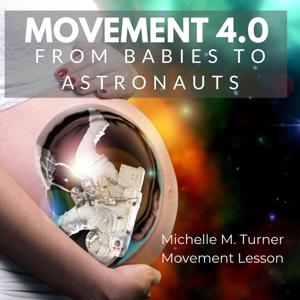


Any and all living beings that we know of here on earth are alive because of oppositional rotational movements. from atoms to the sub crust layers of our earth, even to the atmosphere above and around us, all of these move with oppositional rotational movements. This is where our gravitational binding force comes into play. We are not pinned to the earth but rather are able to move upon it as we are bound to it. This sort of interaction does not exist in outer space which is why astronauts quickly lose their functional movements and struggle to regain them when they return.
Mars and the moon are drastically different in regards to how rotation will affect humanity which also needs to be addressed before people get there.
Having functional movement in life is crucial to our being able to live and thrive to our fullest. from the moment we are born to our last breath we depend on these functional, rotational movements. If we ever hope to explore beyond the bounds of earth we need to understand these principles of rotational movement and biological gravity.
Our bodies function in a beautiful balance so long as the push/pull mechanics within out bodies is working correctly. As astronauts travel to outer space they lose these mechanics due to the increase in the buoyancy of their systems. As they return to Earth, their bodies struggle to relearn these push/pull milestones.
In this episode we discuss the importance of learning the rotational milestones as well as changing the patterns of exercise and training that astronauts use while in space. It is critical for us to incorporate functional rotational movements and exercises into our astronaut training if we ever how to travel or live for extended periods of time in space.
One major milestone that we learn from infancy is how to lay down. We can see babies sleep in almost any position but as we grow up we seem to lose the ability to do so. As astronauts go into outer space, they return to a state of float and lose the milestones they gained as a child. this includes the milestone of lying down. Without this they lose a level of function that has to be relearned.
We are not meant to fall down. Gravity has a linear affect on non living things and that is why those things fall when allowed. As living beings, when we fall it is usually not an intentional action but rather a loss of balance. We learn, from a very young age, to have a controlled decent. We also learn to commit to a fall based on previous experience for instance, when sitting on a chair. When an astronaut goes into outer space, whether it is a perpetual free fall or a true float, their bodies are no longer under the gyroscopic inter-rotation that it is used to and they loose the countering to all of their movement. This is why when they return to Earth, and all these counters to their systems return to normal, they can no longer oppose a fall without relearning how to not fall.
Gravity is not a pinning force. We, as living beings, have internal rotational fluid dynamics within our muscles and within our system in general. This rotational interaction functions in accordance with the gravitational field of the Earth around us. When we leave Earth's gravity, our system no longer functions with this internal rotational gravitational balance. Our system looses this functionality and that is why astronauts returning to Earth have to relearn how to function in its gravitational field.
Having something as serious as a stroke or heart attack in outer space is something NASA and other space agencies have put countless hours into mitigating however, some of the more serious complications that will arise from such a thing happening won't fully be realized until the person returns home to Earth. Part of the brain during a stroke has succumb to gravity but the astronaut is not in a gravitational environment. Upon returning to a gravitational environment, the part of the brain that has been affected will act as a mass around which the rest of the brain cannot function. This is something proper movement principles may be able to address to help return the person to a more normal living condition.
One of the biggest challenges human beings face in this life is being able to breathe effectively and efficiently. Breathing is one of the first things we do at birth and is usually the last thing we will do before death. If we are unable to breathe correctly and efficiently we begin to succumb to the force applied on a non living mass and, eventually, we are unable to continue without support. Astronauts face similar struggles as their bodies are subjected to improper forces and a lack of movement, both of themselves and the air around them, within their confined areas.
There is a beautiful balance between course, large muscle action and precise, fine muscle action. One of the easiest places to see this is in the shoulder and specifically how the shoulder and the arm interact. High level athletes often exemplify this balance in the way they perform their specific art. They seem to be able to perform at an elite level for a long duration with what appears to be little to no effort. At the same time, some of their fellow players or opponents seem to constantly be exerting themselves to the fullest. They often tire quickly, and get injured more frequently which injury can end their careers. Why is this? It is because the athletes that perform at higher levels have developed both their course muscle and fine muscle functions in this beautiful balance of movement interaction.
This balance is something that our astronauts lose quickly when they no longer have buoyancy to react with in their bodies, ultimately leading to their inability to even stand or walk when they are reintroduced to Earth's gravity.
From the publisher's feed