
Sign up to save your podcasts
Or



Show Notes:
What actually happens in the brain when a child learns to read?
In this episode, host Jesica Glover explores the neuroscience behind reading — uncovering why the Science of Reading works from a biological standpoint and how understanding the brain’s reading circuitry can transform how we teach.
You’ll hear from experts, educators, and Kansas leaders who explain what decades of research have revealed about decoding, comprehension, and how structured literacy can literally rewire the brain for reading success.
Reading isn’t firmware in our brains. It has to be explicitly taught — step by step — so that written language becomes a code we can unlock. — Dr. David Hurford, Center for Reading, Pittsburg State University
This podcast is produced by KB PODCASTS
Show notes:
Resources & References
This podcast is produced by KB PODCASTS
Show Notes
If we know how children learn to read, why are so many schools still getting it wrong? In this episode, Jesica dives into the science behind phonics, the pitfalls of whole language and balanced literacy, and the systemic barriers keeping effective reading instruction out of classrooms.
You’ll hear from reading researchers, school leaders, literacy specialists and parents who have seen firsthand the difference structured literacy can make — and how Kansas is beginning to shift toward evidence-based reading instruction.
“Reading isn’t natural… it’s a skill we have to be explicitly taught.” — Jesica, summarizing Dr. Louisa Moats and Dr. G. Reid Lyon
“Teachers aren’t the enemy here — they’re the victims of insufficient training and misguided curricula that weren’t based on the Science of Reading.” — Tammy Kofford
Parents: Ask your child’s teacher and principal about the curriculum and structured literacy training. Consider diagnostic testing and support from Phillips Fundamental Learning Center.
Teachers: Enroll in Science-of-Reading-aligned professional development, including Alphabetic Phonics or Orton-Gillingham-based training, and advocate for administrative support.
Kansas Listeners: Support statewide alignment with Science of Reading. Engage in school and policy discussions to ensure every child has the right to learn to read.
This podcast is produced by KB PODCASTS
Watching a child struggle to read can feel heartbreaking—and for parents and teachers, it’s easy to feel powerless. In this bonus episode of My Child Can’t Read: A Heartland Crisis, host Jesica Glover sits down with Tammi Hope, Director of Program Development at Phillips Fundamental Learning Center (PFLC), to hear how belief, the right tools, and a child-centered approach are transforming literacy education in Kansas. This episode is packed with hope, insight, and inspiration for parents, teachers, and advocates alike.
What You’ll Learn:
"If you know that you're using tools that don't work, you are doing a disservice to the child and to yourself. You're setting both of you up for failure." — Tammi Hope
Resources & Links:
Call to Action
This podcast is produced by KB PODCASTS
What if every child had access to the kind of instruction that transforms lives?
In our Season 1 finale, we revisit the journey of Austin, once a struggling 6-year-old, now a thriving 17-year-old scoring in the top percentiles on the ACT. His story reminds us what’s possible when kids are finally taught to read with proven methods.
This episode takes a hard look at Kansas literacy outcomes, where only 28% of fourth graders are proficient in reading, and explores the systemic reforms underway. From legislators and board members to parents, teachers, and students, you’ll hear how Kansas is at a turning point — and what it will take to finally get this right.
Call to Action
This podcast is produced by KB PODCASTS
What if I told you it was never your fault?
Many teachers care deeply — so why do so many children still struggle to read?
In this eye-opening episode, we explore the myth of balanced literacy, the widespread training gaps in teacher preparation, and the emotional toll on students and families. We follow the powerful journey of Jeanine Phillips — a Kansas teacher and mom who discovered her own dyslexia in college and then fought to understand why her son, Cooper, couldn’t read.
Their story reveals how broken systems leave educators unprepared, students misdiagnosed, and families desperate for answers — until someone finally teaches the code.
Jeanine Phillips’s story of discovering her own dyslexia and advocating for her son
Cooper Phillips reflecting on shame, a diagnosis of profound dyslexia, and the moment everything changed
Dr. Brian Stone’s perspective on identifying dyslexia and guiding a family toward healing
Balanced literacy didn’t prepare teachers to teach reading — and many never learned how the brain actually learns to read
Dyslexia is real, common, and often misunderstood — in both students and adults
Early intervention, structured literacy, and the right support can change the trajectory of a child’s life.
Families and teachers are doing their best within broken systems — and change starts with knowledge and action
You’re not alone, and you’re not to blame — but together, we can do better
“Balanced literacy didn’t prepare me to teach reading. I had the title, but not the training.”
– Jeanine Phillips
Subscribe so you never miss an episode
Rate & Review on your favorite podcast platform to help others find the show
Share this episode with a parent, teacher, or professor preparing future educators
Tell us your story at: funlearn.org/subscribe
Explore screening tools and resources at: funlearn.org
Phillips Fundamental Learning Center — Wichita, KS
LETRS Structured Literacy Training
Sold a Story podcast — Emily Hanford & APM Reports
Children of the Code video series
Teaching Reading Is Rocket Science by Dr. Louisa Moats, AFT (2020) — Myths About Dyslexia — PDF Resource
This podcast is produced by KB PODCASTS
What if everything you believed about how kids learn to read… was wrong?
In this Season 1 premiere, host Jesica Glover — a mom, former reading specialist, and once-struggling reader herself — shares her family’s journey through confusion, frustration, and discovery. This episode uncovers how our education system lost sight of how reading really works… and why so many parents and teachers were left in the dark.
You’ll hear from brain scientists, psychologists, educators, students, and parents all asking the same painful question: Why can’t my child read — and why didn’t anyone prepare us to help them?
This isn’t just a story about what went wrong. It’s the beginning of a reckoning — and a roadmap toward what’s possible.
Jesica Glover’s personal story of struggle — as a mom and an educator
Kansas Educator, Jill Hodge, reflecting on feeling unprepared despite a degree
Sarah Collins discovering her child’s experience wasn’t unique
Teen Emmi Johnston describing what it’s like to feel “stupid” — until someone finally teaches you to read
Austin Collins, age 10, student with dyslexia
Dr. Reid Lyon explaining why reading isn’t natural — and why the science still hasn’t reached most classrooms
“If you’re a teacher who feels unprepared, a parent who feels unheard, or a student who feels invisible — you’re not alone. And it’s not your fault.”
Subscribe so you never miss an episode
Rate & Review on your favorite podcast platform to help others find the show
Share this episode with a parent, teacher, or professor preparing future educators
Tell us your story at: funlearn.org/subscribe
Explore screening tools and resources at: funlearn.org
Alphabetic Phonics Curriculum (Multisensory Teaching Approach)
Children of the Code video series: What’s at Stake
Dr. Reid Lyon, Keynote, Summit for Literacy (2024)
LETRS Structured Literacy Training
Phillips Fundamental Learning Center — Wichita, KS
Reading in the Brain by Stanislas Dehaene (Viking, 2009)
Sold a Story podcast — Emily Hanford & APM Reports
Teaching Reading Is Rocket Science by Louisa Moats, AFT (2020)
G. Reid Lyon, “Why Reading Is Not a Natural Process,” via SOUNDSTRIPE.COM
This podcast is produced by KB PODCASTS
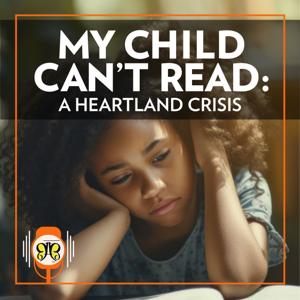
Too many kids are struggling to read — and too many parents and teachers are left without answers. But the fact is Reading failure is not inevitable. It’s a problem with a solution. But we need to act.
Hosted by Jesica Glover — a National Board Certified teacher and parent whose own child couldn’t read — this podcast explores the literacy crisis in Kansas and across the country. Through real stories and expert insight, we uncover how reading is actually learned, where schools are falling short, and what families and educators can do to change it. Each episode combines real stories, expert insight, and a look at the science of how reading works —
From early warning signs and misdiagnoses to bold reforms and grassroots change, My Child Can’t Read traces a powerful journey from heartbreak to hope.
Whether you’re a parent, teacher, or policymaker, this podcast helps you understand what went wrong — and what we can do to make it right.
Call to Action
PODCAST MUSIC - SOUNDSTRIPE.COM
Shimmer - What We Call Home
This podcast is produced by KB PODCASTS
From the publisher's feed
In classrooms across America — and especially here in Kansas — too many children are being left behind in reading. And too often, their parents and teachers are left wondering: What did I miss? Why didn’t anyone tell me?
Hosted by Jesica Glover — a National Board Certified teacher, reading specialist, and parent who couldn’t help her own daughter learn to read — this podcast explores the literacy crisis in Kansas and across the country. Through real stories and expert insight, we uncover how reading is actually learned, where schools are falling short, and what families and educators can do to change it. Each episode combines real stories, expert insight, and a look at the science of how reading works —
From early warning signs and misdiagnoses to bold reforms and grassroots change, My Child Can’t Read traces a powerful journey from heartbreak to hope.
Whether you’re a parent, teacher, or policymaker, this podcast helps you understand what went wrong — and what we can do to make it right, right here in the Heartland.