
Sign up to save your podcasts
Or



🇺🇸 Functional Neurological Disorder has no borders. Neither should awareness, understanding or compassion.
For this special milestone tenth episode of FND: The Questions Nobody Asks, Paul Edwards takes listeners across the Atlantic to explore Functional Neurological Disorder (FND) in the United States of America.
Although the United Kingdom and United States have very different healthcare systems, people living with FND often share similar challenges: obtaining an appropriate diagnosis, accessing specialist treatment, overcoming misconceptions and finding people who truly understand.
But this episode is about more than healthcare.
It is also a celebration of friendship, determination and the American FND advocates who are making a difference through their own lived experiences.
What We Explore in Episode 10
🇺🇸 A Special Recognition: Three American FND Warriors
This episode includes a personal dedication to three remarkable women whom Paul has been fortunate to meet through his FND journey.
💙 Roxie — RISE FND Warrior Support
Roxie lives with Functional Neurological Disorder and is dedicated to raising awareness and supporting others through RISE FND Warrior Support.
Her commitment to advocacy demonstrates how lived experience can inspire encouragement, education and community connection.
💙 Jenn — An American FND Warrior
Jenn is another valued American friend living with FND.
Her experiences and contribution to awareness deserve recognition, reminding us that every person's story matters.
💙 Brandy — Friendship Beyond Borders
Brandy also lives with FND and represents the importance of understanding, friendship and connection within the international FND community.
Together, Roxie, Jenn and Brandy demonstrate that although thousands of miles may separate people geographically, shared experiences can create meaningful connections.
This special tenth episode is dedicated to Roxie, Jenn and Brandy, with gratitude for their friendship and commitment to greater FND awareness.
Why Greater Awareness Matters in America
Functional Neurological Disorder is a genuine condition affecting nervous system functioning.
Diagnosis should be based on positive clinical findings rather than simply the absence of abnormalities on routine medical investigations.
Depending on individual needs, treatment may involve specialist physiotherapy, occupational therapy, psychological approaches and multidisciplinary rehabilitation.
Across the United States, access to these services may vary depending on location, insurance arrangements and specialist availability.
Greater awareness among healthcare professionals, patients, families and communities can help improve understanding and encourage appropriate care.
FND Has No Borders
From the United Kingdom to the United States, people living with FND deserve to be heard, respected and supported.
This episode recognises not only Roxie, Jenn and Brandy, but also the wider American FND community working to challenge misconceptions and improve awareness.
Different countries. Different healthcare systems. One shared determination to improve understanding.
About the Presenter
Paul Edwards lives in the United Kingdom with Functional Neurological Disorder and functional aphonia, which affects his ability to speak.
Although the narration in this podcast is computer-generated, the research, words and lived experiences shared are his own.
Through FND: The Questions Nobody Asks, Paul aims to promote evidence-informed neurological education, challenge misconceptions and recognise the importance of patient advocacy across international borders.
Because understanding begins when we stop making assumptions.
Further Information and Resources
FND Hope USA: https://fndhope.org/usa/
Functional Neurological Disorder Society: https://www.fndsociety.org/
National Institute of Neurological Disorders and Stroke: https://www.ninds.nih.gov/
Medical Disclaimer: This podcast is intended for educational and awareness purposes only. It does not replace professional medical advice, diagnosis or treatment. People experiencing new, unfamiliar or changing neurological symptoms should seek appropriate medical assessment.
#FNDAwareness #FunctionalNeurologicalDisorder #FNDAcrossAmerica #FNDAdvocacy #FNDWarriors
One moment, you can walk independently, hold a conversation or complete everyday activities. A few hours later, you may experience weakness, tremors, overwhelming fatigue, difficulty speaking or problems with mobility.
How can someone's neurological symptoms change so dramatically within the same day?
In Episode 9 of FND: The Questions Nobody Asks, Paul Edwards explores one of the most misunderstood aspects of Functional Neurological Disorder (FND): fluctuating neurological symptoms.
For many people living with FND, good days and bad days are not always predictable. Symptoms can vary throughout the day, sometimes without an identifiable trigger.
In this episode, we explore:
A Good Day Does Not Mean Someone Has Recovered
One of the greatest challenges for people living with FND is being misunderstood when their symptoms change.
Someone may walk into a supermarket but struggle to walk back out.
They may communicate clearly during a medical appointment but experience speech difficulties later.
They may enjoy an afternoon with friends and subsequently require significant rest or assistance.
These fluctuations do not mean someone is pretending, exaggerating or choosing when to experience symptoms.
FND symptoms are genuine and involuntary.
Understanding this is particularly important for families, employers, healthcare professionals and social care assessors.
A person's abilities during a single appointment may not accurately represent their needs throughout an entire day or week.
Understanding the Invisible Challenges
Living with unpredictable neurological symptoms can affect confidence, relationships, education, employment and independence.
Making plans can become difficult when someone cannot reliably predict how they will feel later.
Greater awareness means recognising that disability is not always constant or visible.
"Seeing someone walk today does not mean they could walk yesterday. Seeing someone smile does not mean they are not struggling."
About the Presenter
Paul Edwards lives with Functional Neurological Disorder and functional aphonia, which affects his ability to speak.
Although this podcast uses computer-generated narration, the words, research and lived experiences shared are his own.
Through FND: The Questions Nobody Asks, Paul aims to challenge misconceptions, promote evidence-informed education and improve understanding among patients, families, carers, healthcare professionals and the wider public.
Because understanding begins when we stop making assumptions.
Further Information
For evidence-informed information about FND and neurological rehabilitation:
NHS inform: https://www.nhsinform.scot
FND Guide: https://www.neurosymptoms.org
NICE Guidance: https://www.nice.org.uk
Medical Disclaimer: This podcast is intended for educational and awareness purposes only. It does not replace professional medical advice, diagnosis or treatment. New, sudden, unfamiliar or significantly changing neurological symptoms should receive appropriate medical assessment.
Functional Neurological Disorder (FND) is often associated with adults, but did you know that children, teenagers and young adults can also develop this complex neurological condition?
In Episode 8, Paul Edwards explores the realities of FND in younger people, the challenges they face and why greater awareness is urgently needed across England, Wales, Scotland and Northern Ireland.
Imagine being fourteen years old, watching your friends attend school, enjoy sports and make plans for their futures, while you struggle with weakness, tremors, functional seizures, fatigue or difficulties walking.
For some young people living with FND, this is their everyday reality.
In this episode, we explore:
More Awareness. Brighter Futures.
Children living with FND deserve to be listened to, believed and supported.
Their symptoms should never automatically be dismissed as attention-seeking, behavioural difficulties or school avoidance.
Equally, an FND diagnosis should be made through appropriate clinical assessment, and new or changing symptoms should not automatically be attributed to FND.
This episode also explores something that can be overlooked: loneliness.
For a young person, losing contact with school friends, missing important milestones or feeling different from their classmates can be deeply isolating.
Sometimes, what a child wants most is simply one friend who understands.
Greater awareness must extend beyond hospitals and clinics into schools, youth organisations, families and communities.
A child with FND is still a child. They deserve an education, friendships, understanding and the chance to enjoy growing up.
About the Presenter
Paul Edwards lives with Functional Neurological Disorder and functional aphonia, which affects his ability to speak.
Although this podcast uses computer-generated narration, the research, words and lived experiences shared are his own.
Through FND: The Questions Nobody Asks, Paul aims to challenge misconceptions, promote evidence-informed education and encourage greater understanding of FND.
Because understanding begins when we stop making assumptions.
Further Information and Resources
Medical Disclaimer: This podcast is intended for educational and awareness purposes only. It does not replace professional medical advice, diagnosis or treatment. Children and young people experiencing neurological symptoms should receive appropriate assessment from qualified healthcare professionals.
Imagine experiencing burning sensations, sharp nerve-like pain, tingling or persistent discomfort that significantly affects your everyday life.
You undergo blood tests, scans and medical examinations, yet the results appear normal.
Does that mean your pain isn't real?
Absolutely not.
In Episode 7 of FND: The Questions Nobody Asks, Paul Edwards explores the relationship between Functional Neurological Disorder (FND), chronic pain, sensory disturbances and the nervous system.
This educational episode challenges the misconception that pain must always be visible on medical investigations to be genuine.
What We Explore in This Episode
Normal Tests Do Not Mean Imaginary Pain
Pain is a genuine experience involving complex processes within the nervous system.
Although medical investigations can identify many causes of pain, not every painful condition produces abnormalities on routine scans or blood tests.
Importantly, FND is diagnosed using positive clinical findings, not simply because medical investigations are normal.
Pain can occur alongside FND, but it can also result from other medical conditions requiring their own investigation and treatment.
People living with FND deserve the same careful assessment of new or changing symptoms as anyone else.
A Personal Perspective
Paul Edwards lives with Functional Neurological Disorder and functional aphonia, which affects his ability to speak.
Through his educational work, research and lived experiences, Paul aims to challenge misconceptions and improve understanding of neurological conditions among patients, families, carers and healthcare professionals.
Although the narration is computer-generated, the words, research and personal experiences are Paul's own.
An Important Message
Pain does not have to be visible to be real.
Someone may smile during a conversation while experiencing significant discomfort.
They may appear comfortable while sitting but struggle with movement later.
Their ability to complete one activity does not invalidate their difficulties with another.
People living with persistent pain deserve appropriate medical investigation, compassionate treatment and individualised support.
Normal medical investigations do not mean someone is imagining their pain.
And having FND does not mean every new symptom should automatically be attributed to it.
FND: The Questions Nobody Asks — because understanding begins when we stop making assumptions.
Presented by Paul Edwards | FND Education & Advocacy
Medical Disclaimer: This podcast is intended for educational and awareness purposes only. It does not replace professional medical advice, diagnosis or treatment. New, persistent, severe or changing pain should be assessed by an appropriately qualified healthcare professional.
Imagine waking up after a full night's sleep, only to feel as though you haven't rested at all.
Your body feels heavy. Your concentration is limited. Even getting dressed, preparing breakfast or holding a conversation can feel exhausting.
For many people living with Functional Neurological Disorder (FND), fatigue is much more than simply feeling tired.
In Episode 6 of FND: The Questions Nobody Asks, Paul Edwards explores the often overlooked impact of extreme fatigue, brain fog and fluctuating energy levels in people living with FND.
Drawing on medical understanding, research and lived experience, this episode examines why fatigue can persist despite rest, how it affects daily functioning and why it deserves appropriate medical attention.
What We Explore in This Episode
Fatigue Is Not Laziness
One of the most misunderstood aspects of FND is that symptoms are not always visible.
Someone may appear perfectly well while experiencing overwhelming exhaustion.
They may attend an appointment in the morning but struggle to prepare a meal later that afternoon.
They may communicate clearly one day and experience significant cognitive difficulties the next.
These fluctuations do not mean that symptoms are exaggerated, imagined or deliberately produced.
Fatigue is a recognised problem reported by many people with FND. However, its causes can vary, and persistent or worsening fatigue should be properly assessed rather than automatically attributed to FND.
A Personal Perspective
Paul Edwards lives with Functional Neurological Disorder and functional aphonia, which affects his ability to speak.
Through his educational work, research and lived experiences, Paul aims to challenge misconceptions and improve understanding of FND among patients, families, carers, healthcare professionals and the wider community.
Although the narration is computer-generated, the words, research and personal experiences are Paul's own.
An Important Message
Resting does not always mean recovering.
And being awake does not always mean having the energy to function.
People experiencing disabling fatigue deserve understanding, appropriate medical investigation, individualised support and compassionate care.
FND: The Questions Nobody Asks — because understanding begins when we stop making assumptions.
Presented by Paul Edwards | FND Education & Advocacy
Medical Disclaimer: This podcast is intended for educational and awareness purposes only. It does not replace professional medical advice, diagnosis or treatment. Persistent, severe or unexplained fatigue should be discussed with an appropriately qualified healthcare professional.
Imagine walking through your home, standing in a supermarket or simply getting out of a chair when suddenly, without warning, your legs give way and you collapse.
For some people living with Functional Neurological Disorder (FND), this is a frightening and unpredictable reality.
In Episode 5 of FND: The Questions Nobody Asks, Paul Edwards explores functional drop attacks, sudden weakness and unexpected falls, examining why these episodes happen, how they affect everyday life and why they must be taken seriously.
Drawing on medical understanding and lived experience, Paul challenges misconceptions surrounding functional neurological symptoms and highlights the importance of appropriate assessment, rehabilitation and patient safety.
In this episode, we explore:
FUNCTIONAL DROP ATTACKS ARE REAL.
A functional neurological diagnosis does not mean that a collapse is harmless. Sudden falls can result in head injuries, fractures and other complications, regardless of the underlying cause.
Functional symptoms are involuntary. They are not deliberate, imagined or evidence that someone is seeking attention.
A PERSONAL PERSPECTIVE
Paul lives with Functional Neurological Disorder and functional aphonia, which affects his ability to speak.
Through his research, educational work and lived experiences, he aims to improve understanding of FND among patients, families, carers, healthcare professionals and the wider public.
Although the narration is computer-generated, the words, research and personal experiences are Paul's own.
"Nobody chooses to collapse. Nobody deserves to be judged for symptoms they cannot control."
This episode encourages greater awareness, compassionate care and recognition of the physical and emotional impact of unpredictable neurological symptoms.
Functional drop attacks are real. The risk of injury is real. And the need for appropriate medical assessment and support is real.
FND: The Questions Nobody Asks — because understanding begins when we stop making assumptions.
Presented by Paul Edwards | FND Education & Advocacy
Medical disclaimer: This podcast is intended for educational and awareness purposes only and does not replace professional medical advice. New or unexplained collapses require medical assessment. Seek emergency assistance for serious injuries, chest pain, significant breathing difficulties, persistent unconsciousness or other concerning symptoms.
Imagine knowing exactly what you want to say, understanding everything happening around you, but being unable to produce your speaking voice.
For some people living with Functional Neurological Disorder (FND), this is an everyday reality.
In Episode 4, Paul Edwards explores functional aphonia, a condition that can affect someone's ability to produce normal voiced speech, despite no structural abnormality sufficient to explain the symptoms.
Drawing on medical understanding and his own lived experience, Paul examines one of the lesser-understood manifestations of FND.
In this episode, we explore:
This episode is particularly personal to Paul.
Living with FND and functional aphonia himself, Paul understands the frustration of being unable to communicate verbally.
Although the narration is computer-generated, the words, research and lived experiences are his own.
His message is simple but powerful:
"Losing my ability to speak has not taken away my ability to educate, advocate or be heard."
This episode is intended for people living with FND, their families, carers, healthcare professionals and anyone seeking a better understanding of functional neurological symptoms.
Functional aphonia is real. Silence does not mean a lack of understanding, intelligence or dignity.
FND: The Questions Nobody Asks — because understanding begins when we stop making assumptions.
Presented by Paul Edwards | FND Education & Advocacy
Medical disclaimer: This podcast is for educational and awareness purposes only and does not replace professional medical advice. Sudden new speech difficulties may indicate a medical emergency, including stroke, and require urgent assessment.
Functional seizures and epileptic seizures can look remarkably similar, but what makes them different?
In Episode 3, Paul Edwards explores one of the most misunderstood aspects of Functional Neurological Disorder (FND): functional seizures, also known as dissociative seizures or Non-Epileptic Attack Disorder (NEAD).
Drawing on medical knowledge and lived experience, Paul explains how functional seizures can involve shaking, collapsing, unresponsiveness and changes in awareness, closely resembling epileptic seizures despite having different underlying neurological mechanisms.
This episode explores:
Functional seizures are genuine, involuntary events. They are not imaginary, deliberately produced or evidence that someone is pretending.
Paul lives with FND and functional aphonia, which affects his ability to speak. Although the narration uses a computer-generated voice, the words, research and lived experiences are his own.
Created for patients, families, carers, healthcare professionals and anyone seeking a better understanding of functional neurological symptoms.
Different mechanisms. Similar symptoms. Both deserve to be taken seriously.
FND: The Questions Nobody Asks — because understanding begins when we stop making assumptions.
Presented by Paul Edwards | FND Education & Advocacy
Educational information only. Not a substitute for professional medical advice. Seek urgent medical assistance for a first suspected seizure, prolonged convulsive seizures, breathing difficulties or other serious concerns.
Can someone experience Functional Neurological Disorder (FND) symptoms even when they feel completely calm, happy or relaxed?
The answer is yes.
In this episode, Paul Edwards challenges one of the most common misconceptions surrounding FND: that symptoms must be caused by stress, anxiety or psychological trauma.
Drawing on medical understanding and lived experience, Paul explores why functional neurological symptoms can occur without an obvious emotional trigger, how physical factors such as fatigue, illness and exertion may influence symptoms, and why stress or trauma is not required for an FND diagnosis.
The episode also highlights the importance of accurate neurological assessment, individualised treatment and recognising FND as a genuine, often disabling condition.
Paul lives with FND and functional aphonia, which affects his ability to speak. Although the narration uses a computer-generated voice, the words, research and personal experiences are his own.
FND is not simply another name for anxiety. Symptoms are real, even when someone isn't feeling stressed.
Created for patients, families, carers, healthcare professionals and anyone seeking a better understanding of Functional Neurological Disorder.
FND: The Questions Nobody Asks because understanding begins when we stop making assumptions.
Presented by Paul Edwards | FND Education & Advocacy
Educational content only. Not a substitute for professional medical advice.
How can someone living with Functional Neurological Disorder (FND) walk normally one day but struggle to stand or need a wheelchair the next?
In this opening episode, Paul Edwards explores one of the most misunderstood aspects of FND: fluctuating neurological symptoms.
Discover why mobility, muscle weakness, balance and coordination can change dramatically, sometimes without an obvious explanation, and why these changes are genuine rather than a sign that someone is exaggerating or pretending.
Paul also shares his perspective as someone living with FND and functional aphonia. Although the narration uses a computer-generated voice, the words, research and lived experiences are his own.
Created for patients, families, carers, healthcare professionals and anyone wanting to better understand FND.
FND symptoms can fluctuate. Disability isn't always predictable.
FND: The Questions Nobody Asks — because understanding begins when we stop making assumptions.
Presented by Paul Edwards | FND Education & Advocacy
Educational content only. Not a substitute for professional medical advice.
From the publisher's feed
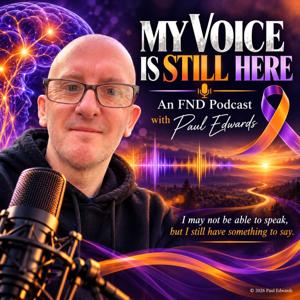
My Voice Is Still Here is Paul Edwards’ personal journey through neurological illness and Functional Neurological Disorder, beginning with the hospital admission that changed his life.…