
Sign up to save your podcasts
Or

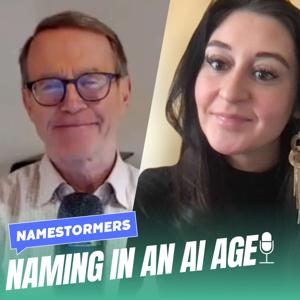


This week, NameStormers CEO Mike Carr and Director of Ops Ashley Elliott discuss the evolving role of AI in naming, highlighting a project journey for an outdoor lifestyle brand's bug repellent. While AI generated initial ideas, human creativity was crucial in refining names due to trademark concerns. The process involved presenting names with visual context, client feedback, and adjustments based on packaging and trademark needs. The key takeaway is that the best names market an experience, not just functionality. The hosts also recommend The Power of Instinct by Leslie Zane, emphasizing the importance of marketing higher-order benefits.
In this episode of Naming in an AI Age, NameStormers, Director of Ops Ashley Elliott and CEO Mike Carr discuss the complexities of trademarking viral phrases, using TikTok content creator Jools Lebron’s catchphrase "very demure, very mindful" as an example.
Jools faced challenges trademarking the phrase for beauty products due to trademark trolls, including individuals who filed for the phrase before her. Mike explains that while catchphrases can be trademarked if used in commerce, they must be filed in specific product classes, and extensions are possible for up to 18 months.
Common law usage rights can also apply if a creator proves they used the phrase first in commerce. However, trolls risk legal consequences if their intent is to profit from holding trademarks hostage. While some trends are fleeting, building a sustainable brand requires consistent content and careful planning, ensuring the trademark strategy aligns with long-term goals.
In this podcast, Ashley Elliott and Mike Carr explore the complexities of naming strategies, emphasizing the importance of context in making naming decisions. They discuss how names like "Dunkalatte" are designed for clarity and brand consistency, while luxury EVs, such as Ford’s "Mustang Mach-E," leverage existing brand equity and signal innovation. The conversation highlights the need to balance creativity with practicality, ensuring naming systems are flexible for future growth. They also stress the importance of considering the target audience's familiarity with the brand, legal availability, and cultural appropriateness, especially for global brands. Ultimately, effective naming requires a thoughtful blend of strategy, creativity, and market awareness.
In the podcast "Naming in an AI Age," Mike and Ashley discuss the critical factors in naming a product, emphasizing the need to understand both the competitive landscape and target audience. Using Desert Glory’s "Cherubs" tomatoes as a case study, they highlight how the name cleverly evokes both "cherry" tomatoes and cute, small angels, making it memorable and effective. The episode contrasts master brand strategies, which use a single name for all products, with niche branding, which targets specific product attributes. Mike also stresses the importance of testing names to gauge their effectiveness and appeal.
In this podcast episode on naming strategies, Ashley Elliott and Mike Carr discuss the importance of selecting a name that aligns with the desired look, feel, and emotional resonance for a product. Using the example of Intergraph's CAD CAM platform competing against Autodesk, they illustrate how the name "Solid Edge" was chosen to convey both functional and aspirational qualities, appealing to engineers by emphasizing stability and innovation. The conversation highlights the need to balance emotional and functional elements and understand the target audience in naming decisions.
This week on "Naming in the AI Age," Namestormers Ashley Elliott and Mike Carr discuss the evolving relevance of taglines in today’s fast-paced digital world. While some critique taglines as outdated distractions, Mike argues for their enduring value, suggesting they enhance brand names by providing emotional appeal and differentiation. He highlights examples like Dr. Pepper's changing taglines and discusses how AI tools, such as Meta's LLAMA 3.1, are revolutionizing tagline creation with precision and efficiency. The podcast emphasizes that, despite varying opinions, taglines remain crucial for branding, and AI is becoming a key resource in crafting impactful and memorable taglines.
NameStormers CEO, Mike Carr, discusses the impact of brand names across age groups, emphasizing that while memorable names can spark conversation, they may not support broad demographic expansion. He underscores the role of controversy in making names engaging but warns about considering consumer emotions in purchasing decisions. Carr notes challenger brands disrupt with edgy names and advises balancing uniqueness with market appeal for growth.
In this episode, NameStormers CEO Mike Carr discusses the importance of choosing engaging and memorable names for products or companies, citing examples such as Snapple and eBay, which demonstrate the power of names that are not necessarily descriptive but capture attention. He also warns against the mistake of ignoring the target audience when naming a product or company. Carr emphasizes the importance of a name being memorable and sticky.
Mike Carr, co-founder of NameStormers, highlights the company's 40 years of experience in addressing naming challenges like budget constraints, team disagreements, and legal issues. Key considerations include name length, spelling ease, memorability, branding alignment, and competitor differentiation. Their process involves understanding client needs, creating tailored strategies, and using AI tools. Clients receive valuable insights and actionable strategies, whether or not they form a partnership. NameStormers combines AI with expertise to vet names legally, culturally, and linguistically, with successful projects like Angry Orchard, Cherubs, and Tapestry for Hilton.
In this podcast, NameStormers CEO Mike Carr interviews, Laura Schroeder who discusses her transition to a naming career, highlighting the shift from tech-sounding to organic names due to trademark issues and changing preferences. She emphasizes aligning names with a brand's value, involving clients, and using surveys for feedback. Good namers need strong vocabulary and language skills. Schroeder categorizes names into descriptive, evocative, abstract, and arbitrary. Memorable names should have quick backstories, be pronounceable, and easy to spell. For rebranding, she recommends considering scalability and adaptability, using "tissue sessions" for feedback, and notes the long-term benefits of unique and intriguing names.
From the publisher's feed
Join members of the NameStormers team as they explore the nuances of the creative nature of name generation, the mechanics behind trademark screening, and the importance of consumer research, with…