
Sign up to save your podcasts
Or

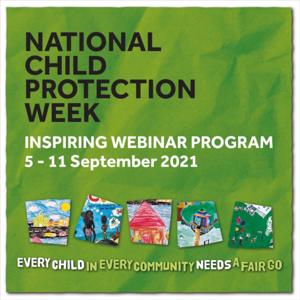


COVID-19 has dominated the news headlines and fundamentally changed the way we all live. With the ever-changing restrictions, lockdowns and isolation from loved ones, it’s understandable that it’s been a confusing and challenging time, particularly for children and young people. Missing out on school, hanging out with their friends and cousins, cuddles from grandparents and the changing rules are taking a toll now and likely into the future.
Although we occasionally hear about the toll the pandemic has taken on our mental health, unfortunately the reality for many children and young people is extremely challenging. We need to act. Now.
This webinar heard from leading experts about the impact of COVID-19 on the mental health of children and young people and the strategies we can use to support them as well as each other, at a time when many of us are already overwhelmed. The conversation included ways we can work together to help navigate the stormy COVID-19 waters and what we can do to support the mental health of children and young people as we come out of this pandemic.
Speakers:
Tracy Adams, yourtown (Kids Helpline)
Ali Fogarty, Murdoch Children’s Research Institute
Elizabeth Seeley-Wait, Clinical Psychologist and Director Children’s Psychology Clinic
Facilitator: Rani Kumar, Head of Policy and Campaigns, NAPCAN
This year’s theme for National Aboriginal and Torres Strait Islander Children’s Day was Proud in Culture, Strong in Spirit. As with all Australian children, it is important for Aboriginal and Torres Strait Islander children to be able to maintain strong connections to their family, community, culture and Country.
Too often though, child protection systems seemingly lack the understanding of, or deprioritise, cultural connection. This can have negative consequences for Aboriginal and Torres Strait Islander children in out-of-home care.
This webinar explored how children thrive in systems that recognise the strengths of Aboriginal and Torres Strait Islander cultures.
Together, we can build a future where all Aboriginal and Torres Strait Islander children have the opportunities to grow up safe in their families, strong in their identities, and connected to their cultures.
The discussion included:
Speakers:
Every child, in every community, needs a safe home.
Yet we know that far too many children are living with violence every day. We see domestic violence as a factor in the majority of substantiated child abuse cases in Australia.
This webinar explored a vision for safer communities where children and young people are at the centre of our conversations and actions as we address domestic and family violence.
The conversation included:
Speakers:
How do we make this happen?
The topics of respectful relationships education and consent have been widely discussed this year. What we now know is it’s not just up to schools to be having these conversations – it’s up to the whole community.
Every child and young person in every community deserves to have access to respectful relationships education, no matter what school they go to, where they’re from or how old they are.
This webinar heard from a parent/journalist, a teacher and a worker in the space about how we can all play a part in the wider conversation with children and young people about respectful relationships.
Topics included; how to involve parents in these conversations, how to work together, consent culture, the importance of children’s voices, the line between encouragement and coercion, adult responsibility vs self protection for children, what young people are telling us and how to work through barriers.
Speakers:
Children and young people with disability are more likely to experience abuse and are significantly overrepresented in the child protection system due to increased risk. This increased risk is not about the disability itself but rather is due to the things that children and young people with disability commonly experience like; having more reliance on others for care and support, being socially isolated, lacking a trusted adult or way to communicate with someone who can help, or lacking the right support to fully participate in society.
So, how do we build our communities so that children and young people with disability thrive? How can we empower children and young people with disability to exercise their rights and ensure their full participation and inclusion? How can we better listen to the voices of children and young people with disability? How do community attitudes towards children and young people with disability impact on safety and wellbeing?
Speakers:
Not-for-profit organisations including faith-based organisations and institutions often see each other as strategic competitors. But what if we saw each other as allies? Allies working together towards a community where children thrive and families are supported.
This webinar provided learning and practice examples of how community organisations can work together to achieve a common goal. Featuring voices from the local community, the webinar heard from a community leader, NAPCAN’s NT Manager and prevention practitioner, as well as a leader in the faith-based space.
Discussions included:
Speakers:
To treat all of Australia’s children fairly, we need to make sure every family and community has what kids need to thrive and be healthy.
Not every child or community has what they need. And not everyone thinks about children’s wellbeing as a responsibility for communities and society, rather than just families.
Our understanding of what children need to thrive is constantly adapting as our world changes around us. As we gain knowledge, we see the connections and the responsibilities that we all have, to make sure our young people can live well and achieve their potential.
In this webinar we discussed:
A panel of experts introduced us to some of the unexpected roles that different parts of society play in boosting child wellbeing. And left us with thoughts on how we can all support and share responsibility for all children in Australia.
Speakers:
This was a live-streamed official launch of National Child Protection Week 2021 by the Governor-General, His Excellency General the Honourable David Hurley AC DSC (Retd).
The launch was followed by a keynote address by Anne Hollonds, National Children’s Commissioner, who shared her insights on the importance of this year’s National Child Protection Week theme that: To treat all of Australia’s children fairly, we need to make sure every family and community has what kids need to thrive and be healthy.
The event set the scene for a week-long program of events focused on how we can all work together to build a healthier, fairer Australia for all our children, now and into the future.
From the publisher's feed