
Sign up to save your podcasts
Or



The human neonate enters the world with billions of neurons, a regionally differentiated cerebral cortex, and sensory, motor, and affective systems already organized by prenatal development. Yet this substantial biological endowment does not confer mature locomotion, language, conceptual knowledge, autobiographical memory, or a stable sense of self. The apparent discrepancy is not explained by the absence of neural architecture, but by the absence of the experience-dependent organization through which that architecture becomes functionally calibrated, selectively stabilized, and biographically differentiated. This article advances the thesis that neurodevelopment is best understood neither as the inscription of experience upon an initially empty mind nor as the simple maturation of a fully specified neural program, but as the progressive transformation of an inherited biological architecture into an individualized cognitive system.
On this account, the child is neither cognitively vacant nor developmentally complete. Neural systems present at birth establish structured capacities and constraints; embodied action, sensory exposure, linguistic interaction, social relations, and memory subsequently refine their connectivity and functional specialization. Motor competence emerges through calibration, perceptual stability through learned interpretation, language through experience-dependent selection, and personal identity through the cumulative integration of memory, self-representation, and social history. Development therefore denotes more than growth or the acquisition of information: it is a process of neural individuation through which shared biological possibilities become organized competence and, along a singular developmental trajectory, an individual human mind.
By Alexis O. Kaya, M.D., Ph.D., Neuroscientist
This article advances the thesis that durable memory is best understood not as the passive retention of discrete informational objects, but as the sustained organization of distributed neural relations across time. On this account, an experience becomes memorable when encoding and consolidation modify coordinated ensembles of neurons, synapses, and interacting brain systems in ways that preserve functionally significant structure despite continuous molecular turnover and ongoing plasticity. The persistence of a memory therefore need not require the permanence of every molecule, synapse, or cellular state initially involved in its formation. Instead, it may depend on the capacity of neural systems to maintain, reactivate, and reorganize relational patterns with sufficient fidelity to support later reconstruction.
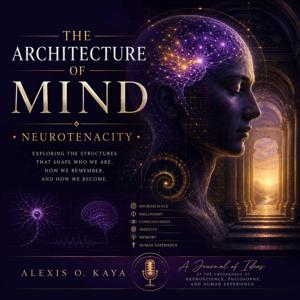
The term Neurotenacity is introduced as a theoretical label for this capacity to preserve biologically instantiated organization while permitting adaptive change. It denotes neither neuronal immutability nor a single molecular mechanism. Rather, it describes the multiscale persistence through which long-lived neurons, synaptic plasticity, recurrent circuit dynamics, systems consolidation, and network-level redundancy may jointly sustain continuity. The concept accordingly reframes the apparent tension between stability and plasticity: memory requires stability sufficient to conserve learned relations, yet also flexibility sufficient to incorporate new experience, update predictions, and reorganize representations across changing contexts.
Within this framework, forgetting is not treated as a unitary process or as the simple inverse of memory. In some cases, forgetting reflects degradation or loss of the neural organization required for retention. In others, the relevant representation may remain partially preserved while access is impaired by altered cues, interference, competition, or disrupted pathways of retrieval. Remembering is therefore conceived as a reconstructive operation performed by a dynamic system: retrieval reactivates and reassembles distributed information, and each act of retrieval may modify the architecture from which the memory is subsequently reconstructed.
The broader implication is that autobiographical continuity and personal identity emerge from the cumulative organization of experience rather than from a perfectly preserved neural archive. Identity is supported by overlapping memory systems, habits, affective dispositions, learned expectations, and self-relevant narratives whose relations remain sufficiently coherent across time. This proposal is intended as an integrative theoretical framework rather than a settled empirical account. Its central prediction is that the durability of memory should be explained increasingly at the level of resilient, reconfigurable neural organization—across cells, circuits, and systems—rather than by reference to any single fixed storage locus.
By Alexis O. Kaya, M.D., Ph.D., Neuroscientist
The starting point is an important scientific development. The studies discussed in the article strengthen the evidence for adult neurogenesis and describe its molecular architecture with greater precision.
The surprising part is that this does not answer the largest philosophical and scientific question. Showing that new neurons can arise is not the same as showing that an entire memory-supporting architecture is replaced.
Here is the key distinction: proliferation, neurogenesis, neuronal replacement and replacement of mnemonic architecture are four different claims. Each requires its own evidence, and they should not be treated as interchangeable.
The dentate gyrus matters because the evidence is anatomically specific. Moving from findings in this hippocampal region to claims about ‘the adult brain’ requires care about scale, function and inference.
The persistence problem asks how memory-related organisation continues while some of its biological components change. It is a problem about functional continuity, not merely about whether individual cells survive.
Existing theories explain substantial parts of memory formation, consolidation, indexing and transformation. Yet they do not automatically remove the need to explain how organised access and continuity persist through change.
A cautious possibility is that the hippocampus operates as a dynamic participant rather than as the unique final store of enduring memory. That hypothesis preserves the importance of hippocampal function without making a stronger claim than the argument supports.
If the hippocampus can remain functionally organised while its cellular composition changes, where—and in what relations—should we locate the continuity of memory?
By Alexis O. Kaya, M.D., Ph.D., Neuroscientist
This Podcast argues that the idea of overpopulation should not be treated only as a demographic question, but as a philosophical and civilizational framework. It examines how modern societies came to interpret humanity through concepts of scarcity, productivity, technological management, and ecological constraint. Rather than denying the reality of environmental, economic, or demographic challenges, the essay asks whether some limits attributed to humanity may instead reflect the historical limits of our institutions, technologies, economies, and forms of organization.
The central thesis is that before asking whether there are too many human beings, civilization must ask what kind of social order has learned to experience humanity as a problem. The article therefore reframes overpopulation as a question of recognition, human value, and civilizational responsibility. Its conclusion proposes that the future will depend not only on solving inherited problems, but on developing the courage to examine whether inherited questions still deserve to be asked in the same way.
Alexis O. Kaya, MD, PhD, Neuroscientist.
This article argues that the biological pursuit of immortality cannot be reduced to the extension of lifespan. Longevity medicine may preserve the organism, but the persistence of the self depends upon continuity: the preservation of memory, identity, experience, and the organized history through which a person remains recognizably themselves. The nervous system occupies a singular place in this problem because it gathers accumulated experience into living neural architecture and dynamic biochemical regulation.
The text distinguishes biological survival from personal continuity, showing that a body may remain alive while memory, personality, and autobiographical coherence gradually deteriorate. Neurodegenerative disease therefore becomes a decisive lesson: it reveals that preserving life is not always the same as preserving the person. The article also widens the argument beyond neural structure alone, emphasizing that continuity may require the preservation of neural function, chemistry, regulation, and the broader biological ecology through which experience remains possible.
The conclusion remains cautious but deliberately provocative. Neuroscience has not solved immortality, and it cannot yet determine what level of continuity is sufficient for the persistence of the self. Nevertheless, if radical continuity is biologically possible, the nervous system appears to be the most plausible place to begin. The first biological path toward immortality may therefore depend less on preserving the body indefinitely than on understanding and preserving the history carried by the nervous system.
By Alexis O. Kaya, M.D., Ph.D., Neuroscientist
Consciousness may depend not only on neural architecture, but on the living biochemical conditions that allow that architecture to function. A brain could, in principle, be preserved with its neurons intact, its synapses maintained, and its networks structurally recognizable. Yet a difficult question would remain: would such preservation be enough to preserve experience itself? This article explores that uncertainty through what I call the Biochemical Continuity Problem: the possibility that saving the structure of the brain may preserve the framework of a mind without preserving the dynamic chemical ecology through which consciousness emerges.
By Alexis O. Kaya, MD, PhD, Neuroscientist
This Podcast-Article examines the nervous system as a uniquely protected and partially isolated organ within the body. Although the brain governs nearly every dimension of physiological life, it rarely encounters the body directly. Instead, it communicates through filtered blood supply, cerebrospinal fluid, immune regulation, endocrine signals, interoceptive pathways, and representational models. The article argues that this controlled separation is not incidental. It may represent a central evolutionary strategy for preserving neural architecture, accumulated information, memory, identity, and perhaps the biological conditions of consciousness. Through the lens of Neurotenacity, the nervous system appears not only as a regulatory organ but as a living archive: a structure designed to preserve continuity across time. The paradox of the brain is therefore profound: the organ most connected to the body may also be the organ most carefully protected from it.
By Alexis O. Kaya, MD, PhD, Neuroscientist
What truly gives a human being value? This episode explores that question at a moment when artificial intelligence, automation, migration, and global economic change are transforming the foundations of contemporary civilization.
Rather than asking only what societies produce, build, or invent, the episode proposes a deeper question: what does a civilization recognize? Through a long historical perspective, it examines how human value has been associated with physical labor, mechanical production, cognitive ability, and now the challenges introduced by artificial intelligence.
At the center of the reflection is the Theory of Reflective Human Value, which argues that human worth is not created by usefulness, productivity, intelligence, or social status. Human value is sustained through recognition, and the denial of another person’s value ultimately weakens the very foundation upon which our own value depends.
The episode also introduces the Diamond Structure of Human Value, built around four dimensions: ontological value, moral value, social value, and economic value. A civilization becomes truly mature when it preserves all four dimensions and refuses to reduce human beings to their function, origin, performance, or market utility.
The central message is clear: the future will not be judged only by the intelligence of our machines, but by the humanity our civilization is still able to recognize, protect, and affirm.
Alexis O. Kaya, MD, PhD, Neuroscientist.
This podcast argues that neurodegenerative diseases do more than impair memory, cognition, or behavior; they expose the biological conditions through which personal continuity is maintained. By progressively disrupting neural networks, synaptic organization, autobiographical memory, emotional regulation, and relational responsiveness, these disorders reveal that personhood cannot be reduced to a single faculty, a single brain region, or a single moment of consciousness. Identity is best understood as organized continuity: a historically accumulated architecture of memory, emotion, attachment, values, habits, and neural connectivity through which a human being remains recognizably themselves across time. The erosion of this architecture clarifies both the fragility and the resilience of the self, suggesting that neurodegeneration is not only a pathology of cellular loss but also a disorder of continuity, organization, and personhood.
By Alexis O. Kaya, MD, PhD, Neuroscientist
From the publisher's feed