
Sign up to save your podcasts
Or

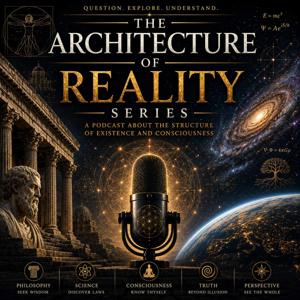


Nicholas S. Kondisenko explores how diplomatic pageantry functions as a tool to manufacture political legitimacy and moral approval. By examining Indian Prime Minister Narendra Modi’s high-profile visits to Australia and Indonesia, the author argues that lavish ceremonies and public honors serve to reframe strategic necessity as virtuous partnership. This spectacle prioritizes geopolitical interests, such as trade and security, over the historical and humanitarian controversies surrounding a leader’s domestic record. Ultimately, the text suggests that modern diplomacy uses choreographed imagery to bypass moral accountability, effectively teaching the public to overlook contradictions in favor of national interest. The “architecture of legitimacy” thus acts as a system of selective memory, where the aesthetics of power gradually redefine what is considered politically acceptable.
The Architecture of Reality: Amazon
Nicholas S. Kondisenko argues that global empire is not defined by a specific nation or flag, but rather functions as a transnational operating system embedded in institutions and technology. While traditional power centers like the United States may decline, the mechanisms of control—such as financial networks and surveillance systems—simply migrate to new hosts like Beijing, Brussels, or decentralized digital platforms. This perspective suggests that geopolitical shifts toward a multipolar world often disguise the continuity of imperial structures under new names and symbols. True sovereignty is lost when essential human functions are centralized and automated, making the identity of the ruling capital secondary to the architecture of the system itself. Ultimately, the text asserts that human freedom depends on dismantling these dependencies rather than merely choosing a different global supervisor. Consequently, the next era of governance may become increasingly placeless, woven directly into the technical fabric of daily administration.
Nicholas S. Kondisenko’s analysis explores the NATO Ankara summit as a carefully constructed theatrical performance designed to project unity despite deep internal fractures. The author argues that the alliance’s focus on massive military spending and industrial production transforms security into a permanent economic operating system that prioritizes defense over social needs. While official rhetoric emphasizes collective deterrence and support for Ukraine, the text highlights inherent contradictions regarding national sovereignty, democratic values, and shifting geographic centers of power. Ultimately, the source suggests that NATO sustains itself through a self-reinforcing cycle of fear, where the constant preparation for conflict becomes an inescapable political reality. This framework makes genuine peace difficult to imagine as militarization becomes the primary lens through which global stability is viewed.
NATO and the Theatre of Permanent Security: Substack
The Architecture of Reality: Amazon
This text explores the concept of Pax Silica, a new global order where sovereignty is defined by computational power rather than territorial borders. Nicholas S. Kondisenko argues that modern nations are becoming structurally dependent on foreign-controlled technology stacks, including semiconductors, cloud infrastructure, and artificial intelligence. This shift creates a hierarchy of reality where true authority belongs to those who own the underlying digital substrate upon which modern civilization operates. The author suggests that traditional political independence is increasingly illusory if a state lacks control over the technical systems that govern its economy and military. Ultimately, the source warns that the future will be divided between architects who build the machine and users who are merely trapped within its design.
The Architecture of Reality: Amazon
Pax Silica and the End of Sovereignty: Substack
This podcast examines the intellectual trend of comparing contemporary political figures to ancient historical archetypes, specifically focusing on Donald Trump. While past commentators have drawn parallels to Alcibiades or Caligula, the author argues that Marcus Licinius Crassus serves as a more accurate reflection of the former president. Like Crassus, Trump is characterized as a wealthy outsider who leveraged financial success into political authority while constantly seeking prestige and recognition to rival his peers. The podcast highlights how both men shared a theatrical public persona and a belief that business acumen naturally translates into effective statecraft. Ultimately, the source essay uses the disastrous end of Crassus’s career as a cautionary tale about the dangers of unbridled ambition and the limits of wealth in the political arena. In doing so, it suggests that ancient Roman history remains a vital mirror for understanding the motivations and risks of modern leadership.
In this narrative, the author reflects on the meditative and challenging process of an all-day backyard barbecue. Despite a frustrating start involving damp fuel and technical setbacks, the storyteller emphasizes that authentic smoking is a negotiation with the elements that demands constant vigilance. The text highlights a growing cultural shift where the slow-paced American smokehouse tradition is being embraced within the Australian lifestyle. Beyond the culinary techniques, the piece explores how patience and persistence transform a series of minor failures into a rewarding experience. Ultimately, the author suggests that the true value of the ritual lies in slowing down and savoring the time invested rather than just the final meal.
Nicholas S. Kondisenko explores the mystery of Java La Grande, a landmass appearing on a 1542 map that predates the official European discovery of Australia. He argues that historical truth is often a product of power, where official records prioritize administrative recognition over actual early encounters. Using the “Boke of Idrography” as a focal point, the text examines whether this anomaly represents suppressed Portuguese knowledge or a cartographic phantom born of imagination. Ultimately, the author suggests that maps are political tools rather than neutral documents, reflecting a civilization’s expectations and its desire to organize the unknown. This narrative serves as a broader meditation on the fragility of archives and how human reality is constructed from fragments that power chooses to validate.
Nicholas S. Kondisenko explores how the human brain acts as an architect, actively constructing our perception of reality rather than just observing it. He posits that while a physical world exists, our experience of it is filtered through biological, cultural, and psychological maps. This internal construction extends to society, where shared imagination creates foundational structures like money, law, and religion to organize collective existence. By comparing ancient cave paintings to modern digital screens, the author suggests that humanity has always used symbols to navigate mystery. Ultimately, the text serves as a reminder that the systems we view as objective truths are often invisible frameworks built by the mind. Awareness of these mental models is essential for understanding our place in an ever-changing world.
In this text, Nicholas S. Kondisenko argues that artificial intelligence is evolving into a modern deity through the “architecture of daily life.” The author contends that the real threat is not technological consciousness, but rather a human tendency to project divine authority onto machines that merely mimic understanding. By rebranding statistical patterns with theological terms like “intelligence” and “learning,” society has constructed a new priesthood rooted in data and infrastructure. This shift encourages individuals to outsource moral judgment and wisdom to algorithms that lack a soul or true perception. Ultimately, the source serves as a warning against a civilizational surrender, urging humans to maintain personal responsibility instead of worshiping their own inventions.
This podcast explores the concept of managed chaos, suggesting that modern global power functions as an invisible architecture rather than a traditional empire. Instead of direct conquest, the system maintains dominance by fostering instability and proxy conflicts in distant regions to ensure peripheral nations remain dependent on a protected center. The author argues that high-profile political figures serve as distracting masks, absorbing public scrutiny while the underlying machinery of debt, surveillance, and militarization continues its work. This strategy transforms allies into expendable buffers and reclassifies citizens as mere industrial inputs to be managed through fear. Ultimately, the source warns that a declining empire preserves its status by making permanent disorder the global norm. The ultimate goal of this design is to convince the world that imperial oversight is the only solution to the very fires it helped ignite.
From the publisher's feed