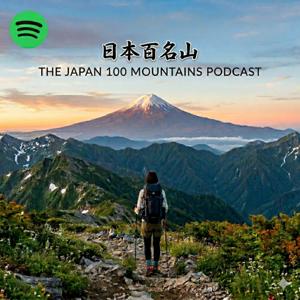
Rising from the neck of the Kubiki Mountains, Mount Myōkō stands as a majestic stratovolcano often hailed as "Echigofuji" for its resemblance to Japan's most famous peak. This 2,454-meter "famous mountain" of Niigata Prefecture is more than just a geological marvel; it is a landscape where fire, faith, and folklore converge.
📖 Legends, History, and FolkloreThe mountain’s very name is steeped in Buddhist cosmology. One legend suggests that its shape, reminiscent of a hawk spreading its wings, inspired the name, while another draws a spiritual parallel to Mount Meru (Sumeru), the center of the Buddhist universe. In ancient times, it was known as Mount Koshinonaka, but its name was eventually changed to Myōkō (妙高) to utilize two "lucky" characters.History whispers through the high ridges, most notably in the legend of Kiso Yoshinaka. Following a victory in the late 12th century, the general is said to have climbed the peak to dedicate three Amida Buddha statues at the summit’s Amida-do hall. These sacred figures were later moved to the foot of the mountain to protect them from the elements and are still unveiled during the annual mountain-opening ceremony.
⛩️ Sacred Traditions and Mountain WorshipFor centuries, Mount Myōkō has been a sanctuary for Shugendō, a syncretic religion where practitioners (Yamabushi) seek spiritual power through rigorous asceticism in the wilderness. The mountain was traditionally regarded as a divine realm where the God resides or descends, particularly as a guardian of the water sources that enrich the rice fields below.The historical heart of this worship was Sekiyama Shrine (formerly Sekiyama Sansha Gongen), which served as the primary gateway for pilgrims. Along the old trails, 36 stone Buddhas were once "planted" into the earth to guide seekers. Though the mountain’s religious structures faced destruction during the warring states period and the forced separation of Buddhism and Shinto in the Meiji era, the spiritual aura remains in the small shrines (Hokora) and the Myōkō Daigongen deity enshrined on the southern peak.
🥾 Hiking Routes and Trail HighlightsTo climb Myōkō is to traverse a landscape of dramatic contrasts, from volcanic fumaroles to tranquil marshlands.
- The Tsubame Onsen Route: This path begins at a village famous for its milky-white hot springs. Highlights include the So Falls, one of Japan’s top 100 waterfalls, and the challenging Kaisuri no Ken (Shell-Scraping Steep), a rocky section equipped with fixed chains that leads hikers to the summit.
- The Sasagamine Approach: This route offers a gentler but longer journey through high-altitude wetlands. Hikers pass the blue-domed Kurosawa-ike Hut and the shimmering Koya-ike marshlands, where the water reflects the treeless slopes of neighboring Mt. Hiuchi.
- The Sky Cable Route: For those seeking the shortest ascent, the Myōkō Kogen Sky Cable whisks visitors to a trailhead that passes through ancient beech forests and the Otani Hut.
From the summit, a 360-degree panorama reveals the Northern Alps, the smoking crater of Niigata Yakeyama, and, on clear days, the distant silhouette of Mt. Fuji.
🧭 Seasonal Tips and Mountain SafetyThe mountain is as unforgiving as it is beautiful. Because it sits in one of the world's heaviest snowfall regions, snow often lingers in shaded valleys and steep traverses until early July. Hikers visiting in late spring or early summer are advised to carry crampons and ice axes, particularly for the dangerous traverse at Okura Nokkoshi.The area is also active bear territory; travelers should carry bear bells and remain alert. Additionally, because the mountain remains an active volcano, sulfurous smells emanate from the fumaroles in the Minami Jigokudani (South Hell Valley). Finally, water is scarce at the high-altitude huts; the unreliable supply at Koya-ike and Kurosawa-ike often requires treatment, such as boiling, before consumption