
Sign up to save your podcasts
Or

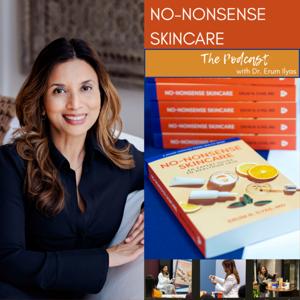


What does “clean beauty” actually mean? The answer may be less clear than you think.
Dr. Erum Ilyas breaks down what clean skincare labels and ingredient-rating systems can—and can't—tell us about a product. From preservatives and allergens to exclusion lists and replacement ingredients, she explains why “clean” isn't a standardized medical or scientific category.
More importantly, she offers a better way to choose skincare: look past the claim, start with your skin, and choose products based on purpose and evidence.
This week, there was one ingredient that kept coming up in conversation: peptides.
But here's what surprised me: until recently, very few people were asking what peptides actually were. They had quietly become another "must-have" skincare ingredient—until the headlines made everyone stop and ask questions.
In this episode of No-Nonsense Skin, I explain:
One of the biggest lessons from this story isn't about peptides at all. It's about learning how to evaluate skincare ingredients before spending your money.
🎧 Listen on Spotify: https://open.spotify.com/episode/5xb7...
🍎 Listen on Apple Podcasts:
https://podcasts.apple.com/us/podcast...
📘 No-Nonsense Skincare: An Expert Guide to Healthier Skin
https://amzn.to/4aeG9ai
#peptides
Medical Disclaimer
The information presented in this podcast is intended for educational and informational purposes only and should not be interpreted as individualized medical advice. Listening to this podcast does not establish a physician–patient relationship. Please consult your healthcare provider regarding any questions about your own health, medications, or skincare concerns before making changes to your routine or treatment.
Disclosure
I have no financial relationships with the skincare brands or products discussed in this episode unless specifically stated. My opinions are based on published medical evidence, clinical experience, and my commitment to helping patients better understand their skin.
Hair loss is one of the most common concerns I see in young men - - but not every changing hairline is male pattern baldness.
After more than 20 years as a board-certified dermatologist, I've learned that the biggest mistake isn't waiting too long or starting treatment too early, it's treating the wrong diagnosis.
In this episode of No-Nonsense Skin, I discuss:
✔️ Not every change in your hairline is male pattern hair loss
✔️ Why seeing more hair in the shower may mean something completely different
✔️ What treatments actually have evidence behind them
✔️ Whether you'll need treatment forever
Most importantly, don't panic.
We have more effective treatments than ever before.
The right treatment starts with the right diagnosis.
📘 No-Nonsense Skincare: An Expert Guide to Healthier Skinhttps://amzn.to/4aeG9ai
Medical Disclaimer
The information presented in this podcast is intended for educational and informational purposes only and should not be interpreted as individualized medical advice. Listening to this podcast does not establish a physician–patient relationship. Please consult your healthcare provider regarding any questions about your own health, medications, or skincare concerns before making changes to your routine or treatment.
Disclosure
I have no financial relationships with the skincare brands or products discussed in this episode unless specifically stated. My opinions are based on published medical evidence, clinical experience, and my commitment to helping patients better understand their skin.
Should you throw away your CeraVe products?
This week on No-Nonsense Skin, I answer one of the most common questions I was asked in clinic after headlines about benzene in acne products.
In this episode, we discuss:
My goal isn't to tell you what to buy—it's to help you understand the science behind the headlines so you can make informed decisions with confidence.
Medical Disclaimer: This podcast is for educational purposes only and does not establish a physician–patient relationship. The information discussed is general in nature and should not replace personalized medical advice. Please consult your healthcare professional regarding your individual health concerns.
Disclosure: I have no financial relationships with the skincare brands or products discussed in this episode. My opinions are based on the medical literature, clinical experience, and patient education—not sponsorships or affiliate relationships.
One of the most common questions I was asked in clinic this week was:
"If sunscreen blocks vitamin D, shouldn't I stop wearing it?"
The answer is more nuanced than you might think.
In this episode, we explore how your skin makes vitamin D, why sunscreen isn't the whole story, how skin tone influences vitamin D production, and why balance—not extremes—is the key to healthy skin and overall health.
No hype. Just practical ways to think through skincare.
Medical Disclaimer: This podcast is intended for educational purposes only and does not establish a physician–patient relationship. The information discussed is general in nature and should not be considered personal medical advice, diagnosis, or treatment. Please consult your healthcare professional regarding your individual health concerns.
Disclosure: Unless otherwise stated, I have no financial relationships with the skincare brands or products discussed in this episode. My recommendations are based on the available medical literature, clinical experience, and patient education—not sponsorships or affiliate relationships.
Choosing a sunscreen shouldn't feel overwhelming—but with hundreds of options on the shelf, it often does. This week, I answer one of the most common questions I hear in the exam room: How do I choose the right sunscreen? We talk through SPF, mineral versus chemical sunscreens, sprays, sticks, lotions, and how to find one you'll actually wear every day.
No hype. Just practical ways to think through skincare.
Medical Disclaimer: This podcast is intended for educational purposes only and does not establish a doctor–patient relationship. It is not a substitute for individualized medical advice. Please consult your healthcare professional regarding your personal health and skincare needs.
Disclosure: Unless otherwise stated, Dr. Erum Ilyas has no financial relationships with the skincare brands or products discussed in this episode. Recommendations are based on the available medical literature, clinical experience, and educational purposes rather than sponsorship or affiliate relationships.
One question kept coming up in clinic this week:
Do red light masks and red light devices actually work?
From rejuvenation masks to hair growth caps, red light seems to be everywhere right now—but are we asking the right question?
In this episode of No-Nonsense Skin, Dr. Erum Ilyas breaks down how she approaches this conversation in the exam room: separating the science behind red light from whether at-home devices actually deliver it.
You’ll learn:
• Why we hear so much about red light
• What photobiomodulation means (without the jargon)
• The alarm clock analogy that changes how to think about red light
• What Dr. Ilyas’ research team found when testing consumer devices
• Why intensity, wavelength, and time matter
• How to decide whether a device is worth trying using the truth SERUM framework
No hype. Just practical ways to think through skincare decisions.
After more than 20 years in dermatology, I’ve realized something surprising: people aren’t overwhelmed because they don’t care about skincare—they’re overwhelmed because they care so much.
In this first episode, I share the thinking that led to No-Nonsense Skincare and why I created this podcast.
Each week, we’ll take one of the most common questions I’ve been asked in clinic and work through it using evidence, experience, and practical ways of thinking about skin.
If you’ve ever felt overwhelmed by products, confused by trends, or wondered whether you’re doing too much—this conversation is for you.
Clarity over clutter starts here.