NOLA History Guy

NOLA History Guy

By NOLA History GuyHistory
Download on the App Store

NOLA History Guy episodes

  • Podcast: Maunsel White in the days after the Battle of New Orleans
    Maunsel White, Irishman, planter, and veteran of the Battle of New Orleans, is the subject of our first pod of 2017.
    Guest Starring on Podcasts!
    Our first pod for 2017! We’re behind a bit, because @NOLAHistoryGuy started out the year doing a guest segment on another podcast. It was fun to sit and chat with Mark Bologna of Beyond Bourbon Street about the Battle of New Orleans. Mark is @BeyondBourbonST on Twitter – note the “ST” for “Street” in Mark’s Twitter handle and website.
    After attending a wonderful talk by Mr. Winston Hu of the University of New Orleans Department of History (my old stomping ground as an undergrad) on the history of Chinese people in New Orleans, I went out to Cypress Grove Cemetery to photograph the “Chinese Tomb” that Hu discussed.
    (editor’s note: Let’s be honest here, walking through Cypress Grove isn’t a huge sacrifice for me, since I park on Canal Street by the cemetery, then walk over to Banks Street, to go to Wakin’ Bakin’ for breakfast, coffee, and writing time.)
    Maunsel White and Cemetery Exploration
    As I walked through Cypress Grove, I came across a mausoleum with “Maunsel White” carved in the top. There was a small bronze plaque at the base of the mausoleum, indicating that the senior White was a veteran of the War of 1812. I remembered the name, that he was one of Jackson’s officers on 8-Jan-1815. I shot a bunch of photos, then made a note to do an article on him for my cemetery website. Then I looked him up, and realized he was part of the bigger story of the Battle of New Orleans. Not to steal the thunder from what Mark and I chatted about on his pod, I decided that talking about White would be a good complementary discussion.
    So, have a listen to White, and his involvement in the days following the Battle of New Orleans. Be sure to add Beyond Bourbon Street’s pod to your playlist, and recommend it to your friends.
    43 min
  • Podcast: Maunsel White in the days after the Battle of New Orleans - NOLA History Guy
    Maunsel White, Irishman, planter, and veteran of the Battle of New Orleans, is the subject of our first pod of 2017.
    Guest Starring on Podcasts!
    Our first pod for 2017! We’re behind a bit, because @NOLAHistoryGuy started out the year doing a guest segment on another podcast. It was fun to sit and chat with Mark Bologna of Beyond Bourbon Street about the Battle of New Orleans. Mark is @BeyondBourbonST on Twitter – note the “ST” for “Street” in Mark’s Twitter handle and website.
    After attending a wonderful talk by Mr. Winston Hu of the University of New Orleans Department of History (my old stomping ground as an undergrad) on the history of Chinese people in New Orleans, I went out to Cypress Grove Cemetery to photograph the “Chinese Tomb” that Hu discussed.
    (editor’s note: Let’s be honest here, walking through Cypress Grove isn’t a huge sacrifice for me, since I park on Canal Street by the cemetery, then walk over to Banks Street, to go to Wakin’ Bakin’ for breakfast, coffee, and writing time.)
    Maunsel White and Cemetery Exploration
    As I walked through Cypress Grove, I came across a mausoleum with “Maunsel White” carved in the top. There was a small bronze plaque at the base of the mausoleum, indicating that the senior White was a veteran of the War of 1812. I remembered the name, that he was one of Jackson’s officers on 8-Jan-1815. I shot a bunch of photos, then made a note to do an article on him for my cemetery website. Then I looked him up, and realized he was part of the bigger story of the Battle of New Orleans. Not to steal the thunder from what Mark and I chatted about on his pod, I decided that talking about White would be a good complementary discussion.
    So, have a listen to White, and his involvement in the days following the Battle of New Orleans. Be sure to add Beyond Bourbon Street’s pod to your playlist, and recommend it to your friends.
    43 min
  • Podcast #4 – Pontchartrain Beach
    Labor Day is considered the traditional end of summer. In New Orleans, that meant it was the last weekend of the year for Pontchartrain Beach, the beloved local amusement park.
    Pontchartrain Beach opened on the east side of Bayou St. John in 1929. Harry J. Batt, Sr, had observed the highs and lows of the Spanish Fort venues on the other side of the bayou. His family’s ice manufacturing business supplied ice to many lakefront businesses, and Batt decided to start his own amusement park.
    At Pontchartrain Beach
    The Great Depression actually gave Pontchartrain Beach a customer base, as locals didn’t have a lot of money to take out of town vacations. Works Progress Administration construction projects helped improve the infrastructure of the city, including a new bath house on Lake Pontchartrain at the end of Elysian Fields. That bath house prompted Harry Batt to move his amusement park from the bayou to Milneburg.
    Not only did the WPA build the bath house at the end of Elysian Fields Avenue, but they also improved many streets in Gentilly. The WPA turned Elysian Fields Avenue from a shell road into a 4-lane boulevard with a wide neutral ground, leading right to Pontchartrain Beach.
    Because Pontchartrain Beach was a segregated facility that used Federal funds, the city was required to build a “separate but equal” facility for African-Americans, Lincoln Beach, in what is now New Orleans East.
    War Effort
    World War II saw a huge amount of development along Lake Pontchartrain in New Orleans. One of the big facilities on the lake was Naval Air Station New Orleans. It was right next to Pontchartrain Beach. While the base was important to the war effort, it was not very useful for the Cold War. The base is now the main campus of the University of New Orleans.
    While the Batts traveled the world to find quality rides for The Beach, the mile-long beach area was one of the main attractions. Hanging out on the beach was a great way to relax on a summer weekend. Margie Johnson Thienemann was one of many folks who soaked up the summer sun at the Beach.
    Since food at The Beach was basically carnival-midway fare, the Batts also operated the Bali Hai, a “Tiki” restaurant next to the amusement park.
    1 hr 3 min
  • Podcast #4 – Pontchartrain Beach - NOLA History Guy
    Labor Day is considered the traditional end of summer. In New Orleans, that meant it was the last weekend of the year for Pontchartrain Beach, the beloved local amusement park.
    Pontchartrain Beach opened on the east side of Bayou St. John in 1929. Harry J. Batt, Sr, had observed the highs and lows of the Spanish Fort venues on the other side of the bayou. His family’s ice manufacturing business supplied ice to many lakefront businesses, and Batt decided to start his own amusement park.
    At Pontchartrain Beach
    The Great Depression actually gave Pontchartrain Beach a customer base, as locals didn’t have a lot of money to take out of town vacations. Works Progress Administration construction projects helped improve the infrastructure of the city, including a new bath house on Lake Pontchartrain at the end of Elysian Fields. That bath house prompted Harry Batt to move his amusement park from the bayou to Milneburg.
    Not only did the WPA build the bath house at the end of Elysian Fields Avenue, but they also improved many streets in Gentilly. The WPA turned Elysian Fields Avenue from a shell road into a 4-lane boulevard with a wide neutral ground, leading right to Pontchartrain Beach.
    Because Pontchartrain Beach was a segregated facility that used Federal funds, the city was required to build a “separate but equal” facility for African-Americans, Lincoln Beach, in what is now New Orleans East.
    War Effort
    World War II saw a huge amount of development along Lake Pontchartrain in New Orleans. One of the big facilities on the lake was Naval Air Station New Orleans. It was right next to Pontchartrain Beach. While the base was important to the war effort, it was not very useful for the Cold War. The base is now the main campus of the University of New Orleans.
    While the Batts traveled the world to find quality rides for The Beach, the mile-long beach area was one of the main attractions. Hanging out on the beach was a great way to relax on a summer weekend. Margie Johnson Thienemann was one of many folks who soaked up the summer sun at the Beach.
    Since food at The Beach was basically carnival-midway fare, the Batts also operated the Bali Hai, a “Tiki” restaurant next to the amusement park.
    1 hr 3 min
  • Podcast #3 – Beating the Summer Heat in Old New Orleans - NOLA History Guy
    Podcast #3 – Day trips out to West End and Spanish Fort, by train or streetcar. Beating the summer heat is an ongoing challenge in New Orleans!
    Introduction
    Welcome to NOLA History Guy Podcast! We’re back, talking about our hot New Orleans summers with an edition we call Beating the Summer Heat in Old New Orleans
    Hot summers in New Orleans are certainly not a new phenomenon. Staying cool in the Summer months has been a challenge since the French and Spanish explorers came Louisiana and the Gulf Coast. These days, we run from our air-conditioned homes to our air-conditioned cars to our air-conditioned offices, then back again in the evening.

    Now, think about doing that at a time when there was no air-conditioning! Every work day, riding the streetcar or a bus to the office, and home again. Older homes were designed to maximize air flow, and electrification provided power for fans in any rooms in the house. Still, it got hot. You know how that goes, when the a/c is broken and you have to rely on ceiling fans!

    The men who went off to work had to deal with the same heat and humidity as the women, but they were on the move more. Mom was stuck at home with the kids. Day in, day out, doing the housework, cooking the meals, supervising the kids, Mom needed an escape!

    The easiest escape route for mom and the kids, sometimes even dad, if he could take a day off, was on the streetcar, heading out to the Lakefront. There were two popular escape destinations, West End and Spanish Fort. We’ll talk about the attractions at both, and how folks got out to Lake Pontchartrain.
    1860 – 1880 – Summer Heat at West End
    1880 – 1900
    1900 – 1920
    Spanish Fort
     
    55 min
  • Podcast #3 – Beating the Summer Heat in Old New Orleans - NOLA History Guy
    Podcast #3 – Day trips out to West End and Spanish Fort, by train or streetcar. Beating the summer heat is an ongoing challenge in New Orleans!
    Introduction
    Welcome to NOLA History Guy Podcast! We’re back, talking about our hot New Orleans summers with an edition we call Beating the Summer Heat in Old New Orleans
    Hot summers in New Orleans are certainly not a new phenomenon. Staying cool in the Summer months has been a challenge since the French and Spanish explorers came Louisiana and the Gulf Coast. These days, we run from our air-conditioned homes to our air-conditioned cars to our air-conditioned offices, then back again in the evening.

    Now, think about doing that at a time when there was no air-conditioning! Every work day, riding the streetcar or a bus to the office, and home again. Older homes were designed to maximize air flow, and electrification provided power for fans in any rooms in the house. Still, it got hot. You know how that goes, when the a/c is broken and you have to rely on ceiling fans!

    The men who went off to work had to deal with the same heat and humidity as the women, but they were on the move more. Mom was stuck at home with the kids. Day in, day out, doing the housework, cooking the meals, supervising the kids, Mom needed an escape!

    The easiest escape route for mom and the kids, sometimes even dad, if he could take a day off, was on the streetcar, heading out to the Lakefront. There were two popular escape destinations, West End and Spanish Fort. We’ll talk about the attractions at both, and how folks got out to Lake Pontchartrain.
    1860 – 1880 – Summer Heat at West End
    1880 – 1900
    1900 – 1920
    Spanish Fort
     
    55 min
  • Podcast #2 – “A Streetcar Named Desire” - NOLA History Guy
    This weekend is the annual Tennessee Williams Festival, and tomorrow will be the festival’s “Stella” yelling contest, conjuring the spirit of “Streetcar Named Desire” in the streets of New Orleans. “Desire” was a metaphor to Williams, but the Desire streetcar line was real, and an important route, tying the Upper Ninth Ward to the rest of the city.
    Show notes:
    Desire!
    Tennessee Williams, relaxing at the Hotel Monteleone, 1950s.
    Buy this t-shirt from Dirty Coast and you’ll get oriented quickly.
    Desire Line route, 1920-1923. Dark = outbound, Light = inbound
    Desire Line route, 1920-1923. Dark = outbound, Light = inbound
    “Why, they told me to take a streetcar named Desire and then transfer to one called Cemetery and ride six blocks and get off at Elysian Fields.”
    When Tennessee Williams arrived in New Orleans in 1938, he took a room here, at 722 Toulouse Street. Now it’s the offices of the Historic New Orleans Collection. WGNO “News with a Twist” did a great spot on the house this week.
    The streetcar tracks are gone in this 1951 photo of Royal Street in the Marigny, but it’s a good idea of what riders of the Desire line saw on their way into town.
    Two views of the Upper Ninth Ward from 1946 and 1947. These shots of N. Tonti Street at Pauline are a good illustration of the houses and buildings in the neighborhood serviced by the Desire line.
    The first streetcars to run on the Desire line were single-truck Ford, Bacon, and Davis cars. NORTA 29 (ex-NOPSI 29) is the last FB&D streetcar.
    The 800- and 900-series arch roof streetcars operated on the Desire line from 1923, until its discontinuance in 1948.
    The streetcar tracks were ripped up in 1948, and “A Bus Named Desire” took over bringing commuters to and from the Ninth Ward to Canal Street.
    The Streetcars of New Orleans by Hennick and Charlton – the authoritative reference on New Orleans streetcars to 1964
    Earl Hampton’s book, The Streetcars of New Orleans, 1964-Present, picks up where Hennick and Charlton leave off.
    My book, New Orleans, The Canal Streetcar Line. Amazon Link | Signed Copies here.
    Wakin’ Bakin’ on Banks Street in Mid City

    The Historic New Orleans Collection 

    48 min

About NOLA History Guy

From the publisher's feed

New Orleans History, Nostalgia, and Fun!

More shows like NOLA History Guy

Stuff You Should Know by iHeartPodcasts

Stuff You Should Know

78,360 Listeners

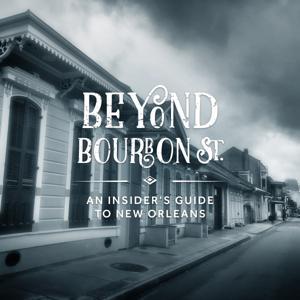
Beyond Bourbon Street, an Insider's Guide to New Orleans by Mark Bologna

Beyond Bourbon Street, an Insider's Guide to New Orleans

889 Listeners

My Favorite Murder with Karen Kilgariff and Georgia Hardstark by Exactly Right and iHeartPodcasts

My Favorite Murder with Karen Kilgariff and Georgia Hardstark

171,962 Listeners