
Sign up to save your podcasts
Or

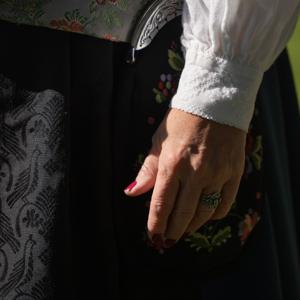

Not all bunads were created for grand celebrations. In this episode, we explore the forgotten story of Norway’s everyday bunad—a lighter, more practical version of the traditional costume that once challenged conventions and gave ordinary people access to national dress.
We begin with the Blåtøysbunad, named after the inexpensive “blåtøy” fabric it was made from. Unlike the formal wool bunads, this simplified style had fewer requirements for silver, shoes, or embroidery. It was accessible, affordable, and widely used as daily wear in the first half of the 20th century. We’ll also look at how some cotton versions of traditional bunads—like the råndastakk—found new uses, even as uniforms for waitstaff, showing how bunad traditions could adapt without losing cultural meaning.
From there, we dive into the broader story of the so-called “summer bunad”, promoted by cultural pioneer Hulda Garborg as a practical, self-sewn garment for women’s associations, folk dance, and everyday life. With shorter sleeves, lighter fabrics, and less adornment, it became popular across Norway as a bunad for all occasions—not just holidays or formal events. Yet despite its widespread use, the summer bunad faded from memory, partly due to its association with children’s wear and the lack of official preservation efforts.
We’ll also discuss the cultural tension behind these garments: how they blurred the line between festive costume and everyday clothing, challenging ideas of what a “proper” bunad should be. And finally, we ask: could these lost bunads have a future? With today’s focus on sustainability, practicality, and accessibility, perhaps the everyday bunad is due for a modern revival.
Alongside this story, listeners will learn how Hulda Bunader continues to champion Norwegian heritage, offering both custom-made bunads and DIY material kits—always with a focus on sustainability, local production, and keeping cultural traditions alive.
This episode invites you to see bunads not only as heirloom garments, but as adaptable traditions shaped by history, rebellion, and the everyday lives of ordinary Norwegians.
 View all episodes
 By Hulda Bunader
Not all bunads were created for grand celebrations. In this episode, we explore the forgotten story of Norway’s everyday bunad—a lighter, more practical version of the traditional costume that once challenged conventions and gave ordinary people access to national dress.
We begin with the Blåtøysbunad, named after the inexpensive “blåtøy” fabric it was made from. Unlike the formal wool bunads, this simplified style had fewer requirements for silver, shoes, or embroidery. It was accessible, affordable, and widely used as daily wear in the first half of the 20th century. We’ll also look at how some cotton versions of traditional bunads—like the råndastakk—found new uses, even as uniforms for waitstaff, showing how bunad traditions could adapt without losing cultural meaning.
From there, we dive into the broader story of the so-called “summer bunad”, promoted by cultural pioneer Hulda Garborg as a practical, self-sewn garment for women’s associations, folk dance, and everyday life. With shorter sleeves, lighter fabrics, and less adornment, it became popular across Norway as a bunad for all occasions—not just holidays or formal events. Yet despite its widespread use, the summer bunad faded from memory, partly due to its association with children’s wear and the lack of official preservation efforts.
We’ll also discuss the cultural tension behind these garments: how they blurred the line between festive costume and everyday clothing, challenging ideas of what a “proper” bunad should be. And finally, we ask: could these lost bunads have a future? With today’s focus on sustainability, practicality, and accessibility, perhaps the everyday bunad is due for a modern revival.
Alongside this story, listeners will learn how Hulda Bunader continues to champion Norwegian heritage, offering both custom-made bunads and DIY material kits—always with a focus on sustainability, local production, and keeping cultural traditions alive.
This episode invites you to see bunads not only as heirloom garments, but as adaptable traditions shaped by history, rebellion, and the everyday lives of ordinary Norwegians.