
Sign up to save your podcasts
Or

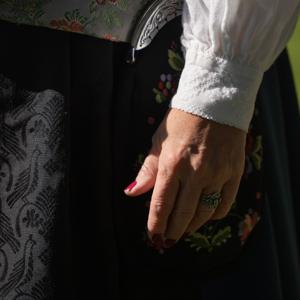


In this episode, we take a closer look at the traditional headwear worn with the reconstructed men’s bunad from Østerdalen in Norway.
We explore:
We also discuss how the reconstructed bunad, launched by Elverum Husflidslag in 1986, was based on historical garments from North Østerdal—even though many associate it with South Østerdal today.
This episode is a journey into Norwegian folk dress history, traditional craftsmanship, and the details that help keep these living traditions alive across generations.
For more information about Hulda Bunader, please visit www.huldabunader.com
Norway’s bunad tradition has officially been added to UNESCO’s list of intangible cultural heritage—a major recognition of one of Norway’s most meaningful cultural traditions.
In this episode, we explore:
With more than 450 regional bunads, Norway’s bunad tradition is unlike anything else in the world. But this recognition is not only about clothing—it is about identity, belonging, craftsmanship, and cultural continuity.
This episode is a celebration of the people, skills, and stories that keep bunad tradition alive today—and a reflection on what it takes to protect living heritage for future generations.
For more information about Hulda Bunader, please visit www.huldabunader.com
In this episode, we talk about the meaning behind Norway’s Constitution Day and why the bunad holds such a special place in Norwegian culture—both in Norway and abroad.
We explore:
This episode is a tribute to the stories we carry through tradition—and how the bunad continues to connect people across oceans and generations.
Gratulerer med dagen. Happy Constitution Day. 🇳🇴
For more information about Hulda Bunader, please visit www.huldabunader.com
Silk scarves and shawls hold a unique place within the bunad tradition. While many elements of a bunad are shaped by historical reconstruction and regional identity, silk scarves offer something different: a space for personal expression. In this episode of Personal Freedom in Silk Bunad Scarves, we explore how this tradition has always allowed for variation—both in how these pieces are worn and in the colors and patterns chosen. There are no strict rules defining what is “right,” and this freedom has long been part of bunad culture.
Historically, scarves were practical garments used by both women and men, offering warmth while also serving as decorative elements. Over time, silk became a particularly valued material—an exclusive textile often given as a meaningful gift and carefully preserved. Today, silk scarves can be styled in multiple ways: tied around the neck, worn in the hair, or draped more loosely for a softer expression. For men, they are often folded and worn neatly at the collar, while for women, the styling possibilities are broader and more expressive.
Variation has always been part of this tradition. What was available through trade, changing fashion, and local preferences influenced which scarves people wore. Some periods favored simpler designs without fringes, while others embraced more decorative finishes. Even within specific bunad traditions, such as those from Østerdalen, there has never been one single correct choice. This reflects an important truth: bunad tradition is not fixed, but shaped over time by both history and individual preference.
At the same time, silk scarves represent an extraordinary level of craftsmanship. The weaving process is complex and time-intensive, often using advanced techniques such as jacquard weaving to create intricate patterns with multiple colors. Understanding this craftsmanship adds depth to the choice of scarf—not just as an accessory, but as a piece of textile art.
It is also important to be aware that availability can vary. Silk scarves are not always standard stock items, and certain colors or patterns may disappear for long periods before returning. This makes the process of choosing a scarf more intentional, and often more meaningful.
Ultimately, this episode invites you to approach bunad accessories with confidence and curiosity. Rather than searching for strict rules, you are encouraged to explore what resonates with you—while respecting the craftsmanship and heritage behind each piece. Silk scarves are not just accessories; they are a way to connect tradition with personal identity in a natural and authentic way.
For more information about Hulda Bunader, please visit www.huldabunader.com
The idea that a bunad must be “approved” is one of the most persistent myths in Norwegian cultural tradition. In reality, there is no official approval system in Norway. No government body certifies bunads, and no law regulates who is allowed to produce or sell them. Despite this, marketing language such as “authorized” or “official” is often used, creating a misleading sense of legitimacy and leaving many people unsure about what truly matters when choosing a bunad.
Closely connected to this is the question of ownership. Many assume that certain bunads belong to specific makers or companies, but this is rarely the case. Most traditional bunads are based on historical garments that are part of a shared cultural heritage. Regional bunads from areas like Hardanger, Telemark, or Østerdalen are not owned in a legal sense. Only newly designed garments, created as original works, may be protected by intellectual property laws. For the vast majority of bunads in use today, they belong to the cultural commons rather than to any single entity.
So why does the myth of approval continue to exist? The answer lies in the emotional significance of the bunad itself. A bunad is more than clothing—it represents identity, family ties, and a sense of belonging. When something carries that much meaning, it is natural to seek reassurance and certainty. The concept of “approval” provides that comfort, even if it has no factual or legal foundation.
At the same time, it is important to remember that the bunad is not a fixed or static tradition. It is a living expression of culture that has evolved over time. Variations in colors, cuts, and details have always existed, and reconstructions are often based on interpretations of historical sources. While institutions and experts contribute valuable knowledge and documentation, they do not “approve” bunads. Instead, they help inform and guide understanding.
This brings us to the most important shift in perspective. Rather than asking whether a bunad is approved, the more meaningful questions relate to quality and integrity. Is the bunad made with genuine craftsmanship? Are the materials carefully chosen and of high quality? Is the production process transparent and responsible? And does the final garment respect the traditions it is meant to represent?
These questions are especially relevant today, as the bunad market continues to evolve. Increased outsourcing and industrial production introduce new challenges. When production is driven by cost efficiency and scale, there is a risk of simplification and loss of detail—elements that are essential to the character of traditional craftsmanship. In this context, the real concern is not the absence of approval, but the potential erosion of quality and authenticity.
Ultimately, moving beyond the myth of the “approved bunad” allows for a more informed and meaningful conversation. Authenticity is not defined by a label or a certificate, but by knowledge, care, and respect for the craft. The bunad belongs to the community and to the cultural heritage it represents. It is preserved not through gatekeeping, but through informed choices, transparency, and a shared commitment to maintaining its integrity.
For more information about Hulda Bunader, please visit www.huldabunader.com
The story of the bunad begins in the everyday lives of people in rural Norway, where clothing was shaped by climate, resources, and local traditions. Over time, what was once practical attire became something more—especially during the 19th century, when a growing sense of national identity inspired Norwegians to preserve and celebrate their cultural roots. Visionaries like Hulda Garborg played a key role in transforming these garments into symbols of pride and belonging.
Today, the bunad is not just a reflection of Norway’s past, but a living tradition. Each bunad carries the story of a specific place—a valley, a village, a region—making it deeply personal. For Norwegian-Americans, this connection can be especially meaningful. Tracing your ancestry can lead you to a bunad that represents not just Norway, but your Norway.
At the same time, the making of a bunad remains an art form grounded in patience and authenticity. Skilled hands continue to sew, embroider, and assemble each piece using traditional techniques and materials sourced from Norway. This dedication ensures that every bunad is not only beautiful, but also true to its origins.
What makes the bunad truly remarkable is its ability to bridge generations. It is worn at weddings, on Norway’s National Day, and during life’s most important moments. It can be passed down, carefully restored, or even created by hand through modern sewing kits. In this way, the bunad is never static—it evolves while carrying history forward, connecting people across time, place, and heritage.
For more information about Hulda Bunader, please visit www.huldabunader.com
The bunad is one of Norway’s most cherished cultural traditions—yet it is also one of the most misunderstood.
In this episode of Norwegian Bunads, we dive into the history, meaning, and modern relevance of the bunad, offering a deeper understanding for those with Norwegian heritage—or simply a love of traditional craftsmanship.
Originally inspired by rural clothing worn in Norway during the 1700s and 1800s, the bunad as we know it today was largely shaped in the early 20th century. At that time, Norway was building its national identity after gaining independence, and the bunad became a symbol of cultural pride, rooted in local traditions and regional differences.
Today, there are more than 450 recognized bunad variations across Norway, each tied to a specific region, history, and set of traditions. The work of documenting and preserving these bunads is led by institutions like the Norwegian Institute of Bunad and Folk Costume, ensuring that knowledge of materials, techniques, and design is passed on to future generations.
An estimated 2.5 million Norwegians own a bunad today—a remarkable number in a country of just over 5 million people. These garments are worn during life’s most important moments: Constitution Day (May 17), weddings, confirmations, and other celebrations. For many, wearing a bunad is not just about tradition—it’s about belonging.
But the bunad is not a static tradition. In recent years, there has been growing discussion around authenticity and production. What does it mean for a bunad to be “authentic”? Should it be sewn by hand in Norway, using local materials? Or is there room for modern production methods and global manufacturing?
These are important questions—and they reflect the fact that the bunad is still very much alive.
For Norwegian-Americans, the bunad can be a powerful way to reconnect with heritage. Even if your family’s exact regional ties are unknown, learning about bunads opens a door into Norway’s cultural landscape—its history, craftsmanship, and sense of place.
At Hulda Bunader, we believe in sharing this knowledge and making it accessible—so that more people can understand not just how a bunad looks, but what it truly represents.
Whether you dream of owning one, making one, or simply learning more, this episode is your starting point into the world of Norwegian bunads
For more information about Hulda Bunader, please visit www.huldabunader.com
In this episode we dive into the story of Hulda Garborg (1862–1934) and her lasting impact on Norwegian culture and the bunad tradition.
At the turn of the 20th century, many traditional rural customs were disappearing as Norway modernized. Hulda Garborg believed these traditions were essential to the country’s cultural identity. Through research, writing, and cultural activism, she helped revive historical clothing traditions and adapt them into what we today recognize as the modern bunad.
You’ll learn about:
More than a historical figure, Hulda Garborg represents a cultural movement that transformed traditional clothing from something fading into history into a living expression of heritage, identity, and craftsmanship.
Today, Hulda Bunader carries forward that same vision by sharing knowledge, materials, and inspiration that help people around the world connect with Norwegian bunad traditions.
For more information about Hulda Bunader, please visit www.huldabunader.com
For the final episode of Season 1, we turn our attention to what happens after the bunad is made: how to care for it, preserve it, and ensure it can be passed down through generations as a true family heirloom. Bunads are more than garments—they are living pieces of cultural heritage—and their longevity depends on how we treat them.
This extended episode offers a comprehensive guide to bunad care, covering every component from wool skirts and bodices to shirts, aprons, shawls, stockings, shoes, and silver. We’ll discuss practical solutions for common challenges, including how to handle stains, prevent moth damage in untreated fabrics, and keep silver gleaming without harsh chemicals.
Listeners will learn detailed storage and maintenance techniques, such as using breathable garment bags, hanging methods that prevent fabric strain, and why shirts should never be ironed before long-term storage. Special care for delicate fabrics—like silk shawls, embroidered aprons, or linen shirts with wool stitching—is explained step by step. We also cover how to properly damp and press wool to avoid shine, maintain the structure and color of Toskaft fabric, and air garments after pressing.
Finally, the episode highlights care tips for accessories and footwear, from polishing bunad silver to conditioning leather shoes with grease or mink oil, using shoe trees, and ensuring they hold their shape between wears.
More than a technical guide, this episode explores the deeper cultural importance of preserving bunads, ensuring they remain not only beautiful and wearable, but also meaningful symbols of heritage that can be inherited by future generations.
Whether you own a bunad, plan to make one, or simply want to understand the traditions behind their care, this episode will leave you with the tools and knowledge to protect one of Norway’s most treasured cultural legacies.
✨ Thank you for joining us throughout Season 1 of this podcast. We truly appreciate your listening and support. Please stay tuned for Season 2, where we’ll bring you even more exciting history, fascinating facts, and useful insights into the world of bunads—directly from Hulda Bunader in Norway.
For more information about Hulda Bunader, please visit www.huldabunader.com
In this episode, we uncover the story of the Lødrup bunad, one of Østerdalen’s official festive costumes and a fascinating example of how history, art, and cultural debate shaped Norwegian tradition.
Listeners will learn how this bunad was designed in the 1940s by Ruth Arnestad Lødrup, an accomplished artist whose work drew inspiration from Østerdalen’s historic garments and embroidery. Commissioned by Tynset Husflidslag during the war years, the project faced delays due to material shortages and heated debates about what a regional festive costume should look like. Eventually, the Lødrup bunad shared first place in the 1948 competition with the Marie Aaen bunad, cementing its place in history.
We’ll explore the distinctive design elements of the Lødrup bunad: its characteristic skjøteliv (bodice with flaps), striking color options such as black or pale red with contrasting edges, and the skirt adorned with four embroidered stripe patterns. Completing the costume are linen or winter shirts, a decorative pocket, headwear inspired by traditional caps, black stockings, and silver jewelry from Østerdalen. Together, these features created a festive bunad that stood out both in form and symbolism.
Finally, we discuss how the bunad lives on today. Through Hulda Bunader, customers can purchase complete, hand-sewn Lødrup bunads crafted with traditional techniques and Norwegian materials, or opt for material kits with fabrics, embroidery, and accessories to sew their own. This ensures that the legacy of the Lødrup bunad remains both preserved and practiced, connecting past debates with modern craftsmanship.
This episode invites listeners to see the Lødrup bunad not just as clothing, but as wearable art born out of history, resilience, and regional pride—a legacy still carried forward today.
For more information about Hulda Bunader, please visit www.huldabunader.com
From the publisher's feed