
Sign up to save your podcasts
Or

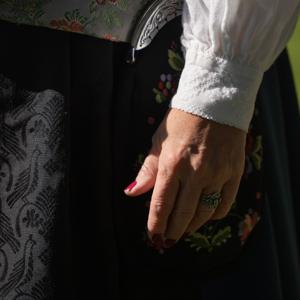

The idea that a bunad must be “approved” is one of the most persistent myths in Norwegian cultural tradition. In reality, there is no official approval system in Norway. No government body certifies bunads, and no law regulates who is allowed to produce or sell them. Despite this, marketing language such as “authorized” or “official” is often used, creating a misleading sense of legitimacy and leaving many people unsure about what truly matters when choosing a bunad.
Closely connected to this is the question of ownership. Many assume that certain bunads belong to specific makers or companies, but this is rarely the case. Most traditional bunads are based on historical garments that are part of a shared cultural heritage. Regional bunads from areas like Hardanger, Telemark, or Østerdalen are not owned in a legal sense. Only newly designed garments, created as original works, may be protected by intellectual property laws. For the vast majority of bunads in use today, they belong to the cultural commons rather than to any single entity.
So why does the myth of approval continue to exist? The answer lies in the emotional significance of the bunad itself. A bunad is more than clothing—it represents identity, family ties, and a sense of belonging. When something carries that much meaning, it is natural to seek reassurance and certainty. The concept of “approval” provides that comfort, even if it has no factual or legal foundation.
At the same time, it is important to remember that the bunad is not a fixed or static tradition. It is a living expression of culture that has evolved over time. Variations in colors, cuts, and details have always existed, and reconstructions are often based on interpretations of historical sources. While institutions and experts contribute valuable knowledge and documentation, they do not “approve” bunads. Instead, they help inform and guide understanding.
This brings us to the most important shift in perspective. Rather than asking whether a bunad is approved, the more meaningful questions relate to quality and integrity. Is the bunad made with genuine craftsmanship? Are the materials carefully chosen and of high quality? Is the production process transparent and responsible? And does the final garment respect the traditions it is meant to represent?
These questions are especially relevant today, as the bunad market continues to evolve. Increased outsourcing and industrial production introduce new challenges. When production is driven by cost efficiency and scale, there is a risk of simplification and loss of detail—elements that are essential to the character of traditional craftsmanship. In this context, the real concern is not the absence of approval, but the potential erosion of quality and authenticity.
Ultimately, moving beyond the myth of the “approved bunad” allows for a more informed and meaningful conversation. Authenticity is not defined by a label or a certificate, but by knowledge, care, and respect for the craft. The bunad belongs to the community and to the cultural heritage it represents. It is preserved not through gatekeeping, but through informed choices, transparency, and a shared commitment to maintaining its integrity.
For more information about Hulda Bunader, please visit www.huldabunader.com
 View all episodes
 By Hulda Bunader
The idea that a bunad must be “approved” is one of the most persistent myths in Norwegian cultural tradition. In reality, there is no official approval system in Norway. No government body certifies bunads, and no law regulates who is allowed to produce or sell them. Despite this, marketing language such as “authorized” or “official” is often used, creating a misleading sense of legitimacy and leaving many people unsure about what truly matters when choosing a bunad.
Closely connected to this is the question of ownership. Many assume that certain bunads belong to specific makers or companies, but this is rarely the case. Most traditional bunads are based on historical garments that are part of a shared cultural heritage. Regional bunads from areas like Hardanger, Telemark, or Østerdalen are not owned in a legal sense. Only newly designed garments, created as original works, may be protected by intellectual property laws. For the vast majority of bunads in use today, they belong to the cultural commons rather than to any single entity.
So why does the myth of approval continue to exist? The answer lies in the emotional significance of the bunad itself. A bunad is more than clothing—it represents identity, family ties, and a sense of belonging. When something carries that much meaning, it is natural to seek reassurance and certainty. The concept of “approval” provides that comfort, even if it has no factual or legal foundation.
At the same time, it is important to remember that the bunad is not a fixed or static tradition. It is a living expression of culture that has evolved over time. Variations in colors, cuts, and details have always existed, and reconstructions are often based on interpretations of historical sources. While institutions and experts contribute valuable knowledge and documentation, they do not “approve” bunads. Instead, they help inform and guide understanding.
This brings us to the most important shift in perspective. Rather than asking whether a bunad is approved, the more meaningful questions relate to quality and integrity. Is the bunad made with genuine craftsmanship? Are the materials carefully chosen and of high quality? Is the production process transparent and responsible? And does the final garment respect the traditions it is meant to represent?
These questions are especially relevant today, as the bunad market continues to evolve. Increased outsourcing and industrial production introduce new challenges. When production is driven by cost efficiency and scale, there is a risk of simplification and loss of detail—elements that are essential to the character of traditional craftsmanship. In this context, the real concern is not the absence of approval, but the potential erosion of quality and authenticity.
Ultimately, moving beyond the myth of the “approved bunad” allows for a more informed and meaningful conversation. Authenticity is not defined by a label or a certificate, but by knowledge, care, and respect for the craft. The bunad belongs to the community and to the cultural heritage it represents. It is preserved not through gatekeeping, but through informed choices, transparency, and a shared commitment to maintaining its integrity.
For more information about Hulda Bunader, please visit www.huldabunader.com