
Sign up to save your podcasts
Or

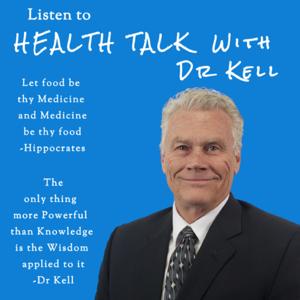

Welcome everybody and thanks for joining us on episode #18 of “Health Talk with Dr. Kell”. Last week we started a four-part series called “Inflammation and The Autoimmune Response”. We talked about nutritional triggers for inflammation with Dr. Kell and Ted Hahn, clinical nutritionist.
Ted’s favorite quote is, “If it doesn’t have fins, feathers, fur, or grow out of the Earth – don’t eat it!” A good place to start is to cut down on hard alcohols and sugars, which cause an inflammatory response in the body.
Today, in part two, we will discuss the physical triggers for inflammation in the body, which are injury and infection.
Injury is an act that damages or hurts. Examples of injury are abrasions, lacerations, hematomas, broken bones, joint dislocations, sprains, strains, and burns. Most of us have had an injury at some point in our life, whether it was an acute one, which resulted from a single, traumatic event such as a car accident or sports injury, or an overuse injury, which was subtle and occurred over time, like many athletes are experiencing in mid-life.
Infection occurs when another organism enters your body and causes disease. The organisms that cause infections can include things like viruses, bacteria, fungi, and parasites. If you are living and breathing, you have dealt with an infection in your life. Your immune system is built to recognize and kill all invaders.
Today, we will answer the questions: what is inflammation, how does exercise help or hurt the body’s immune system, what is going on in the body during exercise, does injury affect the immune system, and what causes long-term inflammatory conditions such as asthma, colitis, crohn’s disease, arthritis, vasculitis and nephritis?
Let’s jump in…
EWG’s Health Living App
 View all episodes
 By Dr. Kell Fullerton
5
11 ratings
Welcome everybody and thanks for joining us on episode #18 of “Health Talk with Dr. Kell”. Last week we started a four-part series called “Inflammation and The Autoimmune Response”. We talked about nutritional triggers for inflammation with Dr. Kell and Ted Hahn, clinical nutritionist.
Ted’s favorite quote is, “If it doesn’t have fins, feathers, fur, or grow out of the Earth – don’t eat it!” A good place to start is to cut down on hard alcohols and sugars, which cause an inflammatory response in the body.
Today, in part two, we will discuss the physical triggers for inflammation in the body, which are injury and infection.
Injury is an act that damages or hurts. Examples of injury are abrasions, lacerations, hematomas, broken bones, joint dislocations, sprains, strains, and burns. Most of us have had an injury at some point in our life, whether it was an acute one, which resulted from a single, traumatic event such as a car accident or sports injury, or an overuse injury, which was subtle and occurred over time, like many athletes are experiencing in mid-life.
Infection occurs when another organism enters your body and causes disease. The organisms that cause infections can include things like viruses, bacteria, fungi, and parasites. If you are living and breathing, you have dealt with an infection in your life. Your immune system is built to recognize and kill all invaders.
Today, we will answer the questions: what is inflammation, how does exercise help or hurt the body’s immune system, what is going on in the body during exercise, does injury affect the immune system, and what causes long-term inflammatory conditions such as asthma, colitis, crohn’s disease, arthritis, vasculitis and nephritis?
Let’s jump in…
EWG’s Health Living App