
Sign up to save your podcasts
Or

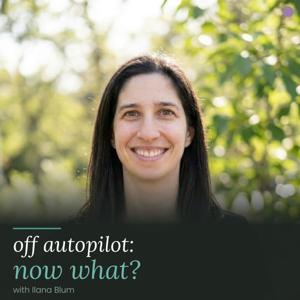


Why do you feel guilty after saying no, even when the other person said it was fine?
This week is about the guilt that hangs around after you've set a boundary, especially with a parent. Maybe your mom said, "Okay, honey, that's fine." Nothing bad happened. And you still spent the whole drive home half-writing a text to take it back. The same thing can happen with a friend, a sister, or your manager.
We get into why that guilt so often has nothing to do with how the other person reacted. I think of it like a smoke alarm set too sensitive, one that goes off for toast. I share where mine got installed, as a kid who felt responsible for calming a family member's anger. We also look at the difference between guilt and shame, and what's yours to carry versus what belongs to someone else.
For listeners with ADHD, we talk about why that alarm can hit faster and harder, and how to work with it.
By the end, you'll have one small tool for the moment the guilt kicks in: write the walk-back text in your notes, then send the warm one instead.
Subscribe to the newsletter:
Book a Free Discovery Session
The deadline you think you missed? It was never real to begin with.
"It's too late" is one of the most convincing thoughts we tell ourselves, and the timeline behind it is something we made up, not something real. This episode is built around a woman who wrote into an advice column at thirty-six, certain medical school would make her forty-three by the time she finished. The reply she got back was one line: how old will you be in seven years if you don't.
I walk through where that thought actually comes from, and what it does once you believe it. It doesn't just sit there quietly. It changes what you do next, usually some mix of freezing, rushing into the wrong thing, or avoiding the question altogether. Whatever time gets burned that way gets read back later as proof the original thought was right all along.
Then we get into how to hold two things at once: the real grief of time you didn't spend on the thing, and the choice to start anyway, today, without either one canceling out the other. This isn't toxic positivity. Some of this is genuinely true and worth feeling. It's just not the whole story.
Subscribe to the newsletter
Visit my website
The fifteen minutes you keep skipping might be the reason you don't feel like yourself lately.
This week is about doing something just for you, even something small. It sounds backwards at first. It might actually be one of the more generous things you can do, not just for yourself, but for the people who depend on you.
We get into why an ask this small can feel so disproportionately hard to justify, especially for women. We talk about where that pressure actually comes from, and what self-care really means once you get past the bubble-bath image. Not all rest works the same way, either. Twenty minutes of scrolling and twenty minutes of walking look identical on a calendar. They do very different things for your nervous system.
By the end, I'll give you one small way to test this out for yourself this week. Nothing to rearrange your whole schedule around, just ten or fifteen minutes and a little attention to what shifts afterward.
Subscribe to the newsletter
Visit my website
The list is neutral. The feeling isn't. If your to-do list has started following you into bed, tight chest and all, this episode is for you.
Sometimes the list itself really is the problem, too long, too much, more on it than one person can reasonably do. Trimming it down is a real conversation, just not today's.
Today I'm assuming everything on the list actually needs to happen, and looking at what's underneath it anyway. Even a fully reasonable list can come with a thought attached that fires the moment you look at it. "I'm never going to get to this." "I'm already behind." "Everyone else has this handled and I don't." That thought, not the list, is what's actually running the show.
I walk through exactly how that works, using the same thought-feeling-action framework I use with clients every week, and where that particular flavor of self-judgment tends to come from in the first place. Then I give you one small, doable tool for the nights it all feels like too much: not a bigger to-do-list hack, just one believable next thought, one rung up from wherever you're actually standing right now.
This isn't about doing more, faster. It's about what you're making the list mean.
Subscribe to the Newsletter
Visit my website
This episode opens with someone who's been holding her family together since she was the oldest kid in the house, catching problems before they happened, only to get overridden anyway and handed the cleanup regardless. Her actual goal wasn't distance, it was closeness, and the pattern was costing her exactly that, without her ever fully clocking it. We get into the psychology of the fawn response, a socialization pattern that shows up especially for women, a coaching technique called peeling the onion for finding the real fear under an old pattern, and a practice for reclaiming what's actually yours to carry instead of what you've just always carried.
Subscribe to the newsletter
Book a free discovery session
Most advice about motivation picks a side: chase what you love, or chase the outcome, and treat the other one as a trap. I think that's missing half the picture. Using my own marathon training as the throughline, and taking it into building a business and finishing a creative project along the way, I get into real brain-scan research showing intrinsic and extrinsic motivation are two genuinely different systems, not one purer than the other, plus a practice for building the specific thoughts that let you want an outcome without needing it to carry your whole sense of self.
Subscribe to the newsletter
Book a free discovery session
This episode opens with someone who loves the life she built, and still ends up crying in the car after a friend's art show, without fully knowing why. We talk about grief for the paths you didn't take, even when the path you're actually on was chosen on purpose and you don't regret it. We get into what ambiguous loss actually is, why self-compassion isn't the same thing as self-pity, and what it looked like years later when wanting something for herself again felt selfish and too late. Then, a two-letter writing practice, one for the life you didn't live, one for the life you're actually living, so grief and gratitude both get to be true at once.
Subscribe to the newsletter
Book a free discovery session
Sometimes, we struggle to make decisions no matter how much information we throw at them. This episode breaks down why: it's usually not a logic problem, it's an unnamed values conflict wearing indecision as a costume, and often, fear wearing a value's clothes. We get into the psychology of maximizers versus satisficers and why more options can mean more paralysis, a coaching tool for separating your own values from ones you inherited, a real coaching example about staying versus leaving a stable job, and a ten-minute exercise for sorting what you'd gain and lose from each option into fear versus values, fact versus story.
Subscribe to the newsletter:
Book a free discovery session
Would you rather try something and have it not work out, or spend the next twenty years wondering what would have happened? This episode is about the specific kind of regret we can still prevent, the fear underneath the thing you keep circling, whether it's fear of failure, of disappointing someone, of it being too late, or even of succeeding. We get into the research on why inaction haunts us more than action does, a real coaching example about a two-years-hidden book, and a short version of the fear-setting exercise that helped me finally stop waiting.
Subscribe to the newsletter
Book a Free Discovery Call
What if the story you're telling yourself only has two endings, when reality actually has ten? This episode is about black and white thinking, the specific way our brains turn progress into failure and effort into all-or-nothing. We get into why this shows up especially hard for women, a real coaching example about a client who couldn't tell me where "there" even was, and a simple ten-minute exercise for catching your own black and white thought and finding the evidence you're not actually at zero.
Subscribe to the newsletter
Book a Free Discovery Call
From the publisher's feed