
Sign up to save your podcasts
Or

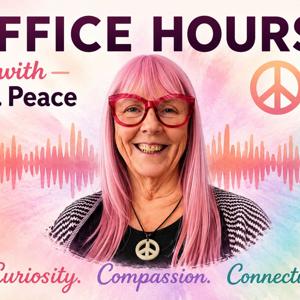


In this episode of Office Hours with Dr. Peace, I sit down with Kathleen, a former student, to discuss one of the most challenging—and important—parts of social work practice: engaging people who may be viewed as resistant to help.
Using substance use disorders as our starting point, we explore what “resistance” might actually communicate, what can get in the way of meaningful engagement, and how curiosity, compassion, and respect can help build a genuine helping relationship.
Rather than asking, “Why won’t this person cooperate?” we consider a more useful question: “What might this person’s response be telling us?”
Come on in. Let’s think together.
Curiosity. Compassion. Connection.
In this episode, I sit down with mitigation specialist and PhD candidate, Chris Miner, to have an honest conversation about social capital, second chances, and the impact both can have on people returning from incarceration.
Chris speaks both from professional expertise and lived experience, making this an especially personal and poignant conversation about relationships, opportunity, loss, and what it means to truly have someone in your corner.
CONTENT NOTE: This episode includes discussion of incarceration, suicide, and the death of someone by suicide. Please take care while listening. If you or someone you know is experiencing a mental health crisis or thoughts of suicide, call or text 988 for the Suicide and Crisis Lifeline.
What do we really mean when we call someone "noncompliant"?
In this solo episode, I draw on my years in child welfare, substance use treatment, and social work education to think about what may be happening beneath that label. Sometimes what looks like resistance makes a lot more sense when we become curious about the person, their circumstances, and their experiences.
A short reflection on language, empathy, and what can happen when we replace judgment with curiosity.
What happens when mental health is misunderstood--not only by the public, but sometimes by the people experiencing it?
In this episode of Office Hours with Dr. Peace, I sit down with a former student, Caitlyn Galloway for an honest conversation about living with Histrionic Personality Disorder, the stigma surrounding personality disorders, the lack of information and treatment options specifically for histrionic personality disorder, and her experience with ketamine treatment.
Caitlyn shares the challenges of receiving an often misunderstood diagnosis and offers an important perspective: she believes men may be underdiagnosed with HPD because many of the same behaviors are dismissed as "boys will be boys". Together, we explore how gender expectations can shape mental health diagnosis and why curiosity and compassion matters more than assumptions.
This conversation is thoughtful, courageous, and filled with hope for anyone navigating mental health challenges or supporting someone who is.
If this episode resonates with you, please subscribe, leave a review, and share it with someone who might benefit from hearing Caitlyn's story.
#socialwork #MentalHealth #HistrionicPersonalityDisorder #PersonalityDisorders #KetamineTreatment #TraumaRecovery #OfficeHoursWithDrPeace #CuriosityCompassionConnection
In this episode, I sit down with Anthony Mosinski, a Licensed Clinical Social Worker and community leader whose work focuses on homelessness, substance use, and mental health in Alaska.
Anthony shares what it's like to lead while remaining connected to the people he serves, the challenges facing communities today, and the hope that keeps him going. One of my favorite parts of this episode is the way Anthony lights up when he talks about the "fun" of sitting with someone along the side of the road just to get to know them and understand their experience enough to really provide help.
Whether you're a social work student, educator, practitioner, or simply curious about the people working to make a difference, I think you'll enjoy this conversation. It is truly centered on Curiosity. Compassion. Connection.
Topics include:
•Homelessness
•Substance use
•Mental Health
•Unique challenges of Alaskan homelessness
•Social work leadership
•Community partnerships
If you enjoyed this conversation, please, like, subscribe, and share it with someone who cares about creating stronger communities.