
Sign up to save your podcasts
Or

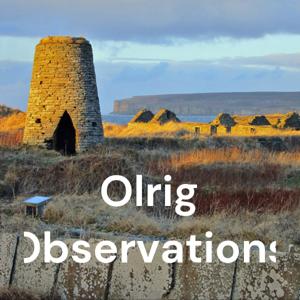


Water. A precious commodity and essential to all human, animal and plant existence. We tend to take the availability of clean, safe drinking water as a given in our modern age, but it wasn't always so and remains an aspiration for many. Muriels explores life in our parish when collecting fresh water from springs and wells presented a physical challenge and a daily chore before water was made more readily available as a public service.
Olrig Hill stands proud over the Parish of Olrig, and from the top uninterrupted views can be had over most of Caithness and the rugged coastline bordering the Pentland Firth. Over the millennia the hill has featured strongly in the lives of the local inhabitants, from iron age settlements, use as a site for signalling and communications, public hangings, and military operations, to more modern activities like Scout and Guide camps and the latest telecommunications systems. Not forgetting the ghostly goings on regarding the Piper of Windy Ha....
In April 1847, the proposed export of local grain by boat from Castlehill Harbour by landowner William James Sinclair of Freswick was seen as a great social injustice by some of his tenant crofters. They took matters into their own hands, marching on the harbour and storming the vessel to prevent it being loaded and leaving the harbour. Muriel recounts the true story of the events that took place and the fate of the rioters.....
An enchanting yarn about Damien Farlow of Caledonian Properties, who meets local worthy Wullie Bain and becomes entranced by the history and heritage of the buildings he was employed to survey.
Elizabeth Yates, whose family have strong connections local to the village of Castletown in Caithness, was appointed Mayor of the Onehunga Borough in New Zealand in the late 1800s, and in doing so became the first female mayor in the history of the British Empire. Her appointment broke long established social barriers, and whilst not universally popular amongst her male counterparts it was an achievement that so impressed Queen Victoria she sent her congratulations and encouragement!
Image attribution: By Archives New Zealand AEGA 18982 PC4 1894/14 - Archives New Zealand https://www.flickr.com/photos/archivesnz/27551199038/in/dateposted-public/, CC BY 2.0, https://commons.wikimedia.org/w/index.php?curid=72878853
Birkle Hill on the south-east edge of Castletown may not be high in absolute terms, but it offers a commanding view of the surrounding farmland, the village of Castletown and Dunnet Bay. Muriel researches the derivation of the name 'Birkle' and explores some of the features associated with the hill, uncovering many connections with the humble Birch tree.
The Custer Tablecloth is a unique and poignant memento of the many service personnel who were based at RAF Castletown during WWII. The story behind it gives a flavour of the impact such a large military operation had on the village of Castletown and the surrounding area. The very existance of the tablecloth is down to the forward thinking of a young woman who captured evidence of an important but transient moment in history in a distinctive and personal way.
This unusual clock featuring braille markings and an engraved plaque 'St Dunstan's 1915 - 1965' was donated to Castlehill Heritage Centre a few years ago by the decendents of the original owner, local man Walter Mackay. The story behind the clock reveals some of the terrifying ordeals he experienced as a young man during World War I and his bravery and indomitable spirit after the war.
Lindsay Broomfield, a professional costume maker with a passion for heritage costumes reviews the Castletown Heritage Society entry to the virtual Highland Threads Exhibition, an innovative on-line exhibition showcasing a treasured costume from each of fourteen museums from across the Highlands of Scotland. Our entry, a late Victorian mourning outfit dates from the turn of the twentieth century and was lovingly passed down from mother to daughter over four generations. The earliest wearer is believed to be Mrs Elizabeth Taylor (née Macpherson) who was widowed in 1912. Her husband James Taylor was a crofter and farmed at Buldoo in Reay, Caithness. The outfit represents a time when the approach to death, funerals and widowhood were vastly different from attitudes today.
A time-worn ninetheenth century oil painting of the Barque Samarang passing the Rock of Gibralter sparks an investigation into the three-masted vessel's fascinating history, and during the voyage of discovery a lesson is learned that all is not always what it seems....
From the publisher's feed