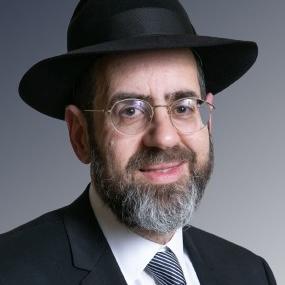
For a 10% discount on Rabbi David Sutton's new book A Daily Dose of Preparation for Yamim Noraim click the link below https://www.artscroll.com/Book s/9781422645086.html On Delayed Understanding This is a deep dive into the fifth contemplation from Sha'ar Cheshbon HaNefesh (Gate of the Soul's Accounting), a powerful and introspective series. Many of these contemplations are triggered by a real-life situation, a simple event that serves as a powerful metaphor. In this accounting the question we're meant to ponder is this: What should you think when you delay and push off understanding the Torah God gave us, and even worse, when you're complacent and it doesn't even bother you? Let's use an everyday example: prayer. We pray every single day, yet do we truly understand the meaning of the words? Does it bother us if we don't? During the season of Selichot (prayers of forgiveness), you might read a prayer you've said for years and suddenly realize you don't know what a certain word means. Maybe you look it up in a Hebrew-English text and discover you've been misunderstanding it all this time. Does that lack of understanding bother you? Compare this to how you react to other important documents in your life. If you receive a letter about a jury summons, your taxes, or a medical report and don't understand it, you're going to put in the effort to figure it out. If you're on vacation in a foreign country and get a parking ticket in a language you don't know, it will certainly bother you. You'll work hard to understand what it means and what action is required. We take the time to understand information from a human being, so how much more effort should we put into understanding God's Torah, which is our very life and our salvation? As the verse says, "Ki Hu Chayecha V'Orech Yamecha" ("For it is your life and the length of your days"). Rabbi Wolbe explains that when we say, "Ki Hem Chayeinu" ("For they are our lives"), it's not just poetry; it is a literal truth. The Chovot HaLevavot (Duties of the Heart) uses this analogy to speak directly to us, using the term " Achi " ("my brother"). He asks, "My brother , how could you allow this to happen? How can you ignore this? How can you be content with a superficial understanding and not delve deeper?" {The term "my brother" is a deliberate choice, just as Yacob Avinu used it when rebuking the shepherds who were wasting time at the well. As Rabbi Yaakov Kamenetzky taught, you have to connect with someone before you can give them rebuke. The Chovot HaLevavot knows this rule and creates a connection before delivering his message.} The prophet Daniel delivers a similar message when he says: "For the gods of silver and gold, copper and steel, wood and stone—that do not see, hear, or understand—you praised. But to God, in whose hand is your very soul and all your paths, you do not give glory?" There is an inherent disgrace in this. A story based on the teachings of the Pele Yoetz illustrates this perfectly: A man's wife bakes his favorite cake, while his daughter-in-law buys a cake from a bakery. The man pushes his wife's cake aside and eats the one from the bakery. When his wife starts crying, he asks what he did wrong. He's insulted her by rejecting her thoughtful gift in favor of something else. In the same way, we insult God when we choose to prioritize other things over His Torah . This is why King David, in Psalms, says of the righteous man, "B'moshav Leitzim Lo Yashav" ("He did not sit with scoffers"), but rather "Ki Im B'Torat Hashem Cheftzo" ("He desired His Torah"). The people who don't learn Torah are called "scoffers" because to "scoff" is to belittle. By sitting and engaging in idle chatter when you have the opportunity to engage with Torah, you are insulting it. We have a responsibility to show respect and importance to religious texts. With the High Holidays approaching, one of the most important texts we will read is the Malkhuyot, Zikhronot, and Shofarot —the central prayers of the Mussaf service—on which we are judged for the entire year. If a person had a court case or a major presentation, they would put in the time to properly prepare and understand what they were saying. Going into Rosh Hashanah without understanding the words of our prayers is like going to war without knowing how to use your weapon. To truly fulfill this contemplation, you must prepare. A great resource to help you is "Daily Dose of Preparation for the Yamim Noraim" from ArtScroll, a day-by-day guide to prepare for the High Holidays. It's a worthwhile book to use as you prepare and fulfill this חשבון . Go to https://www.artscroll.com/Books/9781422645086.html and place your order.



 View all episodes
