
Sign up to save your podcasts
Or



Renee Wegrzyn, PhD, is co-founder of Transfyr AI. Recognized as a TIME 100 Innovator, Rock Health Top 50 Digital Health Innovator, and recipient of the Superior Public Service Medal, Renee holds a BS and PhD in Applied Biology and Bioengineering from Georgia Tech. She spent over a decade at DARPA, including as a program manager focused on gene editing and biomanufacturing and as a technical advisor to IARPA, where she ran "moonshot" programs. She later became VP of Business Development & Head of Innovation (Biosecurity) at Ginkgo Bioworks.
Anna Marie Wagner is co-founder of Transfyr AI. She holds a B.A. in Applied Mathematics from Harvard University and an MBA from Harvard Business School. She spent nearly a decade at Bain Capital Private Equity, eventually focusing on vertical software, before joining the executive team at Ginkgo Bioworks. She built out Ginkgo's AI team and oversaw major strategic transactions, including the 2021 IPO (raised $1.6B — reportedly the largest-ever go-public raise in biotech).
Learn more about Transfyr in the recent NYTimes feature: https://www.nytimes.com/2026/08/27/science/scientists-experiments-replication-ai.html
Ron is Co-Founder and CEO of NOETIK, a next generation precision oncology company using multimodal foundation models pre-trained on large-scale human tumor data to discover cancer therapeutics. He holds an MD and PhD from Stanford University School of Medicine, where he completed his doctoral work in Neuroscience, and has a MA in History of Medicine from UCL. Prior to founding Noetik, Ron was Senior Vice President, Head of Research and acting-CSO at Recursion, where he led the company’s scientific organizations and portfolio strategy. At Recursion, he led portfolio and platform builds across rare disease, neuroscience, oncology, and immunology, and was responsible for advancing multiple therapeutic programs from discovery to clinical development.
Chris Anderson currently serves as an advisor at Pillar VC and Renaissance Philanthropy. He was editor of WIRED and spent seven years at The Economist, where he worked as editor of both the technology and business sections. Anderson holds a degree in physics from UC Berkeley, has conducted research at the Los Alamos National Laboratory, and has done stints at the leading journals Nature and Science.
Stacie Calad-Thomason is Head of BioPharma Labs and Manufacturing Business Development at NVIDIA. She has a PhD in Chemistry from UC Irvine and a B.A. in Chemistry from UC Berkeley.
Topics & Timecodes:
Physical AI Tools (Omniverse, Cosmos, Isaac, Groot) [04:46]
Lab Automation Bottlenecks [06:20]
Simulation vs Physical AI in Biology [09:42]
Stacy's PhD Journey & Serendipitous Discovery [13:21]
Transition from Academia to GSK Industrial R&D [19:15]
Early AI Adoption in Drug Discovery (ADAM Consortium) [23:57]
Efficiency as Career Motivation [27:14]
Leadership at Atomwise During COVID [29:02]
Biosymetrics & Phenomics Work [33:31]
Vision for AI Scientists [35:11]
AI Impact on Research Workflows [38:09]
Career Advice: Perseverance, Adaptability & Skill Breadth [41:10]
Ira Hoffman is the CEO of HighRes. He has a M.S. in Computer Science and a B.A. in Physics/Mathematics from the University of Vermont.
OUTLINE:
[00:00] - Introduction to collaborative robots and safe human-robot coexistence
[01:52] - CEO of Hi Res (formerly Hi Res BioSolutions), 20-year journey in lab automation
[03:36] - Deep diving into AI strategy and product development
[05:23] - From large-scale automation to accessibility for scientists
[06:45] - How robots safely coexist with humans in labs
[09:19] - Too many unvalidated hypotheses from AI tools
[09:39] - Moving from high-throughput screening to prescriptive hypothesis testing
[11:21] - Physical and digital integration challenges
[15:46] - How chaos in early research differs from standardized processes
[19:17] - Why fully autonomous labs are still far away
[21:09] - Identifying automation opportunities vs. necessary human involvement
[22:13] - Why large molecule biologics are easier to automate
[23:36] - A leading example of closed-loop design-make-test-analyze
[27:22] - AI-powered products enhancing automation workflows
[28:47] - How to upskill teams in using AI tools effectively
[31:44] - 3D visualization, AR overlays, and workflow simulation
[36:36] - Why capturing contextual data is critical for consistent results
[39:43] - Leadership approach under pressure and creativity
[41:57] - Find your passion in science and technology
-
Episode 93. Jason Kelly is the co-founder and CEO of Ginkgo Bioworks. He has a Ph.D. in Biological Engineering and a B.S. in Chemical Engineering and Biology from the Massachusetts Institute of Technology.
References:
https://www.ginkgo.bio/autonomous-lab
OUTLINE:
00:00 – From Jurassic Park Pilled to MIT
03:00 – Founding Ginkgo During the 2008 Crash
07:00 – Tom Knight & Thinking About Biology Like Software
11:00 – Why Biology Lacked Abstraction (Until Now)
16:00 – The Foundry Model: Centralizing Biology
20:00 – The 5 Levels of Lab Automation
23:00 – Automation vs. Autonomy (Subway vs. Waymo)
27:00 – The Technical Bottleneck: Connecting 150+ Machines
34:30 – The Zymergen Acquisition & Strategic Pivot
38:00 – Level 4 & 5 Labs: The Future of Programmable Biology
Episode 92. Ashlee Vance is a renowned tech and science reporter, filmmaker, and founder of Core Memory, a podcast and blog that chronicles the lives and discoveries of scientists and engineers (https://www.corememory.com/). He wrote the definitive biography on Elon Musk and has been documenting the modern space race and recent developments in AI, among other things.
Episode 91. Michael Koeris is the Director of the Biotechnologies Office at DARPA. Michael completed his PhD at Boston University and did postdoctoral research in synthetic biology at MIT. He spent time early in his career at Flagship Pioneering, is a former founder and executive of multiple biotechs, and was formerly a professor at the Keck Graduate Institute.
Episode 90. Barry Bunin is the CEO and President at Collaborative Drug Discovery, which he founded 20 years ago. Prior to that, Barry was an Entrepreneur in Residence at Eli Lilly. He completed his PhD in Bioorganic Chemistry at UC Berkeley and his bachelor's degree in chemistry at Columbia University. To learn more about CDD:
https://www.collaborativedrug.com/ai-drug-discovery#Bioisosteric-Suggestions
https://www.collaborativedrug.com/curves#Calculations
https://www.collaborativedrug.com/automation
Seemay Chou is co-founder and CEO at Arcadia Science, Board Member at Astera Institute, and Board Chairperson at The Navigation Fund. Seemay was previously an assistant professor at UCSF and completed her PhD in Molecular and Cell Biology at UC Berkeley.
From the publisher's feed
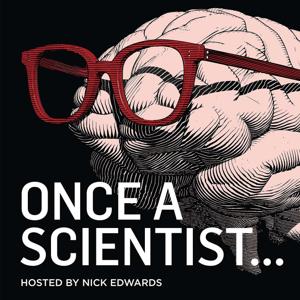
Once A Scientist is a podcast about how science is changing and the people changing with it.
Hosted by scientist and entrepreneur Nick Edwards, the show features conversations with…
Guests talk about the technologies reshaping scientific work, the problems they believe are worth solving, and the often-unplanned paths that brought them there. Along the way, Nick explores a bigger question: as machines take on more of the work of reading, analyzing, designing, and eventually executing experiments, what becomes possible for science—and what becomes more important for scientists?
Once A Scientist is about where science is going, who is building it, and how the next generation of scientists can find their place in it.

43,359 Listeners

111,799 Listeners
1,448 Listeners
7,309 Listeners