
Sign up to save your podcasts
Or

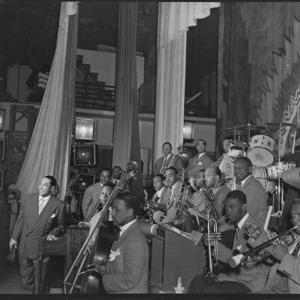


In November 1926, a twenty-year-old who signed himself "Richard Bruce" published "Smoke, Lilies and Jade" in the single issue of Fire!! — the first published literary work by an African American to write openly about homosexuality. It ended with the words "To Be Continued." The continuation never came. Almost everything about Richard Bruce Nugent arrived late — including the recognition.
This episode follows him through the young Harlem that made him: the Fire!! editorial board alongside Thurman, Hughes, and Hurston; the rooming house at 267 West 136th Street — "Niggerati Manor" — whose walls he covered with murals; the magazine that burned in an actual fire while Thurman paid off its printer for years; and the dandy's triple refusal — of regular work, of the closet, of respectable dress — that Nugent treated as a single refusal.
Then comes the long middle most histories skip: Broadway dance companies, Federal Writers' Project history work, a 1952 marriage, and decades out of the spotlight — until the spotlight came back. In 1972, Greaves filmed him at Duke Ellington's townhouse, among the last of the Fire!! circle still living. The Harlem Renaissance we can still hear in the first person runs disproportionately through him — with one caveat this episode keeps honest: Nugent was a raconteur, and his stories arrive polished.
Follow along for the next deep dive.
Stay curious.
In 1920s Harlem, the biggest bank in the neighborhood wasn't a bank. It was an illegal lottery run by Casper Holstein — a St. Croix-born former Wall Street messenger who built his numbers game, Bolito, on the New York Clearing House's own published figures: a daily winning number that nobody could fix.
About half of Harlem played on any given day. The game turned over tens of millions of dollars a year and employed roughly a thousand collectors — and Holstein poured the profit back into the community. In 1926 he put up the $1,000 that endowed Opportunity magazine's literary prizes, the Casper Holstein Awards, and historian David Levering Lewis counted him among the six most important benefactors of the Harlem Renaissance. He bought Garvey's Liberty Hall, financed dormitories at Black colleges, shipped hurricane relief to St. Croix, and bankrolled the lobby that won U.S. citizenship for Virgin Islanders in 1927.
Then came the fall: kidnapped in 1928 in a crime that was never solved, squeezed by Dutch Schultz's takeover — which he refused to join, and refused to fight with violence — and finally convicted of illegal gambling, his only conviction. He died in 1944 with the fortune gone. This episode follows the money: how Harlem's pennies became its prizes, and what happened when Black capital had no legal protection.
Follow along for the next deep dive.
Stay curious.
When Madam C.J. Walker died in 1919, her daughter A'Lelia inherited a fortune, two Harlem townhouses, and a question nobody could answer for her: what is Black wealth supposed to DO? Her answer was the Dark Tower — a salon on 136th Street, named for a Countee Cullen poem, decorated like a skyscraper, where poets and painters mixed with numbers bankers and downtown millionaires.
Langston Hughes called her the joy goddess of Harlem's 1920s. Her great-granddaughter's biography calls her something more deliberate: an institution builder who co-designed the salon with the artists it served, asking them, "What is it that you would like?"
This episode follows the money, the guest lists, the turbans, and the funeral 11,000 people filed past — and ends on the strangest loop in Harlem: her salon was demolished and replaced by a library named for the poet it was named after.
Follow along for the next deep dive.
Stay curious.
At her NYPL interview, Regina Anderson wrote "American" in the race box. The administrator told her: to us, you're not. She was routed to the one branch Black librarians were confined to — the 135th Street branch in Harlem — and proceeded to turn it into the Harlem Renaissance's switchboard.
From that desk she programmed the lectures and exhibitions, hosted the writers at her apartment up the avenue, and helped plan the 1924 Civic Club dinner that launched a generation. Langston Hughes met Arna Bontemps in her rooms. Aaron Douglas got his landing place there. She also wrote plays of her own, fought forty years for every promotion grade, and was still there in 1972, on camera at the Greaves party, billed simply as "librarian/hostess."
This episode is the argument that the Renaissance ran on infrastructure — and that a librarian built a disproportionate share of it.
Follow along for the next deep dive.
Stay curious.
In August 1972, filmmaker William Greaves threw a cocktail party at Duke Ellington's Harlem townhouse and invited every surviving creator of the Harlem Renaissance he could find. Three cameras rolled for hours. Then the footage sat unfinished for 54 years.
This founding episode tells the whole story: who Greaves was, what happened in that room (the arguments, the poetry, 96-year-old Leigh Whipper reciting from memory, James Van Der Zee sitting down at Ellington's piano), why the film took three generations of one family to finish, and how it finally premiered in 2026 to a Library of Congress prize.
Then we walk the room. All 26 guests get their introduction here — because every one of them, and everything they built, gets a deep dive of its own in the episodes ahead.
Follow along for the next deep dive.
Stay curious.
From the publisher's feed